The Well’s Quiet Pressure: A Meticulous Dismantling of a Suburban Empire’s Illegitimate Tyranny
CHAPTER 1: The First Salvo
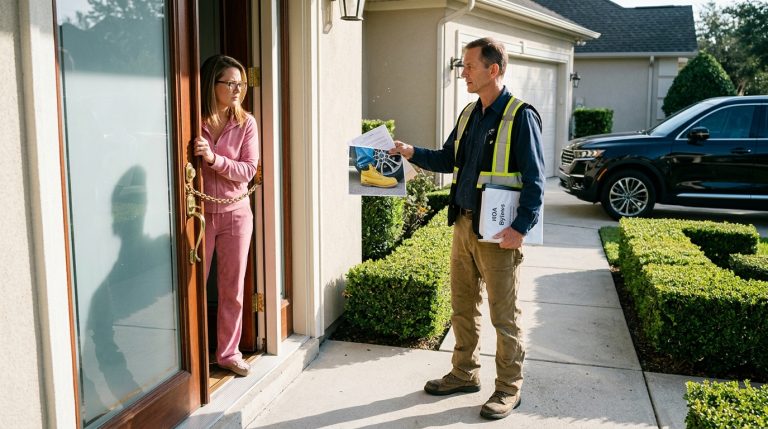
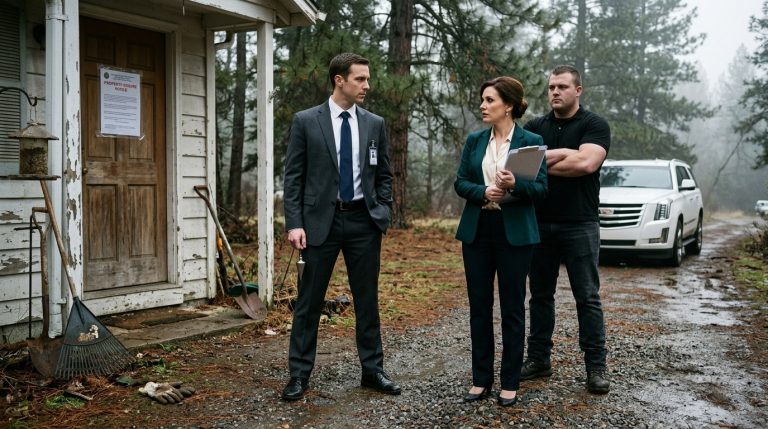
The clipboard she held was an extension of her reach, a plastic white shield that kept her safely distanced from the sweat-dampened grass of my own property.
“Emergency bylaw 7.4,” she said. The phrase sounded practiced, hollow, like a line from a script she’d rehearsed in front of a mirror until the absurdity had smoothed into something resembling authority. “Your private pump is now a community hydraological asset. Access keys to the pump house by Monday, Mark. Don’t make this difficult.”
I looked at her, then past her at the boundary line of my twenty acres. Beyond the thin line of Georgia pines, the Oakidge Estates subdivision crouched like a well-tended cemetery, all perfect lawns and synchronized sprinkler heads. Here, the air smelled of ozone and wet soil. My well—the steel pipe I’d spent months and a small fortune to install—was a silent, singular triumph of engineering. It was a secret I had cultivated for my family, a safeguard against the predictable, dry heat of the coming summer.
“You’re on my land, Karen,” I said. My voice was quieter than I expected, calibrated to match the sudden, icy drop in my pulse.
She smiled, a thin, tight compression of lips that didn’t reach her eyes. Those eyes were searching, scanning the barn, the pump house, the verdant, rebellious patch of grass I’d been watering just moments before she arrived. She wasn’t looking at me; she was calculating the cost of my independence.
“I’m here as the president of the Oakidge Estates Homeowners Association,” she countered, her pen clicking—a sharp, staccato sound that mimicked the rhythm of a firing pin. “And you, Mark, are in direct violation of drought mitigation protocols. I suggest you consult the board’s latest email blast. Ignorance is no defense when the reservoir is at its limit.”
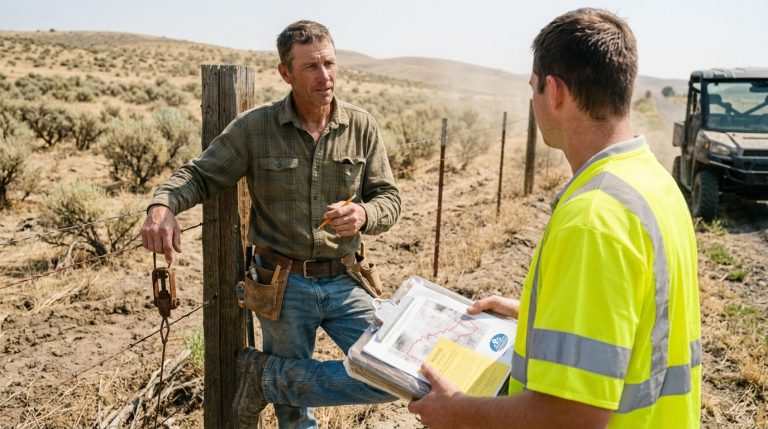
I didn’t answer. I didn’t point out that my water didn’t come from the community reservoir. I didn’t tell her about the geological surveys, the independent driller, or the specific zoning laws that carved these twenty acres out of her jurisdiction. I simply watched her.
She was waiting for an outburst. She was waiting for me to raise my voice, to threaten her, to give her the ammunition she needed to cast me as the unstable neighbor, the agitator. She wanted a performance.
But my mind was already pulling back, shifting into the cold, technical headspace I’d spent twenty years refining in the Corps. This wasn’t a conversation. It was a battlefield analysis. She was the forward observer, testing my perimeter, checking to see where the fence was weak, where the protocols could be bent.
“I’ll take it under advisement,” I said, my tone as flat and lifeless as the metal of her clipboard.
Karen blinked, her smile faltering for a fraction of a second. She had expected pushback, a volley of words, a denial. Instead, she got the silence of a man who had already started building his wall.
“Monday, Mark,” she repeated, turning on her heel. The floral print of her mumu swished against the grass, a garish, misplaced splash of color in the deep green of my woods.
I stood still as she walked back toward the gate, watching the way her stride stayed perfectly rhythmic, perfectly controlled. As she crossed the invisible line back into her subdivision, she pulled her phone from her pocket and tapped a single, quick message.
When she vanished behind the screen of trees, I didn’t go to the house. I walked to the pump house, my boots crunching on the dry gravel. I reached out and rested my hand on the cold steel of the pump housing, feeling the vibration of the water waiting just beneath the surface.
Something was wrong. Not just with her claim, but with the timing. The drought had only been a concern for a week. She had arrived here with a clipboard that looked new, a bylaw that hadn’t been discussed in any board meeting minutes I’d seen, and an urgency that smelled less like civic concern and more like desperation.
I looked at the padlock on the pump house door. It was secure. But as I turned to head back, I noticed something that made the hair on my arms stand up—a small, freshly placed survey stake in the corner of my yard, buried deep in the mulch. It wasn’t there this morning.
CHAPTER 2: The Geometry of a Lie
The stake was plastic, bright orange, and shoved into the mulch with a jagged, hurried violence that felt entirely out of place in the manicured silence of the estates. I knelt, my fingers tracing the sharp, molded edge of the plastic. It was a surveyor’s marker, but it sat at least fifteen feet inside my perimeter. My jaw tightened. It was a boundary incursion, plain and simple—a physical manifestation of the claim Karen had just shouted in my face.
I pulled it from the earth, the dirt clinging to the tip like shredded nerves. My heart was steady, but my mind was spinning through the structural implications. This wasn’t just a petty administrative move. It was a tactical encroachment. If she could move the boundary by fifteen feet, she could move it by fifty, until the well-house itself sat on “contested land.”
The memory of the Kandahar base construction hit me then—not as a ghost, but as a technical blueprint. I saw the way we’d marked the flight line, the way one misplaced stake could throw off the entire concrete pour, creating a structural failure weeks down the line. Karen was operating with the same crude, destructive logic. She was setting a foundation for a legal narrative that didn’t exist, and she was doing it with the confidence of someone who expected me to stay in my lane, to keep my head down, and to accept the new reality she was fabricating.
I walked to the barn, the weight of the stake in my hand feeling like a piece of evidence rather than a tool. Inside, the air was cool, smelling of aged cedar and the faint, sweet scent of stored gasoline. I opened my closing binder—the thick, heavy archive of every document I’d signed, every survey map provided by the title company, and every legal contingency I’d paid for.
I spent the next three hours in the dim light of a single desk lamp, the contrast between the yellowed paper of the maps and the sharp, black ink of the legal descriptions acting as a steadying force. I wasn’t just looking for the property line anymore. I was looking for the authority of the HOA itself.
According to the CC&Rs—the Covenants, Conditions, and Restrictions—that served as the constitution of Oakidge Estates, our twenty-acre parcel was designated as an Exempt Agricultural Tract. I highlighted the clause for the fourth time, the yellow ink bleeding into the paper. It was explicit. We were shielded from architectural oversight, landscaping requirements, and—crucially—land-use limitations.
But as I dove deeper, I found a discrepancy that made my breath hitch. I pulled the original plat map, the one filed with the county clerk years before the development had even been paved. I cross-referenced the coordinates of the back pasture with the current subdivision map in the HOA’s online portal.
There.
The lines didn’t align. The current digital map in the HOA’s possession had been subtly altered. The boundary of the subdivision had been expanded, pulling the eastern corner of my back pasture into the jurisdiction of the development. It wasn’t an accident. It was a pixel-perfect, calculated adjustment of the geography itself.
I felt a cold prickle of realization at the base of my neck. This wasn’t a sudden drought-induced epiphany. Karen had been planning this annexation for a long time. She had effectively “redrawn” the map while everyone was looking at trash-can fines and front-yard tree species. She needed the land—or, more specifically, what sat beneath it—to be considered “community property” so she could enforce that emergency bylaw she’d invented.
I closed the binder, my hands steady now, though my grip was white-knuckled. Sarah walked into the office, her silhouette framed by the porch light outside. She looked at the desk, at the highlighted maps, and then at the survey stake I’d placed on the corner of the monitor.
“She was back here, wasn’t she?” Sarah asked. Her voice was quiet, stripped of the usual warmth that greeted me at the end of the day.
“She was,” I said. “And she’s moving the goalposts, Sarah. Literally.”
I didn’t tell her about the map alteration yet. I needed to be certain. I needed to see if the county’s official, physical records matched the digital ghost Karen had created. If the county records were different, it meant the HOA was operating on a fraudulent map.
I stood up, the chair scraping against the concrete floor—a harsh, dissonant sound in the quiet house. I felt the surge of kinetic energy that came with a defined objective. The uncertainty of the afternoon was gone, replaced by the clinical, relentless drive of a problem that could be solved with the right data.
“I’m going to the records office tomorrow,” I said, reaching for my coat. “I need to see the original filed plat.”
“Mark, it’s an HOA,” Sarah said, stepping into the room, her hand resting on the back of my chair. “People like that… they don’t play fair. She’s going to make this loud. She’s going to make us the problem.”
“She already has,” I replied. I looked at the map, then back at her. “But if she wants a war of attrition, she’s picked the wrong terrain. I know how to read the landscape, and I know how to spot an unstable structure. Karen’s authority is built on sand, Sarah. All I have to do is find the tide.”
I turned off the desk lamp, plunging the office into darkness, but in my mind, the map was still there, glowing with the sharp, jagged lines of a manufactured reality. Tomorrow, I would find the paper trail. Tomorrow, I would start the process of pulling the pins from the foundation.
As I walked out of the barn, the night air was still and humid, the crickets providing a steady, rhythmic static. I stopped at the pump house one last time, listening. The pump was silent, the well resting, but I knew the water was there—cold, deep, and entirely mine. The fight wasn’t just about the well anymore. It was about the truth of the soil beneath our feet. And as I looked toward the distant, manicured lights of the subdivision, I felt the first, faint coldness of a long, calculated winter settling in.
Karen had drawn the first line. I was going to erase it.
CHAPTER 3: The Ghost in the Map
The lobby of the county records office was a cavern of polished marble and the smell of industrial-grade floor wax. It was a space designed to intimidate—to remind you that your personal disputes, your land, and your life were ultimately just rows in a database overseen by people who didn’t know your name.
I didn’t head for the help desk. I knew the drill. Instead, I navigated to the public terminal room, a row of humming, obsolete workstations bathed in the flicker of overhead LEDs. My binder was tucked under my arm, its weight a comforting, tangible presence. I didn’t come here to ask for help; I came to verify the discrepancy.
I logged into the county’s land management portal, my fingers stiff against the keys. It felt like a surgical procedure. I searched for Oakidge Estates, then filtered for the plat maps filed at the time of the initial land acquisition. When the digital file finally bloomed onto the screen, I didn’t look at the whole map. I zoomed in—once, twice, three times—until the individual lot lines were sharp, black vectors against the grid.
I compared it to the image I had printed from the HOA portal.
They weren’t the same.
The HOA’s version showed an extension of the development’s boundary that simply didn’t exist in the county’s master file. It was a deliberate, digital shadow-land, a slice of my property that Karen had effectively erased from the public record and re-allocated to the subdivision’s domain.
The cold realization hit me with the force of a physical blow: this wasn’t an accident. You don’t accidentally edit a property map. You need access, you need specialized software, and you need a reason to lie to the entire board. The sophistication of the distortion suggested that this wasn’t just Karen playing general in her cul-de-sac; there was a structural, high-level intent behind it.
I leaned back, the plastic chair groaning under the shift in weight. A man in a suit passed behind me, his footsteps echoing in the high-ceilinged room. I watched the reflection in the dark glass of the monitor. I looked like a suburban homeowner, maybe a bit stressed, maybe dealing with a messy property dispute. I didn’t look like a man who had just stumbled onto a crime scene.
I switched to the financial records tab. I needed to see the HOA’s audit trail, specifically the line items related to “community land maintenance” and “surveying costs.”
The records were dense, a labyrinth of bureaucratic jargon and obfuscation. But then I saw it—three separate payments, totaling over twenty thousand dollars, marked for “Topographical Assessment and Boundary Realignment.” The vendor? Miller & Sons Logistics.
I sat there, the air in the room suddenly feeling thin and recirculated. Miller was Karen’s maiden name.
The rot was deeper than a petty bylaw. It was a closed loop. She was using the HOA’s funds to pay a company she controlled to perform fraudulent “assessments,” which then provided the legalistic cover to seize my land—the very land that would, in turn, be managed by the same company under the guise of “hydrological asset protection.”
It was a masterclass in parasitic economics. She wasn’t just the president; she was the beneficiary, the contractor, and the judge. And by labeling the property an emergency asset, she effectively locked the other homeowners out of the math, keeping them blinded by the drought crisis while she hollowed out the association’s accounts.
I reached for my phone, but stopped. No. No phone calls. No digital paper trails that she could trace. I began to print. One page after another, the printer rattled, a metallic, insistent sound that felt like a countdown.
As I gathered the documents, I felt a sharp, intrusive flash of memory: a supply route project in a remote valley, where the costs for concrete had been tripled by a local contractor who had ties to the provincial governor. We had spent weeks documenting the discrepancy before we could pull the plug on the contract. It was a long, slow, grinding process of building a case that was legally unassailable.
Karen had made the same mistake that governor had. She had become so comfortable in her power that she stopped hiding the links. She thought she was too big to be audited, too integrated into the community to be questioned.
I left the building, the sun hitting me with a brutal, mid-afternoon glare that made me squint. The world looked different now. The neighborhood, the HOA, the friendly newsletters—it all looked like a set design, a fragile front for the machinery turning underneath.
I climbed into my truck, the engine turning over with a low, reliable rumble. I didn’t head home. I headed for the local diner on the edge of town, a neutral space where I could spread out the documents and begin the final organization. I needed to see if there were other victims of these “boundary realignments.” I needed to know how many others had paid for the privilege of being stolen from.
As I drove, I noticed a silver sedan lingering three car lengths behind me. It matched the color and make of Karen’s vehicle. I kept my speed steady, watching in the rearview mirror as it paced me, then finally peeled off into a side street.
Coincidence? Maybe. But I knew better. In a game of shadows, there are no coincidences, only patterns. I turned onto the highway, the road stretching out ahead of me, a long, gray strip of asphalt that led away from the safety of my home and into the heart of the truth.
I was going to build my case, and when I was done, there wouldn’t be a single stone left in her empire. She wanted to play architect? I’d show her what happens when the foundation is built on nothing but greed.
I stopped at the diner, the smell of burnt coffee and fried onions a grounding reminder of the real world. I ordered a black coffee, pulled the binder from the passenger seat, and opened it. The work was just beginning.
CHAPTER 4: The Architecture of the Siege
The diner was nearly empty, the fluorescent lights humming a low-frequency drone that harmonized with the mounting hum of tension in my chest. I had spent three hours cross-referencing the invoices. They were beautiful, in a sick, structural way—a perfectly articulated framework of deception. Each one was signed off by Karen, then processed by the management company with a rubber stamp of approval. It was a closed circuit, a self-sustaining engine of theft that required only silence to function.
I reached out and touched the edge of the printed county map, my thumb tracing the red-inked line where the subdivision had been artificially expanded. Beside it, the invoice from Miller & Sons Logistics for “boundary realignment” sat like a confession. It was twenty thousand dollars for a lie.
My phone vibrated on the laminate tabletop. A notification from the HOA’s private Facebook page. I flipped the phone over, the screen dark. I didn’t need to look. I could hear the digital noise in my head—the whispers, the gossip, the manufactured outrage over my “water hoarding.” They were ramping up the pressure, likely on Karen’s direct orders. She was leaning into the villain narrative, betting that if she made enough noise, I would be too exhausted by the social friction to actually audit her books.
I stood up, leaving a ten-dollar bill next to the cold, half-empty mug, and walked to the truck. The air outside was crisp, the Georgia night settling into a deep, velvety indigo. I had an appointment in the morning that Karen didn’t know about: the HOA management office thirty miles away.
The journey was a study in restraint. I kept to the speed limit, my eyes scanning the road, my mind running through the contingencies. Every turn, every stoplight, every stretch of empty road was a chance to practice the quiet discipline of the profession. I wasn’t just a homeowner in a dispute anymore; I was a strategist, and my first objective was to secure the missing link in the chain—the original permit logs for the “drought mitigation study.”
When I reached the management office the following morning, the receptionist—a woman with thin lips and a nameplate that read Sheila—looked at me with the weary cynicism of someone who dealt with neighborhood grievances for a living.
“I need to review the files for the 2024 Oakidge Estates infrastructure contracts,” I said, my voice steady, professional. I presented my membership ID and a copy of the request I’d sent via certified mail.
Sheila frowned, glancing at the clock. “The president didn’t authorize a review for today. You’ll need to schedule this with the board.”
“The board’s authorization isn’t required for an inspection of records under the state statutes,” I replied, sliding the legal citation across the desk. “I’m here now. I have the right to look at these files. If you deny me, I’ll be calling the county clerk to initiate a compliance inquiry.”
I didn’t yell. I didn’t threaten. I just let the weight of the law sit there on the desk between us.
She stared at me, then at the document, and finally sighed, clicking a few keys on her computer. She disappeared into the back, the silence stretching for five agonizing minutes. When she returned, she held a slim, blue-tabbed folder.
“You have thirty minutes,” she said, pointing to a small, isolated desk in the corner. “And nothing leaves the room. No photos, no copies.”
I sat at the desk, the fluorescent light buzzing directly above my head. I opened the folder. It was a sanitization job. The budget proposals were there, the invoices for minor repairs, the routine vendor contracts. But the permit logs for the Miller & Sons study were missing. The space where they should have been was empty, the paper clip indented with the ghost of documents that had been recently removed.
I didn’t panic. I knew this was coming. I pulled my own notebook from my pocket—a small, grid-lined book I’d been keeping since the start of this, a meticulous record of every interaction and document I’d seen. I started sketching the file architecture, noting the gaps in the numbering, the missing page sequences, and the timestamps on the existing invoices.
The discrepancy was the proof. If they had nothing to hide, the logs would be there. Their absence was a structural failure, a gap in the facade that screamed fraud.
I walked out of the office thirty minutes later, my head clear, the information burned into my memory. Sheila didn’t look up as I passed. I drove back toward the development, the landscape passing in a blur of green and gray.
As I passed the entrance to Oakidge, I saw the patrol car idling by the gate. A deliberate show of force? Or just a random patrol? It didn’t matter. The intimidation was the point. Karen wanted me to feel watched. She wanted me to feel the weight of the “community” pressing down on me.
I turned into my own driveway, the gravel crunching under my tires, and pulled into the shelter of the barn. Sarah was waiting on the porch, her arms crossed, her eyes tracking the truck.
“How did it go?” she asked, walking toward me as I climbed out.
“They purged the files,” I said, meeting her gaze. “But they were sloppy. They left the gaps.”
She looked at me, her brow furrowed. “What does that mean for us?”
“It means I have everything I need to get a judge to open their books,” I said, my voice dropping. “Karen’s trying to hide the money, but she’s running out of places to bury it. Tomorrow, I go to see Amelia.”
As I stepped onto the porch, I felt a sharp, cold wind whip through the trees. It was the first true chill of the season, a reminder that the environment was changing. The drought was still there, the grass still brown, the threat of water restrictions still looming over the community. But for the first time, I felt like the tide was turning. The game wasn’t just about the well anymore. It was about the entire foundation of the HOA, and as I walked into the house, I knew the structural collapse of Karen’s little empire was already underway. She just didn’t know it yet.
CHAPTER 5: The Legal Ambush
The lobby of Albbright, Finch, and Montgomery was a masterclass in controlled intimidation. The mahogany panels were polished to a mirror finish, and the air was chilled to a precise, comfortable temperature that felt entirely detached from the humid sprawl of Atlanta outside. I sat in one of the leather armchairs, the binder resting heavy on my knees, feeling the pulse of the city through the thick, sound-dampened glass of the fortieth-floor windows.
I wasn’t the man who had walked in here a few weeks ago. That man was defensive, reactionary, and fueled by a simple desire for property sovereignty. Today, I was a conduit for a singular, cold intent: the systematic disassembly of Karen Miller’s power.
Amelia appeared at the double doors precisely on the minute. She wore a charcoal suit that looked like armor, her gaze sharp, assessing. She didn’t offer a pleasantry. She gestured toward the conference room, her movements fluid and efficient.
“Mr. Davies,” she said, once the doors clicked shut behind us. “I assume you have the material?”
I placed the binder on the mahogany table. It was thicker now, expanded with the copies I’d pulled from the records office and the notes from my inspection at the management company. I opened it to the highlighted section detailing the Miller & Sons invoices.
“It’s not just a boundary dispute,” I said, my voice steady. “It’s a closed-loop fraud. She’s using the HOA as a personal treasury to fund her brother-in-law’s company, and she’s using map distortion to justify it. The permit logs for the study she cited as an ’emergency’ are missing, scrubbed from the management records.”
Amelia leaned forward, her eyes scanning the documents. The silence in the room wasn’t empty; it was the tension of a wire being drawn tight. She stopped at the invoice for the topographic realignment. Her finger tracked the number, the calculation simple and devastating.
“She’s overbilling by three hundred percent,” she murmured. A thin, dangerous smile touched her lips. “This isn’t just a regulatory issue, Mark. This is felony-level embezzlement. If these invoices are backed by falsified plats, she’s looking at years in a state facility.”
“Can we move?” I asked.
“We don’t just move,” Amelia said, standing up and walking to the window. She looked down at the grid of the city, her reflection ghosting against the glass. “We time this. If we file now, she’ll try to destroy the remaining physical records. We need to catch her in the middle of a transaction. The next board meeting is next week, correct?”
“Thursday,” I said.
“Perfect.” She turned back, her expression hard. “I’m going to serve her with a preservation-of-evidence order before the meeting. It will freeze the board’s ability to approve any new contracts or make any financial transfers. It’ll force her into a corner. If she attempts to continue with the current trajectory, she’ll be in direct contempt.”
I felt a sudden, sharp memory of a bridge project I’d surveyed in the desert—a beautiful, sweeping span that looked perfect on paper but was failing because the soil underneath had been compromised by a contractor looking to cut corners on the foundation. Karen was exactly like that contractor: all surface, no depth, and entirely vulnerable to a stress test.
“She’s been fanning the flames on the community board,” I said. “Turning the neighbors against me to distract from the audit trail.”
“Let her,” Amelia replied. “Public opinion is a vapor. It disappears the moment a judge signs a warrant. When we arrive at that meeting, we aren’t going to argue about water rights. We are going to present the fiscal reality of her administration. And we are going to do it in front of every single member of the association.”
As I left her office, the skyscraper seemed to hum with the energy of the coming conflict. The weight of the binder was gone, passed to the one person who knew exactly how to wield it.
I drove home, the city transitioning into the suburban sprawl, the dusk bleeding into the sky in shades of bruised purple. My phone chirped. A message on the HOA page, a direct jab from Karen. “Still waiting for those pump house keys, Mark. The community patience is reaching its limit.”
I didn’t respond. I didn’t need to. I reached out and turned the phone off, the silence in the cab suddenly absolute. The physical pressure of her control—the notices, the threats, the manufactured drama—now felt like nothing more than a thin layer of dust on a structural steel frame.
I pulled into my driveway, the woods surrounding my house dark and silent. I stepped onto the porch and looked out toward the distant lights of Oakidge Estates. The architecture of my victory was already in place. The legal ambush was set, the evidence was cataloged, and the antagonist was running out of ground. The next step was the meeting itself, and when the smoke cleared, there wouldn’t be a single shadow left for her to hide in.
I wasn’t fighting for a well anymore. I was fighting for the restoration of the land, and for the first time, I could see the final outcome as clearly as if it were drawn on a blueprint.
CHAPTER 6: The Contempt of Order
The morning was brittle, the sky a flat, unyielding gray that seemed to press down on the roof of the truck. I sat in the driveway for a long moment, the engine idling, the rhythmic vibration of the chassis a steady hum against the silence of the woods. My hand gripped the door handle, but it jammed—a sudden, sharp friction, a mechanical protest against the day’s work. I gave it a sharp, calculated yank, the metal snapping back into place with a sound like a pistol slide. A minor complication, but in this headspace, it was an omen. Everything had to work, or the whole structure would fail.
I didn’t drive toward the subdivision gate. I took the back access road, the one that wound through the dense woodland bordering the development. It was an old logging track, rarely used, overgrown with briars that clawed at the sides of the truck with a sound like tearing paper. This was my terrain. I knew every root, every soft patch of soil, every line of sight from the houses that backed onto the perimeter.
I arrived at the edge of the community clubhouse thirty minutes before the board meeting was scheduled to begin. I parked in the shadows of a cluster of dense oaks, the truck’s engine cooling with a series of metallic ticks. I checked my watch. 5:30 PM. The parking lot was already beginning to fill with the sedans and SUVs of the neighborhood, the headlights sweeping across the pavement in erratic, searching arcs.
I saw Karen’s vehicle. It was a pristine, white luxury sedan, parked directly in the handicapped spot nearest the clubhouse door—a subtle, arrogant statement of entitlement. My chest tightened, but it wasn’t fear. It was the focus of a mission. Amelia had been clear: do not engage. Let the legal filings do the work. The preservation order was being served on the management office at this exact moment. By the time Karen sat down in that chair, she would be legally muzzled.
I watched as the residents began to drift into the clubhouse. They moved in small, self-contained groups, the murmur of their voices lost to the wind. Some of them looked nervous; others looked angry. The division in the community was palpable, a fault line running right through the heart of the subdivision.
I saw Mr. Henderson pull up in his rusted flatbed, the truck looking like an anomaly against the backdrop of the McMansions. He stepped out, his movements slow and deliberate, a man who had spent his life dealing with stubborn earth and broken fences. He wasn’t a man who would be cowed by a clipboard-wielding bureaucrat.
I stepped out of the truck and adjusted my jacket. I wasn’t there to be seen yet. I took a path through the trees, staying in the shadows, my boots silent on the carpet of dead leaves. I reached the side entrance of the clubhouse, a service door that opened into the utility corridor behind the main hall. It was locked, but the hinge was loose—a small, persistent structural flaw I’d noticed during a community clean-up day months ago.
I leaned against the door, feeling the give in the frame. I didn’t open it. I didn’t need to infiltrate. I just needed to be close enough to witness the shift in power.
From inside, I heard the muffled, rhythmic thud of the gavel—Karen’s signature sound of authority. It sounded different tonight, thinner, less resonant.
“This meeting is now in session,” her voice came through the door, amplified by the hall’s internal PA system. It was sharp, but there was a tremor in the pitch, a tiny, jagged instability that only a practiced ear would pick up. She was compensating for the unknown. She knew something was coming, even if she didn’t know what it was.
I leaned closer, my ear against the cool, painted metal of the door.
“Before we proceed to the agenda, I want to address the rumors—” she started, but she was interrupted by the sound of the main door swinging open.
A new voice, resonant and cold, cut through the room. It was a man, likely the courier Amelia had dispatched. The murmur of the room died instantly. There was the rustle of a thick envelope, the sound of official documentation being accepted under duress, and then, a long, suffocating silence.
Karen’s voice, when she spoke again, was barely audible. “What is this?”
“An order of preservation, Mrs. Miller,” the man replied, his tone as detached as a machine. “And a formal notice of legal proceedings regarding the association’s fiscal records. You are legally required to suspend all administrative changes until this is reviewed.”
I stepped back from the door, the cold air rushing in to fill the space where my breath had been. The transition had begun. She was inside, trapped by the paper she’d spent her career trying to manipulate.
I didn’t need to hear the rest. I turned and walked back toward the trees, my boots making no sound on the damp, yielding earth. The tactical shift had occurred. The board meeting was no longer a platform for her propaganda; it was a cage. I had everything I needed to move to the next phase, but for a moment, I just stood there in the darkness, listening to the silence emanating from the building.
The weight of the last few weeks—the sleepless nights, the meticulous research, the cold, grinding work of building the case—seemed to lift, replaced by a crystalline clarity. The structure was breaking. Now, I just had to wait for the collapse.
I climbed back into the truck, the door closing with a solid, final click. I wouldn’t wait for her to emerge. I didn’t need to see her face to know that the game was over. I put the truck in gear and drove away into the night, the road ahead opening up like a clear, unobstructed path. The siege was working. Tomorrow, the cleanup would begin.
CHAPTER 7: The Unravelling of the Edifice
The drive back from the clubhouse had been a vacuum of silence, but the air inside the truck felt pressurized, thick with the weight of what had just been set in motion. Karen was muzzled, but she wasn’t defeated. People like that don’t just fold; they scramble. They look for the exit, for the hidden account, for the paper shredder.
I didn’t head home. I headed straight for the management office. The preservation order was in place, but I knew the architecture of her deception—the digital map distortions, the linked vendor invoices—required a central nervous system. The HOA’s digital administrative portal wasn’t just a website; it was a hosted service, and I suspected the administrative credentials were logged on a local terminal within the office suite.
I reached the management office at 9:00 PM. The parking lot was desolate, the fluorescent lights of the building humming in the dark. I didn’t need to break in; I had the key-card I’d retained from my last, authorized site inspection, the one the receptionist had failed to collect back in the haze of our confrontation.
The office was a graveyard of suburban bureaucracy. Desks were piled with notice-of-violation forms, color-coded files, and the detritus of a thousand petty grievances. I moved directly to the rear office—the one Karen used whenever she was on-site. The room smelled of ozone and cheap cologne.
I bypassed the workstation and pulled the server unit from its cabinet. It was a compact tower, tucked away behind a stack of landscaping contracts. I felt the heat coming off the chassis—it was still running, still synchronizing, still holding the keys to the kingdom. I reached behind, fingers brushing against the tangle of cables, and yanked the Ethernet cord.
The silence that followed was absolute. The screen in front of me flickered, the cursor frozen in the middle of a spreadsheet that was actively updating. I pulled the hard drive from the chassis, the metal casing warm against my palm. This was it—the physical manifestation of every fraudulent invoice, every map edit, and every email Karen had sent to her brother-in-law.
But as I turned to leave, the office door clicked open.
I didn’t need to look up to know who it was. The sharp, rhythmic clicking of heels on the linoleum was unmistakable. Karen. She looked disheveled, the sleek, severe lines of her suit compromised by a frantic, jagged energy. She hadn’t expected to see me. She had expected to be the only one in the room, likely coming here to wipe the very data I had just secured.
“You have no idea what you’re doing,” she said, her voice shaking, losing its practiced authority. “You’re just a homeowner with a chip on his shoulder. You’re playing at war, Mark, but you don’t even know who you’re fighting.”
“I’m fighting a parasite,” I said, my voice quiet, dead-leveled. I held the hard drive up. “And I think I’ve found the host.”
She lunged—not at me, but at the terminal, her hands flying across the keyboard in a desperate attempt to reboot the system or trigger a remote wipe. She was panicked, the mask of the community leader shattered, revealing the desperate, cornered individual beneath.
“You can’t take that,” she hissed. “That’s property of the association! That’s confidential!”
“It’s evidence,” I corrected. I stepped past her, the hard drive heavy in my jacket pocket.
She stood there, surrounded by the physical artifacts of her petty empire—the files, the stamps, the neatly organized forms—and she looked suddenly small. The fluorescent lights flickered, casting long, distorted shadows across the room that made the space feel like a stage set after the play had finished.
I didn’t gloat. I didn’t offer a rebuttal. I simply walked past her, the exit door swinging open to the cool, night air. I didn’t look back. I had the drive, I had the proof, and I had the endgame.
I reached my truck, the metal casing of the drive pressed against my hip. I was finished here. The last piece of the structure had been removed, and all that remained was for the final order to be served. I started the engine, the sound a low, steady growl in the darkness. I drove away from the office, the road ahead stretching out like a clear, illuminated corridor.
Karen could scream at the empty office, she could call the police, she could do whatever she wanted, but the evidence was already in my possession. The collapse was no longer a theory; it was a physical certainty. Tomorrow, the lawyers would handle the rest, and the neighborhood—our home—would finally begin the slow, quiet process of waking up from the nightmare.
CHAPTER 8: The Weight of the Truth
The parking lot of the community center was a sea of confusion. Residents were gathered in small, agitated clusters, their voices rising in the cool morning air like a gathering storm. The news of the preservation order had rippled through the neighborhood overnight, and the sight of Karen Miller’s car still parked in the handicapped spot—now covered in a fine layer of dew—felt like a tombstone.
I walked toward the building, the hard drive a heavy, reassuring lump in my jacket pocket. My boots struck the asphalt with a rhythmic, measured cadence. This was it. No more shadows, no more indirect observation. The time for the “breathing” of secrets was over; it was time to let the truth have its say.
Amelia was waiting for me at the entrance, her silhouette sharp against the glass doors. She looked as composed as the day I’d first met her, though there was a glint of predatory focus in her eyes. “The board is inside,” she said, her voice dropping into a low register. “They’re panicking. Karen is trying to claim the preservation order is a clerical error, but the DA’s office is already on the line.”
I nodded and stepped into the lobby. The room was tense, the air vibrating with the collective anxiety of a community that had lived under a regime of petty tyranny for too long. Karen was at the front of the room, standing behind the dais. She looked haggard, the makeup caked into the fine lines of her face, her hands gripped so tightly on the edges of the lectern that her knuckles were white.
When she saw me, her eyes widened—not with fear, but with a sudden, sharp clarity. She knew. She saw the drive in my hand, the way Amelia stood beside me, the way the room had gone deathly silent.
“Mr. Davies,” Karen said, her voice strained, a jagged edge of desperation cutting through the professional veneer. “You’ve made a terrible mistake. This is a private meeting of the association. You have no authority here.”
“I don’t need authority,” I said, my voice projecting across the silent hall, calm and devoid of the rage she wanted to provoke. “I have the ledger.”
I walked to the table where the board sat, their faces a mixture of confusion and growing horror. I pulled the hard drive from my pocket and set it down in the center of the table. The sound it made—a hollow, solid click against the wood—seemed to echo for a long, agonizing moment.
“This drive contains the financial records of this association for the last five years,” I said, looking at the board members, one by one. “It contains the invoices from Miller & Sons Logistics, the altered plat maps, and the correspondence detailing the systematic siphoning of community funds into private accounts. It’s all here.”
The room erupted. It wasn’t the sound of cheering; it was a sudden, chaotic roar of realization. The man who had been the treasurer, David, stepped forward, his eyes locked on the drive. “I told you,” he said, his voice trembling as he looked at Karen. “I told you the numbers didn’t add up.”
Karen tried to speak, to yell, to regain control, but the gavel she’d used as a weapon for years now sat ignored on the dais. The momentum had shifted entirely. The board members were turning, their questions becoming demands, their confusion hardening into the righteous anger of people who had been swindled.
The payoff was immediate. I watched as the local sheriff’s deputies, tipped off by the DA’s office, stepped through the rear doors. They didn’t rush. They moved with the steady, inexorable pace of the law. They walked straight to the dais, their presence a final, ironclad seal on the proceedings.
Karen didn’t resist. She seemed to deflate, her shoulders slumping as she realized that no amount of rhetoric, no amount of fabricated bylaws, and no amount of manipulation could stop the physical reality of the evidence. She was led away, her head bowed, the woman who had once claimed to be the architect of order now a footnote in a case of petty fraud.
The cool down was a slow, agonizingly quiet descent. The room began to empty, the residents drifting out into the daylight with a dazed, hollow look on their faces. I stayed behind, standing near the dais, feeling the silence settle back into the space. The air no longer smelled of ozone and anxiety; it smelled of dust and, finally, of something like peace.
Amelia approached me, a thin, satisfied smile on her face. “Poetic justice is rarely this efficient,” she said, nodding at the drive. “The DA will have everything they need by noon. You did good, Mark.”
I didn’t answer. I just walked out into the parking lot. The sun was rising, casting long, sharp shadows across the pavement. I went to the truck and pulled out the small, rusted toolbox I kept under the seat. I walked to the edge of the property, to the fence line Karen had tried so desperately to rewrite.
The fence was sagged, the wood rot-eaten and brittle. I knelt, the damp grass soaking into my jeans. I took out a hammer and a handful of nails, the rhythmic clink-clink-clink of the repair a grounding, tactile sensation. I worked for an hour, fixing the broken slats, aligning the wire, and tightening the gate until it swung true.
It was a small thing—a few boards and a bit of tension—but it felt like the most important repair I’d ever made. It was the repair of the boundary, the restoration of the line between what was mine and the rest of the world.
Sarah found me there, standing by the fence as the morning sun warmed the back of my neck. She didn’t say anything, just rested her hand on my shoulder, her fingers warm through the fabric of my shirt.
“Is it done?” she asked.
“It’s fixed,” I said, looking at the fence, then out toward the deep green of our woods, where the spring was still flowing, deep and cold, undisturbed by the petty desires of the world beyond.
I was tired—a deep, marrow-level exhaustion that felt like the end of a long, arduous deployment—but the air was clean. The weight of the secret, the pressure of the fight, the cold, calculating work of the siege—all of it had settled, leaving behind a world that finally felt like home again. I turned away from the fence, my hand in Sarah’s, and we walked back toward the house, the silence between us now a comfortable, breathing thing. The ground was ours, and for the first time in years, the horizon looked entirely, perfectly clear.