The Right of Way: A Retired Engineer’s Calculated Siege Against a Suburban Tyrant’s Fragile Empire
CHAPTER 1: THE EDGE OF THE GRAVEL
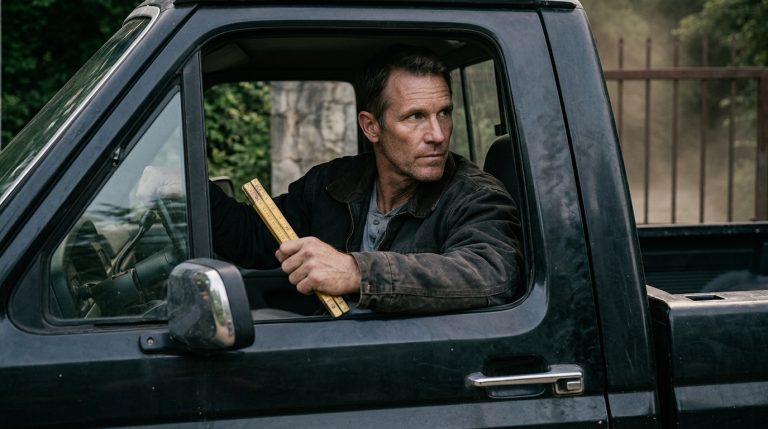
The humidity was a physical weight, sticking my shirt to my back as I stood at the mouth of my driveway. The bulldozer’s idling engine was a low-frequency pulse, vibrating through the rubber soles of my boots and traveling up into my marrow. It was a predatory sound, calculated to intimidate, but to my ears, it was just another machine operating outside its parameters.
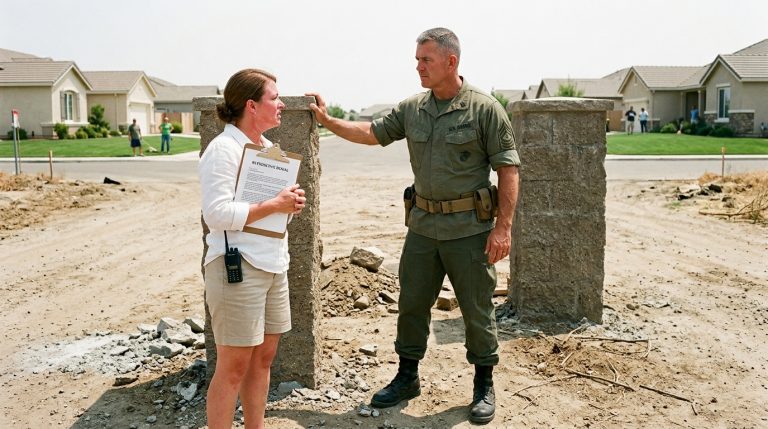
Karen stood five paces from the operator, clutching a leather-bound folio as if it held the secrets of the universe. She didn’t look at me; she looked at the patch of earth where my road met the asphalt of Oakwood Lane. To her, this wasn’t a driveway. It was a scar, a defiance of the manicured, beige uniformity she had spent two years enforcing.
“This is the end of the blight, Mr. Reynolds,” she said, not shouting, but projecting with the practiced authority of someone who had spent too many hours in clubhouse board meetings. She gestured toward the contractor—a man whose face was mapped with deep lines of exhaustion—who sat motionless in the operator’s seat, his hand hovering over the hydraulic controls. “Covenant 17B is clear. No unauthorized access easements.”
I didn’t reach for a weapon. I didn’t raise my voice. I kept my hands at my sides, feeling the cool, stiff edge of the manila folder tucked under my left arm. It contained the only things that mattered in this world: the original property deed, a survey signed by a man long buried, and the recorded easement that pre-dated her entire subdivision by decades.
The heat shimmered off the gravel, turning the horizon into a distorted, liquid line. I looked past Karen, directly at the contractor. He was looking at the blade of the bulldozer, then at the dirt, then at me. He was waiting for a signal, but he was also gauging the cost.
“Mr. Henderson,” I said, my voice cutting through the thrum of the diesel.
He shifted, his gaze locking onto mine. There was a flicker of recognition there—a shared understanding of the cost of maintenance and the wear and tear of a long career.
“You’re about to scrape a legally recorded, county-filed right-of-way,” I said, my tone as flat and even as a technical manual. “Before you drop that blade, you might want to consider the liability of blocking municipal-grade access routes.”
Karen stiffened, her face tightening into a mask of indignation. “He doesn’t have an easement, Henderson. It’s an encroachment. Proceed.”
I stepped forward, my boots crunching on the loose stone—a sharp, rhythmic sound that seemed to silence the birds. I stopped exactly six feet from the bulldozer’s tread. I didn’t look at Karen. I focused entirely on the steel blade, oxidized and scratched, a relic of labor that was being wasted on a petty grievance.
“Henderson,” I said again, ignoring her entirely. “There’s a document in this folder that changes the calculus of your contract. If you value your license more than a morning’s worth of diesel, take ten seconds to read it.”
I extended the folder. The silence that followed wasn’t peaceful; it was heavy, waiting for the first crack. Karen reached for the file, her fingers trembling with fury, but I held it steady, waiting for the contractor to make the choice. He looked at her, then back at me, his hand finally dropping from the hydraulic lever. The engine’s vibration seemed to change pitch, signaling a shift in the gravity of the room. I felt the first, cold ripple of the endgame beginning.
CHAPTER 2: THE PAPER WALL
Henderson’s hand stayed off the lever, his fingers splayed against the greasy metal like he was afraid of burning them. Beside him, Karen looked less like a president and more like a predator that had suddenly found its claws retracted. She glared at the folder in my hand, her face flushing that uneven, mottled pink that only appeared when her reality refused to align with her decrees.
“Henderson,” she hissed, her voice a jagged whisper, “I am the authorized representative of the board. You are contracted to remove an obstruction. Do your job.”
“Ma’am,” Henderson said, his voice dropping into that low, dangerous calm that comes from years of operating heavy machinery near people who don’t understand physics. “I’m not dropping the blade. Not today. And honestly, looking at these papers? Not ever.”
He didn’t wait for her to retort. He climbed down from the cab with a heavy, rhythmic thud that punctuated the silence. He didn’t even look at her; he looked at me, a brief, silent acknowledgment of the professional courtesy I’d extended by showing him the potential lawsuit waiting in the wings. He turned toward his support truck, a rusted Ford with a flatbed trailer, and began unlatching the safety chains.
I didn’t smile. A smile would have been a provocation, and I had spent twenty-five years in the Corps learning that the most effective way to win a battle is to make the enemy feel like they were the ones who made the decision. I kept my face impassive, my posture relaxed. My hand felt the familiar, coarse texture of the folder, the weight of a decade of documentation.
Karen stood paralyzed as the bulldozer engine sputtered and died, the sudden absence of the low-frequency drone making the hum of the cicadas in the nearby oaks sound like a roar. She looked at the bulldozer, then at the empty road, then at me.
“You think this is over?” she said, her voice rising, shaking with a brittle, thin rage. “This is just a temporary delay. The HOA has funds, Mr. Reynolds. We have legal counsel on retainer. You are one man. You are an island. We will annex that road, and we will pave it over your corpse if we have to.”
“It’s not an annexation, Karen,” I said, my voice steady, stripped of all condescension. “It’s a deed. I suggest you consult with your legal counsel before you spend another cent of your members’ dues on a campaign that has no legal standing.”
She didn’t answer. She turned on her heel, her floral mumu swishing sharply against her legs, and marched toward her silver Lexus. The door slammed with a mechanical finality, and the engine turned over, the pristine, high-pitched whine of the motor a stark contrast to the rough, diesel-soaked air we’d been breathing. She pulled away, leaving a plume of dust that settled slowly over the gravel I had laid myself—the same gravel that was now officially a firewall between her and her goal.
I stood there for a long time after the dust cleared. The heat was rising, the sun baking the moisture out of the grass. I walked to the edge of the easement and knelt, checking the state of the base layer. A decade of traffic—my own truck, the local utility repair vans, and the occasional heavy rig—had compacted the stone until it was almost as hard as concrete. It was a sturdy, quiet foundation.
I thought about the years. I thought about the days after we’d moved in, when this road had felt like a gateway to a life that belonged solely to Sarah and me. Now, it was a barricade. I walked back toward the house, the gravel crunching under my boots—a sound of friction, of resistance. Every step was a calculation of weight and pressure.
Inside the house, the air was cool and still. I set the folder on the drafting table in my office, right next to the original plat maps. My hands were steady, but the lingering hum of the day’s tension was still tucked into the back of my mind. I opened the folder to the first letter—the one Karen had sent two years ago. The paper was crisp, the ink dark and judgmental. I had kept every one of them, organized by date, stapled to my own responses, my own quiet, surgical rebuttals.
I wasn’t just defending a road. I was defending the quiet. The irony wasn’t lost on me: the woman who obsessed over aesthetic harmony was the one introducing the most noise into my life. I walked to the kitchen and poured a glass of water, the ice clinking against the glass—a small, clean sound. I looked out the window. My wife, Sarah, was in the garden. She was bending over a row of tomatoes, her hands moving with a gentleness that was the polar opposite of the confrontation I’d just survived.
I watched her, the tension in my shoulders finally beginning to bleed away. But as I took a sip of the water, my eyes drifted to the tree line at the edge of the property, where the HOA’s manicured lawns met my wild, overgrown pasture. I saw a figure standing in the shadow of an oak tree, watching the house. It was Bob. He wasn’t doing anything—just standing there, arms crossed, staring.
He wasn’t part of the bulldozer crew. He had no business being on the property line. I set the glass down, a slow, deliberate movement. The standoff had ended at the driveway, but the siege was clearly moving into a more insidious, quiet phase. I didn’t go outside to confront him. I stayed in the window, watching his silhouette, calculating his posture. He was waiting for something, or someone. I needed to know what the next line of communication would look like, and I knew exactly where to start digging for the next layer of this mess.
CHAPTER 3: THE EYES OF OAKWOOD
The figure beneath the oak tree didn’t move. Bob stood with the stillness of a man who had practiced his surveillance, his arms crossed over his chest in that rigid, self-important posture that had become the hallmark of Oakwood Estates. I kept my hand on the window sash, the glass cool and smooth against my palm. I could see the way he shifted his weight, testing the ground, his gaze fixed on the brickwork of my rancher.
He wasn’t there to trim his hedges. There was no gardening equipment, no casual walk. He was a sentry, and his presence was the first tangible sign that the bulldozer had merely been the opening skirmish. I backed away from the window, keeping my movements slow and deliberate, a habit formed long ago when the wrong twitch could be interpreted as a threat.
“Jack?” Sarah’s voice came from the kitchen. She wasn’t looking at me; she was focused on a pan of vegetables, the aroma of roasting garlic thick and comforting. “Is everything alright? You were staring at the fence line for a long time.”
I didn’t answer immediately. I took a breath, feeling the internal rhythm of my own pulse—steady, controlled. “Everything’s fine, Sarah. Just checking the perimeter. The heat’s doing funny things to the light.”
I lied with the ease of a man who knew that truth was a resource to be rationed. I walked into the kitchen, my boots silent on the hardwood. I didn’t want her to know about the shadow in the trees. She had enough to worry about with the garden and the house; she didn’t need to know that our neighbors were beginning to act like a militia.
I picked up the cordless phone from the counter, walked into the hallway, and retreated into my office. I closed the door, the click of the latch final. The room was dim, the light filtering through the blinds in thin, horizontal strips that cut across the drafting table. I didn’t dial immediately. I sat down and looked at the documents again—the certified mail receipts, the threatening letters, the plat map.
I needed to understand the scope. If Karen was using the neighbors as eyes and ears, she was trying to force a mistake. She wanted me to lose my temper, to shout, to do something that could be recorded and turned into an exhibit for her “aesthetic violation” campaign. I needed to document their movements.
I reached into the bottom drawer of the desk and pulled out a small, digital camera—something I used for site surveys. I didn’t use the flash. I crept back to the window, keeping low, and framed the shot of the oak tree. The lens zoomed, sharpening the image of Bob. He was holding his phone now, tapping at the screen. He was sending a report.
My phone vibrated in my pocket. It was a local number, one I didn’t recognize. I let it go to voicemail. I didn’t need to hear a scripted, legalistic threat from Karen or some anonymous board member. I needed to watch.
The strategy was evolving. The War of the Road was expanding into a war of attrition. I walked to the wall safe hidden behind a framed picture of the house, punched in the code, and pulled out a small notebook—my field journal. I began to log: 17:42. Subject identified as resident known as Bob. Static observation of property line. Duration: 14 minutes.
Every entry was a brick in a wall of defense. I didn’t feel angry anymore. That hot, visceral response from earlier had cooled into something much harder, much more precise. It was the same feeling I used to have when analyzing the stability of a bridge or the load-bearing capacity of a foundation. If they wanted a war, they were going to get one fought on the terrain of documentation and liability.
I stood up and paced the small office. The dust motes danced in the light, swirling in the stillness. I thought about the garbage truck, about the fire marshal, about the logistics of their little fiefdom. They were reliant on systems—sanitation, electricity, mail, fire safety. They were a community that believed in the illusion of their own self-sufficiency, never realizing how tethered they were to the world outside their beige gates.
I heard the sound of a vehicle pulling out of a driveway down the road—the soft hiss of tires on asphalt. I peeked through the blinds again. Bob was walking away, his gait brisk, purposeful. He was heading back to his own house, his hands in his pockets, his shoulders hunched. He wasn’t just a neighbor; he was an informant.
I felt a cold sense of clarity. The escalation wasn’t about the road anymore. It was about the existence of my property as a hole in their map. I sat back down at the desk and pulled out a fresh sheet of paper. It was time to reach out to the contacts I had made during my time at the Department of Defense—people who knew the difference between a nuisance and a legal vulnerability.
I wrote down the name of an old associate, a man who specialized in municipal land disputes. My hand was steady as I wrote. I didn’t need to rush this. The bulldozer had failed because it was too loud, too direct. This new phase would be quieter, more deliberate. I was going to turn their surveillance back on them. If they wanted to watch, I would give them something to see. I would start by cataloging every violation their own community committed against the county codes. If they wanted a war of rules, I would show them how to play the game until the entire board collapsed.
CHAPTER 4: THE KANGAROO COURT
The air inside the Oakwood Estates clubhouse was stale, reclaimed and recycled by an aging HVAC unit that groaned every few seconds. It smelled of industrial-grade floor wax and the faint, chemical tang of the pool water outside. I didn’t come to the meeting to win—winning required a fair judge—but I came to build the record. I walked in, my binder tucked under my arm, the weight of the documents providing a steady, familiar pressure against my ribs.
Karen was seated at the front folding table, her back arched, her head held at an angle that screamed practiced superiority. The room was packed; thirty or so residents, a mix of curious onlookers and active participants in the HOA’s rigid social hierarchy. When the clubhouse door clicked shut behind me, the murmur of conversation didn’t die down instantly. It dissipated in layers, starting with the front row and rippling backward until the only sound was the hum of the air conditioner.
I didn’t take a seat in the rows. I stood against the back wall, a solitary figure anchored by the history of the land I owned.
“Mr. Reynolds,” Karen said, her voice dripping with a carefully cultivated tone of weary patience. She didn’t look at me, but she didn’t have to; the room’s collective gaze had already shifted. “I’m afraid our bylaws are quite clear. This is a private forum for members. Your presence is… noted, but non-sanctioned.”
Bob, sitting near the front, shifted in his chair, his gaze landing on me with the same hollow intensity he’d displayed under the oak tree. He tapped his foot, a nervous, rhythmic tick that sounded like a countdown.
“This meeting concerns the status of my easement,” I said, my voice steady, carrying easily to the front of the room. I didn’t raise my volume; I simply spoke with the kind of clarity that demands attention. “And since the board is preparing to vote on an expenditure involving that easement, I am here to provide the factual record.”
“You have no standing,” Karen countered, turning her chair slightly. Her smile was sharp, a thin line of red across her face. “The board has already reviewed the relevant information. This is a matter of community aesthetic and infrastructure compliance. We are not here to debate property law with non-members.”
The board members sitting beside her—a collection of beige-clad figures who avoided my eyes—all nodded in unison. It was a perfectly choreographed dismissal. They had the gavels, they had the microphones, and they had the illusion of authority.
“If the board has reviewed the information, then you’ve seen the survey dated 1974,” I said, stepping away from the wall. The floorboards creaked under my boots—a sound of honest, aged wood in a room of synthetic everything. “You’ve seen the easement agreement recorded with the county clerk. If you move to fund the destruction of that road, you aren’t just voting on aesthetics. You are voting to incur a liability that this association cannot sustain.”
A few people in the middle rows exchanged glances. The Miller couple, sitting near the door, looked down at their laps, but I saw the slight tremor in the man’s hand. They were listening.
“Order,” Karen snapped, hitting the table with a plastic gavel that made a dull, unimpressive thud. “Mr. Reynolds, if you do not leave, I will have you escorted out for trespassing.”
I looked at the room. I looked at the way their shoulders were tight, the way they held their breath. This wasn’t a community meeting; it was a performance, a ritual of exclusion designed to reinforce the boundaries of their little kingdom. I saw the decoy secret Karen was presenting—the idea that my road was an unsightly, dangerous flaw in their design. It was a compelling lie because it appealed to their desire for a uniform, trouble-free life. They wanted to believe that if they just removed the “eyesore,” the problems would vanish.
“A vote today is a record of intent,” I said, my voice dropping an octave, losing all trace of casual conversation. I wasn’t just talking to the board; I was talking to the silent majority who were starting to realize that the rules they enforced were being used to bankrupt their own stability. “Once that record exists, every dollar spent becomes an act of willful destruction.”
Karen didn’t give me the satisfaction of a response. She turned to the room, her expression shifting back to one of practiced warmth. “Now, as I was saying, we need to address the urgent need to maintain the harmony of our streets. Let’s proceed with the vote.”
I didn’t walk out yet. I stood my ground, watching the hands go up, watching the faces of the people who were complicit in the charade. I watched Bob’s hand shoot up with the aggressive, jagged speed of a man trying to prove his loyalty. I was cataloging them. I was watching the way the room tilted, the way the silence felt like a heavy, physical weight.
As the vote concluded and Karen began to dictate the minutes, I finally turned and walked to the door. I didn’t look back. I had the confirmation I needed: they were doubling down on the lie, blinded by their own need for control. I pushed the door open and stepped out into the night. The air was thick, heavy with the impending storm, and the silence of the night air felt sharper, more deliberate. I had lost the vote, but I had gained the one thing I needed: a clear understanding of the enemy’s commitment to their own collapse.
CHAPTER 5: THE LOGISTICAL AUDIT
The walk back to my rancher was slow, the gravel under my boots feeling less like a path and more like the deck of a ship navigating a storm. I didn’t look back at the clubhouse. The lights behind the frosted glass windows seemed stagnant, a sterile glow that held no heat. My mind was already back at the drafting table, the images of the subdivision’s master plan burning into my thoughts with the clarity of a blueprint.
The front door of the house was cool to the touch. I stepped inside, the silence of the home wrapping around me like a shroud. Sarah was asleep; I could hear the faint, steady rhythm of her breathing from the bedroom. I didn’t turn on the main lights, opting for the soft, amber glow of the desk lamp in my office.
The room smelled of old paper and the sharp, metallic tang of the drafting tools. I sat down and pulled the subdivision schematics into the center of the desk, the edges curled and yellowed from years of storage. My eyes scanned the lines of the Oakwood Lane infrastructure—the narrow turns, the delicate, decorative curbing, the misplaced drainage pipes.
A memory surfaced, unbidden—a supply chain bottleneck in a remote sector, years ago. I remembered the way a minor miscalculation in transit flow had crippled an entire battalion’s logistics. The principle was identical. These people were obsessed with aesthetic flow, but they had sacrificed functional utility to get it. I traced the path of the main thoroughfare, the line of the cul-de-sacs, and then my own gravel access point.
They were trapped. Their “gated” reality was entirely dependent on a delicate, inefficient dance of heavy vehicles that couldn’t handle the tight-radius corners they had installed for prestige. The garbage trucks, the fire engines, the delivery rigs—they all relied on the very road they were trying to destroy.
I picked up a drafting pencil, the lead sharp and precise, and began to annotate the map. I marked the intersections where a ladder truck would have to reverse, the corners where a garbage truck would inevitably climb the curb and shatter their precious, beige-bordered flower beds. I was conducting a logistical audit of their arrogance.
A sudden, sharp intrusive thought flared: I saw the landscape of my old deployment, the way we had used the terrain to force an enemy into a confined, untenable position. I gripped the pencil until the wood bit into my skin. This wasn’t a military operation, I reminded myself. This was neighborhood survival. But the logic held. I was the one holding the bottleneck.
I pulled out my phone and dialed the regional office of the waste management firm. It was late, but I knew the emergency line for the route supervisors.
“Allied Waste, this is dispatch,” a tired voice answered.
“This is Jack Reynolds,” I said, my voice as neutral as an instrument. “I’m the property owner adjacent to the Oakwood Estates site. I have some documentation regarding the road access safety protocols for your primary front-loading units. I’d like to speak with the route supervisor about the current liability risks of the main entrance.”
The operator paused, the line filled with the static of long-distance. “Sir, it’s past ten.”
“I understand,” I said, “but I suspect your insurance department might be interested in the potential for vehicle damage and legal exposure regarding a recent board resolution to decommission a primary, county-recorded access route. If you’d prefer, I can forward these documents to your legal counsel tomorrow morning.”
The mention of legal counsel acted like a cold compress. The operator’s tone shifted immediately. “Hold on, sir. Let me get you to a supervisor.”
While I waited, I looked back at the schematics. I was no longer just looking at lines on a page. I was looking at a set of gears that I could grind to a halt with a single well-placed letter. The frustration of the meeting, the sting of the vote—it all felt small, distant, like an error in a calculation that I had already identified and corrected.
The supervisor, a man named Frank, picked up. I didn’t give him a chance to be dismissive. I laid out the facts, citing the structural constraints of Oakwood Lane, the turning radius issues, and the explicit threat the HOA had made to my easement. I spoke with the detached precision of an engineer presenting a structural failure report. By the time I finished, Frank wasn’t just listening; he was taking notes.
“You’re saying they’re trying to block the only route our heavy units can take without hitting their curbs?” he asked, his voice incredulous.
“I have the documentation right here,” I replied. “And I have a copy of the fire marshal’s assessment regarding their ladder trucks. If you want to avoid a massive breach of contract suit, I’d suggest you take a very close look at your access agreements.”
When I hung up, the room felt different. The tension wasn’t gone, but it had shifted from my shoulders to the phone in my hand. I stared at the drafting table, at the map of their “premier” community, and for the first time since the bulldozer arrived, I felt the cold, hard weight of a plan that didn’t rely on their cooperation. I was the bottleneck, and I was just beginning to squeeze.
CHAPTER 6: THE COUNTERMOVE
The rain began as a tentative tapping against the metal roof of the porch, then intensified into a steady, rhythmic drumming that transformed the dry earth of the Oakwood perimeter into a dark, slick mud. I stood on the top step, the air cooling rapidly as the pressure dropped. Below me, the gravel road—my road—darkened to a deep, charcoal gray, its surface turning into a hardened drainage vein.
I didn’t move. I watched the water channel off the crown of the road, flowing away from the foundation of my house and toward the storm drains the HOA had installed with such misguided precision. This was the moment I had anticipated. The local storm drainage system was a marvel of design, at least on paper, but it was calibrated for a specific volume of runoff. With the construction still churning up the soil at the back of the subdivision, the silt load in the water was high.
I picked up the heavy duty flashlight from the porch table and clicked it on. The beam sliced through the deluge, catching the glint of water as it pooled near the main intersection of Oakwood Lane. A vehicle approached—a delivery van, its tires throwing up great, muddy arcs of water. It skidded, just for a fraction of a second, on the slick surface of the road.
The logistical trap was closing. I went back inside, my movements quick, efficient. I checked the secondary letters I had drafted—the formal notifications I was ready to send to the Fire Marshal’s office and the local news outlet. I had already spoken with the supervisor at Allied Waste; now I needed to ensure the physical evidence was undeniable.
I walked to the drafting table, but I didn’t sit. I paced, the floorboards vibrating slightly with the force of the storm. The phone buzzed. It was an email alert: Frank, the route supervisor. He had kept his word. A formal letter, scanned as a PDF, sat in my inbox. It was crisp, professional, and devastatingly clear: the company would not—could not—risk their heavy equipment on the main thoroughfare’s current configuration.
I printed the letter, the paper warm as it slid from the tray. I felt no triumph, only the cold, steady satisfaction of an engineer seeing a bridge support hold under a calculated load. The pieces were locking into place.
I heard a sudden grinding sound from outside—the low-pitched, straining whine of a heavy engine. I moved to the front window. A vehicle was stuck. It was a landscaper’s truck, heavy with equipment, trying to negotiate the tight, decorative corner Karen’s committee had insisted upon. The van was tilted at an impossible angle, its rear wheels spinning in the mud, the underside dragging on the too-high curb.
I watched as the driver climbed out, swearing, the sound of his frustration lost in the rain. He kicked the curb—a useless, symbolic gesture—and looked around for help. I didn’t go out. I turned away, the scene outside just another data point in the failure of their infrastructure.
The strategy was working precisely as I’d modeled it. Every delay, every stuck vehicle, every piece of damaged curbside landscaping was a micro-leak in their authority. They were fighting me, but they were losing to their own design flaws. I sat down and began to draft the final notification to the Fire Marshal, appending the new photos I’d taken of the current road conditions.
The room felt small, the walls closing in as the storm intensified. The house was quiet, but the world outside was in chaos—the kind of controlled chaos I had spent years analyzing. I didn’t need to be the one to shout; I just needed to be the one who documented the collapse. I reached for the phone again, ready to place the final call. The endgame was no longer a theoretical exercise; it was becoming a physical, undeniable reality. The HOA wasn’t just losing the argument; they were losing the ability to keep their own community functioning.
I looked at the clock. It was barely midnight, but the day had felt like a decade of sustained, tactical planning. I was tired, but the exhaustion was clean, focused. I stood up, the chair scraping sharply against the hardwood, and walked back to the window. The landscaper’s truck was still there, a dark, immovable shape in the rain. The streetlights flickered, their glow struggling against the dark, and for a moment, the entire subdivision seemed to dim, like a theater preparing for the final act. I took a deep breath, the air smelling of wet stone and imminent change, and turned back to the desk. The next phase required absolute precision, and I was exactly where I needed to be.
CHAPTER 7: THE DAY THE TRASH PILED UP
The morning after the storm, the air was clear, washed of its humidity and replaced by a sharp, metallic crispness. I walked out onto the porch with my coffee, the mug warm against my palms, and looked out over the property. The gravel road was clean, the rain having flushed away the fine silt of the subdivision construction, leaving the stone bright and exposed. But beyond the property line, the picture was vastly different.
The cul-de-sacs that fed into the main thoroughfare were transformed. Piles of sodden, uncollected garbage sat at the end of every driveway, the plastic bags bloated and leaking in the morning sun. The scent was unmistakable—a heavy, sweet, cloying odor of decay that seemed to cling to the very air. The garbage truck had not come.
I watched as one of the neighbors—a man I vaguely recognized, someone who had stood in the back of the clubhouse during the meeting—walked out to his curb. He stopped, stared at his overflowing bins, and then looked toward the main entrance of the subdivision. He didn’t look angry; he looked defeated, a man suddenly confronted with the reality of his own lack of control.
This was the consequence loop I had initiated. I wasn’t the one who had stopped the trucks; it was the result of the HOA’s own insistence on maintaining their restrictive, dysfunctional road design. By threatening the only access route for the heavy collection equipment, they had triggered a service stoppage that the company—now fully aware of the liability risks—would not bypass.
I took a slow sip of the coffee. My phone vibrated. It was another email, this one from Maria Sanchez, the reporter. “Jack, the fire marshal’s office confirmed their assessment. They’re issuing a formal inquiry into the emergency vehicle access for Oakwood Estates. The story is going live at six.”
The trap was fully sprung. Karen had built an empire on the enforcement of arbitrary rules, but she had failed to understand the physics of the system she governed. Rules were only effective when the infrastructure supported them. Without the access road, the community was essentially held hostage by its own layout.
I saw Karen’s silver Lexus emerge from her driveway. It moved slowly, navigating the obstacle course of rotting trash bags that now lined the cul-de-sac. She stopped. She got out of the car, looking at the mess, her hands raised to her head in a gesture of pure, unadulterated frustration. She was the picture of a queen whose subjects had simply stopped obeying.
She turned and looked toward my house. I was standing on the porch, visible against the morning light. She didn’t wave; she didn’t even acknowledge me with a shout. She just stared, her face a mask of disbelief. I held my ground. I didn’t reach for the camera this time; I didn’t need to. The evidence was everywhere, etched into the landscape of the neighborhood.
The neighbor who had been looking at his trash suddenly looked up. He saw me, then he saw Karen, then he turned and walked toward her. He was followed by another, and then another. A small, ragged group was gathering near her car, their posture stiff, their voices rising into the morning air. The conversation was muffled by the distance, but the tone was clear. It wasn’t a request for information; it was a confrontation.
I turned back to the house, setting the coffee mug on the porch table. The situation was moving past my direct control and into the hands of the people who had been lied to. I wasn’t the enemy anymore; I was the observer of a system correcting itself. I walked inside, the silence of the hallway feeling less like a fortress and more like a shelter.
I went to the drafting table and cleared away the schematics. I didn’t need them anymore. I sat down and pulled out the blank notebook, the one where I had been recording the history of the conflict. I didn’t write anything. I just stared at the page, the weight of the last two years settling into my chest. The relief I felt was physical, a slow, draining release of tension that left me feeling hollowed out, clean.
The neighborhood was waking up to a reality they hadn’t chosen, one where the rules no longer insulated them from the consequences of their own inaction. I heard the sound of a car door slamming—harsh, final—followed by the fading hum of an engine as someone else left the subdivision. It was the sound of a community beginning to fracture under the weight of its own mismanagement. I closed my eyes for a moment, listening to the morning birds, the smell of the rain-drenched earth drifting through the open window, and felt the first, true breath of peace.
CHAPTER 8: THE FINAL VERDICT
The scene at the clubhouse was a study in controlled chaos. When I walked through the double doors, the air was thick with the scent of damp wool and nervous energy. The room was packed to capacity, the aisles jammed with residents who looked as though they hadn’t slept in days. At the front of the room, Karen stood behind the folding table, but her posture had betrayed her. Her hands were splayed flat on the surface, her knuckles white, her gaze darting across the room like a trapped animal’s. The mask of administrative superiority had shattered.
Mr. Miller, the young man who had lived two doors down, stood in the center of the aisle, holding a thick folder—not unlike the one I had carried for two years. He wasn’t shouting. He was speaking with a calm, dangerous deliberation.
“We have the letters,” Miller said, his voice echoing off the sterile, beige walls. “We have the logs of the service disruptions. And we have the confirmation from the county that this association has been acting outside the scope of its charter. The question isn’t whether we vote; the question is how we begin to undo the damage.”
I found a spot near the back wall, leaning against the cold, painted cinderblock. I didn’t need to speak. The momentum had shifted entirely. The neighborhood had finally realized that the threat wasn’t the gravel road; the threat was the woman who had used it as a distraction to consolidate her own crumbling power.
Karen tried to interrupt, her voice high and thin. “This is a mutiny! You don’t have the authority—”
“We have the signatures,” Mrs. Gable said from the front row. Her voice was thin, but it cut through the room like a blade. She held up the clipboard, the pages overflowing with names. “We have the majority. The charter is clear, Karen. You serve at our pleasure. And that pleasure has ended.”
The vote wasn’t a debate; it was an execution. One by one, hands shot up across the room, a sea of fingers pointing toward the exit. I watched Karen’s face as the count was called—a slow, agonizing realization that her fiefdom had vanished, leaving her nothing but the hollow shell of a title. She stood there for a long moment, the silence of the room deafening, and then she turned and walked off the dais. She didn’t look at anyone. She simply walked out, the sound of her heels clicking on the tile floor the only sign of her departure.
The aftermath was almost immediate. The management company representative, who had been hiding in the corner, suddenly found his voice, offering to facilitate the transition. The room began to disperse, not with cheers, but with a somber, heavy sense of relief.
In the days that followed, the change was palpable. The trash was collected, the smell dissipated, and the tension that had gripped the neighborhood for months began to thaw into something approaching normal. The new board met on a Tuesday, and their first act was a formal motion to strike the previous resolutions regarding my access road. They didn’t just ignore the old covenants; they codified the easement, turning my private right-of-way into a permanent, respected feature of the community’s infrastructure.
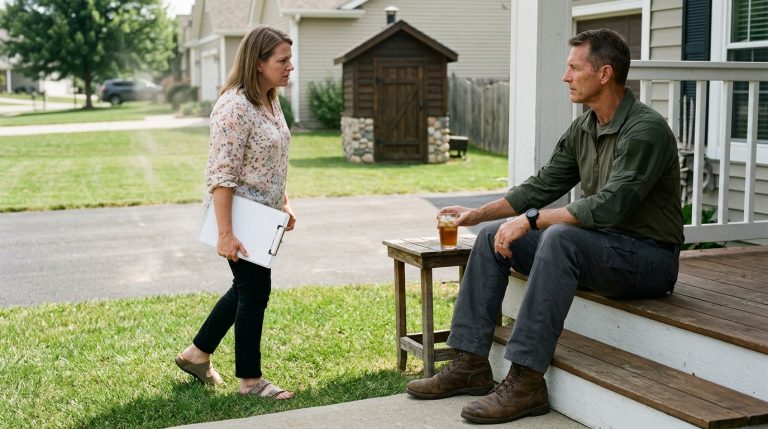
Two weeks later, I stood on the porch with a cup of coffee. The morning was clear, the sky a brilliant, unblemished blue. I heard the familiar, heavy groan of the Allied Waste truck. Gus, the driver, pulled to a stop at the mouth of my road. He didn’t just drive past; he slowed the behemoth, gave me a long, slow wave, and then let out a single, triumphant blast of the air horn.
I smiled, a genuine, tired, and quiet movement of my face, and lifted my mug in response. I looked down at the gravel road. The surface was still, sturdy, and true. It had held. I walked back into the house and went to the office. I opened the field journal, turned to the final blank page, and wrote three words: Resolution of conflict.
I closed the book, the leather cover soft and worn under my touch. Then, I walked to the kitchen and found the small wooden birdhouse Sarah had been meaning to fix—one of the ones that had been knocked over during the heat of the standoff. I sat at the table, pulled out the wood glue and a set of clamps, and began to work. It was a simple task, repetitive and grounded. As I clamped the pieces together, I felt the last of the adrenaline bleed away, replaced by a deep, resonant calm. The house was quiet, the road was safe, and for the first time in years, the only orders I had to follow were the ones I gave myself.