A Legacy Forged in Smoke: How One Retired Sergeant Major Dismantled a Suburban Tyrant’s Empire
CHAPTER 1: The First Salvo
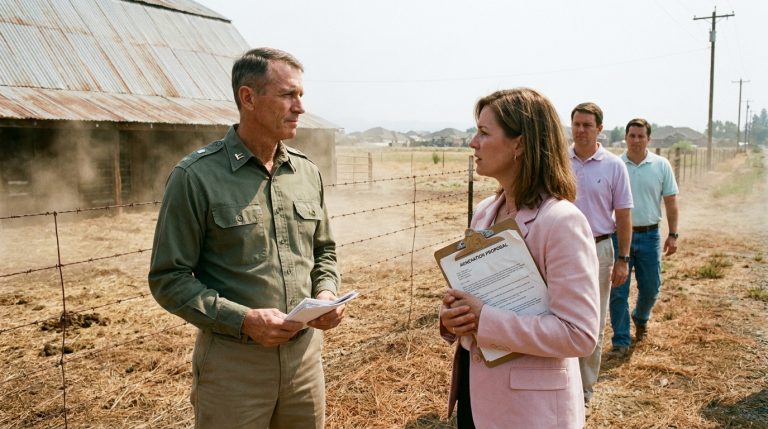
Your little hobby shed is a public nuisance and a fire hazard, Mr. Callahan. I’m having it condemned. Consider this your final warning.
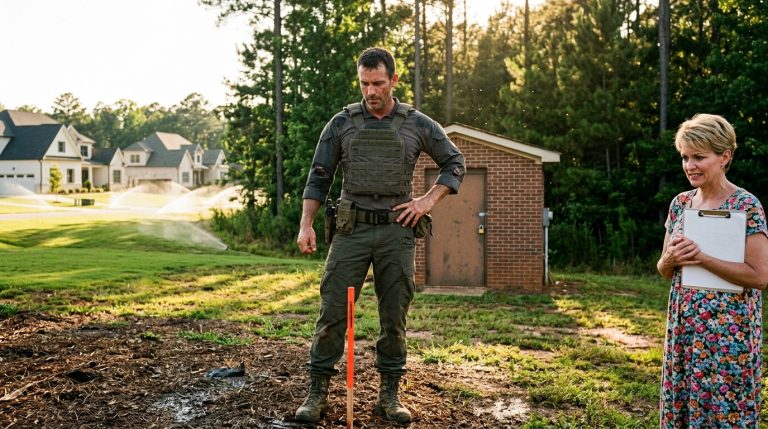
The words didn’t cut; they grated, sharp and ugly, like shrapnel against the stillness of the afternoon. I didn’t look at her face right away. I looked at the clipboard clutched to her chest—a plastic ballistic plate meant to shield her from the reality of an actual neighbor. She stood on the edge of the grass, a queen of a jurisdiction she barely understood, her finger jabbed toward the back of my property.
I sat on the porch, the iced tea in my hand still sweating against the late-summer heat. My smokehouse sat a hundred yards away, a handsome structure of dark-stained cedar and riverstone. To her, it was a violation of section 4, subsection B, paragraph 7. To me, it was the only thing standing between me and the quiet, hollowed-out grief of the house behind me.
Karen’s weight shifted, her orthopedic sandals sinking slightly into the turf. She expected a stammer, a plea for leniency, the panicked shuffle of a man who didn’t know the rules. She didn’t know she was looking at a man who had spent thirty years watching the architecture of command and control shift in places much less forgiving than Willow Creek Estates.
I took a slow, deliberate sip of my tea. The silence stretched. In the service, the first person to break the silence in a confrontation was the one who had already lost the high ground. I watched her eyes—small, hard, and desperate for the validation of an immediate submission. Her grip on the clipboard tightened until the plastic groaned.
Did you hear me, Mr. Callahan? she pressed, the pitch of her voice climbing, losing its veneer of bureaucratic poise. The board has voted. The fines start tomorrow. Fifty dollars a day. If it’s not demolished in thirty days, we place a lien on your property and hire our own contractor. You’ll be billed for the demolition, of course.
She was going for the jugular, believing that financial terror was the final word in any argument. She was painting a target on her own back, and she didn’t even have the tactical sense to notice the crosshairs.
I finally set the glass down on the wooden side table. The sound was quiet, but in the tension of the afternoon, it seemed to ring out like a dropped casing.
I heard you, Karen, I said, my voice leveled and steady. And you can tell the board they voted on bad intelligence.
Her face soured, the smug certainty curdling into something hotter, more jagged. That’s President Miller to you, she snapped. And this isn’t a debate.
She turned on her heel, her floral fabric fluttering as she marched back toward her own perfectly curated, soulless house. I didn’t watch her leave. I looked past her, toward the smokehouse, and felt the familiar, cold focus settle into my chest. The objective was defined. The enemy had declared war. And she had absolutely no idea who she was fighting.
CHAPTER 2: The War Room
The envelope was thick, heavy with the weight of bureaucratic malice. I didn’t open it on the porch. I carried it inside to the heavy oak dining table that Sarah and I had salvaged from an antique store two decades ago. That table had held everything from holiday feasts to the strategic battle plans of my career. Now, it was my war room.
I sat down, the air conditioning humming a steady, rhythmic counterpoint to the thumping of my own pulse. I took a letter opener shaped like a cavalry sword—a gift from my final command—and sliced through the seal.
Inside was a sheet of high-gloss paper, professionally printed and dripping with condescension. It was a masterpiece of petty tyranny, signed with Karen’s loopy, ostentatious signature. She had restated every threat: the demolition, the liens, the calculated fines. Behind the cover letter were the violation notices, each on a separate, crisp page.
Violation number one: unapproved detached structure. Violation number two: nuisance smoke and odor. Violation number three: improper commercial activity in a residential zone.
The third one was the most dangerous. It was a clear attempt to bypass the neighborhood rules and force the hand of municipal authorities. If she could prove I was running a business, she wouldn’t just be a neighbor with a clipboard; she would be a whistleblower to the city. The total initial fine was five hundred dollars, with a daily penalty of fifty. She was betting on a classic shock-and-awe campaign. She expected me to see the numbers, panic at the mention of the city, and dismantle the smokehouse before the next sunset.
She bet on a man who had spent thirty years learning how to read the terrain.
I reached for the thick file folder I kept in the top drawer of my cabinet—the repository of my closing documents. I unrolled the original 1956 plat survey, a hand-drawn map of the property from before Willow Creek Estates was a twinkle in a developer’s eye. There, in the faint, precise ink of a draftsman from another era, was the rectangular outline of an outbuilding exactly where my smokehouse now stood.
Then, I pulled out the HOA covenants and bylaws. Karen used them as a sword; I used them as a field manual. I didn’t skim. I combed through every line, every footnote, every appendix. I was looking for the structural flaw in her palace of rules.
I found it buried in the back, in the section on formation and annexation.
Clause G.
The blood in my veins cooled, the focus sharpening into a single, crystalline point. The property had been annexed into the HOA in 2005. Clause G explicitly stated that any pre-existing structures on annexed properties were grandfathered in—provided they maintained their original footprint—and were entirely exempt from the architectural review process that Karen was currently wielding as a cudgel.
I leaned back in my chair, the silence of the house pressing in. The smokehouse sat on that exact, historical footprint. My grandfather had taught me to smoke meat, but the Army had taught me to document, to verify, and to wait for the exact moment the enemy overextended.
I didn’t rush to my phone. I didn’t call her. Instead, I opened my laptop and began to draft the response. It was not a letter of apology, and it was not a plea for peace. It was a legal counteroffensive, precise and devastatingly calm. I addressed every point, citing the 1956 plat, the 2005 annexation agreement, and the explicit text of the bylaws.
For the nuisance odor, I pulled my logbook—a meticulous, real-time record of every smoke I had ever conducted. I cross-referenced the dates she claimed were offensive against the weather reports and my own calendar. Two of the dates listed were when the smokehouse had been cold and empty. The third was a Tuesday when I had been in the city for a VA appointment, a fact I backed up with a digitized copy of my attendance slip.
The complaints were not just petty; they were provably false.
I printed the document, then made two copies. One for my records, one to send certified mail, and one for hand-delivery. I spent the rest of the afternoon gathering the evidence, taping receipts and maps into the packet until it had the weight of an iron anvil.
When I finished, I sat in the dim light of the dining room and watched the sun dip behind the oaks. Karen was waiting for a call, for an excuse, for a crack in my resolve. She would be waiting a long time. The game had shifted from a porch-side spat to a war of attrition, and she had just handed me the one thing I needed to dismantle her: a paper trail that led directly to her own incompetence.
The letter was ready. Tomorrow, I would walk it into the HOA’s soulless office park and hand it to whoever was sitting at the front desk. I would get my timestamped receipt, and then I would go home and wait for the ripple effect to reach her desk. The smokehouse was safe, but the real task had only just begun. I had to ensure that the person wielding that clipboard wouldn’t be able to pick it up again by the time this was over.
I took one last look at the plat survey, the old lines representing a truth that existed long before Karen’s vision of perfection, and felt a strange, quiet satisfaction. She thought she was building a legacy of order. She was actually building the platform for her own collapse.
CHAPTER 3: The Foot Soldiers
The office park was a sterile monument to mid-level management. It was a landscape of gray carpet, humming fluorescent lights, and the faint, recycled scent of artificial lemon—a world designed to suffocate any real emotion. I walked in at 10:15 a.m., my posture stiff, my movements measured. I wasn’t there to make friends; I was there to close a tactical loop.
The young woman at the front desk looked up, her expression a mix of practiced boredom and latent anxiety. She wore a badge that identified her as a junior administrative coordinator, a role that surely placed her in the direct line of fire whenever Karen felt like venting her frustrations. I didn’t smile. I placed the packet on the desk with a controlled, firm movement.
This is a formal response to the violation notice for 112 Willow Creek Lane, I said, my voice cutting through the ambient hum of the office. I need a timestamped receipt confirming your receipt of these documents.
She blinked, her eyes darting to the thickness of the envelope. She reached out, then hesitated, her fingers hovering over the paper as if it might burn her. She fumbled with a date stamp, her hand shaking just enough to betray her discomfort. The thud of the stamp meeting the ink pad was resonant, a small, final sound of defiance. 10:15 a.m., August 14th.
The clock was theirs, but the game was now mine.
I left the office, the cool air of the morning hitting me with a clarity that felt like a relief. I drove back to Willow Creek in silence, the engine of my truck humming a steady, grounding note. Karen wouldn’t take the news of my rejection lying down. She was a woman who equated control with existence, and by proving her rules didn’t apply to my property, I hadn’t just challenged her authority—I had threatened her reality.
The harassment began with the subtle shift of a lens.
That afternoon, I was in the back yard, checking the integrity of my smokehouse. The cedar planks were solid, the riverstone cool to the touch. It was a structure of peace, built to hold the scent of hickory and oak, not the stench of suburban spite. I was running a damp cloth over the stainless steel when I saw it: movement at the edge of the adjacent property line.
A white Ford F-150 was idling near the boundary. It bore the logo of the ‘Willow Creek Beautification Committee,’ a fancy label for the lawn service company Karen had hired to keep the neighborhood in lockstep. The driver wasn’t mowing, and he wasn’t trimming. He was standing by the tailgate, his phone raised, his focus trained directly on my smokehouse.
I didn’t storm over to the fence. I didn’t shout. I went inside and walked to my office, the room that Sarah and I had once called our ‘war room.’ I pulled a pair of high-powered binoculars from the top shelf and returned to the patio.
The man was still there. I braced my elbows against the porch railing and focused the glass. His face came into sharp relief—he was young, tired, and deeply uncomfortable, his jaw clenched as he manipulated the camera on his phone. He wasn’t a professional investigator; he was just another person caught in the wake of Karen’s vendetta.
I kept my movements fluid and slow, a habit ingrained from years of field operations. I retrieved a small, leather-bound notebook and a pen. I didn’t need to be loud to make an impact. I watched him take three distinct photos of the chimney, then shift his angle to capture the stone foundation. I noted the time: 14:30. I recorded the license plate: KFN-377. I noted the color and model of the truck.
He was watching me watch him, but he was too invested in his mission to stop. When I finally stood, the notebook open in my hand, he saw me. He didn’t see a retired man on a porch; he saw someone who was documenting his every move with the cold precision of an auditor.
The look on his face changed instantly. The professional indifference vanished, replaced by a profound, gnawing unease. He lowered the phone, not quickly, but with a sudden, clumsy motion, and scrambled into the driver’s seat. The engine roared, a jagged, aggressive sound that betrayed his panic, and he backed out of the lot, his tires spinning on the dry earth.
I didn’t stop watching until he had disappeared around the corner. I closed the notebook and set it on the table. This was the pattern. She wouldn’t come for me herself; she would use foot soldiers, cheap labor she could leverage or intimidate, hoping they would be the ones to get their hands dirty.
I looked at the smokehouse again. It stood, silent and grounded, against the backdrop of the trees. It wasn’t just a building. It was an anchor. My grandfather had told me once that if you put enough work into something, the structure itself begins to hold the memory of your effort. It becomes harder to tear down because it has weight.
I went inside, my thoughts turning to Emily. She was in the kitchen, the soft clatter of silverware signaling a normalcy that felt like it belonged to another lifetime. I stood in the doorway for a moment, watching her. She had been the balm to my soul after Sarah, a teacher who believed in the inherent goodness of the world. She didn’t deserve to be dragged into this.
Jack? She looked up, her expression softening into the concern that had been haunting her features for weeks. You’re quiet today.
I walked over and put my arm around her, the weight of the day pressing into my shoulders. It’s just the HOA, I said, keeping my voice steady. They’re still looking for problems.
She sighed, a sound of gentle resignation. I don’t like it, Jack. She looks at you like you’ve stolen something from her.
I thought about the man in the white truck, the photos he’d taken, and the way the board had weaponized the bylaws. She thinks she owns the air we breathe, I thought, but I didn’t say it aloud. I just held her, the sharp, cold clarity of the situation settling into my bones. The war was no longer an abstract threat. It was on my porch, it was in my yard, and it was demanding a resolution. I knew what I had to do next, but for now, I would hold onto the peace of the kitchen, because the next phase would require everything I had.
CHAPTER 4: The Inspection
The vehicles were impossible to miss—a white Ford Explorer with the stark county seal, followed immediately by a heavy, red Chevy Tahoe that carried the authoritative weight of the Fire Marshal. They pulled in side by side, blocking the view of the street, a coordinated show of force that turned my morning coffee into an exercise in restraint.
I set the mug down on the porch railing, the ceramic clicking against the wood with a deliberate, steady sound. I didn’t rush. I didn’t panic. I stood up, buttoned my shirt, and walked down the steps. I had been expecting this. Karen was a creature of escalating desperation; when the petty notices and the lawn service spies failed to break me, she would naturally reach for the heavy hand of the state.
From the Explorer, a woman emerged—crisp, efficient, clutching a tablet as if it were a weapon. From the Tahoe, a man stepped out who looked as though he had been carved out of granite. He wore the uniform of a Fire Chief with the ease of a man who had spent decades enforcing the physics of safety.
I didn’t wait for them to reach the porch. I met them halfway, my hands visible, my posture relaxed but alert.
Morning, I said, my voice pitched for calm, not confrontation. I’m Jack Callahan. I assume you’re here about the smokehouse.
The Fire Marshal, a man with a gray mustache that looked like it had seen every kind of disaster, offered a grip that was entirely devoid of pretense. Chief Evans, he said, his voice a low rumble. And this is Miss Rodriguez from the Health Department. We’ve received a multi-page complaint regarding this address, Mr. Callahan. Allegations of an unpermitted commercial food operation and significant fire hazards.
He didn’t need to name the source. The smell of Karen’s influence was all over the paperwork he held.
I gestured toward the back of the property, where the smokehouse stood—a handsome, unassuming structure of dark-stained cedar. I’ve got nothing to hide, Chief. The coffee is fresh. If you’d like a cup once you’ve seen the facility, it would be my pleasure.
We walked along the stone path, the morning dew still clinging to the grass. As we moved, I didn’t wait for them to ask questions; I started the briefing. I spoke with the cadence of an NCO explaining a position to a command officer.
The structure is built on a six-inch reinforced concrete slab, I said, my hand indicating the foundation. It rests on the original footprint of an outbuilding that’s been here since 1956. The walls are double-layered: cedar exterior, fire-retardant insulation, and a sixteen-gauge stainless steel interior, all precision-sealed. The wiring is in metal conduit, and the sub-panel is isolated with GFCI breakers.
Miss Rodriguez was already tapping notes into her tablet, her eyebrows knitting together in surprise as she inspected the seams. Chief Evans reached out and ran a hand along the riverstone, then checked the clearance of the chimney. He was looking for the cracks in the armor, the hidden risks that a homeowner might try to mask.
I unlocked the insulated steel door and swung it open. The smell of cold ash and cured wood drifted out—a clean, sharp scent that had nothing to do with commercial waste.
This is the main chamber, I said. The firebox is quarter-inch plate steel, offset for indirect heat. It’s vented to ensure no flare-ups.
Miss Rodriguez stepped inside, her flashlight beam dancing over the prep tables. She didn’t find grease. She found surfaces that were cleaner than the ones I’d seen in most high-end restaurants. She turned to the rack of analog and digital gauges on the wall.
You keep records? she asked.
I pulled a thick binder from the shelf. Every smoke, every temperature reading, every cleaning cycle. I treat the food safety as if the health inspector were sitting at my table every single night.
She flipped through the pages, the silence in the room stretching as she realized the level of rigor I maintained. Chief Evans, meanwhile, was inspecting the ventilation. He pointed to the stainless steel hood, his eyes narrowing as he analyzed the integration.
Is this commercial-grade? he asked.
It’s an Ansel R102 fire suppression system, I replied. Nozzles over the firebox and the chamber. It’s overkill for a hobbyist, but I’ve been around enough accidents to know that minimum safety standards are just the starting point.
The Chief stood there for a long moment, the tablet in his hand forgotten. He looked at me, then at the smokehouse, and a slow, almost appreciative smile touched his face.
You built this yourself?
I served thirty years in the Army, Chief. You learn how to build things to last.
He let out a short, sharp laugh. I’m not sure what Miss Miller’s complaint was aiming for, but this is one of the most compliant structures I’ve ever seen. You’ll have a clean report by the end of the day.
Miss Rodriguez closed her tablet and looked at me, her expression professional but softened by genuine respect. I see no evidence of a business here, Mr. Callahan. No sales, no traffic, no menu. As far as the health department is concerned, this is a private sanctuary.
They walked back toward the vehicles, the Chief pulling a notebook from his pocket to start the final write-up. I stood there, watching them, the weight of the last three months beginning to shift. They hadn’t just cleared me; they had provided the silver bullets.
I asked for the signed copies—not because I needed them to sleep, but because I needed them to win. Karen had tried to weaponize the state, and in her arrogance, she had handed me the evidence that she was a liar. I walked back to my porch, the morning sun now fully over the trees, and felt a strange sense of clarity. The game wasn’t about the smokehouse anymore. It was about the exposure of the person who had been trying to burn it down.
CHAPTER 5: The Alliance
The dining room table was buried under a landscape of paper. It was a mosaic of Karen’s reign—violation notices, threatening letters, grainy photos taken by the lawn service spies, and the cold, unassailable legitimacy of the two county reports. The air in the room felt thin, charged with the kind of static that precedes a lightning strike.
Dave, the IT guy from two doors down, sat at the edge of his chair, his accordion file open before him. Mrs. Gable was seated across from him, her hands trembling as she smoothed out a document that looked like it had been folded and refolded a thousand times. There were others, too—families who had lived in the shadow of Karen’s whims for too long, their expressions a fragile mixture of desperation and dawning, dangerous hope.
I stood at the head of the table, the fire marshal’s report weighted down by a heavy brass paperweight.
“She rules by fear,” I said, my voice low and rhythmic, cutting through the murmurs. “She treats each of us as a singular problem, an isolated incident to be managed. She wants us to believe that if we just comply, if we just keep our heads down and our lawn gnomes within the approved aesthetic, the storm will pass.”
I looked at Mrs. Gable, whose eyes were fixed on the document detailing the removal of her rose bushes. “She didn’t just want to control the landscaping. She wanted to control the cost of our peace.”
Dave leaned forward, his knuckles white against the edge of the mahogany. “She fined me five grand, Jack. For a basketball hoop that was approved by the previous board. She didn’t even check the records. She just told me the old approval was ‘invalid’ under her administration. It was a shakedown, plain and simple.”
The room hummed with a sudden, collective bitterness. These weren’t just neighbors anymore; they were a constituency of the aggrieved. They had been paying their dues, following the bylaws, and keeping the peace, only to be met with an administrative machine that viewed them as profit centers rather than stakeholders.
“I’ve spent the week documenting the pattern,” I said, my movements precise as I shuffled the documents into a stack. “I’ve mapped her movements, her communications, and the contradictions in her enforcement. But a map doesn’t win a war. We need a leverage point.”
I reached into the center of the table and slid the two county reports forward.
“She didn’t just try to fine me. She tried to bring the county in to condemn my property. She called the Health Department and the Fire Marshal, hoping they would be the ones to wield the axe for her. She didn’t just fail; she provided me with an official certification that her claims were malicious. She signed the death warrant of her own credibility.”
A stunned silence settled over the dining room. Marcus, the attorney, sat in the shadows at the far end of the table, his briefcase open. He had been quiet until now, his presence a stabilizing weight. He caught my eye and gave a nearly imperceptible nod.
“What she doesn’t know,” I continued, “is that her crowning achievement—the Founders Day fundraiser—is built on a foundation of my work. She’s selling tickets for a gourmet barbecue that she thinks is being sourced by a ‘specialty purveyor’ through the butcher shop. She’s selling the myth of a community triumph, all while trying to destroy the source of it.”
Dave let out a short, incredulous laugh. “So, you’re the ‘specialty purveyor’?”
“I am,” I said, my voice sharpening. “And the association is currently invoicing for the labor, the meat, and the smoking process. We have her fingerprints on the receipt for the very thing she’s accusing me of. The moment we expose the hypocrisy, her moral authority to lead this board evaporates.”
Mrs. Gable looked up, her gaze clearing. “It isn’t just about the money, Jack. It’s about the cruelty. She wanted us to feel small. She wanted us to feel like we were guests in our own homes.”
“Then we stop acting like guests,” I said. “We act like the owners we are.”
Marcus stood up, his leather briefcase clicking as he latched it shut. “I have drafted a formal petition for the recall of the President. To trigger an emergency meeting, we need twenty percent of the homeowners to sign. That’s thirty signatures.”
I looked around the room, meeting the eyes of every person there. There were twelve of them. If each of them could bring in two or three more, we would have the quorum by the end of the weekend.
“We don’t do this loudly,” I cautioned. “We don’t post it on the community forums, and we don’t tip our hand to Gerald or any of her other acolytes. We move quietly. We document everything. We show them the evidence, and we offer them a way out of the fear.”
As they began to sign, the atmosphere in the room shifted. It wasn’t the fearful, cramped tension of a complaint meeting anymore. It was the calculated, focused energy of a command center. I felt the sharp, cold edge of the planning, the way the pieces were slotting together into a movement that Karen would never see coming until it was far too late to stop.
I looked toward the back of the room, toward the window that gave a view of my backyard. The smokehouse sat there, bathed in the moonlight, a silent sentinel that had witnessed the start of this, and would be there when it was over. For a fleeting second, the phantom scent of Sarah’s roses—the ones Mrs. Gable had lost—seemed to drift through the room, a reminder of the human cost that Karen had dismissed as ‘unapproved foliage.’
It was a sharp, biting phantom, but I pushed it down. There was no room for ghosts in this operation, only for the cold, hard, and undeniably true record of a tyrant’s decline. By the time the last person signed the petition and slipped out into the night, I knew the board had already lost. They just hadn’t received the memo yet.
CHAPTER 6: The Floor is Open
The fluorescent lights of the community center were a harsh, unblinking glare, casting long, sharp shadows against the linoleum. It was Tuesday, the night of the monthly HOA meeting, and the room was filled with a tension so thick it felt like the air itself had been stripped of oxygen.
I walked in at 6:55 p.m., my briefcase heavy with the recall petition and the supporting evidence. I didn’t sit in the front. I moved to the back, my eyes scanning the room. Dave was already there, positioned near the side exit; Mrs. Gable sat in the third row, her handbag clutched to her chest. We were scattered, a tactical formation designed to blanket the room before the meeting began.
At the front of the room, Karen Miller sat on the dais. She held her gavel like a weapon, her posture rigid, her eyes sweeping over the residents with that familiar, predatory confidence. She looked like a queen who had never once contemplated the possibility of a coup. She opened the meeting with a series of mind-numbing administrative tasks: the nuances of mailbox finishes, the legislative debate over permitted garden gnomes, and the bureaucratic scheduling of the upcoming Founders Day event.
I watched her, marveling at the sheer insulation her arrogance provided. She was so convinced of her position that she didn’t even notice the shift in the room’s frequency. The residents weren’t nodding along anymore; they were watching her with a quiet, observant intensity that felt like a coiled spring.
“And that brings us to item three,” Karen announced, her voice dripping with a practiced, weary magnanimity. “The open forum for community feedback. Please keep your comments brief.”
She expected a request for a stop sign or a complaint about a neighbor’s overgrown hedge. She didn’t expect me to stand.
The chair scraped against the floor, a sound that seemed to echo in the sudden vacuum of noise. I stood, my suit jacket buttoned, my briefcase held at my side. Every eye in the room turned toward me, a slow, synchronized movement. Karen’s smile tightened, her jaw locking. She recognized the threat even before I spoke.
“Madame President,” I said, my voice cutting through the space with the deliberate clarity of a command. “Jack Callahan, 112 Willow Creek Lane. I have a point of order regarding the Founders Day fundraiser and a matter of urgent concern regarding the board’s fiduciary conduct.”
Karen’s face drained of color, then flashed a brilliant, blotchy red. She gripped her gavel until her knuckles went white. “Mr. Callahan, the fundraiser is not open for debate. If you have a grievance, you may submit it to the administrative office in writing. You are out of order.”
I didn’t sit down. I didn’t raise my voice. I stayed planted, my presence forcing the room to wait for my next move.
“Is it out of order to discuss the misuse of community funds?” I asked, the question hanging in the air like a blade. “I have here the official reports from the County Fire Marshal and the Health Department regarding my property. Both of them confirm that the complaints filed against me were not only baseless, but demonstrably false. And since those complaints were filed by this board—using our dues to pay for official investigations—I think the community has a right to know why their money was used to settle a personal vendetta.”
The room erupted. It wasn’t the polite murmuring of a standard meeting; it was the raw, guttural sound of an alliance finding its voice.
“You are out of order!” Karen screamed, her gavel coming down with a violent, jarring crack that sounded like breaking bone. “This is slander! I am adjourning this meeting!”
But as she reached for her chair, the side door opened, and Gerald—her vice president, the nervous man who usually sat by her side like a shadow—stepped in. He didn’t look at her. He looked at the floor, his face pale, and he sat down in the third row, right next to Mrs. Gable. The abandonment was visceral.
Dave stood up from the other side of the room, his folder held high. “She fined me five thousand dollars for a basketball hoop that was already approved! Where did that money go, Karen?”
Then Mrs. Gable stood. “She made me tear out my husband’s roses because they weren’t on an ‘approved foliage list.’ We’re tired of the cruelty!”
The room was no longer hers. The dais was no longer a throne; it was a cage. I watched Karen, her frantic eyes darting from person to person, her reality shattering in real-time. She had spent months trying to build a fortress of bylaws and petty enforcement, but she had failed to account for the one variable that always dismantles a tyrant: the collective realization that they were no longer afraid.
I didn’t move toward her. I didn’t need to. I let the people she had bullied reclaim the space. As the anger surged around her, I reached for my briefcase, ready to introduce the next piece of the puzzle—the petition that would strip her of her badge of office, and the revelation about the barbecue that would turn her pride and joy into her public humiliation. The tension in the room was no longer static; it was kinetic, a force waiting to be released.
CHAPTER 7: The Checkmate
The room had fallen into a silence so profound it felt heavy, a physical pressure against my eardrums. Karen Miller sat at the head of the dais, the gavel still gripped in her hand, but it was now a useless piece of wood. She looked smaller, her face a pale, blotchy map of humiliation and dawning realization. The people who had feared her for months were now standing, their eyes fixed on her with a cold, unforgiving clarity.
Marcus, the attorney, moved with the measured confidence of a man who had already won the trial before stepping into the courtroom. He walked down the center aisle, the heels of his shoes clicking rhythmically against the floor, and placed a clean, stapled document on the dais directly in front of her.
“Karen Miller,” he said, his voice a steady, authoritative baritone that filled the room. “Pursuant to the association’s bylaws, I am serving you with a petition signed by forty-seven homeowners. We have officially met the threshold for an emergency recall vote. You are stripped of your decision-making authority effective immediately.”
Karen stared at the paper. She didn’t touch it. She looked at it as if it were a venomous creature that had just crawled onto her desk. The board members flanking her—Gerald, the nervous vice president, and two others—shifted away from her, a physical manifestation of the political divorce now taking place.
I stepped forward, keeping my movements deliberate. I didn’t want to relish the win; I wanted to ensure the closure was absolute.
“There’s one more thing,” I said, my voice cutting through the remaining murmurs. I reached into my briefcase and produced the printed invoice from Gus’s butcher shop. I walked up to the dais and laid it beside the petition.
“This is the order for the Founders Day barbecue,” I said, pointing to the specific line item at the bottom. “Note the itemization. ‘Specialty service: 14-hour oak and hickory wood smoking.’ This isn’t just meat. It’s an invoice for the very commercial service the board spent community funds to label as a ‘violation’ at my address.”
I looked at the treasurer, Howard, who had been sitting in the back, his face a mask of calculated fury. “Howard, I believe this is the ‘evidence’ you needed for your audit. You’ll find the payment originated from the HOA’s event budget, authorized by a signature from the President’s office.”
The room let out a collective, sharp intake of breath. The irony wasn’t just palpable; it was a weapon. The very foundation of the fundraiser—the mystery barbecue that was supposed to represent the pinnacle of Karen’s leadership—was the smoking gun. She had been paying the ‘criminal’ she was trying to destroy to feed the very people she was trying to impress.
Karen looked up at me, her eyes wide, glassy with a mix of shock and pure, unadulterated hatred. “You set this up,” she whispered.
“No,” I replied, my tone flat, devoid of satisfaction. “I just continued to do exactly what I’ve always done. You were the one who made it into a war. You were the one who insisted on investigating, filing, and litigating your way into your own trap.”
The treasurer stood, his face set in stone. “This audit starts tonight,” Howard declared, his voice echoing off the high ceiling. “Every receipt, every consultant fee, every private investigator invoice—we are going to reconcile every penny.”
I turned away from the dais, the objective accomplished. As I walked back through the rows of people, they parted to let me through. There was no cheering, only a profound, relieved stillness. They had taken back their community not with violence, but with the ruthless, surgical application of the truth.
I reached the double doors and pushed them open. The cold night air hit my face, refreshing and clean. Behind me, I could hear the room beginning to buzz again, but it was a different sound now—the sound of people starting the long, necessary work of repair.
I stopped on the sidewalk and looked back one last time. The light from the community center spilled out onto the parking lot, casting a path for those leaving. I felt a weight lift from my shoulders, a sudden, surprising lightness that I hadn’t realized I was carrying. The smokehouse was safe. But more importantly, the community had learned how to defend its own integrity. I didn’t need to stay for the final gavel. The checkmate was already complete.
CHAPTER 8: The Aftermath
The weeks that followed the meeting were a study in the slow, grinding physics of accountability. The forensic audit initiated by Howard was not a polite inquiry; it was a deep-tissue excavation of every transaction, every legal retainer, and every petty expense that had characterized Karen’s administration. By the end of the month, the truth was laid bare in a report so comprehensive it felt like a surgical chart.
Karen had not just been petty; she had been systematic. The misappropriation of funds had been masked as ‘consultant fees’—payments made to the very private investigators who had been tracking my smokehouse and harassing families like Dave’s and Mrs. Gable’s. It was a closed loop of malice, funded by the very people who were being targeted.
The aftermath was swift. Karen and her husband paid back the ten thousand dollars in misappropriated funds to avoid the looming specter of the HOA’s civil suit, and they listed their house for sale before the first ‘for sale’ sign even hit the pavement. They couldn’t survive the loss of their status, and they certainly couldn’t survive the silent, pointed looks of neighbors who now saw them not as leaders, but as disgraced pretenders.
I sat on my porch on a Saturday morning, the air thick with the smell of hickory. It was the day of the first annual Willow Creek Community Cookout. It wasn’t a stiff, catered affair; it was a potluck, a messy, joyful, organic gathering of people who were finally, truly meeting one another.
Dave was manning a grill near the community green space, his young son running loops around him with a soccer ball. Mrs. Gable sat at a folding table, a spread of her apple pies laid out like a peace offering. She walked over to the porch while I was tending the smokehouse, her steps lighter than they had been in months.
She held a small, potted rose bush in her hands.
“For your garden, Jack,” she said, her eyes bright and clear. “I’ve started replanting the fence line. Robert would have liked you.”
I took the plant, feeling the weight of the ceramic pot and the fragile life within it. “Thank you, Mrs. Gable. I’ll make sure it finds a good home.”
Marcus arrived an hour later, his family in tow. He leaned against the porch railing, looking out over the crowd. “In all my years of practice, Jack,” he said, his voice unusually soft, “this is the most satisfying victory I’ve ever seen. You didn’t just win the case; you dismantled the system that allowed it to thrive.”
“I just wanted to use my own property in peace,” I said, though even as I said it, I knew the reality was deeper. I had reclaimed my own agency, and in the process, I had helped an entire community do the same.
As the sun began to dip toward the horizon, the community held an impromptu vote. They wanted me to serve as the interim president—not because they wanted more rules, but because they needed someone to dismantle the ones that didn’t matter. They wanted the ambiguity stripped away, the petty grievances silenced, and the focus returned to what was actual: safety, infrastructure, and the right to live without the threat of a looming clipboard.
I accepted, provided that the tenure was temporary and the first order of business was the formal, permanent repeal of the board’s ability to levy arbitrary fines.
By sunset, the cookout was beginning to wind down. The scent of barbecue—the real, slow-smoked kind—lingered in the air, no longer a point of contention but a communal thread. I walked back to my smokehouse, the structure that had survived the storm and emerged, if anything, stronger. I took a wrench from my workbench and tightened the hinges on the heavy steel door, the physical act of maintenance grounding me.
I stood there for a long time, watching the shadows stretch across the lawn. The smoke curled up from the chimney, a gentle, gray plume that blended into the twilight. It was a beacon now, a symbol of a hard-won peace. I thought of Sarah, of the years I had spent building this place as a sanctuary for my own grief, and realized that it had become something else entirely. It was no longer just a place to hide from the world; it was a part of the world I lived in, a part I had fought to keep.
Emily walked up behind me and rested a hand on my back. She didn’t say anything, but she didn’t need to. The silence wasn’t empty anymore; it was full, resonant with the knowledge that the tyrant was gone, the board was audited, and the neighborhood—my home—was finally, truly, ours again. I looked down at the rose bush Mrs. Gable had given me, then at the smokehouse, and finally at the quiet, happy scene on the green. For the first time in a very long time, the weight in my chest was gone, replaced by the simple, steady pulse of a life lived in accordance with my own choices.