The Iron Fence and the Dusty Ledger: How a Retired Engineer Dismantled an HOA Empire
CHAPTER 1: THE NOTICE AT THE WIRE
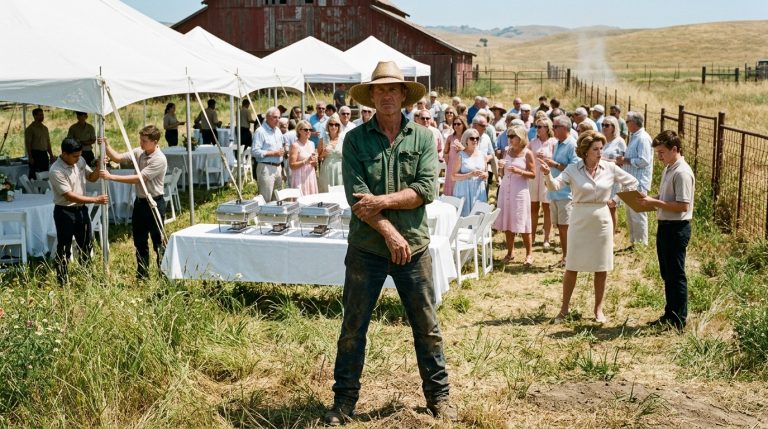
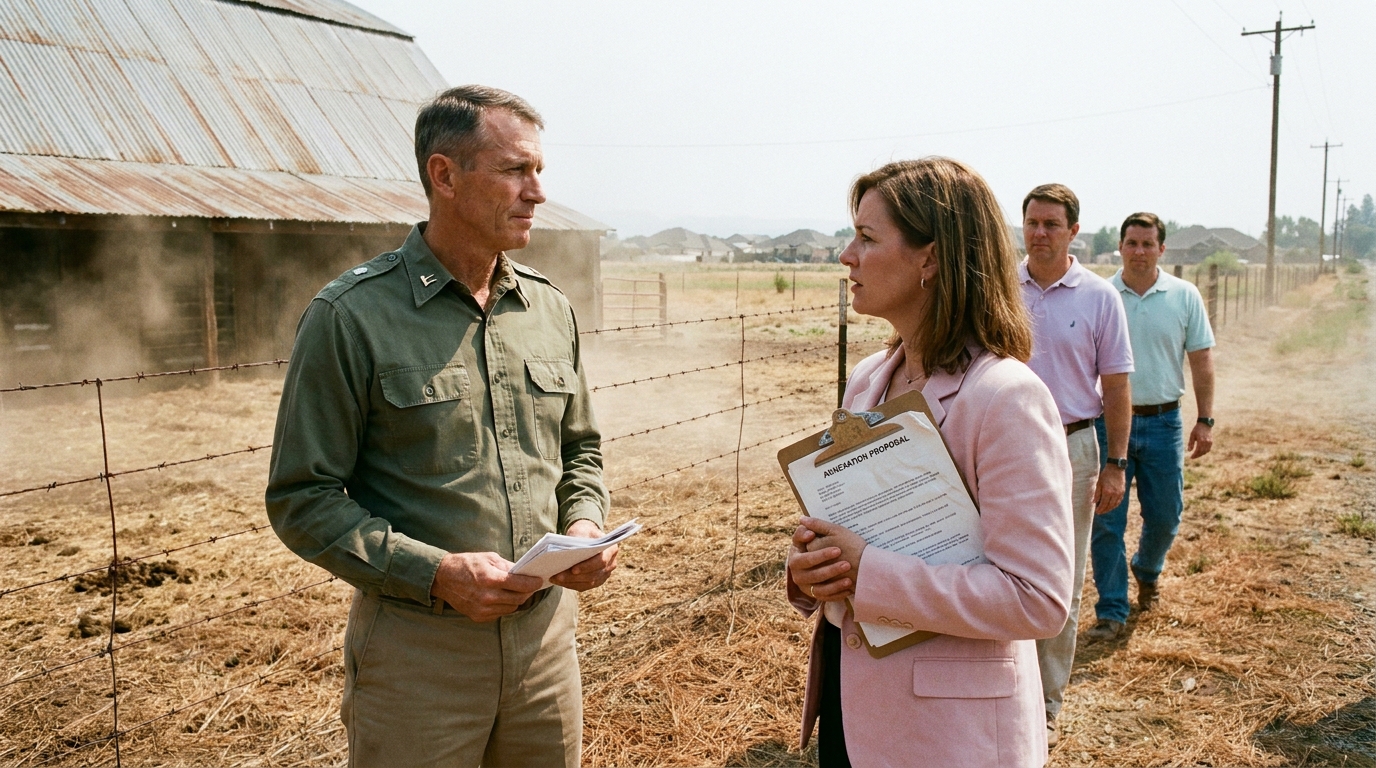
The metal click of the four-strand wire rattling under a sudden grip was the only warning I got. I dropped my grease rag onto the workbench and wiped my palms on my jeans, stepping out of the shade of the old barn just as the pastel pink blur huffed into view. She held a clipboard like it was a scepter, her face pinched against the dust of my family’s road.
“Your grandfather’s handshake is worthless, Colonel,” she snapped, shoving a thick packet through the rusted gaps in the fence.
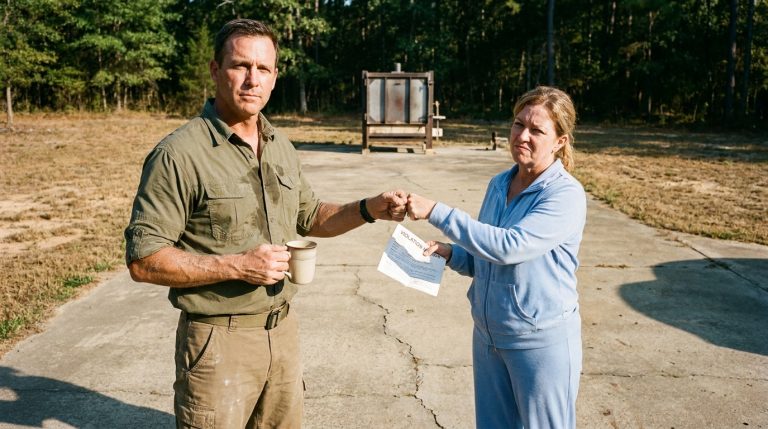
I looked down at the gaudy clip-on pinery logo at the top of the page. The total scrawled in bold red ink at the bottom was fifty-two thousand, eight hundred and forty dollars and seventeen cents. My breathing stayed even, measured by decades of bridge-building over fast water where panicking only got men drowned. I didn’t raise my voice, and I didn’t reach for the wire.
“You’re mistaken,” I said, my tone flat enough to skim ice. “This property has never belonged to any association. The deed goes back a century.”
She let out a sharp, barking laugh that smelled of hairspray and high-end retail. “The board voted to annex the undeveloped parcel for green space management, and that’s you. Pay up by the end of the week, or we place a lien on the land.”
She spun on her heel and marched back toward the manicured lawns of Whispering Pines, her two sycophantic board members trailing in her wake like obedient ducklings. I pulled the papers out from the wire, folded them once with methodical slowness, and slid them into my back pocket. The sun beat down on the corrugated tin roof of the barn, heating the dry air until it smelled of scorched pine needles and tractor oil. I walked back inside, picked up my grease rag, and started cleaning my wrench. The war didn’t start with shouting; it started with a paper trail, and I had all the time in the world to follow it.
CHAPTER 2: THE COUNTY VAULT AND THE STAMPED LIE
The smell of old paper and limestone filled the records room, heavy enough to taste. Brenda adjusted her bifocals, her silver hair catching the fluorescent glare overhead as she slid a thick, leather-bound volume toward my side of the counter.
“They come in here once a year talking about green belts and community standards,” Brenda muttered, her finger tracing a frayed edge of newsprint. “Always the same crowd wearing pastel and carrying clipboards like they own the county road.”
I didn’t answer right away. I let the silence stretch, watching a speck of dust drift through the light shaft hitting the linoleum floor. I flipped the heavy gold case of the watch shut with a quiet, solid click.
“Show me the map they filed six months ago, Brenda,” I said.
She tapped her keyboard twice, the keys clacking with sharp, rhythmic precision, then pulled up a digital scan on her aging terminal. I leaned in, my palms resting on the cool formica counter. The boundary line of my family’s two hundred acres had been neatly redrawn with a thin digital stroke, absorbing our hayfield and barn into Whispering Pines Section D.
“Look right there at the bottom corner,” Brenda said, pointing a fingernail at the certification block. “That’s not a licensed surveyor’s seal. That’s a rubber stamp bought off an office supply catalog.”
“And the notary mark?” I asked, my voice remaining entirely flat.
“Hers,” Brenda whispered, shaking her head. “Karen Miller notarized her own fraudulent annexation document. It’s a clear violation of state law, and if I had to bet my pension, that surveyor never even saw this map.”
The pieces locked into place with the cold certainty of a well-oiled machine. They hadn’t won a legal battle; they had forged a paper key and tried to slip it past the county clerk while nobody was looking. I reached into my coat pocket, pulled out a thick manila folder, and laid Karen’s certified notice of $52,840.17 right beside their digital fiction.
“I need certified copies of the original 2005 plat, this amendment, and a record of every filing made by their board since day one,” I said.
Brenda looked up from the screen, a slow, grim smile touching the corners of her mouth as she caught sight of the Colonel insignia tucked inside my wallet flap. “Let’s go dig up their foundation, Colonel.”
CHAPTER 3: BUILDING THE PAPER FORTRESS
The pickup door groaned on its hinges as I heaved the stack of certified county documents onto the passenger seat. I slid behind the wheel, letting the diesel engine idle until the vibration hummed through the floorboards and settled the dust in my lungs.
Back at the house, the oak dining table became a forensic audit station. I spread out the master plat, the fraudulent amendment, and the growing collection of weekly fine notices that kept arriving in my mailbox.
Each letter added another layer of absurd inventory to Karen’s campaign. A five-hundred-dollar penalty for my historic barn. Two hundred and fifty dollars for a hayfield that fed half the county’s dairy cattle.
I didn’t reach for the phone to argue. I reached for a three-ring binder, clear plastic sleeves, and a red grease pencil. Every single piece of administrative bullying was filed, categorized, and timestamped.
When the white sedan with the subdivision logo crept down my driveway later that afternoon to snap photos of my porch, I didn’t step outside to shout. I watched the security monitor on my desk flash green, recorded the timestamp, and added the trespass report to Section Four of the binder.
If she wanted to play a game of rules and procedures, I was going to give her a masterclass in logistics. The house stayed quiet, save for the steady scratch of a red marker underlining illegal notary stamps and fraudulent annexations.
CHAPTER 4: THE ALLIANCE OF THE CORNERED
The screen door banged shut as David stepped onto my porch, his hands jammed deep into his pockets and his eyes darting toward the subdivision entrance down the road.
“Karen’s holding an emergency meeting tonight,” David said, his voice tight with frustration. “She’s waving your lawyer’s letter around like a declaration of war, telling everyone the board is going to slap emergency liens on every property that questions her.”
I placed my coffee mug down on the weathered wooden table without a sound. “She’s trying to build a wall out of panic before people realize who’s actually holding the paperwork.”
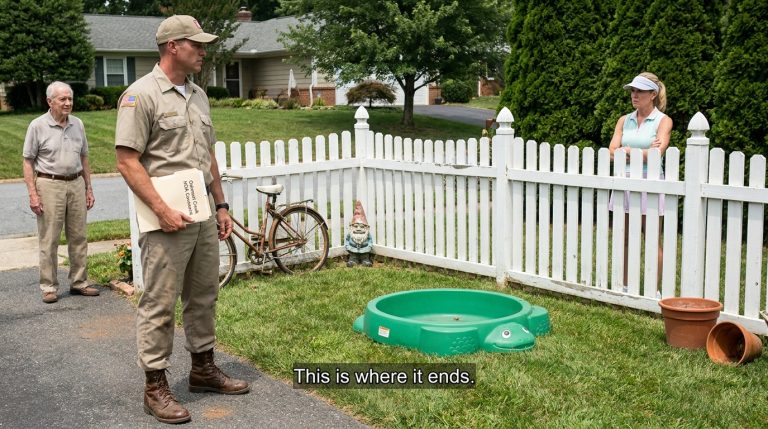
“Mrs. Gable is terrified,” David added, leaning against the railing. “They threatened to fine her for her garden gnomes again.”
I stood up, walked into the kitchen, and pulled a cooler filled with bottled water from the counter. I handed one to David, making sure our fingers brushed so he felt the steady, unyielding pressure of my grip.
“Tell Mrs. Gable and the others to keep their doors locked and their phones charged,” I said quietly. “We aren’t going to her meeting. We’re letting her finish building the gallows.”
David took a long swallow of the cold water, his shoulders dropping an inch as the panic in his chest gave way to grim resolve. “What do you want us to do when she overreaches next?”
“Just document every threat, every late-night notice, and every text message,” I replied, tapping the edge of the evidence locker binder resting near the window. “She thinks she’s running an empire, but she’s just writing her own confession.”
CHAPTER 5: THE PUBLIC TRIBUNAL
Judge Harris banged his gavel twice, cutting through the sudden wave of whispers that rippled across the crowded benches.
“Colonel Miller, you have the floor,” the judge said, his eyes fixed on the documents spread across the council table.
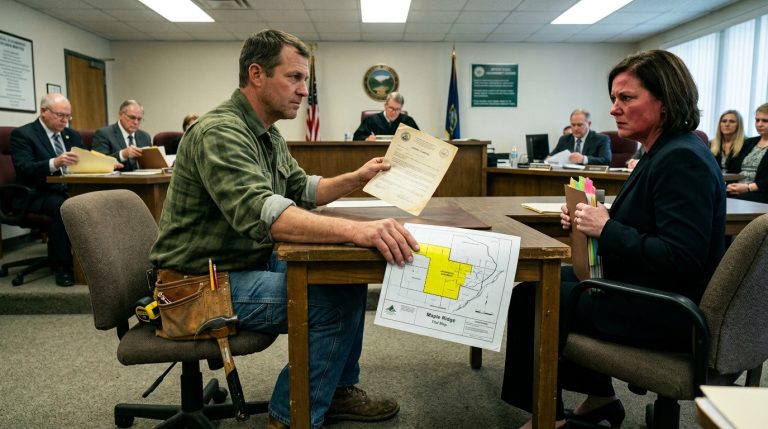
I stepped up to the podium, the eagle insignia on my service jacket catching the overhead glare. I clicked the remote, advancing the slide to reveal the original 2005 plat map right beside the altered six-month-old filing.
“This document was manufactured to seize private land through administrative fraud,” I said, my voice carrying cleanly across the room without a single trace of hesitation.
Across the aisle, Karen surged to her feet, her face flushing a deep, mottled crimson that clashed violently with her pastel jacket.
“This is an absolute lie, Judge!” she shrieked, her finger trembling as she pointed across the aisle. “He’s a disgruntled outsider refusing to pay his fair share of community maintenance!”
Judge Harris raised a single hand, his expression turning cold. “Sit down, Mrs. Miller, or I will have you removed for contempt.”
I clicked the remote again, bringing up the financial flowchart detailing the monthly payments funneled directly into Pristine Properties Management LLC.
“The HOA isn’t a community welfare organization,” I continued, meeting her wide, panicked stare head-on. “It’s a private slush fund operated by the board president’s brother-in-law to drain homeowner accounts through inflated vendor contracts.”
The room erupted into open shouting as neighbors turned to glare at the front row where the board cronies sat frozen. Karen sank back into her chair, her hands gripping the wooden armrests so tightly her knuckles turned bone-white. The foundation of her paper empire had just cracked down the middle, and no amount of clipboards could hold it together.
CHAPTER 6: THE QUIET PORCH AND THE NEW NORMAL
The gravel driveway remained entirely empty of white sedan patrols, save for the occasional neighbor waving from the road without a clipboard in sight.
My daughter Sarah sat across from me in the wooden rocker, looking out over the golden hayfield that stretched undisturbed to the horizon.
“You went to war with a binder and a county clerk, Dad,” she said, a small smile breaking through her tired expression.
I took a slow sip of the cold tea, letting the ice clink against the rim of the glass. “It wasn’t a war I asked for,” I answered, my eyes resting on the restored 1952 Ford tractor gleaming quietly inside the open doors of the barn. “Some lines you just have to hold because a man’s legacy isn’t something you hand over to a photocopy machine.”
Down the lane, the faint, unhurried laughter of children playing in the subdivision drifted across the breeze, untethered by arbitrary rules or artificial fines.
The evidence locker sat closed on its shelf inside the house, its metal clasps locked tight and its purpose fully served. The ground was level again, the paperwork was settled, and the fence line stood exactly where my grandfather had left it a hundred years ago.