The Carpenter of Maple Ridge and the Paper Trail That Brought Down a Neighborhood Dictatorship
CHAPTER 1: THE PINK NOTICE
The glue on the sticker was cheap, peeling away from the grain of my front door under the morning humidity. I scraped the corner of my thumb against the paper, feeling the waxy sheen of the fake official seal.
Inside the envelope was a bill for five hundred dollars, citing a violation of an HOA code I had never agreed to follow.
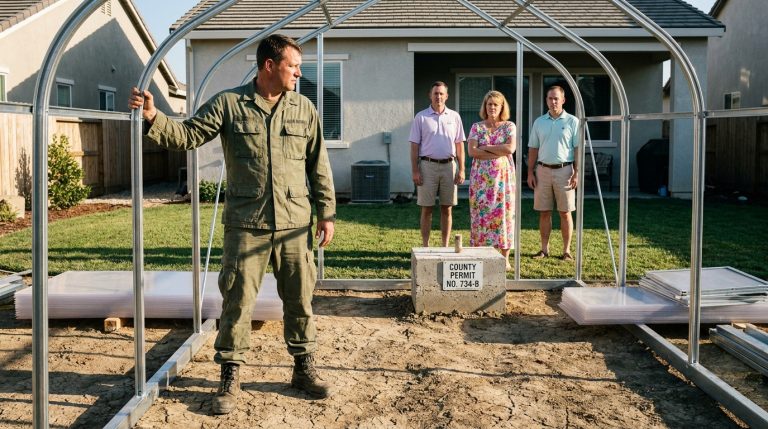
I dropped the paper onto the porch table, picked up my notched wooden carpenter’s pencil, and rolled it back and forth between my calloused fingers. Three months of quiet mornings on Maple Ridge, building my own wraparound porch with seasoned cedar and steady hands, and someone twenty houses away thought they could dictate my color palette.
Footsteps crunched heavily on the gravel drive before I could reach for my coffee mug.
Judith Newell stood by the edge of my truck bed, her sun hat casting a harsh shadow over her pinched face. She didn’t bother with a greeting, her gaze fixed entirely on the newly raised pergola beams overhead.
“You’ll need to tear that down,” she said, her voice sharp enough to cut drywall. “It fails to meet the approved neighborhood aesthetic standards.”
I kept the pencil moving between my fingers, feeling the familiar notches wear against my skin.
“You’re standing on private property,” I said, keeping my tone flat and level. “And I don’t belong to your association.”
“You use the main road to get here, which brings you under our jurisdiction,” she insisted, crossing her arms and pointing a manicured nail toward the asphalt. “You’ll remove the pergola by Friday, or the legal fees will multiply.”
She turned on her heel without waiting for an answer, her steps rhythmic and entirely unbothered by the sheer absurdity of her claim.
I watched her walk down the drive, the silence returning heavier than before. My security camera mounted under the eaves sat dead silent, stripped of its digital storage by a corrupted hard drive earlier that week. I had no video proof, no digital safety net.
Just the deeds in my truck and a growing stack of paper waiting to be sorted.
CHAPTER 2: THE COURTHOUSE SUMMONS
I dropped the truck into gear, the transmission whining softly as I pulled away from Maple Ridge before the morning dew could even dry on my cedar beams.
Cody was already waiting on the courthouse steps, leaning against the limestone pillar with a thick manila binder tucked under his arm like a shield.
“She didn’t just mail a notice,” Cody said, tapping the corner of his binder as I walked up. “She filed a formal civil complaint with the district clerk yesterday afternoon.”
I reached into my pocket, my thumb automatically finding the notched grain of the carpenter’s pencil I kept there. “On what grounds? I’m three blocks outside her subdivision.”
“A creative interpretation of local zoning proximity,” Cody said, a dry smile touching the corners of his mouth. “She thinks sharing a main asphalt vein gives her community the right to dictate your paint choices.”
We climbed the heavy wooden stairs into the courthouse lobby, the air inside smelling of floor wax and quiet desperation.
The clerk called our case file five minutes later, and we stepped into a bare-walled hearing room where an overhead fluorescent light hummed a steady, irritating note.
Judith sat at the opposite table, flanked by two board members who looked like they had practiced their sternest expressions in a mirror.
She clutched a folder labeled with colorful sticky notes, her jaw set tight as the judge shuffled a stack of papers without looking up.
“Plaintiff,” the judge said, his voice flat and tired. “Present your grievance.”
Judith stood up, smoothing the front of her blazer with a sharp, practiced motion. “Your honor, the defendant has repeatedly refused to comply with community standards,” she said, pointing a finger directly at me. “His property compromises the aesthetic value of our neighborhood.”
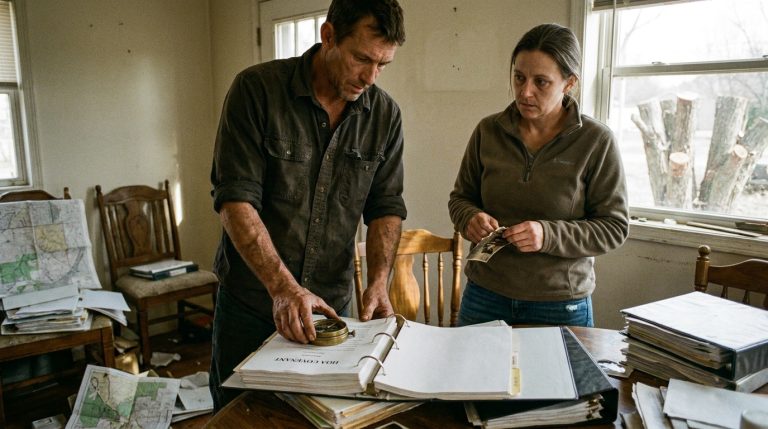
I pulled the binder from Cody’s hands, opened it to the county survey maps, and waited for the exact moment to drop the first line of defense.
CHAPTER 3: THE EXPIRED CHARTER
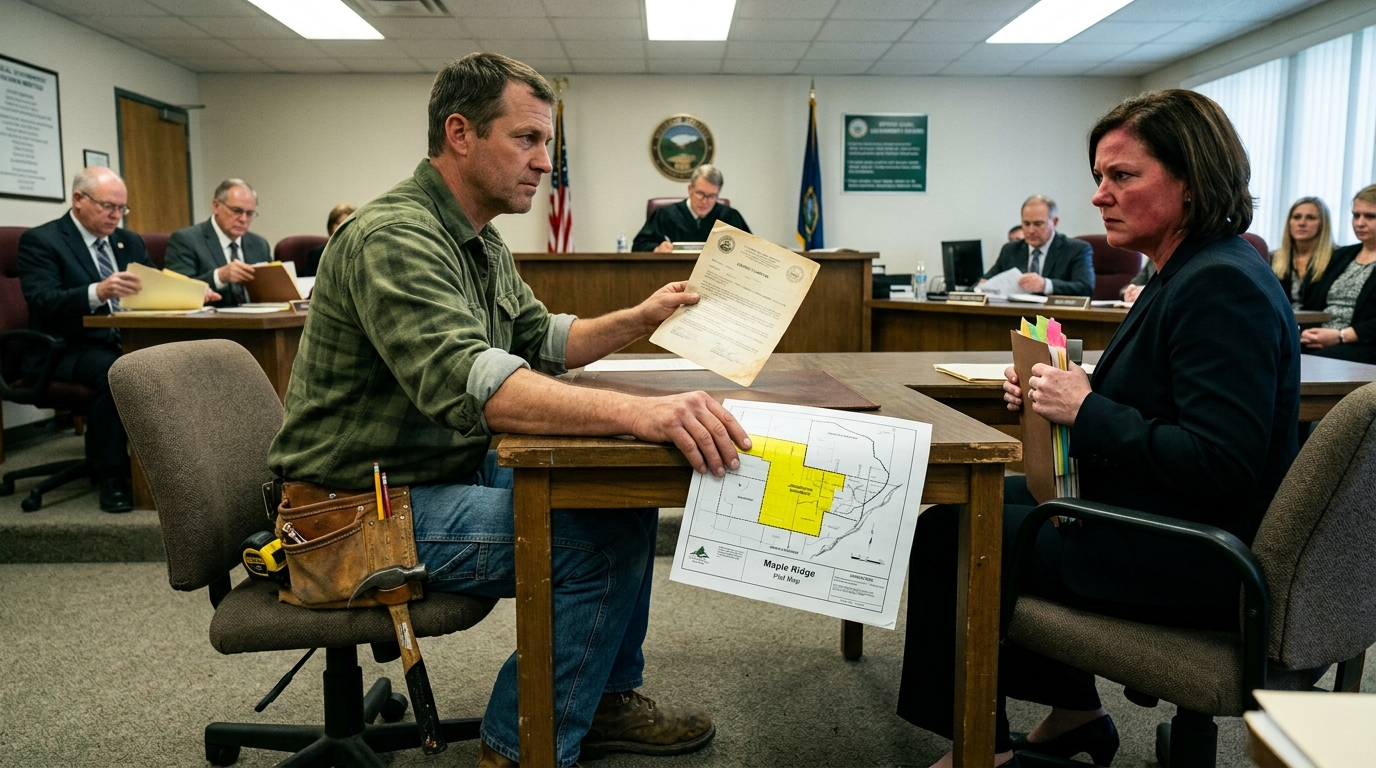
I slid the highlighted plat map forward until it brushed against the edge of the judge’s blotter.
“My property sits entirely outside the Maple Ridge jurisdiction,” I said, keeping my voice flat and steady against the hum of the fluorescent lights. “Not partially—entirely.”
Judith shifted her weight at the opposing table, a bead of sweat catching the harsh overhead light near her temple.
“The association charter extends conditional authority over adjacent properties to preserve community integrity,” she shot back, her fingers digging into the edge of her manila folder until her knuckles turned white.
Cody leaned over and flipped the binder to a heavily tabbed section stamped with county seals.
“The charter she’s waving expired five years ago,” Cody said, sliding a certified document across the wood. “It was never renewed, never voted on, and never filed with the county clerk.”
The judge pulled the document closer, squinting through his reading glasses at the faded signature lines at the bottom of the page.
The silence in the room stretched thin, broken only by the frantic rustle of papers as Judith’s board members scrambled through their folders looking for a defense that no longer existed.
“Is this accurate?” the judge asked, looking up over his frames directly at Judith.
“It’s a clerical oversight,” Judith snapped, her face flushing a dark, blotchy red as she glared across the aisle. “The neighborhood standards still apply to anyone within sight of our entry signs.”
I kept my hand resting flat on the wooden table, feeling the cold grain beneath my palm while she dug her own grave a little deeper.
CHAPTER 4: THE DISCRETIONARY LEDGER
Cody slid a heavy transparent sleeve across the wood, pinning down a pair of canceled checks stamped with the Maple Ridge operating account name.
“She hasn’t just been sending letters,” Cody said, his voice dropping into a flat, steady rhythm. “She’s been collecting cash penalties from property owners who don’t even share a boundary with her association.”
Judith slammed her open palm against the plaintiff’s table, the sharp crack echoing off the bare plaster walls.
“We maintain the structural buffer zone for the community good!” she snapped, her breath catching in a ragged hitch. “Those funds go straight toward neighborhood upkeep and exterior compliance!”
I rolled my carpenter’s pencil between my fingers, feeling the smooth notches press into my skin while I waited for Cody to drop the next piece of paper.
“Upkeep like your own patio extension,” Cody replied smoothly, dropping a printed hardware store receipt onto the judge’s desk. “And a professional landscaping overhaul for your vice president’s back lawn.”
The judge pulled the ledger closer, tracing a slow finger down the column of itemized expenses labeled under community integrity projects.
“You levied fines against non-members and deposited the proceeds into a private discretionary fund,” the judge said, his tone dropping flat and cold.
Judith’s lawyer stared down at his own shoes, his shoulders hunching inward as he realized the defense had completely dissolved beneath them.
“It was a misunderstanding of authority,” Judith stammered, her face flushing a deep, mottled crimson as she glared across the aisle.
“This isn’t a misunderstanding,” the judge said, closing the binder with a heavy thud. “This is fraudulent enforcement.”
CHAPTER 5: THE COLLAPSING BOARD
County investigators moved fast once the financial ledgers were unsealed, fanning out across Maple Ridge to inspect every questionable penalty notice issued over the past two years.
Marisol walked up my gravel drive that evening, holding a copy of the county audit papers in her hand with a look of raw disbelief.
“They fined me last fall for a child’s swing set,” Marisol said, her voice shaking slightly as she pointed at an itemized entry in the audit report. “They claimed it ruined the neighborhood’s line of sight.”
I wiped sawdust from my hands onto my jeans, looking down at the official seal stamped across the top of the county document.
“You weren’t the only one,” I said, rolling my carpenter’s pencil between my fingers. “The investigators found half a dozen homes along the perimeter that got hit with the exact same routine.”
By the end of the week, five more homeowners had stepped forward, pooling their records to file a sweeping civil lawsuit for fraud and targeted intimidation.
Judith tried to issue a counter-statement through her board, claiming the audit was a politically motivated attack by disgruntled outsiders.
The district attorney’s office answered her press release by filing criminal charges for fraud and unlawful property tampering, freezing the association’s accounts before the sun went down.
Two of her board members resigned within the hour, leaving Judith standing alone behind her empty podium as the entire fabricated empire crumbled beneath her feet.
CHAPTER 6: THE CEDAR RED PORCH
Wes from three houses down lugged a heavy cooler onto the edge of my wraparound deck, the ice sloshing against the plastic walls with a muffled thud.
“The county commissioners just voted to dissolve the charter completely,” Wes said, wiping his brow with the back of a weathered hand. “No more buffer zones, no more fake fines, and no more board.”
I laid my notched carpenter’s pencil down on the freshly painted cedar railing, feeling the bright red stain cool under the mid-morning sun.
“They tried to file an emergency injunction an hour ago,” I said, leaning back against the sturdy post. “Claimed the neighborhood would descend into chaos without their oversight.”
“The judge threw it out before his coffee even got cold,” Cody added, walking up the steps with a binder tucked under his arm, completely empty of paperwork for the first time in months. “Judith’s looking at a formal grand jury review for the fund misappropriations.”
There was no cheering or wild celebration, just the steady, grounding clink of lawn chairs unfolding across the grass and the low hum of a portable radio playing old classic rock.
Marisol walked over with a tray of fresh donuts, setting them down on the cedar table right where that garish pink enforcement notice had first landed three weeks ago.
“My daughter’s swing set is back up in the yard,” she said, a quiet, tired smile finally breaking across her face. “The kids haven’t stopped climbing on it since sunrise.”
I picked up my mug of black coffee, looking past the new beams out toward the open property line where the boundary was finally our own.
The weight of the unearned citations, the petty intimidation, and the fabricated rules had all collapsed under the simple, heavy friction of common sense and a solid paper trail.
I sat down in the shade of the cedar pergola, took a slow sip of coffee, and listened to the quiet hum of a neighborhood finally getting back to work.