The Architect’s Ledger: A Quiet War of Precision, Logic, and the Systematic Dismantling of a Neighborhood Tyrant
CHAPTER 1: The Geometry of Conflict
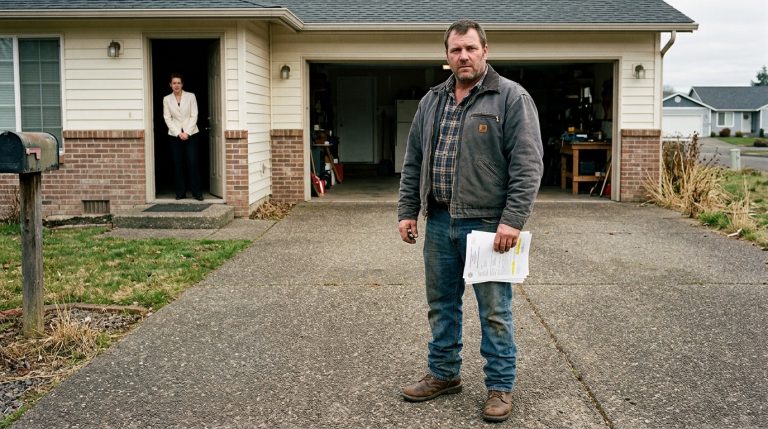
The late afternoon sun hit the Caldwell taupe paint with an unforgiving glare. It was a color I had spent weeks choosing, a shade designed to ground the house against the landscape of Harmony Creek. Now, it looked like a target.
“That’ll be $2,500, Mr. Caldwell.”
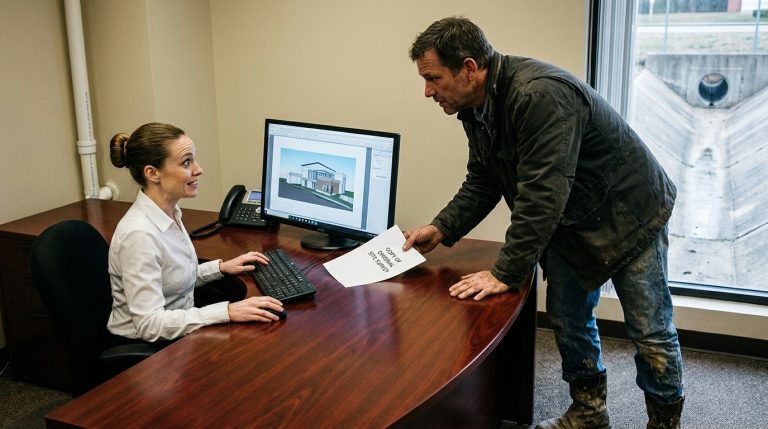
Karen’s voice had the texture of gravel grinding against glass. She stood on the edge of my lawn, her frame encased in a powder-blue pantsuit that seemed to be fighting a losing war against gravity. She held the clipboard like a magistrate delivering a sentence, her gaze darting from my face to the house, searching for a tremor, a blink, a sign of surrender.
“There’s been a mistake, Karen,” I said, my voice steady, stripped of the fatigue that usually clung to me after a long day of consulting.
I didn’t step forward. I didn’t raise my voice. I stayed planted near the drooping rose bush, my boots sinking slightly into the dry, clay-rich soil of the yard I had personally designed. I was an engineer; I knew the structural integrity of a foundation, and I knew when a structure was built on rot.
“A mistake?” She let out a sharp, practiced laugh that didn’t reach her eyes. Behind her, Brenda, her shadow of a secretary, hovered with a digital camera, fingers twitching near the shutter. “The only mistake, Mr. Caldwell, was your assumption that your status as a lead designer on this project granted you immunity from the current architectural board.”
She tapped the clipboard again. The sound was a rhythmic, calculated threat. “This paint color was removed from the approved palette twelve months ago. This is your second notice. Remit the fine within thirty days, or we move to a lien.”
A lien. She wanted to move to the endgame before the first move had even been made.
I felt the familiar, cold clarity settle into my chest. This wasn’t about the color of my walls; it was about the exercise of power. She was testing the perimeter, seeing how much pressure it would take to make me bend. She saw a newcomer. She saw an easy mark. She didn’t see the man who had mapped out the drainage systems, the street layouts, and the very color codes she was now using as a cudgel.
“I’ll review the documents,” I said, keeping my hands at my sides. “And I suggest you do the same, Karen.”
I turned my back on her. It was a tactical risk—leaving my flank exposed—but it was necessary. I needed her to believe that I was dismissing her. I needed her to walk away thinking she had won the first skirmish.
“Don’t turn your back on this board, Mr. Caldwell!” she called out, her voice rising, losing its composure. “We are the authority in Harmony Creek!”
I didn’t answer. I reached the front door and pushed it open, the heavy wood latch clicking into place behind me. Inside, the house was silent, cool, and perfectly still. The scent of fresh coffee and old paper drifted from the basement office—my command center.
I looked at my hands; they were steady. I walked toward the basement stairs, my boots marking a path through the foyer. The violation notice in my pocket felt heavy, not with the weight of the fine, but with the weight of the truth. She wanted a war of attrition. She wanted to drain me of my resources.
She had no idea that I had just spent five years waiting for a project worth my full attention. I walked down into the dark, flicked on the drafting light, and laid the notice on top of the original, city-filed master plan.
The first crack in her facade was already appearing. I just had to be patient enough to watch it widen.
CHAPTER 2: The Anatomy of a Blueprint
I didn’t turn on the overhead lights. The warm, focused glow of my drafting lamp was enough, casting deep, elongated shadows across the walls of my basement sanctuary. This room had been designed for planning; it was where I had laid out the infrastructure of Harmony Creek—the precise angle of the street corners, the placement of the utility lines, and the curated aesthetic that now, ironically, felt like a noose tightening around my own property.
I smoothed the edge of the master plan with a heavy metal straightedge. The paper was stiff, the ink dark and authoritative. It was a stark contrast to the flimsy, ozone-scented photocopy of the bylaws Karen had taped to my door. I leaned over the table, my eyes tracking the original layout of the subdivision. My military training had taught me that any system—no matter how complex—had a structural blueprint, and every structure had a weak point where stress would eventually lead to a fracture.
Karen wasn’t playing by the rules of the neighborhood; she was playing a game of attrition. She was betting that I would get angry, that I would make a mistake, that I would lash out and give her a reason to escalate the pressure. She wanted me to act like a desperate, irrational resident.
But I wasn’t a resident in that sense. I was the architect.
I traced the line of the creek that cut through the north end of the development. My finger lingered on the lot numbers. Every modification to the aesthetic standards of this neighborhood had been a deliberate, legally recorded act. I could still hear the echo of the city hearings five years ago, the dry, meticulous tone of the planning commissioners as they approved the original palettes.
I grabbed a notepad and began to map out the discrepancy. I wasn’t just looking for a typo; I was looking for a breach in protocol.
The silence of the house upstairs was absolute. Sarah and Emily were asleep, tucked away in the quiet safety I had moved them here to provide. I felt a pang of resentment—not for the situation, but for the intrusion. Karen hadn’t just attacked my house; she had walked onto the soil I had leveled and prepared, and she had started tearing at the foundation.
My mind shifted to the tactical, the way it used to in the planning rooms of the Corps. If she was changing the rules to force a lien, she was chasing cash flow. She was creating a deficit in the residents’ sense of security to extract capital. It was a classic protection racket, scaled down to the level of suburban landscaping and paint codes.
I took a sip of lukewarm coffee, the bitter taste grounding me. I pulled out my laptop, the screen flickering into life, casting a cold, white light that stripped the warmth from the room. I needed to see if there were digital breadcrumbs. I began cross-referencing the amendment dates on her flimsy bylaws with the city’s public record filings.
The work was tedious, but it was the kind of work I excelled at. It was the rhythm of construction, the slow, methodical assembly of facts. As I sifted through the data, a thought tugged at the back of my mind—a ghost of my time overseas. There, the enemy’s motives were usually clear: territory, resources, ideology. Here, the motive was smaller, pettier, but just as dangerous because of its invisibility. It was the desire for a small, localized empire.
My eyes burned as I jumped between screens. The discrepancy appeared suddenly, like a glitch in the hardware. There was a gap in the records. The amendment she cited didn’t just deviate from the original design binder; it predated the required community notice period for such a drastic change.
I sat back, the chair groaning under the shift in my weight. She hadn’t just ignored the rules. She had bypassed them entirely, relying on the fact that no one would bother to check the math. She was counting on the laziness of a peaceful community.
I reached for a red pencil and marked the discrepancy on the printout. I felt a cold, sharp satisfaction. She had built her authority on a shaky foundation of falsified procedures.
I stood up and walked to the small basement window, looking out at the dark, manicured shapes of the neighborhood. The rust-colored iron of the window frame felt cold beneath my hand. In the distance, I saw a light flicker in a house down the street, then vanish. I wasn’t going to storm the gates. I wasn’t going to shout at her in the street. I was going to systematically deconstruct her authority until the walls she had built around me started to cave in on their own weight.
I turned back to the desk. There were more documents to review, more lines to draw, and more gaps to identify. I picked up the pen. The war wasn’t about to start; it had been declared the moment she tapped that clipboard on my lawn. And in a war of infrastructure, the person who holds the blueprint holds the victory.
CHAPTER 3: The Clubhouse Trial
The air inside the Harmony Creek clubhouse was thick with the scent of cheap air freshener, a cloying floral sweetness meant to mask the underlying odor of damp drywall and communal frustration. I stood near the back row, my folder tucked firmly under my arm. The room was a soulless space of beige walls and uncomfortable folding chairs, all arranged in a rigid formation facing a long, rectangular table at the front.
Karen sat at the head of that table, flanked by her board. To her right sat Gary, the treasurer, his pen hovering over a ledger that looked suspiciously pristine. To her left were two women whose names I had yet to learn, their expressions fixed in a mimicry of professional concern. Brenda, the secretary, sat at the edge, clutching her camera like a talisman.
The meeting had not yet begun, but the tension was already coiled tight. About fifteen residents were scattered among the chairs, their postures guarded. They didn’t look like neighbors gathered for a community discussion; they looked like suspects waiting for a verdict.
“Let’s begin,” Karen announced, her voice hitting the back wall with a metallic, rehearsed precision. She didn’t look at the residents. Her gaze was locked on her clipboard, her hand drumming a rapid, impatient beat against the pressboard.
I watched her from the shadows of the doorway. She was an architect of atmosphere, and she knew exactly how to make the room feel like a courtroom where the judge and the jury were one and the same. She moved through the initial procedural formalities with the speed of a machine—minutes approved, financial reports mumbled by Gary, landscaping updates glossed over with vague references to “contractor overhead.”
My heartbeat was slow, a steady, measured rhythm. I wasn’t here to be part of her theater; I was here to introduce a variable she hadn’t calculated.
“New business,” Karen said, her eyes finally finding me. She didn’t offer a polite welcome. She pointed a manicured, blood-red nail directly toward my seat in the back. “Mr. Caldwell, the floor is yours. Explain why you believe our community standards are open to your personal interpretation.”
The room went silent. The air felt heavy, stagnant. I felt the collective weight of fifteen pairs of eyes. They were waiting for me to falter, to get angry, to give her the ammunition she needed to dismiss me as a problem resident.
I walked to the front. The floorboards creaked under my boots, a sound that seemed disproportionately loud in the vacuum of the room. I didn’t look at the board. I looked at the residents—at the elderly man in the third row, at the young woman near the window.
“My name is Mark Caldwell,” I began, my voice level. It wasn’t the voice of an agitator; it was the voice of a professional delivering a site assessment. “I moved here because I helped design this community. I know these streets, I know the infrastructure, and I know the standards that were legally filed with the city.”
I opened my folder. I pulled out the high-resolution copy of the original architectural guidelines and laid it flat on the table in front of Karen. She didn’t touch it. She looked down at it with the detached disdain of a scientist observing a specimen she had already decided to destroy.
“I received a fine for my exterior paint color,” I continued. “According to the documents provided to me, this fine is based on an amendment to the bylaws. However, I have reviewed the city-filed records. There is no record of the required public notice or the quorum-backed vote necessary to enact that change.”
I felt the tension in the room shift. It wasn’t a sudden break, but a subtle, flickering doubt.
Karen’s smile didn’t reach her eyes; it remained a thin, sharp line. “Mr. Caldwell, you are confusing a resident’s opinion with the board’s authority. Article Nine of our bylaws grants us the power to maintain the aesthetic integrity of this neighborhood. We have exercised that power to ensure Harmony Creek remains a desirable place to live.”
“Article Nine requires a quorum for such votes,” I countered. I kept my tone clinical, devoid of personal attack. “I am formally requesting the minutes from the meeting where that vote was held. I would like to see the record of the attendance and the official vote count.”
Brenda, the secretary, shifted nervously in her chair. Her eyes flicked toward Karen, then down at her camera. Gary, the treasurer, suddenly found a loose thread on his sleeve to be the most fascinating object in the room.
Karen tapped her pen against the clipboard. The sound was sharp, like a gavel strike. “The minutes are internal records, Mr. Caldwell. They are not subject to public debate every time a resident disagrees with a board decision. You may submit a written request, and we will consider it at our convenience. In the meantime, the fine stands.”
She moved to bang the gavel, to cut off the conversation and maintain the illusion of control. But I wasn’t finished. I placed the second document on the table: a printout of the current state statute regarding homeowner association transparency.
“It isn’t a request, Karen,” I said, my voice quiet, cutting through the room. “It’s a notification. Under state law, these records are not optional for the board to provide. I’m giving you the opportunity to address this internally before I pursue the legal remedies required to ensure the association’s compliance.”
The silence that followed was suffocating. I held her gaze. For the first time, I saw a flash of something beneath the iron mask—a momentary, frantic flicker of confusion. She had expected a brawl, but I was giving her a quiet, technical dismantling.
She opened her mouth, but for a second, no sound came out. The residents behind me began to murmur, a low, buzzing sound of growing realization. I turned back toward my chair, leaving the documents on her table. I hadn’t won anything yet, but the air in the clubhouse felt different. It was no longer her room.
CHAPTER 4: The Reconnaissance
The downpour arrived with the sudden, violent efficiency of a desert storm. Within seconds, the manicured streets of Harmony Creek were transformed from a picturesque neighborhood into a blurred, shimmering gray landscape. I pulled my jacket collar up, the coarse fabric scratching against my throat, and headed toward my car.
The adrenaline from the clubhouse was beginning to dissipate, leaving behind a sharp, cold clarity. I knew Arthur was waiting, but the rain was turning the streets into a treacherous maze of slick asphalt and blinding water. I keyed the ignition, the engine turning over with a steady, reassuring growl that felt like the only sane thing in a world that had suddenly tilted on its axis.
Driving to Arthur’s place was a study in patience. The wipers beat a frantic, rhythmic tattoo against the glass—thwack-thwack, thwack-thwack—a relentless reminder of the time slipping away. I navigated the familiar curves, my hands light on the wheel, my eyes scanning the darkness for movement.
When I pulled up to Arthur’s drive, the house was a solitary beacon of yellow light in the deluge. I didn’t rush. I took a moment to sit in the car, watching the water cascade over the windshield, listening to the drumming of the storm. This was the transition—the space between the confrontation and the collaboration. I had thrown the first stone at Karen’s authority, and now I had to make sure the ripples would travel in the right direction.
I stepped out and sprinted through the rain, the cold water soaking through my shoes the moment I hit the lawn. I reached the front porch just as Arthur opened the door. He was a small man, his shoulders slightly hunched, but his eyes were sharp, bright with an intelligence that the HOA board had consistently underestimated.
“You look like you’ve been in a fight,” he said, holding the door wide.
“A skirmish,” I corrected, stepping into the warmth of his foyer. The house smelled of old books and dried roses, a sharp, comforting contrast to the sterile, ozone-heavy air of the clubhouse.
“The board meeting?” he asked, leading me toward the kitchen.
“I asked for the minutes,” I said, peeling off my wet jacket. “And I cited the statute.”
Arthur paused, a teakettle in his hand. He turned, a slow, appreciative smile spreading across his face. “You cited the law to Karen? That’s not a skirmish, Mark. That’s a declaration.”
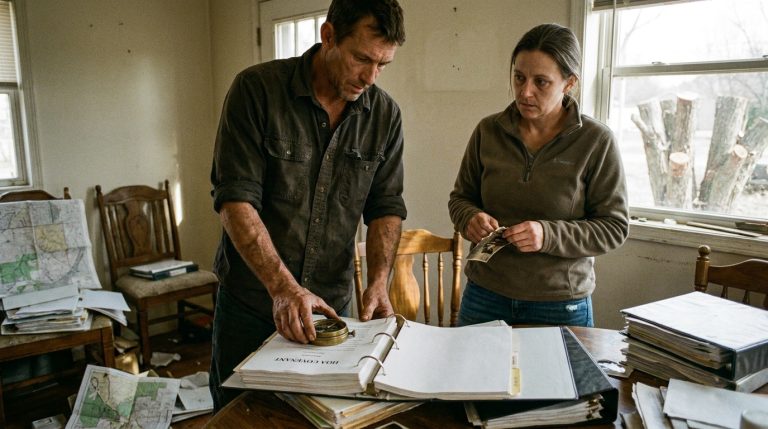
“It’s a data request,” I said, moving to the table. I sat down, pulling the folder from my bag. The moisture had made the edges of the paper curl, but the text was still legible. “She’s banking on the residents being afraid to look at the paperwork. If we want to take the power back, we have to show them that the fear is based on a lie.”
He poured tea, the steam rising in delicate, twisting ribbons. We sat in silence for a moment, the sound of the rain hammering against the roof acting as a backdrop to our planning. Arthur was the historian; he knew the patterns of this neighborhood better than anyone. He knew which residents had been picked off, which ones had been intimidated into silence, and which ones were just waiting for a reason to stand up.
“It’s not just the paint,” Arthur said, leaning in. “Last year, the Hendersons were fined for a mailbox upgrade. It was a gift from their daughter, a custom iron piece. They paid the fine because they didn’t want the hassle.”
I jotted the name down in my notebook. The list of grievances was growing. Each entry was a structural defect in Karen’s regime. “We need to talk to them, Arthur. We need to document everything. Not just for a legal case, but to show the community that this isn’t an isolated incident. It’s a pattern.”
“They’ll be scared,” he warned, his voice soft. “People don’t like to talk when they feel like they’re being watched.”
“That’s why we work quietly,” I replied. “We aren’t going to hold a protest. We’re going to conduct an audit. We’re going to look at every fine, every rule change, and every vendor contract. If the money is being mismanaged, there will be a paper trail. And if I’ve learned anything about people like Karen, it’s that they are rarely as careful as they are arrogant.”
I looked at the window. The rain was beginning to slacken, leaving behind a world that looked washed-out and tired. My hands felt steady again. The anger I had felt earlier in the clubhouse had burned away, replaced by the cold, mechanical focus of the mission. I wasn’t fighting for a paint color. I was fighting for the architecture of the community, for the integrity of the ground we all stood on.
“I’m with you,” Arthur said, his hand resting briefly on the table. “I’ve been waiting for someone to show up with a set of plans.”
I nodded, the weight of the moment settling between us. The war of attrition had entered its second phase. We weren’t just gathering evidence; we were building a consensus. And for the first time in months, the future of Harmony Creek felt like something we could define, measure, and finally, rebuild.
CHAPTER 5: The Data Dump
The garage was a cavern of shadows and cold, hard surfaces. I had cleared the workbench, pushing aside my usual collection of engineering tools—calipers, levels, and drafting pens—to make room for the massive, lopsided cardboard box Karen had dumped on my porch. It sat there like a malignant growth, its cardboard sides damp from the humidity of the night, exuding the faint, musty smell of institutional neglect.
“You really think she just gave it to you?” Arthur asked, his voice echoing slightly in the concrete space. He stood near the garage door, his hands clasped behind his back, watching me as I reached for the packing tape.
“Compliance is a weapon, Arthur,” I said, pulling the tape back with a sharp, piercing rip that sounded like a gunshot in the confined space. “If she refused, I’d have grounds for an immediate injunction. By dumping it here in this state, she’s betting on chaos. She thinks if she buries me in enough paper, I’ll get lost.”
I pulled the flaps back. The box wasn’t organized. It was a chaotic slurry of invoices, minutes, bank statements, and vendor contracts. They were jumbled together, stapled with rusted clips, and held in place by brittle rubber bands that snapped the moment I touched them. It was a deliberate, messy obscuration.
“David will be here in ten minutes,” I said, pulling out a handful of papers. “He’s bringing the high-speed scanner. If we can digitize this, we can search it. We can find the patterns.”
I started sorting. I didn’t try to read everything; I looked for categories—financials, correspondence, architectural reviews. The flickering fluorescent light above the workbench hummed, casting a sickly, uneven yellow glow over the desk. Every time the light pulsed, the numbers on the pages seemed to dance and rearrange themselves, heightening the sense of urgency.
My hands moved with practiced rhythm. I found a receipt for “Landscaping Supplies” from 2023—a four-figure sum for a delivery of mulch that seemed, even to my engineer’s eye, disproportionate to the acreage of the common areas. I set it aside in a pile labeled Suspicious.
“Mark,” Arthur said, pointing to a loose sheet that had fluttered to the floor.
I leaned down and picked it up. It was a partial bank statement, heavily redacted with thick, black marker. But the ink was faint, and the light from the workbench shone through the page, highlighting the faint outlines of the numbers underneath. It was a transfer—a large one—made to a corporate entity I didn’t recognize: Harmony Landscaping LLC.
The name triggered a sharp, cold realization in my chest.
“She’s hiding the vendor payments in the operating expenses,” I muttered, my mind racing to reconstruct the budget. If these payments were listed as standard maintenance, they wouldn’t appear on the board’s monthly reports as vendor contracts. They were being laundered through the noise of day-to-day upkeep.
The garage door rattled in the wind, a sharp, metallic sound that made me look up. My skin prickled. I had the sudden, irrational sense that the shadows outside weren’t just the product of the storm. I stood still, listening. The rain had subsided into a low, steady drizzle, but the silence of the street was too perfect, too heavy.
“You think she knows?” Arthur asked, his voice a whisper.
“She knows she’s hiding something,” I said, my gaze dropping back to the redacted statement. “And people who are hiding things eventually get sloppy.”
I didn’t let the fear take hold. I focused on the page, the texture of the paper, the specific, jagged line of the black ink. I had spent my life building things that were meant to last—bridges, foundations, homes. I knew how to identify a structural weakness by how it resisted pressure. Karen was resisting here, in this box, with this obfuscation.
The rumble of a car pulling into the driveway broke the tension. David’s sedan. I let out a long, slow breath, my grip on the statement tightening.
“Get the scanner ready,” I said to Arthur. “We’re going to map this entire thing. If they’re embezzling from this community, the evidence isn’t just in the paperwork—it’s in the timeline. And I’m going to build a timeline that will bury them.”
I didn’t look back at the garage door. I turned back to the workbench, my resolve hardening like set concrete. The decoy secret—the financial mismanagement—was becoming clearer by the second, but something told me that beneath this, at the very root of the organization, lay something far more personal, something that connected Karen to the very heart of Harmony Creek. And I was going to pull that thread until the whole thing unraveled.
CHAPTER 6: The Paper Trails End
The garage was silent now, save for the rhythmic whirr-clunk of the scanner. David sat hunched over his laptop, his eyes darting across lines of data that scrolled down the screen in a blur of green and white. Beside him, Arthur was meticulously filing the pages we had already processed, his movements precise and calm, a stark contrast to the tightening knot in my gut.
“Found something,” David said, his voice clipped. He didn’t look up. “This isn’t just a shell company, Mark. Look at these wire transfers.”
I leaned over his shoulder. The screen displayed a list of transactions to Harmony Landscaping LLC. They were dated, logged, and recurring. But as David highlighted the sequence, a different anomaly jumped out at me. Every single one of these transfers was authorized by a digital signature—a specific, encrypted user ID—that didn’t belong to Karen.
“That’s not her,” I whispered, the cold air of the garage suddenly feeling thin. “That’s Gary’s ID, but the authorization log shows it was processed from a terminal outside the clubhouse network.”
“It gets worse,” David said, clicking deeper into the metadata. “Every time one of these payments was approved, the same secondary account received a ‘processing fee’—an automated micro-transaction. It’s a siphon. Karen and Gary weren’t just splitting the loot; they were being taxed by someone with higher-level administrative access.”
I stepped back, my boots scraping against the concrete. I looked at the piles of paper, the boxes of files that had seemed like a jumble of petty grievances, now appearing as a meticulously architected extraction system. Karen was the face—the loud, obnoxious hammer—but there was someone else pulling the strings, someone who had programmed the infrastructure of our community to feed their own pockets.
“The architecture of the system,” I muttered, the realization hitting me with the force of a structural collapse. “I designed the billing protocols for this association. I made them efficient, transparent. They haven’t just been breaking my rules—they’ve been reverse-engineering the ones I wrote to hide their own bypasses.”
The air in the garage felt suddenly oppressive. The fluorescent light buzzed, a high-pitched, insistent frequency that set my teeth on edge. My hands were stained with the carbon of a thousand photocopies, my skin feeling brittle and dry. I wasn’t just facing a neighborhood tyrant anymore. I was facing an engineered corruption that had been woven into the very fabric of my design.
“What do we do?” Arthur asked, his eyes grave. “If we take this to the board, it’s not just Karen. We’re accusing the system itself.”
“We don’t take it to the board,” I said, my voice cold, decisive. “The board is compromised. If we show them this, they’ll just destroy the evidence. We wait. We document every single byte of this metadata, and then we take it to someone who has the authority to seize the servers.”
I paced the small, clear patch of concrete between the workbench and the garage door. The weight of the secret was a physical presence, a density I had to carry. My military instincts screamed at me to move, to act, to neutralize the threat, but I knew the cost of a premature strike. If I exposed the embezzlement now, I would only be pruning the branches of the rot. I needed to expose the entire root system.
“Keep scanning,” I commanded, turning back to the table. “David, I need you to map these transfer signatures against every other administrative action in the last three years. If there’s an admin back door, it had to be opened from somewhere.”
I picked up the latest batch of files, the texture of the paper feeling coarse and jagged against my fingertips. I was an architect; I understood how to build, but tonight, I was learning something much darker: I was learning exactly how to identify a flaw that would bring an entire structure down.
The feeling of being watched returned, stronger than before. I glanced at the garage window, seeing nothing but the reflection of the workbench and the blinking red light of the scanner. I walked to the door, checking the lock for the third time. The rain had stopped, and the neighborhood outside was shrouded in a heavy, unnatural stillness.
“We have enough to start the fire,” Arthur said, his voice barely audible over the hum of the machine.
“No,” I replied, staring at the screen. “We have enough to burn it all down. And that’s exactly what I’m going to do.”
CHAPTER 7: The Seven Ticking Time Bombs
The garage door was cracked open just enough to let in the smell of wet pavement and the low, muffled sound of the neighborhood settling into a restless sleep. I stood at the workbench, my hands moving with the methodical precision of an engineer arming a site. Beside me, the seven envelopes sat in a row, white, crisp, and terrifyingly official.
“Are you sure about this, Mark?” Arthur asked. He was standing near the door, his silhouette framed by the porch light of the house across the street. “Once these leave your hands, there’s no walking it back. Karen will know it’s us. She’ll know we’re the ones who peeled back the layers.”
“She’s already looking for us, Arthur,” I said, my voice steady, though my pulse thrummed in my fingertips. “But she’s looking in the wrong place. She’s looking for a neighbor who’s angry about a paint color. She isn’t looking for an adversary who understands how to map an organization’s structural weaknesses.”
I finished sealing the final envelope, the sound of the adhesive strip tearing through the silence like a serrated blade. I had spent the last two days with David, cross-referencing every anomalous wire transfer with the board’s meeting minutes. We had built a dossier—a complete, unassailable timeline of embezzlement, invalid votes, and administrative fraud. It was a masterpiece of forensic documentation, and it was all contained within these seven envelopes.
“If we mail these, the board gets a choice,” I said, picking up the stack. “They can either align themselves with Karen and go down with her, or they can preserve themselves by forcing her out. We’re not just handing them evidence; we’re handing them an exit strategy.”
I walked toward the garage door, the cold air hitting my face. The neighborhood was quiet, a series of dark windows and locked doors that masked the pervasive, stifling anxiety I had felt growing in every conversation I’d had with our neighbors. My house, with its taupe exterior, stood at the end of the cul-de-sac, a silent sentinel in the dark.
“And what if they don’t break?” David asked from the laptop station, his eyes tired but sharp. “What if they’re in too deep?”
“Then they’ve chosen their fate,” I replied. I felt a strange sense of detachment, a cold, clinical objectivity that I hadn’t touched since my time in the Corps. There was no room for hesitation in a structure this compromised. You didn’t patch a foundation that had been intentionally sabotaged; you stripped it to the dirt and started over.
I stepped out onto the driveway. The night air was crisp, the smell of damp grass and iron filling my lungs. I walked to the mailbox at the end of the driveway, the metal cold and slick with dew. I didn’t rush. I placed the envelopes into the box one by one, the sound of them hitting the bottom a muffled, rhythmic thud.
The weight of the mission shifted from my hands to the system. It was out of my control now; the envelopes would be delivered tomorrow morning, landing on seven desks simultaneously.
I looked up at the streetlights, the orange, flickering hum casting long, distorted shadows across the pavement. I thought of Sarah, of Emily, sleeping soundly in the house. I had done this for them, to clear the path, to make sure the sanctuary we had built wasn’t undermined by the greed of a few petty despots.
A car slowed down at the end of the cul-de-sac—a familiar white golf cart.
My heart didn’t jump. I didn’t pull away or hide. I simply leaned against the mailbox, watching the headlights cut a weak, wavering arc through the dark. Karen. She was doing her late-night rounds, the self-appointed guardian of a kingdom that was already burning. She slowed to a crawl in front of my house, her eyes scanning the driveway, searching for a sign of resistance.
She didn’t stop. She didn’t call out. She just stared for a long, heavy moment before turning the wheel and rolling slowly into the shadows of the next street.
I waited until she was gone, the silence returning to the cul-de-sac like a shroud. She had no idea that the mechanism for her undoing was already in the hands of the postal service. She was fighting a ghost, a neighbor, a problem to be solved with a fine or a lien. She had no clue she was fighting an engineer who had spent the last week drafting the blueprint for her absolute, total removal.
I turned back to the house, my footsteps echoing against the concrete. The tension that had held me upright for the last seventy-two hours finally began to fray at the edges, leaving behind an exhaustion that felt physical, grounding, and absolute. I reached the front door and pushed it open, the latch clicking into place.
The war wasn’t over. But for the first time, I knew exactly how it would end.
CHAPTER 8: The Foundation Restored
The clubhouse was a cacophony of sound—a storm of voices, gavel strikes, and the sudden, sharp flashes of cameras. I stood near the front, my pulse no longer racing, but settled into a steady, rhythmic cadence. I watched Karen, her face a mask of blanched fury and disbelief, as Harold Jenkins and the other board members—the ones we had nudged into the lifeboat—stepped forward to formally suspend her presidency.
She tried to speak, to call for order, but her voice was swallowed by the roar of the residents. It was poetic in its simplicity; the people she had spent years silencing had finally found a single, unified note. She looked at Gary, but he was staring at his shoes, his face drained of color as the reality of the forensic audit—the audit he had unknowingly invited—began to take hold.
The news crew, led by Jessica Vale, moved with the predatory grace of professional observers, their camera recording every tremor in Karen’s jaw, every frantic, grasping gesture she made toward her clipboard. The decoy secret—the illegal paint fines—had been the wedge, but it was the evidence of the shell company, Harmony Landscaping LLC, that had shattered the structure entirely. I didn’t need to speak. I didn’t need to monologue. The data was doing the work for me.
The five pillars of the catharsis were falling into place.
First, the payoff: I watched as the local authorities, who had been alerted by the evidence we’d leaked to the district attorney’s office earlier that morning, entered the clubhouse. They didn’t come in with sirens blazing, but with a quiet, efficient weight. They approached the table, the officers’ presence effectively ending Karen’s reign.
Second, the poetic justice: Karen, who had weaponized the HOA’s bylaws to bully her neighbors, found herself trapped by the very same procedural rules she had attempted to manipulate. When the board voted to suspend her, she invoked the bylaws to protest, only for Harold to cite the specific state statute that invalidated her own “emergency” amendments. She was defeated by the very bureaucracy she had built to ensnare us.
The denouement began an hour later. The clubhouse emptied, the buzzing energy replaced by the cooling, damp air of the evening. I walked out into the parking lot, the asphalt slick and reflective under the streetlights. The urgency that had defined the last several weeks—the late-night scans, the whispered conversations in the garage, the fear of the next notice—was gone.
I drove home slowly. The streets of Harmony Creek looked the same, but the feeling of the place had shifted. It was no longer a guarded, suspicious kingdom; it was just a neighborhood.
I reached my house and climbed out of the car. The taupe paint, which had been the catalyst for the entire conflict, looked soft and welcoming in the porch light. I walked over to the mailbox—the one that had been the subject of so many petty, manufactured grievances—and reached inside. It was empty. The constant barrage of warnings and fines had ceased.
I turned to the rose bush near the front door. During the weeks of the conflict, I had neglected it, and a branch had snapped, drooping toward the ground. I knelt in the dirt, the damp earth staining my jeans, and reached for my gardening shears. I didn’t rush. I clipped the broken wood, the snap of the shears clean and final. I adjusted the stem, tying it back with a bit of twine, securing it against the trellis. It was a small thing—a simple act of maintenance—but it felt like the most important engineering project I had undertaken in years.
Sarah appeared in the doorway, the light from the hall spilling out onto the porch. She didn’t say anything, but she didn’t have to. She walked down the steps and stood beside me, her hand resting on my shoulder.
“It’s quiet,” she said softly.
“It is,” I agreed, standing up and brushing the dirt from my hands.
The weight of the last few months seemed to lift, replaced by the simple, profound reality of a home that was safe once again. We walked into the house together, the door closing behind us with a gentle, final thud. The structure was sound, the rot had been cleared, and for the first time since we moved here, the foundations felt deep, stable, and entirely, peacefully ours.