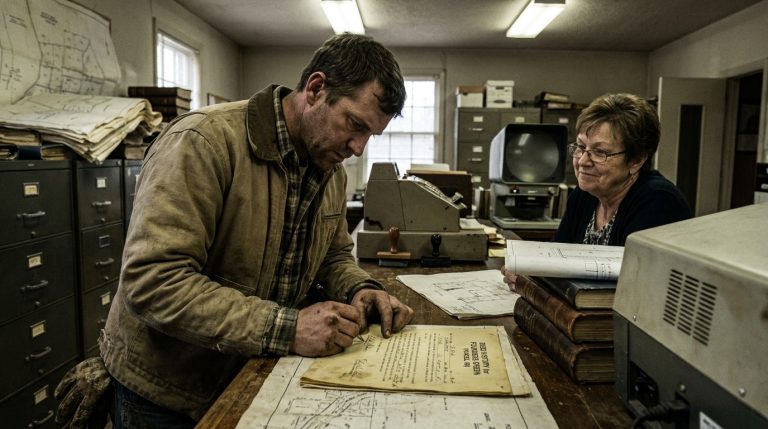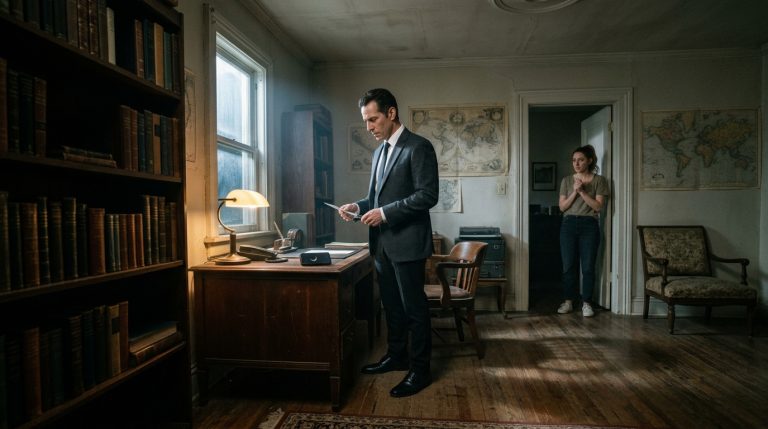
The Old Timber Line: A Hardworking Everyman Defends His Family Legacy Against Relentless Suburban Audacity
CHAPTER 1: SHATTERED PLANKS
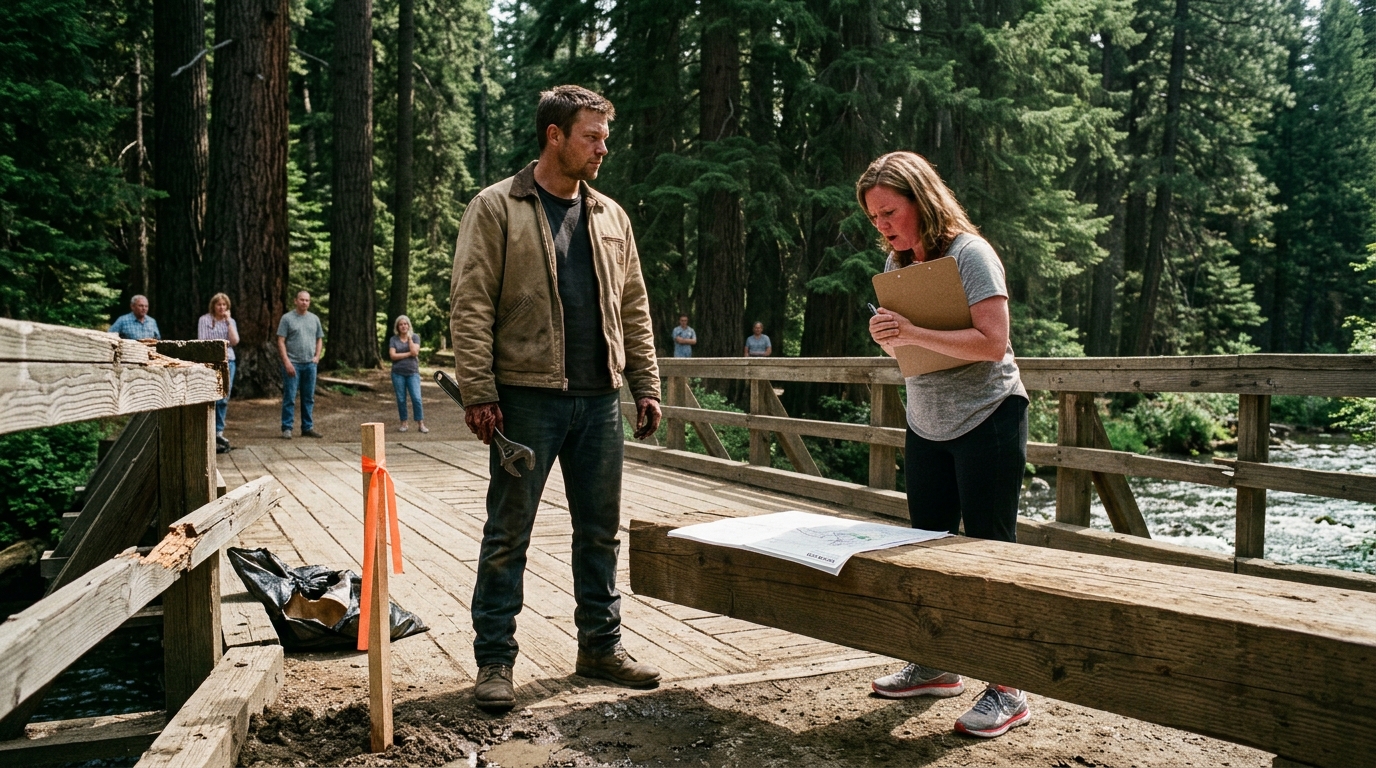
The heavy iron crescent wrench felt cold and grease-slicked against my palm as I tightened the secondary truss bolts beneath the belly of the bridge.
A sharp, scraping screech echoed directly above my head, followed instantly by the heavy, wet thud of a thick contractor bags hitting the ancient timber planks.
I slid out from the steel undercarriage, wiped my soot-stained hands on my denim trousers, and stepped into the blinding midday glare to find Karen dragging a massive black trash bag across our family’s private crossing.
“That bridge isn’t a county landfill,” I said, my voice flat, level, and entirely devoid of the explosive anger she seemed to be waiting for.
Karen jerked backward, her designer running shoes skidding against the weathered grain of the oak planks, before she instantly crossed her arms and thrust her chin out.
“This entire structure is an unsightly hazard to the visual harmony of our adjacent community,” she snapped, gesturing with a manicured hand toward the dense forest that separated my forty acres from her subdivision.
She kicked the side railing hard, the dry wood groaning under the impact, then reached back down to drag the leaking bag toward the rushing river below.
“Don’t touch that bag again,” I muttered, taking three measured steps forward until the shadow of the grandfather pines fell directly across the splintered wood between us.
“Young people simply don’t understand communal responsibility,” she declared, her voice rising in shrill, unearned authority as she pulled an official-looking plastic badge from her windbreaker pocket and thrust it toward my face.
“The community requires access, and until you learn to manage these unused acres responsibly, the neighborhood watch will ensure this runoff zone stays clear.”
She gave the heavy bag one final, desperate heave, sending it crashing violently through the weakened lower railing.
The black plastic split wide open against the sharp granite rocks below, spewing broken chunks of white drywall, jagged ceramic tiles, and sour chemical dust directly into the clean, protected current of the river.
Karen smiled, a thin, triumphant smirk that completely ignored the destruction at her feet, and adjusted her clipboard with the confidence of a woman who believed her own fantasy was absolute law.
“Consider that your first official warning,” she whispered, turning on her heel to walk back toward the paved county road.
I stood completely still in the sudden silence, the heavy steel wrench swinging gently by my side, watching the white lime dust dissolve into the water beneath my grandfather’s spine.
CHAPTER 2: PAPER FENCES
The crisp white envelope inside the box bears the formal, blue-ink stamp of the Shady Pines Homeowners Association.
My thumb slides under the envelope’s seal, ripping the paper cleanly to reveal a notice of immediate violation, carrying a four-hundred-dollar fine for “unlawful blockage of a municipal emergency right-of-way.”
I know the county GIS maps inside out, and the HOA boundary forms a jagged horseshoe that stops exactly three-quarters of a mile short of my eastern fence line.
A sharp snap from the brush at the edge of the tree line breaks the silence, and I catch the distinct smell of cheap perfume drifting through the pines.
Karen steps out onto the gravel road, her self-bought clipboard tucked under her arm like a weapon, a smug expression lifting the corners of her mouth as she notes the white paper in my hand.
“Some people think they can hide behind old family deeds,” she calls out, her voice carrying that forced, regulatory sweetness that sets my jaw on edge.
“But community safety protocols override private neglect every single time, and the board expects immediate compliance.”
I do not raise the paper, nor do I let my posture shift from the relaxed stance my grandfather used to maintain when dealing with smooth-talking land speculators.
“My gate stays locked, Karen,” I say, my voice low, cutting through the morning breeze with absolute finality.
“And your jurisdiction ends where the asphalt turns to my gravel.”
She takes a sharp step forward, her fingers gripping the edge of her clipboard so tightly the plastic groans under the strain, a sudden flash of heat blotching her neck.
“We will see what the county compliance officer says when the formal report lands on his desk tomorrow morning,” she counters, turning sharply to retreat down the road before I can give her the loud argument she desperately wants.
I leave the mailbox behind and walk down the sloping path toward the riverbank, the heavy crescent wrench swinging in my grip as I search for whatever else she might have left behind during the night.
Right beneath the massive oak timber that forms the primary support beam of the bridge, a bright, unnatural splash of neon catches my eye.
Driven deep into the damp mud, right where the steel trusses meet the old wood, sits a fresh wooden stake topped with a strip of blazing orange surveyor’s tape.
A chill goes completely still in my chest as I look at the freshly disturbed earth, realizing this isn’t just a petty neighbor dumping trash anymore.
They aren’t trying to clean the river; they are actively marking my grandfather’s foundation for something far bigger than a neighborhood watch cleanup.
CHAPTER 3: THE GATHERING STORM
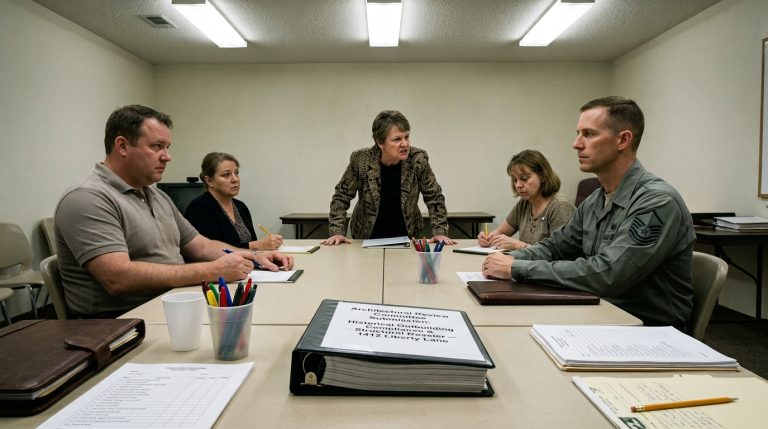
Karen sits right at the center of the front row, surrounded by three neighbors who nod along to every frantic whisper she directs toward the podium.
The wood of the double doors feels cool against my back as I step fully into the hall, my presence drawing a sudden, heavy silence that ripples straight through the seating rows.
The HOA board president, a gaunt man named Miller, clears his throat into the microphone, the high-pitched feedback whining through the speakers.
“We have reached the open floor segment regarding the emergency access petition,” Miller says, his eyes darting toward me before dropping down to his papers.
Karen stands up immediately, her self-appointed badge catching the harsh glare of the ceiling lights as she grips a stack of typed documents.
“The individual standing at the back has repeatedly compromised our community welfare,” she announces, her voice echoing off the concrete walls with rehearsed indignation.
“His private bridge blocks a critical watershed axis, and his complete refusal to trim his overgrowth severely limits emergency visibility for the entire subdivision.”
A murmur of uneasy agreement passes through the older couple seated directly to my left.
“My land sits entirely outside your jurisdiction, Miller,” I say, my voice carrying cleanly across the room without me ever having to raise it.
“The county map marks my bridge as a private crossing, no public right of way.”
Karen turns sharply, her face blotching a deep, angry crimson as her hand slams down onto the back of an empty metal chair.
“The law of community necessity overrides technical property boundaries when public safety is actively threatened!” she shouts, her voice cracking around the edges.
“You are hoarding access to a public runoff zone, and this board will enforce the necessary compliance measures to clear the path.”
I take a slow step down the center aisle, my boots clicking firmly against the linoleum flooring as I pull a folded piece of paper from my breast pocket.
“This is the official GIS survey from the county environmental protection office,” I state, laying the document flat on the board table.
“The orange stake placed under my primary support beam yesterday wasn’t a safety measure—it’s a commercial utility marker for an unapproved subdivision road.”
Miller flinches, his hands instantly shuffling the stack of folders in front of him to cover a map that matches my exact description.
The room erupts into a low, buzzing friction as two neighbors in the front row lean away from Karen, their expressions shifting from irritation to sudden suspicion.
Karen stares at the document on the table, her jaw tightening as she realizes her bureaucratic narrative has just hit a concrete wall of public record.
CHAPTER 4: THE BROKEN LOCK
The beam of a small flashlight cuts through the downpour, illuminating the slick, muddy ground right at the entrance of my grandfather’s crossing.
Karen stands completely drenched in the storm, her heavy yellow raincoat glistening under the downpour as she forces a long pair of red-handled bolt cutters against the hardened steel padlock of my boundary gate.
Her breath comes in short, ragged gasps of pure physical desperation, the tool slipping repeatedly against the wet metal links until she braces her weight fully against the handles.
“That lock isn’t yours to cut, Karen,” I say, stepping out from the shadow of the pines, my old canvas jacket instantly soaking through as the wind drives the rain sideways.
She jumps, the heavy iron cutters slipping from her grip and clattering loudly against the iron frame before she instantly recovers her balance, her boots sliding heavily into the deep mud.
“This gate is an illegal obstruction to a designated county development pathway!” she screams over the roar of the rushing river below, her face twisted in a mask of absolute defiance.
“Miller confirmed the board filed the emergency variance, and you have no right to lock the community out from public access!”
She bends down to retrieve the heavy cutters, her fingers fumbling against the slick gravel as the mud shifts beneath her weight, forcing her onto one knee.
“Miller doesn’t own this dirt, and neither does your association,” I counter, my voice steady against the wind as I tap the cold steel wrench tucked securely into my belt loop.
“You are breaking and entering on private property, and the county surveyor records already prove your variance is completely fraudulent.”
She forces herself back up, using the gate frame for leverage while her raincoat shifts, revealing the orange surveyor’s tape she has carelessly stuffed into her side pocket.
“The expansion road is going through whether you like it or not!” she shrieks, lunging forward to jam the metal jaws of the cutter back onto the chain link.
—”Drop the tool, Karen.”
The absolute flatness of my command catches her mid-motion, her arms freezing as she glares at me through the dark, the rain dripping heavily from the brim of her hood.
She doesn’t drop it; instead, she throws her entire body weight against the handles with a desperate, grinding strain, trying to force the blade through the metal before I can step closer.
The ancient timber post groans under the sudden leverage, but the hardened padlock holds firm, the red handles vibrating violently against her wet palms until her grip completely fails.
She stumbles backward into the brush, panting heavily, her unearned authority completely washing away into the dark mud as she realizes the physical boundary of this land will not break for her tantrums.
CHAPTER 5: THE LEGAL CRUCIBLE
Samuel Brewer sits at the defense table next to me, methodically arranging three thick binders of certified county GIS mapping records across the dark oak surface.
Karen occupies the opposite side of the aisle, her fingers drumming a frantic, uneven rhythm against her new leather briefcase while she glares fixedly at the back of the judge’s bench.
Judge Halverson enters from the rear chamber, his stern eyebrows furrowed as he scans the packed benches before settling his eyes directly on the official county complaints folder.
“We are here to resolve the emergency zoning petition filed by the Shady Pines Association against the Harper estate,” Halverson announces, his voice resonant and clear.
Karen’s attorney stands immediately, adjusting his tie with an aggressive gesture as he addresses the court.
“Your Honor, my client acted entirely in accordance with community safety standards when she attempted to clear the emergency right-of-way that this landowner has unlawfully obstructed,” he declares.
Samuel doesn’t raise his voice; he simply stands up, opening the primary binder and stepping toward the witness box to present a certified county deed from 1956.
“The Shady Pines Association has zero mapped jurisdiction over this property, Your Honor,” Samuel states, placing the document directly before the judge.
“Furthermore, we have filed formal documentation proving that the board intentionally falsified the emergency emergency access petition to bypass public zoning laws for a private commercial road.”
Karen leaps from her seat, her face turning a wild, uneven blotch of red as her fist slams violently against the wooden table.
“That bridge belongs to the community!” she screams, her voice cracking around the edges as she ignores her attorney’s desperate hand on her arm.
“He hoards forty acres of critical infrastructure, and I will not allow a single stubborn landowner to hold back neighborhood development!”
Halverson’s gavel slams down once, a sharp explosion of sound that instantly cuts through her outburst and leaves a heavy silence ringing in the chamber.
“Sit down, ma’am,” Halverson commands, his eyes narrowing to a cold glare as he looks down from the bench.
“I have reviewed the official county surveyor logs, and this court finds that your association deliberately forged the emergency variance to illegally condemn private land.”
Karen slumps back into her chair, her jaw trembling violently under the sudden adrenaline dump as she stares ahead, her face completely draining of its unearned authority.
The legal leverage she built on rumors and petty board politics collapses under the absolute weight of documented county statutes, leaving her cornered by the very rules she tried to weaponize.
CHAPTER 6: SOVEREIGN GROUND
The rapid rush of the water beneath the steel trusses hums a low, comforting rhythm that completely replaces months of grating neighborhood noise.
Across the gravel road, the glaring yellow “For Sale” sign stands lopsided in the mud of Karen’s front yard, its bold black print catching the final rays of daylight.
Dennis, her quiet husband, loads the final cardboard moving crate into the back of a rented trailer, his shoulders slumped as he avoids looking toward my tree line.
The court order hangs framed inside my kitchen now, carrying a solid one-hundred-and-forty-eight-thousand-dollar judgment that effectively broke the association’s backing and stripped Karen of her self-appointed title permanently.
A soft rustle in the brush highlights a young deer stepping carefully down to the riverbank to drink, its dark eyes clear and undisturbed by concrete debris or toxic runoff.
The community board completed its mandatory audit yesterday, resulting in Miller’s forced resignation and a complete rewrite of their boundary lines to respect private deeds.
I reach into my canvas pocket, pulling out the heavy iron crescent wrench, and drop it cleanly into the bottom of my grandfather’s dented steel toolbox.
The metal clanks heavily against the old socket sets, a solid, grounding sound that marks the definitive end of an exhausting, unhinged invasion.
This crossing was built by stubborn hands to outlast storms, wars, and the passing generations of men who understood the true weight of boundaries.
I close the lid of the heavy chest, snap the rusted iron latches shut, and look out over the quiet acreage as the shadows of the pines stretch peacefully across the timber.