The Iron Shoreline: A Hardworking Everyman Proves That True Ownership Is Bought With Sweat Not Bureaucracy
CHAPTER 1: THE SPLINTERED EDGE
The mist still crawled low across the black water, smelling of decayed reeds and wet clay, when the first heavy tire crunched into my gravel driveway. I didn’t stop moving the wire brush across the rusted threads of the tractor hitch, my knuckle catching a sharp burr that left a dark, slow smudge of iron-tasted blood across the metal. I simply watched through the low-hanging branches of the willow tree as the white pickup with the magnetic HOA emblems parked sideways across my access lane.
Mark Caldwell stepped out onto the wet grass, his cream-colored golf polo crisp despite the damp air, his reflective sunglasses mirroring the gray morning sky as he waved a roll of blueprints toward three men holding neon survey stakes. “Right along this line, boys,” Mark’s booming, ballroom-practiced voice cut through the quiet, vibrating with the easy audacity of a man who had never hauled stone or dug a trench in his life. “Clear out those scrubby reeds by the bank—we need the footing clear for the kayak launch before the board meeting tonight.”
My thumb rubbed against the cool, heavily scratched brass casing of the manual surveyor’s tape measure in my pocket, the metal clicking twice against my pocket knife as I stepped over the low stone retaining wall I had laid piece by agonizing piece. The soil under my boots was soft, giving way slightly from the heavy erosion I had spent three winters fighting with core logs and native plantings, but Mark didn’t look down at the ground; he looked only at the water where he wanted his monument built.
“You’re twelve feet past your line, Mark,” I said, my voice flat, carrying the dry, gravelly weight of a man who spent his days working instead of scheduling agendas.
Mark didn’t flinch, his smile widening into that polished, un-warm shape that usually made the neighbors down the block capitulate just to avoid the trouble. “Ah, the lake guy—glad you’re up to see the progress,” he said, clapping a hand toward the stakes as a worker drove a splintered stake directly into a cluster of approved native switchgrass. “The community waterfront upgrade is officially underway, and once the pilings are in, your little rental cabins back there are going to double in value, so no need to thank me just yet.”
The worker raised the mallet again, the heavy wood hovering over the stake, and the silence that settled between us was thick with the scent of raw, wet lumber and the sudden, sharp realization that my boundaries were being erased in broad daylight.
CHAPTER 2: PAPER TRAIL IN DUST
The heavy iron gate rattled against its housing as I locked it, turning my back on the white pickup truck and the rhythmic, mocking strike of the mallet behind me. Arguing with a man whose soul was paid for by neighborhood dues was a dynamic that only drained a working man’s clock.
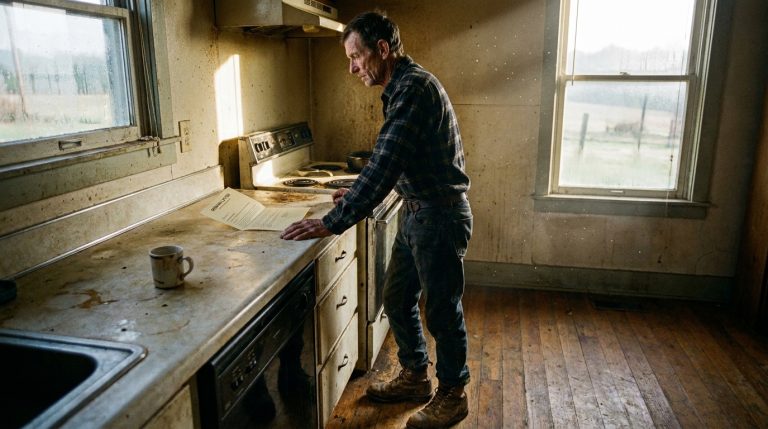
The kitchen table smelled of stale coffee and the dry, vinegar tang of old public records by midnight. Without the clear boundary lines of a private water title to back me up, my fingers smeared gray dust across photocopied county zoning maps from three decades ago.
Every parcel layout looked like a clean grid on paper, but the reality on the ground was a constant friction of mud, runoff, and unrecorded handshakes.
My thumbnail caught on a faded addendum page attached to the 1994 master neighborhood charter, the ink faint and bleeding into the porous paper stock. It wasn’t a property deed; it was a public utility covenant.
The text was buried beneath three paragraphs of standard county boilerplate regarding secondary runoff channels.
“The Homeowners Association hereby relinquishes all future structural, commercial, or recreational encroachment rights upon the western marsh frontage of Parcel 27,” I read aloud to the empty kitchen, my voice dropping into the quiet room.
The document bore a dark, heavy notary stamp from the county environmental board.
To secure the federal funding for their massive upstream retention basin thirty years ago, the original developers had legally frozen the shoreline to protect the local watershed. Mark didn’t just lack a permit for his kayak launch.
The corporate entity he commanded had traded away the physical right to even place a single plank on that mud before he ever bought his first golf shirt.
I leaned back, the wooden chair creaking under my weight as I picked up the heavy brass casing of the manual tape measure, clicking the latch shut with a sharp, metallic snap. The entitlement that built his polished world had a blind spot, and it was filed under public debt.
CHAPTER 3: THE SHADOW ON THE REEDS
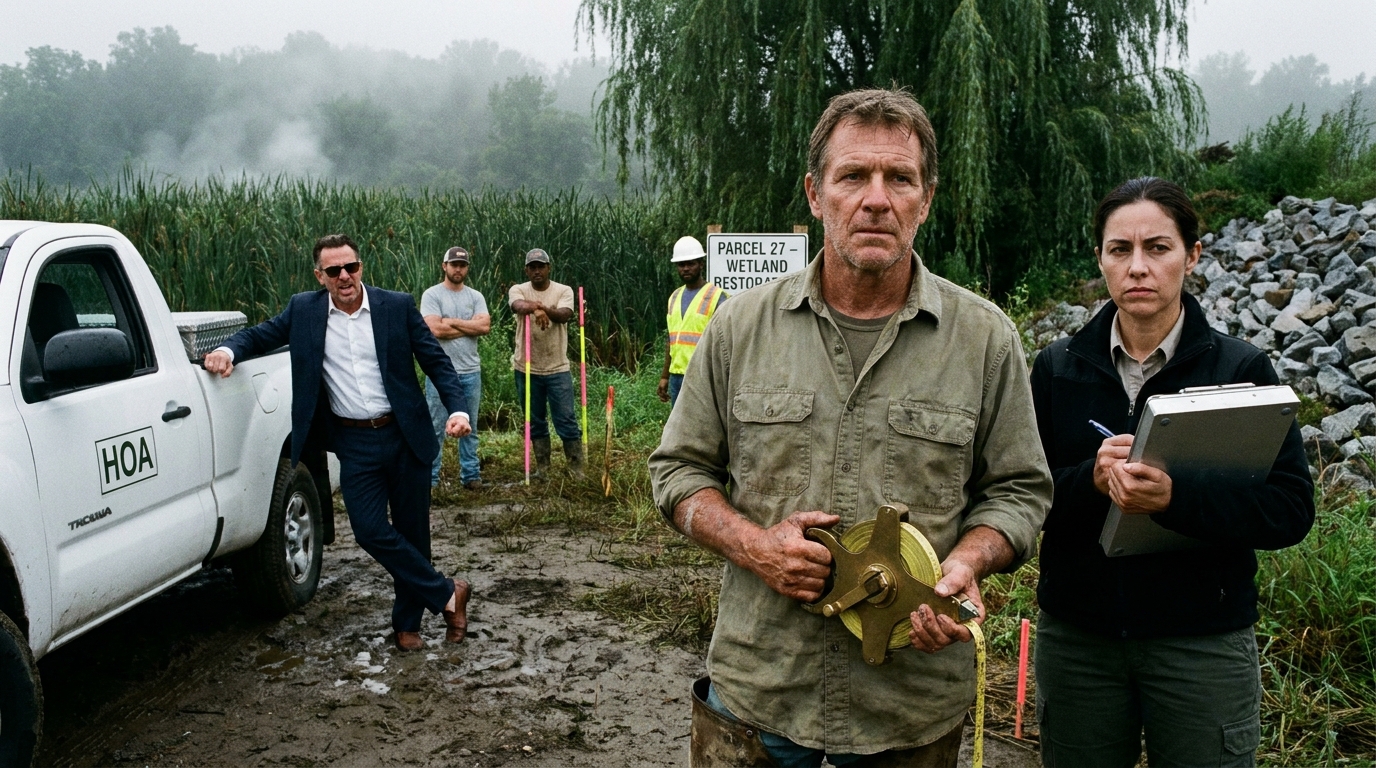
The engine died with a heavy, mechanical shudder, leaving only the sound of waves lapping against the stone erosion wall. Elena, the county environmental compliance officer, stepped out of her vehicle, her work boots sinking two inches into the churned mud where Mark’s contractors had been dragging raw lumber. She held a heavy aluminum clipboard against her hip, her gaze fixed entirely on the fresh pilings driven deep into the fragile reed line.
“The county board received the 1994 master neighborhood charter addendum you flagged,” Elena said, her voice completely devoid of administrative warmth as she walked toward the bank. “This entire shoreline segment falls under a permanent watershed protection lock.”
I stepped out beside her, my fingers rolling the cold, scratched brass casing of the manual tape measure in my coat pocket, clicking the latch into place to anchor my thoughts. Before I could answer, the crunch of gravel signaled the arrival of the white HOA pickup truck, its brakes squealing as it slid to a halt right behind us.
Mark Caldwell emerged from the driver’s side, his reflective sunglasses perched aggressively on his nose, though a faint twitch in his left cheek broke his usual robotic composure. “Elena, what seems to be the hitch here?” Mark asked, his booming voice forcing an unearned familiarity that didn’t register on her face. “We’re just executing a standard community waterfront upgrade—voted on and approved by the board.”
Elena didn’t look up from her clipboard, her pen marking a sharp, decisive line across her checklist. “The board legally traded away its construction rights on this mud thirty years ago to secure an upstream basin grant, Mr. Caldwell. Any structural footprint here is a direct regulatory violation.”
Mark’s jaw tightened, his hand gripping the bed rail of his truck so hard his knuckles turned the color of old pine. My eyes dropped to the open truck bed, catching a glimpse of a brand-new commercial transit level resting unsecured in a plastic case.
A bright yellow asset label glinted under the utility light, carrying a stamped registration number that matched the neighborhood clubhouse’s emergency maintenance budget registry instead of the standard capital improvement fund.
“We’ll file an emergency variance,” Mark countered, his tone sharpening into a direct threat as he stepped closer to the bank, ignoring the soft mud ruining his expensive leather loafers. “This upgrade moves forward regardless.”
Elena finally raised her eyes, her face hardening as she pointed to the freshly driven stakes. “You can file whatever you like, but until the county board reviews the easement fraud, this site is frozen.”
CHAPTER 4: CHECKMATE ON THE WATER
The bright overhead fluorescent lights buzzed with a relentless hum, catching the thick layers of dust floating above the crowded room. Mark Caldwell stood behind the podium, his knuckles pressed flat against the laminated wood, a bead of sweat breaking through his expensive daily trim line and tracking down his jaw.
“We are here tonight to finalize the community waterfront project allocations,” Mark said, his practiced boardroom boom carrying a desperate, forced edge that shifted the silence in the hall from passive to tense. “A minor, routine environmental hold was placed by the county, but the board’s legal counsel assures us it is a temporary procedural speed bump.”
I stood at the back of the room, my shoulder anchored against the concrete block doorframe, the brass tape measure in my pocket resting cold against my palm. Dennis, a quiet neighbor from the far end of the development, leaned slightly toward me, his brow furrowed as he watched Mark shuffle a thin stack of printed budget sheets.
“He’s pressing hard to clear the funds tonight,” Dennis whispered, his voice barely carrying over the hum of the light fixtures. “Something’s wrong with the timeline.”
Mark raised the gavel again, his hand trembling slightly under the strain of keeping his arm perfectly rigid. “Therefore, we will proceed with a final vote to release the emergency maintenance reserve to cover the contractor overages caused by this arbitrary shoreline delay.”
I pushed off from the doorframe, my work boots striking the vinyl floor with a heavy, unhurried rhythm that drew forty pairs of eyes toward the aisle. I didn’t hold up a folder or announce a grand legal discovery; I simply laid three certified copies of the 1994 county drainage easement directly onto the table where the other three board members sat.
“The emergency reserve is already gone, Mark,” I said, my voice cutting flat and dry through the hot, airless room.
The woman sitting at the board secretary’s desk blinked, her fingers freezing over her laptop keyboard as she looked down at the dark, official county seal stamped on the top page.
“That paper shows the HOA legally traded away all construction rights on my parcel thirty years ago to pay for the upstream basin,” I continued, anchoring the room in the immediate reality of the fraud. “And that commercial transit level sitting in the bed of your truck right now carries the exact serial number registered to our clubhouse repair fund.”
Mark’s face lost the last of its polished color, his mouth opening as his arm dropped, the gavel hitting the podium with a dull, hollow click that signaled the definitive shattering of his authority.
CHAPTER 5: THE DESPERATE COUNTERMOVE
The cold wind coming off the water smelled of stagnant moss and wet fuel. Mark Caldwell was already out there on the bank, his expensive polo shirt soaked through and sticking to his ribs, his face contorted into something far removed from his usual polished facade. He was violently dragging a heavy steel surveyor’s pin into the dirt, attempting to manually reset the physical property markers near my retaining wall.
“You think a few old county papers are going to ruin my life?” Mark hissed, his voice cracking as he slammed a hand axe onto the top of the metal stake.
I didn’t rush toward him, nor did I raise my hands. I moved with the exhausted, heavy precision of an adult who had spent thirty years fixing things other people broke. The heavy brass casing of the manual tape measure clicked tightly in my fist as I stopped just four feet from the edge of his truck bed.
“The county auditor spent the last two hours matching the Clubhouse emergency fund registry numbers, Mark,” I said, my voice cutting through the hollow thud of his axe.
Mark lunged forward, grabbing the iron frame of the unapproved piling to steady his footing as the soft bank slid into the freezing water beneath his shoes. He swung the flashlight toward my face, his chest heaving under the sheer biological toll of an adrenaline dump. “They won’t find anything—the board authorized every single dollar for community enhancements!”
I reached out and grabbed the cold steel shaft of the tool he had stolen from the clubhouse, using his own momentum to wedge it firmly between two rock logs. The resistance was raw and grueling; the heavy mud suctioned around our boots as he tried to yank the asset backward, his expensive watch catching on a splintered pine edge with a loud, tearing crack.
“The enhancement fund is completely dry because you fast-tracked this dock to cover a hundred-thousand-dollar deficit before the audit hits next week,” I muttered, my forearm straining against the physical friction of his desperate grip.
Mark froze, his fingers slipping from the slick metal handle as the flashlight beam flickered out against the dark, churning water. The entitlement had finally run out of runway, leaving only an enraged, cornered man standing knee-deep in the very mud he had tried to steal.
CHAPTER 6: THE NEW SILENCE
The morning air smelled of wet pine and turned earth, completely stripped of the heavy tension that had hung over the lake for months. The white HOA pickup truck was gone, replaced by a county utility flatbed that had quietly hauled away the illegal lumber piles late yesterday evening after the emergency board restructuring was finalized.
Mark Caldwell’s forced resignation had hit the community newsletters before the morning dew could even dry on the grass. The forensic audit had torn through the neighborhood accounts like a flood, exposing every cent he had shifted from the clubhouse maintenance fund to pay off his personal credit lines and fast-track the unauthorized shoreline project.
I stood on the edge of the reclaimed bank, my fingers sliding over the scratched brass casing of the manual tape measure in my pocket, clicking the clasp one final time before letting it rest flat at the bottom of my coat. Dennis walked down the slope from the upper lane, holding two plastic containers of black coffee, his usual cautious posture completely relaxed as he looked out across the undisturbed surface of the water.
“The new board just signed the permanent environmental buffer registry at the county courthouse,” Dennis said, passing me a warm cup without a single hint of his old hesitation. “No one’s ever putting a piling in this mud again.”
I took a slow sip of the coffee, the hot liquid grounding me in the absolute stillness of the morning, watching three mallards glide silently through the thick growth of native switchgrass I had just replanted. The unearned entitlement that had tried to pave over this shoreline had disintegrated under its own heavy weight, leaving behind nothing but the clean, hard truth of a boundary well-kept.
I pushed the shovel blade into the damp soil near the stone retaining wall, stabilizing the bank one final scoop at a time, content with the quiet rhythm of an everyman’s victory.