The Iron Legacy of Willow Creek and the Downfall of the HOA Tyrant
CHAPTER 1: LINE IN THE HUMIDITY
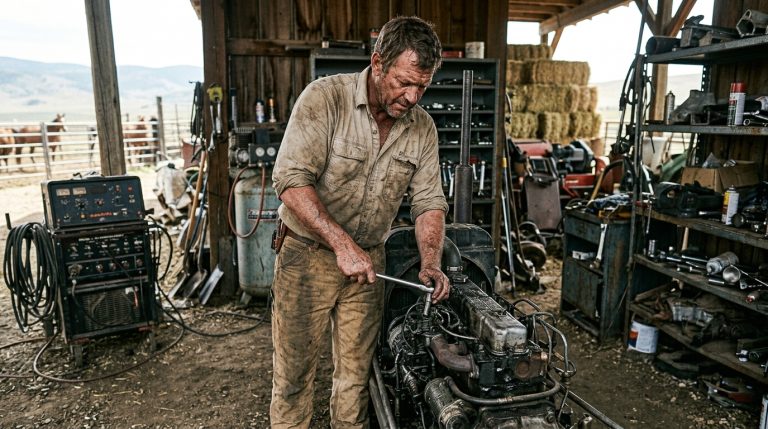
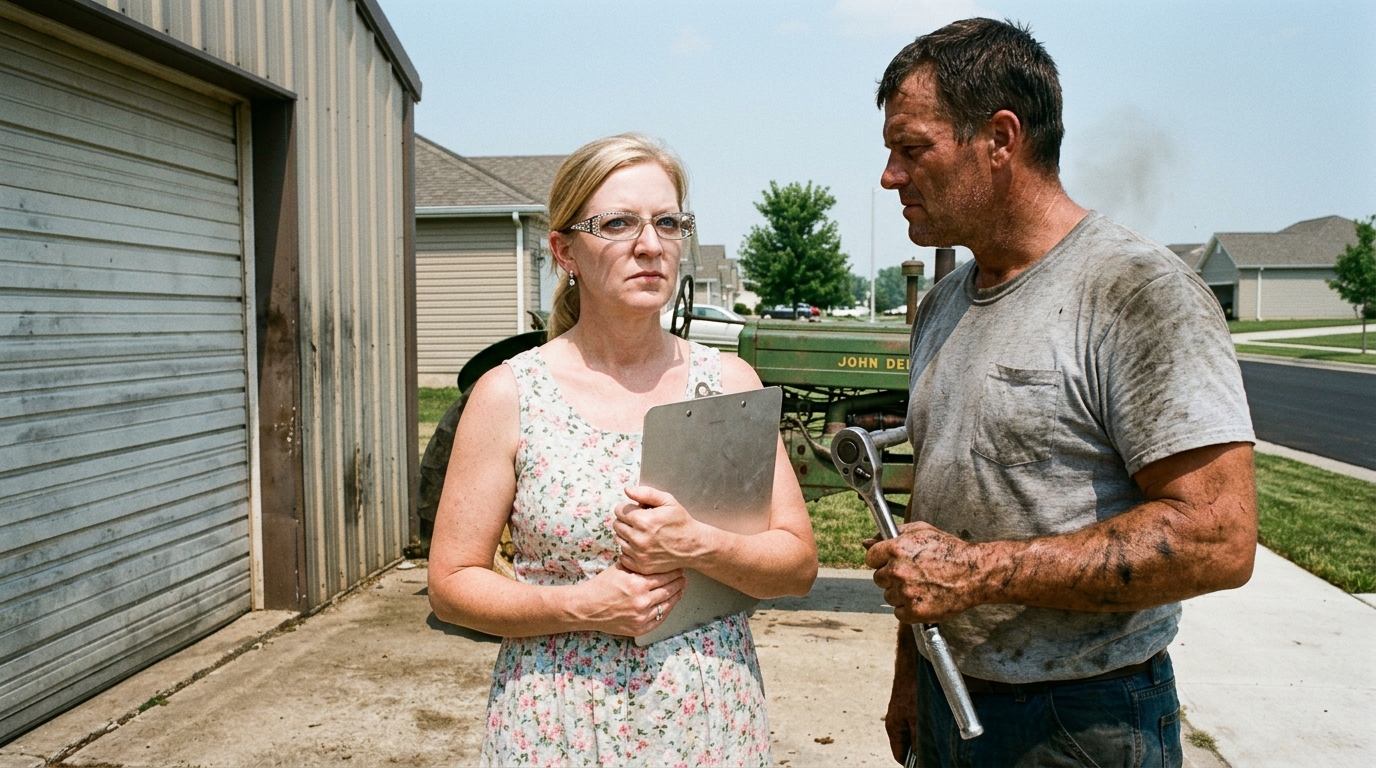
The socket wrench felt heavy and cold in my palm, a solid three-pound bar of forged chrome that smelled faintly of 80-weight gear oil. I was wiping a skin of reddish dust off the iron steering housing of my grandfather’s 1948 John Deere Model M when the gravel crunched across the asphalt edge.
“That pile of rust is an eyesore and a violation, Mr. Donovan,” Karen Miller said, her voice grinding like coarse sand in a dry bearing. “You have 48 hours to clear this pad, or the fines start at $500 a day.”
She stopped precisely two inches short of my property line, draped in a floral dress that looked like a carpet sample, clutching a aluminum clipboard to her chest like armor. Behind her rhinestone-trimmed glasses, her pale eyes swept over the green iron frame with total contempt.
I didn’t lower the rag. I didn’t step off the concrete pad I’d poured with my own hands three weekends ago. I just rolled the 1/2-inch socket slowly between my knuckles, letting the cold steel press into my calluses while the humid afternoon air settled over the driveway.
“The tractor is a registered antique, Karen,” I said, keeping my voice down in the lower register where it stays when the blood in my neck starts running hot. “It sits entirely on my pad, behind the front elevation of the garage. It isn’t violating any covenant I’ve ever signed.”
“Bylaw 7.14, subsection B,” she snapped, clicking her ballpoint pen twice with a sharp, metallic rhythm that sounded like a trigger reset. “Inoperable or agricultural apparatuses are strictly prohibited on residential parcels. The board doesn’t negotiate with residents who drag down property values.”
“I am the owner,” I said. “And the machine runs fine.”
“We’ll see how fine it runs when the total hits five figures,” she said, her mouth twisting into a narrow line that didn’t reach her eyes. She turned on her heel, her sandals slapping hard against the fresh pavement as she marched across the street toward her immaculate, uniform turf.
I stood in the silence she left behind, the grease-stained rag tightening in my fist until the steel socket dug deep into my palm. The threat wasn’t a bluff; a woman like Karen didn’t make bluffs when she had a rubber stamp and a mailbox. But as I turned back to the faded green cowl, feeling the cool iron under my thumb, the frustration in my chest settled into something flat, hard, and permanent.
She wanted a street fight over a clipboard. She was about to find out what happens when you try to push a man who spent eight years learning how to build a defense out of nothing.
CHAPTER 2: PAPER WARFARE
The kitchen smelled of brewed coffee and fresh dishtowels when I walked back inside. I dropped the 1/2-inch socket onto the laminate counter with a heavy, metallic clink that made Sarah flinch.
She stood by the stove, holding a white envelope stamped in an offensively cheerful hunter green. The Oak Meadows HOA logo was embossed on the corner like a crest.
“Five hundred dollars a day, Mike?” Sarah’s voice carried that thin, brittle strain that comes right before the panic sets in. “Tell me she’s joking. Tell me a neighbor can’t just send a letter and take five hundred dollars out of our checking account.”
“She isn’t joking,” I said. I pulled the stiff cardstock from her fingers. “And she can’t take anything unless we hand it over.”
The letter was printed on heavy 32-pound paper, designed to feel like a court order. It cited Bylaw 7.14, Subsection B, calling my grandfather’s 1948 John Deere an “abandoned agricultural apparatus” and an “aesthetic blight upon the community.” It laid out a running daily fine starting effective immediately.
“We don’t have this kind of money,” Sarah whispered, her eyes tracking my face as I read the clinical, bureaucratic garbage line by line. “Leo starts kindergarten in three weeks. We have the mortgage, the truck payment—Mike, we can’t afford a legal fight with an HOA board.”
“We’re not hiring a lawyer,” I said, flattening the letter against the counter with the palm of my hand. “We don’t need a twenty-thousand-dollar legal retainer to read thirty pages of covenants.”
I opened the bottom drawer of the desk, pulled out a thick three-ring binder, a package of plastic sheet protectors, and a black permanent marker. On the white spine, I wrote in block letters: OAK MEADOWS DISPUTE – DOSSIER.
“What is that?” she asked.
“This is how we stop giving her free real estate in our heads,” I said, slinging the first violation notice into a clear sleeve and snapping the metal rings shut. “Karen relies on people panicking and opening their wallets to make the scary letters go away. I spent two tours watching idiots try to bully people with paper threats.”
I picked up the house phone, dialed the number I knew by heart from the VFW roster, and waited three rings until a rasping, gravelly voice answered on the line.
“Gunny,” I said into the receiver, watching Sarah slowly sit down at the table. “I need your eyes on a situation.”
CHAPTER 3: THE RECONNAISSANCE RUN
“She tried to fine me eighty bucks last fall,” Frank said, his broad thumb running along the edge of his neatly trimmed white moustache. “Claimed my American flag was ‘excessively faded’ and dragging down curb appeal. I told her that flag flew over Fallujah, and if she touched the bracket on my porch, I’d drag her to county court myself.”
“Did she back off?” I asked, flipping a fresh sleeve open in the binder.
“She backed off me,” Frank grunted, leaning forward until his heavy elbows pressed into his knees. “Because she knew I’d cause a scene. But she didn’t back off Mrs. Gable down on Oak Drive. Eighty-two years old, widow. Karen dinged her a hundred dollars for an unapproved bird feeder her grandkid made out of pinecones.”
I stopped turning the pages. “A bird feeder?”
“Paid it, too,” Frank said, shaking his head. “Old girl was crying when she took it down. Said she didn’t want any trouble with the board. That’s how Karen operates, Mike. She stays off the ones who bite back and bleeds the ones who keep quiet.”
I reached for my notebook, clicking my pen. “Who else?”
“Start walking,” Frank said, pointing a thick finger toward the street. “Take your evening walk early tonight. Talk to the Rodriguez family on the corner. Their kids used to have a portable basketball hoop in the driveway.”
Ten minutes later, I was leaning against the wooden fence at the end of the block while Carlos Rodriguez adjusted his garden hose. His two boys were tossing a football in the grass, keeping well clear of the asphalt.
“Fifty bucks a day,” Carlos said, his jaw tightening as he turned off the spigot. “Left it out for two hours after dinner once. Karen took a picture from her car and emailed the notice before I even got the kids washed up. Sold the hoop on Craigslist just to stop the letters.”
“Did she cite a specific covenant?” I asked.
“Just said it was an unapproved temporary structure,” Carlos said. He reached into his back pocket, pulled out a folded paper, and handed it across the gate. “Saved the paper. Figured maybe someday somebody’d ask.”
I flattened the sheet against the fence rail. It was standard HOA stationary, signed by Karen as President. But right below her signature, in smaller print, was the header for the Architectural Review Committee—blank.
As I slipped Carlos’s notice into my pocket, my eyes caught a stray scrap of paper blowing out from the blue communal recycling bin sitting by his mailbox. It was a line-item statement for common area lawn care, dropped in the shared box by mistake.
I picked it up. At the top was an invoice for “Evergreen Landscaping LLC.” No phone number. A P.O. Box address three towns over. And a total charge of four thousand dollars for trimming three oak trees along the main drive.
I folded the invoice, tucked it next to Carlos’s letter, and turned back toward my house. The neighborhood wasn’t just tired of Karen’s rules; they were paying for a paper trail that didn’t add up.
CHAPTER 4: THE UNILATERAL BREACH
The state business registry portal took three seconds to load over our home Wi-Fi. I typed the entity name directly from the crumpled paper I’d pulled near Carlos’s driveway: Evergreen Landscaping LLC.
The filing page pulled up a single registered owner and a filing address in the neighboring county.
Owner name: Paul Miller.
I leaned back in the kitchen chair, the wood squeaking under my weight. “Miller,” I said aloud into the dark room.
I pulled up the HOA bylaws PDF from the neighborhood portal, scrolling straight to Section 9—the section Karen had cited to justify her daily fines. Attached to the end of the document was the mandatory annual board structure filing from six months prior.
The Architectural Review Committee was required by Bylaw 3.02 to operate with three elected resident members to review property modifications or levy fines over fifty dollars. I cross-referenced the names. Two of the listed members had sold their homes and moved out of Oak Meadows nearly a year ago.
Karen had never replaced them. She wasn’t running a board; she was signing violation notices and approving thousands of dollars in maintenance work as a party of one.
My phone hummed against the laminate table. It was a text from an unknown number: Heard you’re asking around about Evergreen. You’re pushing your luck, Donovan.
I looked through the front window blinds. Across the dark street, the living room lights in Karen’s house flickered against the glass, casting long shadows across her manicured lawn.
She wasn’t just trying to bully me into removing my grandfather’s tractor. She was protecting a direct pipeline of neighborhood dues straight into her family’s pocket, and she knew I had the paper trail to break it.
CHAPTER 5: THE CHECKMATE TRAP
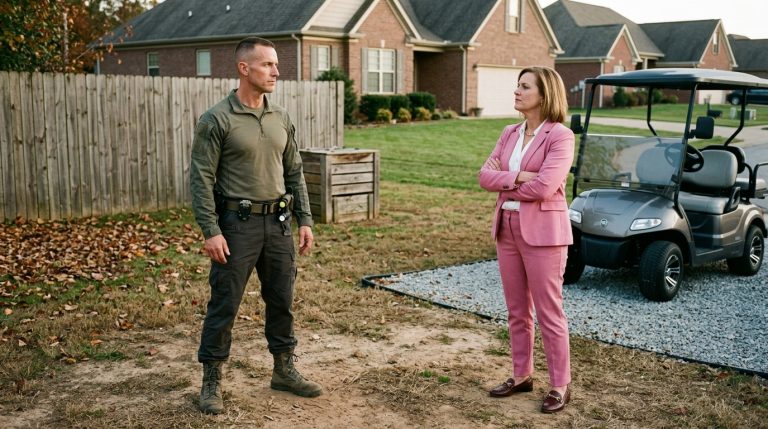
Karen stood behind the board table at the front of the room, her floral dress practically vibrating under the bright ceiling fixtures. She gripped her gavel like a hammer, her knuckles turning a mottled white.
“Mr. Donovan, this emergency session was called to address your continuous non-compliance with Section 7,” Karen said, her voice echoing off the linoleum floor. “It is not a platform for disgruntled residents to air personal grievances.”
“It’s an open meeting, Karen,” Frank Kowalski called out from the second row, his arms crossed tight over his chest. “Let the man speak.”
A wave of low murmurs rippled through the folding chairs. Carlos Rodriguez nodded from three seats down, his phone resting face-up on his knee, screen glowing.
“I have three points,” I said, my voice carrying flat and quiet across the room. I tapped the top sleeve of the binder. “First, Bylaw 3.02 requires a three-person Architectural Review Committee to levy fines exceeding fifty dollars. Your two co-board members resigned ten months ago. You’ve been issuing fines as a committee of one.”
Karen’s jaw clicked shut, a sharp bead of sweat breaking through her foundation near her hairline. “The board maintains broad executive authority during vacancy periods—”
“Second,” I cut in, turning the page so the high-resolution copy of the county corporate registry faced outward toward the front row. “You cited my grandfather’s tractor as an unapproved apparatus while approving eighty-two thousand dollars in lawn maintenance contracts over the last two fiscal years.”
She slammed the gavel down against the folding table, a wooden crack that made the two silent board members beside her jump. “That is completely out of order! Vendor selection is confidential board business!”
“The vendor is Evergreen Landscaping LLC,” I said, laying the state business filing flat against the podium. “Registered agent: Paul Miller. Your brother-in-law.”
The room went dead silent for a fraction of a second, the quiet so heavy you could hear the hum of the air conditioner overhead.
“That’s a lie!” Karen shrieked, stepping out from behind the table, her clipboard clutched to her chest like a shield as her face flushed a dark, angry crimson. “You’re twisting routine maintenance into a smear campaign because you don’t want to follow the rules! I will have you sued for defamation!”
“The corporate filing is public record, Karen,” I said, resting my hand flat on the paper. “And every homeowner in this room paid for it.”
CHAPTER 6: SILENT DEPARTURE
Karen stood beside her car, holding a taped cardboard box containing a solitary desk lamp and a stack of plastic folders. Without her clipboard, her shoulders slumped forward under a beige cardigan, her gaze refusing to drift across the asphalt toward my pad.
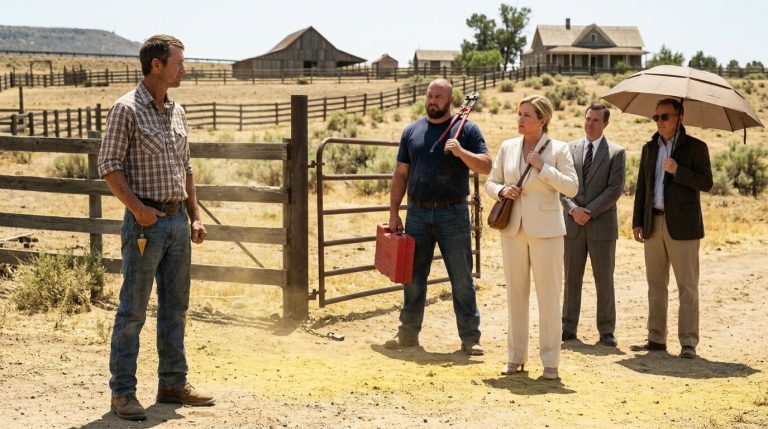
The metal doors of the moving truck rattled as the driver locked the latch in place. Frank Kowalski walked down his porch steps, holding two cold glass bottles of sarsaparilla, his white flat top gleaming in the morning sun.
“Interim board finalized the vote last night,” Frank said, handing me a bottle. “All fines officially wiped from your ledger. Carlos gets his basketball hoop back up today, and Mrs. Gable’s bird feeder is back on her porch tree.”
“What about the state audit?” I asked, twisting the metal bottle cap off until it popped in my palm.
“County prosecutor took the whole folder you handed over,” Frank said, watching the yellow truck pull out of the driveway. “Her brother-in-law’s already liquidating the LLC. She won’t be serving on another neighborhood board for as long as she lives in this state.”
Karen didn’t look back as she opened her sedan door. There were no dramatic speeches, no tearful apologies, and no fiery exits. She simply backed out into the street, her tires crunching over the loose gravel on the shoulder, and drove past my driveway without turning her head.
I turned back to the John Deere. The faded green paint on the cowl was still flaking near the fuel cap, but the cast-iron engine block was clean, wiped down to bare, solid metal.
I reached down, gripped the cold steel crank handle at the front housing, and gave it one firm, practiced pull.
The two-cylinder engine coughed once, spat a faint cloud of grey smoke from the vertical pipe, and caught—settling immediately into that steady, rhythmic pop-pop-pop that my grandfather had taught me to listen for thirty years ago.
I rested my hand on the vibration of the green hood, taking a slow sip from the glass bottle while the machine idled smoothly in the quiet morning air.