The Architect of Silence: A Battle for Control in the High-Stakes Game of Suburban Homeowner Dominance
CHAPTER 1: THE MATHEMATICS OF DECEIT
The autumn air outside was thin, biting, and smelled of the coming frost. I stood on the edge of the property line, the taste of dry earth still coating my tongue. Karen’s golf cart hummed in the driveway like a predatory insect, its battery motor whining at a pitch that set my teeth on edge. She hadn’t left yet. She was watching, waiting for the crack in my composure, the moment where I’d beg for mercy or shout until my face turned purple.
I gave her neither.
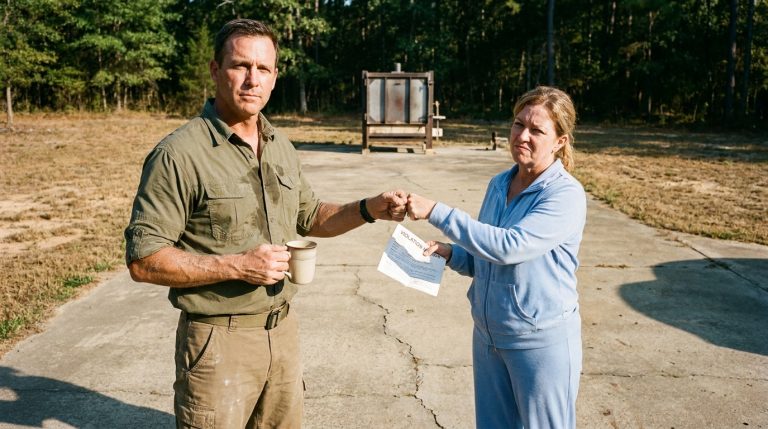
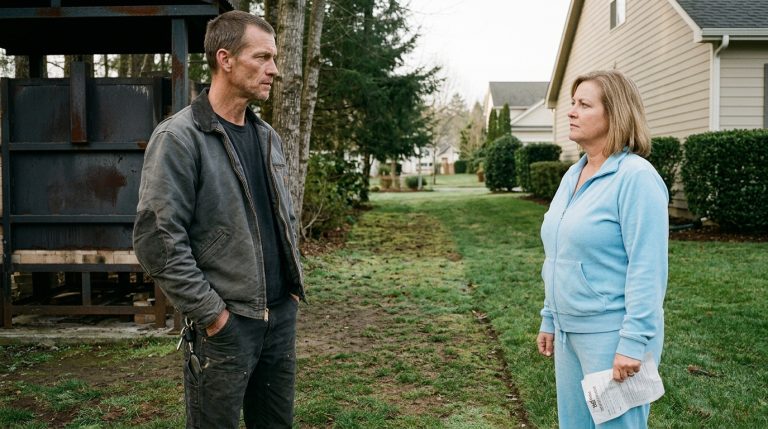
“Five thousand dollars, Karen,” I said, my voice as flat and level as a spirit bubble on a carpenter’s level. I didn’t look at her; I looked at the compost bin. The cedar boards were solid, hand-milled, and reinforced with stainless steel screws. It was built to last a decade, not to be a neighborhood eyesore. “You’ve miscalculated the physics of this dispute. You’re citing By-Law 7, Section C, as if it’s a law of nature. It’s not. It’s a guideline, and it’s open to interpretation.”
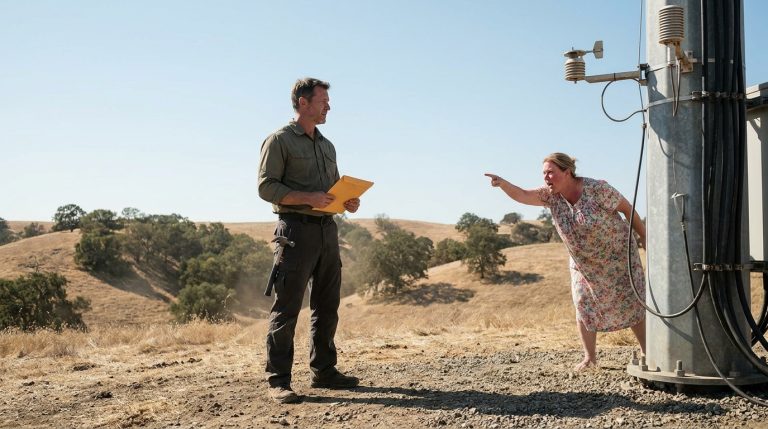
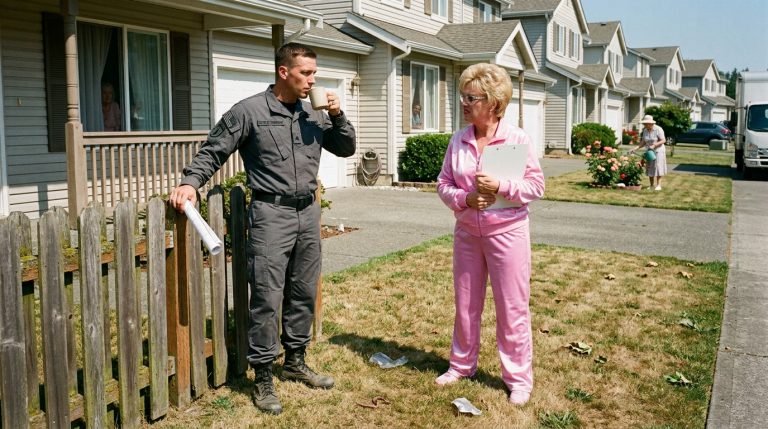
Karen’s smile was a thin, predatory slash of lipstick against a pale, powdered face. She crossed her arms, the fabric of her pink jacket pulling tight across her chest. “It’s not a guideline, Marcus. It’s a dictate. And I am the one who interprets it. You have until Friday to remove the filth, or the lean on your property will be the least of your concerns.”
She spun the cart around, the tires crunching against the gravel, and retreated down the cul-de-sac. She didn’t look back. She didn’t need to. She expected me to crumble.
I turned back to the workshop, my boots heavy on the concrete. The silence of the garage was absolute, filled only by the scent of pine shavings and machine oil. I didn’t see a trash heap. I saw a system. My life had been built on the Corps of Engineers’ logic: every action has an equal and opposite reaction. She had initiated a force-based maneuver, attempting to push me out through sheer, unadulterated pressure.
I set the official fine document on the workbench under the harsh glare of the LED strip. The paper was stiff, expensive card stock, embossed with gold ink. It was designed to look authoritative, to bypass rational thought and trigger an immediate stress response. My phone buzzed in my pocket—a notification from the home security system. Someone had just accessed the HOA’s public portal from a hidden proxy.
I tapped the screen, my pulse steady. My hand didn’t tremble as I entered the admin override code I’d spent three weeks cracking. The files opened: bank accounts, contractor invoices, and a hidden sub-folder marked Asset Acquisition.
My eyes narrowed. The document wasn’t just a fine. It was a formal request for the property survey of my lot, filed with the county clerk an hour before she arrived. She wasn’t trying to clean up my yard. She was trying to condemn it.
The Zeigarnik effect kicked in—that peculiar, gnawing human need to resolve the incomplete. I hadn’t even begun to fight, yet I already knew the battle wouldn’t end at the fence line. It would end when I understood exactly why she wanted this specific strip of earth so badly that she was willing to risk everything to take it.
The light in the workshop flickered, casting a long, jagged shadow across the wall. I reached for a pen. There was a discrepancy in the ledger she’d uploaded. She wasn’t just managing the HOA; she was bleeding it dry.
CHAPTER 2: THE ANATOMY OF A LEAN
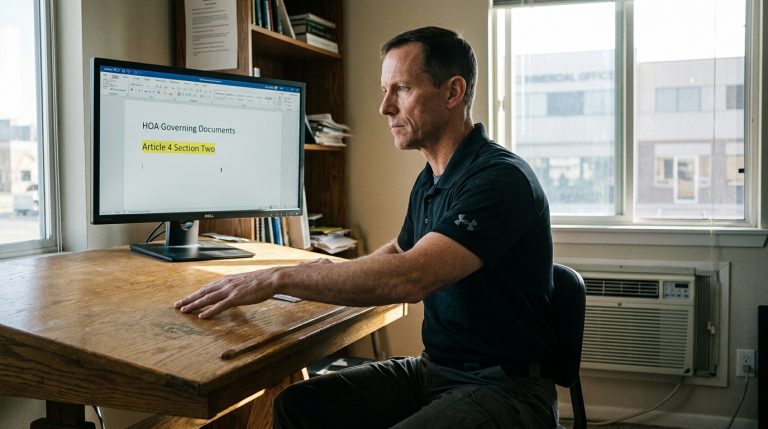
The LED strip above my workbench cast a clinical, unforgiving light on the monitor. It was a cold light—the kind that stripped away the veneer of suburban comfort and left only the raw, ugly metal underneath. I didn’t reach for my coffee. I didn’t reach for a snack. I reached for a notepad, the spiral binding clicking under my thumb as I flipped it open to a fresh, blank page.
Embezzlement was messy. It was a crime of desperation disguised as a crusade for order. I stared at the screen, my eyes tracing the lines of the HOA’s financial records. Karen’s signature was scrawled at the bottom of a fraudulent invoice for “Common Area Landscaping Maintenance,” a bill issued to a shell corporation registered in a neighboring county. The numbers didn’t align. They were too rounded, too convenient. A thousand dollars here, two thousand there, siphoned off into accounts that had no business being associated with a non-profit homeowners association.
I leaned back, the metal chair creaking. The sound triggered a sudden, sharp memory: an airfield in a forgotten corner of the world, twenty years ago. The logistics were collapsing. Supplies weren’t moving, and the fuel bladders were empty because someone in the chain had swapped official vendor contracts for kickbacks. The phantom scent of burning diesel and dust filled my senses for a split second, a visceral reminder of what happens when a system is compromised by internal greed.
The pattern was identical.
Karen wasn’t just a petty tyrant obsessed with mailbox colors; she was a predator using the by-laws as a smokescreen. The “unsightly storage” violation was a surgical strike. She didn’t want my compost pile gone for the sake of the neighborhood’s aesthetic; she wanted me off the lot. I looked back at the screen, the cursor blinking rhythmically, mocking me. I pulled up the county survey she had filed. It showed my lot highlighted in red, flagged for a rezoning application. The “Whispering Pines” development was supposed to be a protected residential zone, but if she could prove the lot was “non-compliant” and “a public nuisance,” the property value would crater, allowing her associates to snap it up for a fraction of its worth.
I heard the soft thud of the front door closing. Sarah was home. I quickly minimized the windows, clicking over to a CAD drawing of a garden shed I’d been working on. I didn’t want her to see the scale of what I’d found—not yet.
“Marcus?” she called out, her footsteps soft on the hardwood. “You’ve been in here for hours. Are you okay?”
I turned, forcing my face into a mask of calm. “Just measuring some lumber, Sarah. These bylaws are a mess of contradictory language. I’m trying to find the loophole that’ll keep the pile where it is.”
She hovered in the doorway, her eyes scanning the workshop. It was my sanctuary, organized down to the millimeter. “She’s not going to stop, is she? She doesn’t want the compost gone. She wants you to bow.”
“Let her want,” I said, rising to meet her. I kissed her forehead, the scent of her lavender shampoo a jarring contrast to the metallic tang of the workshop. “But we aren’t bowing.”
As she walked toward the kitchen, I returned to the bench, but I didn’t open the CAD file. I stared at the darkened screen of my phone. I needed an entry point into her personal communications. If she was laundering money, she’d have a digital footprint somewhere that wasn’t public. I remembered the golf cart—the one she patrolled in like a bored security guard. I’d seen her tapping away on a tablet while parked near the Hendersons’ house last week. She didn’t just use it for clipboard notes.
I looked at my watch. 8:15 PM. The neighborhood was quiet, the streetlights flickering to life, casting long, sharp-edged shadows across the cul-de-sac. Karen’s golf cart was parked in her driveway, a silhouette against the brick facade of her house.
I didn’t need to be loud. I needed to be surgical. I walked to the tool cabinet, pulling out a small, specialized kit—the kind used for low-voltage sensor repair. It wasn’t about breaking in; it was about tapping into the frequency the tablet used to sync with the HOA’s local server. If I could get close enough to the cart, I could pull the cache.
I stepped out the back door and into the cool, biting air. The leaves were turning, crisp and brittle beneath my boots, and the wind had a way of cutting through a light jacket. I kept to the shadows of the fence line, my movements calculated and slow. Every step was measured. I wasn’t just a neighbor anymore; I was an operative in my own backyard. As I neared the boundary of her property, I saw it—the cart, tucked behind a pillar of the garage.
I reached into my kit, pulling out the signal scanner. My breath hitched in my throat as the display flickered to life. The cart was connected. She was still downloading updates. I knelt in the tall, unmown grass at the very edge of the woods, the damp earth cold against my knees. I had the bridge. I started the handshake protocol, my fingers moving with the mechanical precision of a decade of training.
Suddenly, a light turned on in the upper window of her house. The silhouette of a head appeared behind the curtains. My heart didn’t race—it went cold. I froze, the scanner clutched in my hand, my shadow merging with the dark earth. She was still awake. She was watching the street.
The download progress bar crawled forward: 40%… 45%… 50%.
I held my breath, listening to the silence of the neighborhood. A dog barked two streets over. The wind sighed through the pines. I was close enough to see the texture of the garage stucco, close enough to hear the soft mechanical purr of her cart’s battery charging.
If she looked down, she’d see the glint of the scanner. I tucked it closer to my chest, my muscles aching with the tension of holding perfectly still. The progress bar reached 75%. I just needed another thirty seconds.
Then, the front door of her house clicked open. The sound cut through the silence like a gunshot. I pressed my face into the grass, my eyes fixed on the driveway. She wasn’t just checking the street; she was stepping out. And in her hand, she was holding the tablet—the very thing I was currently tapping into.
CHAPTER 3: THE LEDGER OF LIES
I didn’t move. I stopped existing as a man and became a part of the landscape—a shadow pinned against the damp earth and the rusted wire of the fence. Karen stood no more than ten feet away. She was backlit by the porch light, her silhouette rigid, an imposing figure of authority that felt suddenly, jarringly fragile. She tapped a fingernail against the screen of the tablet, the rhythmic tink-tink-tink echoing against the silence of the cul-de-sac.
She wasn’t just checking her email. She was running a diagnostic. My signal scanner buzzed once, a soft, vibrating warning against my ribs, signaling that the handshake had been interrupted. I had the partial download—the financial breadcrumbs—but the directory was now encrypted. She had tightened the lock.
“I know someone is out here,” she murmured, her voice not a shout, but a low, dangerous vibration that carried clearly in the cool autumn air. She wasn’t looking at me, but she was looking at the exact patch of darkness where I lay prone. “If you think a bit of electronic mischief is going to save your property, Mr. Jensen, you’ve fundamentally misunderstood the architecture of this neighborhood.”
She turned, her heels clicking precisely against the driveway as she walked back toward the house. The front door swung shut, the mechanical thud of the deadbolt locking sounding like a finality. I waited, counting the seconds, my lungs burning from the forced, shallow rhythm of my breathing. One hundred and eighty seconds. The standard wait-time for a perimeter guard to lose interest.
I scrambled backward, low to the ground, keeping the bulk of the garage between us until I hit the tree line. Only when I was back in the familiar, oil-scented safety of my workshop did I finally let out a long, ragged exhale. I didn’t turn on the main overhead lights. I sat in the dim glow of the monitor, my hands shaking slightly as I pulled the data from the scanner.
It wasn’t much, but it was enough to tear the mask off.
I opened the folder. The files were a digital autopsy of the HOA’s corruption. There it was: an invoice from a landscaping firm that didn’t exist, dated for work that had never been performed on the green space. But beneath that, buried in the metadata, was something else. A file signature I hadn’t expected—a recurring reference to a company called “Vanguard Development Group.”
I leaned closer, the harsh glare of the screen highlighting the fine lines of fatigue around my eyes. Vanguard wasn’t a landscaping firm. They were a high-end real estate development group known for aggressive acquisitions and turning “problem properties” into luxury housing blocks. The connection was linear: Karen was manufacturing violations, bleeding the residents dry with legal fees and fines to force them into a state of financial, and eventually physical, surrender.
I pulled up the HOA bylaws, cross-referencing the clauses. Article 12, Section E: The Board reserves the right to initiate a mandatory lien sale on properties that maintain a debt exceeding 20% of the home’s assessed market value.
She wasn’t just stealing dues. She was liquidating the neighborhood.
I grabbed my phone and navigated to a secure, encrypted messaging app. I didn’t text; I sent a brief, coded alert to Dave Sterling. The ledger is corrupt. She’s acting as an agent for Vanguard. We don’t have time for the ten-day appeal. We have to bypass the board entirely.
The response was almost immediate. I’m already at the accountant’s office, Marcus. Frank is with me. We found discrepancies in the tax filings. Get to the clubhouse in twenty. We’re going to open the books.
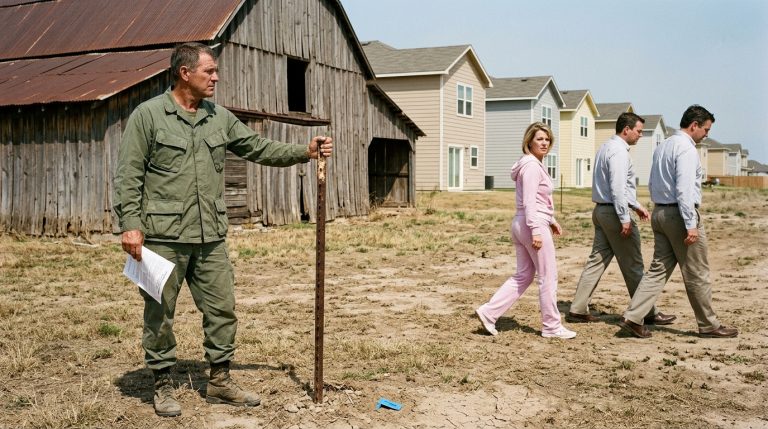
I didn’t pack a bag. I took my phone, the binder with my evidence, and a heavy-duty flashlight—not for the light, but for the weight of it in my hand. I walked out into the night, the air feeling colder now, stripped of the warmth of my sanctuary. The walk to the clubhouse was a gauntlet of memory. I passed the Hendersons’ house, dark and quiet, and the empty lot that Karen had been eyeing for the last month.
When I arrived, the clubhouse lights were already on—a harsh, flickering glow that spilled out onto the empty parking lot. Dave and Frank were already inside, their heads bent over a spread of documents that looked like a battle map of financial ruin.
“You’re late,” Dave said, though there was no malice in his voice, only the steady, grounded concern of a man who’d seen enough command errors in his time. He gestured to the table. “Look at this. She hasn’t just been stealing. She’s been transferring the deeds of the ‘problem’ properties into a holding company under her sister’s name.”
I looked down. The documents were damning—deeds, signatures, and a trail of money that led straight to the pocket of the woman who held the gavel. It was cold, calculated, and entirely, perfectly illegal.
“She’s exposed,” Frank added, his voice thin. “We’ve got enough here to bring in the state auditor, but she’s on the board. She’ll have the power to shut this down before we even make the call.”
“Not if we don’t give her the chance,” I said, my voice echoing in the sterile room. I laid my own evidence on the table—the metadata from the digital ledgers I’d cracked. “She thinks she’s fighting a neighborhood dispute. We need to stop acting like residents and start acting like investigators.”
“What’s the plan?” Dave asked, leaning forward, the fluorescent light carving deep, sharp shadows into his face.
“We don’t go to the board,” I replied. “We bypass the board. We go to the homeowners, one by one. Tonight. We show them the ledger, we show them the Vanguard connection, and we walk into the board meeting tomorrow with a vote of no confidence that she can’t suppress.”
“That’s a lot of doors to knock on,” Frank said, looking at his watch.
“I’ve got the map,” I said, pointing to the layout of the Whispering Pines development spread out on the table. “And I know exactly which houses she’s targeted. We start with the Hendersons. Then we move to the Millers. We build the quorum, Dave. If we get fifty-one percent, the board’s authority is irrelevant. She’s just a citizen with a very large, very criminal problem.”
As we stood there, planning the logistics of the revolt, I caught a flicker of movement through the window—the bright, distinct glow of a golf cart’s headlights turning into the clubhouse parking lot. It was Karen. She wasn’t supposed to be here until the morning.
My tactical sense surged. She must have tracked the data breach.
“Dave, Frank—back room. Now,” I hissed, pushing them toward the storage closet. I grabbed my binder, turning off the main lights and sliding into the shadows behind the podium. The front door handle jiggled, the metal cold and unyielding under the pressure of her hand, and then, with a sharp, crisp click, the lock gave way. She was inside.
CHAPTER 4: THE COUNTERSTRIKE
I pressed my spine against the wall behind the podium, the texture of the drywall rough and cold against my shoulder blades. Karen didn’t move toward the storage closet. She stood in the center of the room, her presence dominating the space. She wasn’t searching for intruders; she was surveying the room as if it were a chessboard, her movements smooth, practiced, and utterly devoid of hesitation.
She pulled the tablet from her bag and laid it on the main board table. A blue light began to pulse from the device, a low-frequency hum that vibrated through the floorboards. She was scanning for unauthorized network connections. My own phone, still connected to the bridge I’d established earlier, buzzed in my pocket—a violent, continuous thrum of data transfer failing.
I had to move. If that signal pinged her device, I’d be marked.
I waited for the rhythmic thump of the air conditioning unit to cycle on, the mechanical roar providing the necessary sonic cover. I shifted my weight, my boots sliding soundlessly over the industrial carpet as I skirted the edges of the room toward the exit. But then, she stopped. She tilted her head, the sharp angle of her chin cutting through the dimness. She had heard something—the subtle friction of my jacket against the wall.
“Marcus?” she said, her voice dropping into a register that lacked all pretense of suburban pleasantry. It was cold, sharp, and entirely professional. “I know you’re in here. You were never particularly good at staying invisible. You have the heavy-footed ego of an engineer who thinks every structural weakness can be braced with enough steel.”
I froze. She wasn’t just guessing; she was baiting.
“I have the ledger, Karen,” I replied, my voice steady, though every instinct I possessed told me to run. “I have the Vanguard files, the shell company invoices, and the deed transfers. The board doesn’t need to know—the state auditor does.”
She laughed, a short, brittle sound. “You think the auditors care about a few thousand dollars in a neighborhood slush fund? You’re playing with arithmetic, Marcus. I’m playing with zoning law. By the time you get an auditor to look at a file, I’ll have already filed for the property consolidation. Your house, the Hendersons’, the Miller lot—it’s already part of the development plan. A few letters from a concerned neighbor aren’t going to stop a multi-million dollar rezoning project.”
She walked toward the back room, her heels tapping with the confidence of a woman who owned the ground she walked on. I realized then that my tactical assumption had been wrong. I had been looking for a fraud; she had been executing a land grab. The embezzlement was just the operating capital—the grease for the gears of the legal engine she’d built.
I slipped out the side door just as her hand reached the storage closet handle. I didn’t head for my car. I headed for the Hendersons’.
The night air was biting, a thin, frozen veil that stung my face as I sprinted across the green space. I had to get to John and Mary. If her timeline was as accelerated as she claimed, she wouldn’t wait for a board meeting. She would move to serve eviction notices or zoning condemnations by morning.
I reached the Henderson house, my breath hitching in my chest, and pounded on the door. John opened it, his face pale, holding a newspaper—not a paper, but a formal notice from the county.
“They were here ten minutes ago, Marcus,” he whispered, his eyes wide. “They said our house is designated for immediate inspection under ‘Public Safety and Structural Hazard.’ They gave us twenty-four hours to vacate.”
The “Public Safety” clause—the same one she’d used against my compost. She had expanded the scope from the yard to the foundation.
“They can’t do that,” I said, my voice tight. “We have the documentation. We have the proof of her conflict of interest.”
“It doesn’t matter,” John said, handing me the document. “Look at the seal. It’s not from the HOA. It’s from the zoning commission. She’s already pushed it through the municipality.”
The realization hit me with the weight of a physical blow. She hadn’t been fighting the neighborhood; she had been weaponizing the city government against us. I looked at the seal—it was authentic, but the filing date was impossible. It had been processed in less than an hour. That wasn’t just influence; that was a pre-arranged, high-level payoff.
I felt the flickering of the streetlamp overhead, the light oscillating in a way that made the entire world seem disjointed, unanchored. My vision blurred for a second—a psychological phantom of the airfield, the sensation of the floor dropping out beneath me. I forced myself to focus on the edge of the paper, the sharp, crisp line of the ink.
“She’s moving now,” I said, my voice hardening. “If she’s hitting your house, she’s hitting everyone who questioned her. Dave. The Millers. We have to stop being defensive. We have to burn the bridge, John.”
“How?”
“We don’t wait for the auditor,” I said, pulling out my phone and opening the encrypted connection to the county’s central database. I’d spent months mapping the digital infrastructure of our township for my work; I knew the backdoor to the zoning commission’s automated filing system. It was a breach—a felony if I was caught—but it was the only way to flag the consolidation as a fraudulent submission. “We hold the ground. And if she wants this lot, she’s going to have to walk through every single one of us to get to it.”
I started typing, the keys clacking in the silent room. I wasn’t just editing a file; I was injecting a recursive error into the zoning database, triggering a manual review that would stall every single one of her applications until the board could investigate. It was a tactical delay—the engineering equivalent of blowing a bridge to slow an advancing column.
But as I hit ‘Enter’, the screen flashed a brilliant, blinding red. Access Denied: Authentication Override Initiated.
She wasn’t just managing the HOA; she was managing the server. I looked up at the Hendersons, the realization sinking in. We were standing in a room that, according to the city, no longer belonged to us.
CHAPTER 5: THE BOARDROOM SIEGE
“It’s gone,” John Henderson said, his voice barely a whisper in the sudden, oppressive silence of the living room. The blue power light on the router flickered once and died. “She cut us off, Marcus. She’s not just watching the database; she’s watching the node.”
I didn’t answer. I stood up, the chair scraping sharply against the hardwood floor. The air in the room felt ionized, tight with the static of a trap snapping shut. Karen didn’t just want to win; she wanted to leave us with nothing to bargain with. But she had made one tactical error: she assumed that because she controlled the digital infrastructure, she controlled the physical reality.
“She’s counting on the file being the only evidence,” I said, grabbing my bag. “But a digital trail is just an echo of a physical action. If she’s laundering money through Vanguard and manipulating deed transfers, those transactions have to be recorded somewhere in the county archives or, at the very least, in the hard-copy files she keeps in the clubhouse office.”
“The clubhouse is locked, Marcus,” Mary said, standing by the window. “And she’s got a private security patrol roaming the grounds tonight.”
“Let them patrol,” I said, my voice dropping to that calm, flat cadence I used when the mission parameters shifted from offensive to survival. “We don’t need to get past them. We just need to get the documents that prove the consolidation was never authorized by the board majority.”
We left the Henderson house through the back, moving through the shadows of the pines. The night was cold, the kind of biting, crystalline chill that made every breath feel like inhaling glass. We didn’t head for the front entrance of the clubhouse. Instead, we circled toward the maintenance bay—a low-slung, cinderblock structure that shared a ventilation shaft with the main office.
The physical labor of the next hour was a grueling exercise in precision. I worked with the tools I’d brought, my hands steady even as my mind calculated the time remaining before the security patrol returned to this quadrant. My movements were stripped of all unnecessary motion: the turn of a wrench, the pry of a crowbar, the steady, rhythmic breathing of an engineer who knew that structural integrity was a matter of patience.
When I finally eased the metal grate of the ventilation shaft out of the wall, the scent of industrial cleaner and stale coffee hit me—the smell of the trap.
I dropped into the office, my boots hitting the carpet with a muffled thud. I didn’t reach for the light switch. I used the beam of my flashlight, the narrow, sharp cone of white light cutting through the darkness like a blade. I went straight for the filing cabinet—the heavy, fire-rated model that Karen treated like a vault.
It was locked, naturally. But it was a standard-issue security cabinet, and I knew the design flaw in its locking mechanism. A small, thin strip of high-tensile steel, a precise amount of pressure applied at the right angle, and the tumblers clicked.
Inside, the truth wasn’t just digital—it was terrifyingly tactile. There were the original, un-redacted deed transfers, the physical bank statements with Karen’s signature next to corporate entity names that matched nothing in the HOA ledger. And underneath it all, the blueprint for the entire neighborhood, with every property she’d marked for “consolidation” shaded in a cold, clinical red.
I began photographing the files, the flash of my camera illuminating the room in rapid, rhythmic pulses. With every image, the weight of the conspiracy became heavier. She wasn’t just taking our houses. She was erasing the entire community to make way for a concrete and glass luxury development, and she had the city council’s approval already stamped on the documents.
Suddenly, the floorboards in the hallway groaned.
I doused the light. Silence returned, absolute and heavy. Outside, the headlights of a patrol car swept across the office window, the blue and white light washing over the room. I held my breath, my muscles coiling like wire. I was cornered—three walls of cinderblock and one door that led directly into the path of the patrol.
I glanced at the ventilation shaft. Too small. I looked at the desk. Too exposed.
Then, I looked at the ledger—the one open on the desk. She hadn’t left this out by accident. It was a decoy. The real consolidation files weren’t in the cabinet; they were hidden in the sub-floor beneath the desk itself. I hadn’t even scratched the surface of the Layer 2 reality.
The door handle turned. A shadow stretched across the threshold, long and distorted.
I didn’t panic. I didn’t retreat. I stood my ground, my hand gripping the edge of the desk. The door swung open, and the beam of a heavy-duty flashlight cut into the room, scanning the walls, the ceiling, and finally, the spot where I had been standing just seconds before.
“I know you’re in here, Marcus,” Karen’s voice drifted in from the darkness of the hallway, steady and terrifyingly calm. “But you’re too late. The zoning commission has already signed the consolidation order. By the time the sun rises, your house will technically be the property of Vanguard Development. You’re not a homeowner anymore. You’re a squatter.”
I remained perfectly still, my eyes tracking the beam of her light as it moved, searching, hunting. I was standing in the darkness, the proof of her crimes clutched in my hand, but for the first time, I realized the game had changed. She wasn’t fighting for control of the HOA. She was fighting to ensure we wouldn’t have a place left to call home.
CHAPTER 6: THE ARCHITECTS FALL
The light didn’t just illuminate the room; it pinned me to the spot. Karen’s hand remained rock-steady, the beam locked onto my face. She didn’t gasp or recoil. She simply exhaled, a sound of profound, weary satisfaction.
“You never could leave a project unfinished, could you, Marcus?” she said, her voice echoing off the cinderblock walls. “You’re standing in a room full of evidence that you don’t even begin to understand. You think this is about the money? You think this is about a few forged invoices?”
She took a step forward, the flashlight beam dipping to reveal the files I was clutching. “This neighborhood is dying. It’s a stagnant pool of outdated architecture and decaying infrastructure. Vanguard isn’t just buying land; they’re performing an urban renewal that Whispering Pines hasn’t seen in thirty years. I am the architect of a future that this pathetic collection of retirees and hobbyist gardeners can’t even fathom.”
I didn’t answer. I focused on the geometry of the room, calculating the distance between us and the heavy fire-rated cabinet behind her. She was positioned near the door, but the flashlight was her tether; she couldn’t strike me without dropping it.
“You’re not an architect, Karen,” I said, my voice steady, cutting through the silence of the clubhouse. “You’re a scavenger. You didn’t build a future; you looted the present.”
I lunged, not toward her, but toward the light. My shoulder connected with her arm just as the beam flickered upward. The flashlight clattered against the floor, rolling into the shadows. We collided, the force of the impact sending us spinning against the filing cabinet. She fought with a desperate, frantic energy, her nails raking against my sleeve, but she was fighting a man who had spent his life maneuvering in confined, high-pressure environments. I pinned her wrist against the metal, the cold steel biting into her skin, and shoved her toward the wall.
“The audit is already triggered, Karen,” I said, my voice low. “Not by the board, and not by the residents. I uploaded the consolidation files to the county’s lead investigator twenty minutes ago. The automated override failed, but the packet capture didn’t. The moment you opened that server, you authenticated the entire transaction. You didn’t just steal the land—you digitized the confession.”
She went limp, the fight draining out of her, replaced by a sudden, jagged realization. She looked at the desk, at the open sub-floor, at the files strewn across the carpet. She had been so busy managing the appearance of control that she hadn’t noticed the structural weakness I’d been building beneath her feet for weeks.
The sirens began to wail, a low, rising pitch that echoed through the empty clubhouse parking lot. Blue and red lights pulsed through the window, washing over the room in a staccato rhythm of reality. She looked toward the door, her face pale, the mask of the iron-willed president finally, permanently shattering.
She wasn’t a titan of industry anymore. She was just a woman standing in a room full of stolen papers.
When the officers entered, I stepped back, my hands raised. I didn’t gloat. I didn’t offer a final word. I watched as they placed her in cuffs—the cold, metallic sound of the ratchets locking into place. It was a rhythmic, final sound, the mechanical conclusion to the project I had been forced to undertake.
The cool-down came the next morning. The neighborhood was quiet, the air crisp and clear, devoid of the artificial tension that had gripped it for months. I walked out to the backyard, the sunrise catching the edges of the cedar compost bin. It stood exactly as I had built it—solid, functional, and honest.
Sarah was on the porch, her coffee steaming in the chill air. She didn’t say anything as I reached for the pitchfork, but she stood beside me as I began to turn the soil. The smell was rich and grounding—the scent of genuine, slow-motion growth.
I picked up the bin’s hinge, which had been bent slightly during the weeks of harassment, and pulled a wrench from my pocket. It took only a few turns of the screw to level the plate, the metal resisting slightly before settling back into its true position. It was a small thing—a minute adjustment—but as the hinge clicked home, I felt the internal friction of the last few months finally dissipate.
We had lost the community garden to the remediation, and the reserve fund had taken a hit that would take years to recover, but the land was ours again. We didn’t own the neighborhood; we were simply the custodians of it. I looked toward the green space, where the yellow caution tape had been stripped away by the wind, and saw the first hints of green pushing up through the disturbed earth.
“It’s going to be a long spring,” Sarah said, her hand resting on my shoulder.
“It’s going to be a good one,” I replied.
I put the pitchfork away, the tool clinking against the rack in the workshop. I wasn’t just a retired engineer anymore. I was a neighbor, a steward, and for the first time in a long time, the quiet didn’t feel like an absence of activity. It felt like the space where real life could finally begin to grow. I looked at the workshop bench, the files now filed away in the trash, and felt a profound, heavy weight lift from my chest. The project was closed. The system was balanced. And for the first time in years, the Whispering Pines were actually whispering—not of secrets or leverage, but of wind, and earth, and the long, slow, honest cycle of the season.