How a Quiet Veteran Weaponized a Three-Ring Binder to Bring an Authoritarian HOA President to Her Knees
CHAPTER 1: THE WEIGHT OF PAPER AND SOIL
The soil under my fingernails was cold, dark, and damp with the rich promise of morning dew.
I didn’t look up when the gravel crunched near the edge of the property line.
I kept my thumb pressed gently against the stem of a native milkweed stalk, ensuring the monarch caterpillar had clear passage.
“Mr. Thompson, your little weed patch is a disgrace to the aesthetic harmony of this community.”
The voice dripped with the syrupy condescension of someone who had never built anything heavier than a grudge.
I stood up slowly, letting my knees pop with the dull ache of thirty years in the Army Corps of Engineers and five hard years of hauling compost.
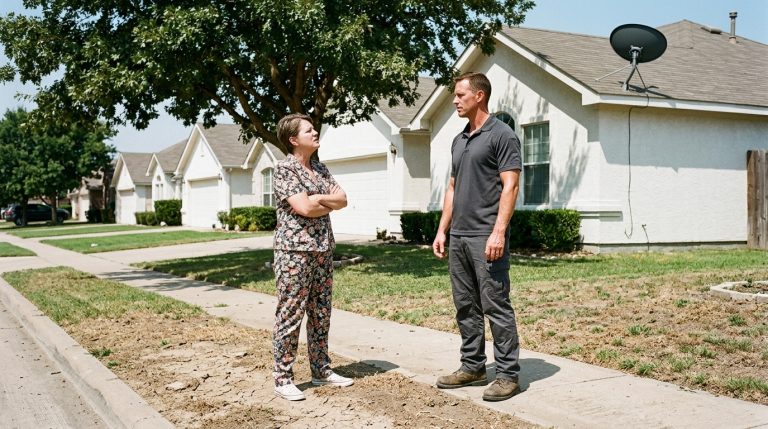
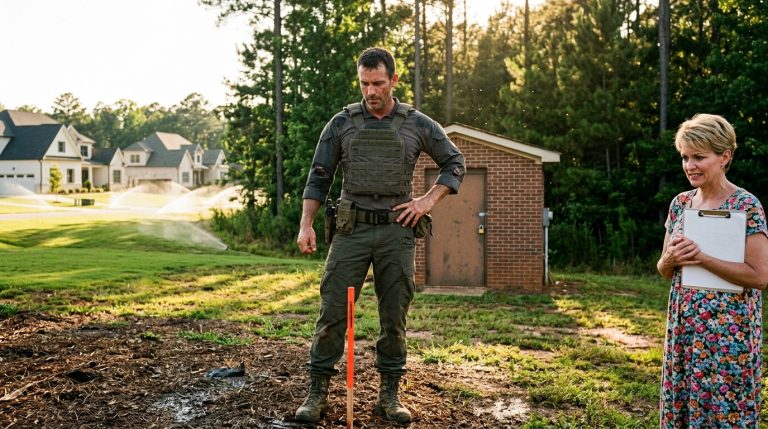
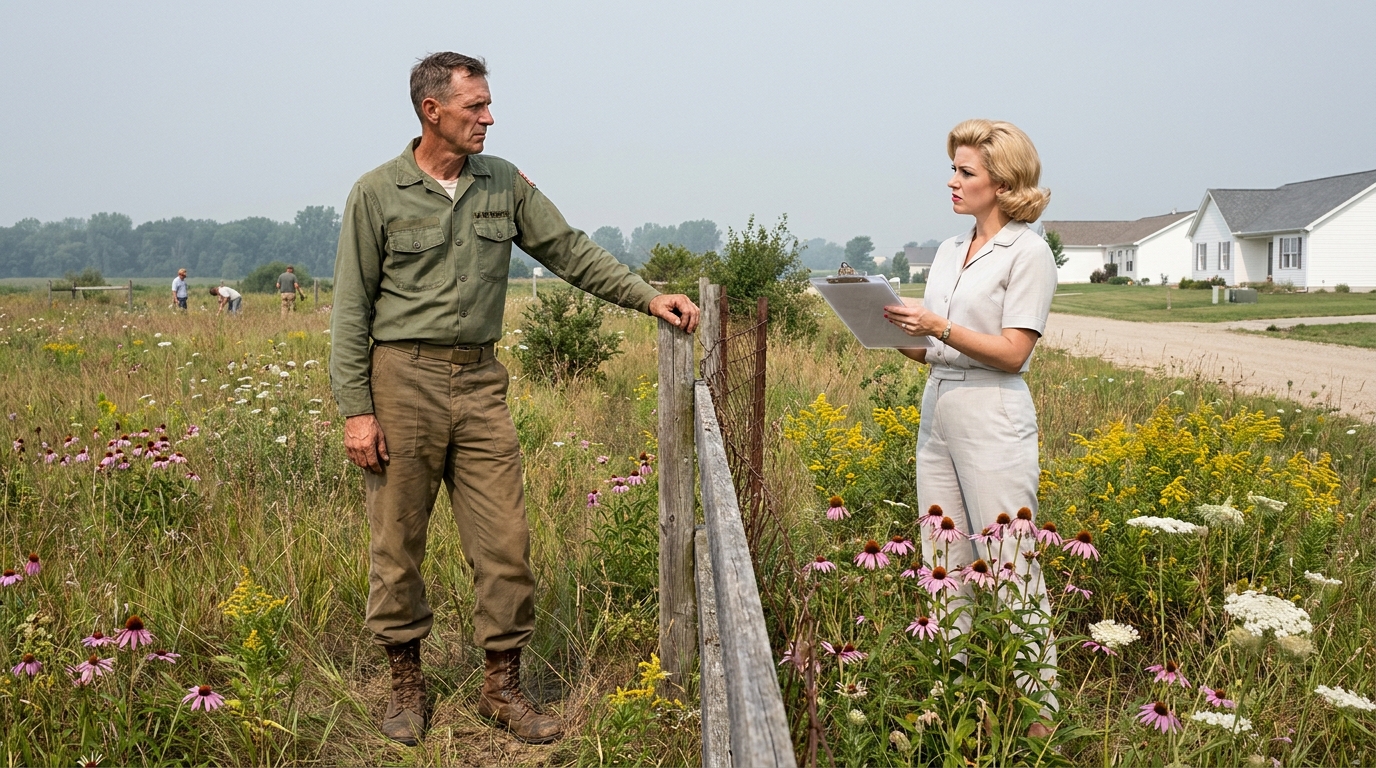
Karen stood at the boundary of my five-acre prairie, clutching her plastic clipboard like a shield of divine authority.
Her shadow stretched across the purple coneflowers, a dark stain of petty tyranny cutting right through Sarah’s masterpiece.
“The board has voted,” she continued, raising her voice so the twitching curtains across the street could catch every calculated syllable. “We are exercising our right under article seven to pave this over for guest parking.”
I looked from her powdered, unwrinkled face down to the vibrant chaos of the field.
It was humming with the frantic, joyful dance of bees and painted wings.
A cold, heavy knot formed in my gut—not panic, but the familiar, steady focus I used to feel right before an engineering deadline went live.
“Paving it,” I said, my voice dangerously low and flat.
“The excavators will be here Monday at eight a.m. sharp,” she snapped, turning on her heel with a triumphant little huff. “Send the bill for the special assessment to your own accountant.”
She walked back toward her pristine white SUV, completely oblivious to the fact that she had just kicked a hornet’s nest the size of a minivan.
I didn’t shout.
I didn’t argue asphalt dynamics with someone who couldn’t tell a weed from a seedling.
I turned back toward the house, my boots crunching rhythmically on the gravel path.
This wasn’t a neighborhood dispute anymore.
It was a logistical problem, and I had thirty years of paperwork ready to solve it.
CHAPTER 2: THE PAPER TRAIL AND THE KILLBOX
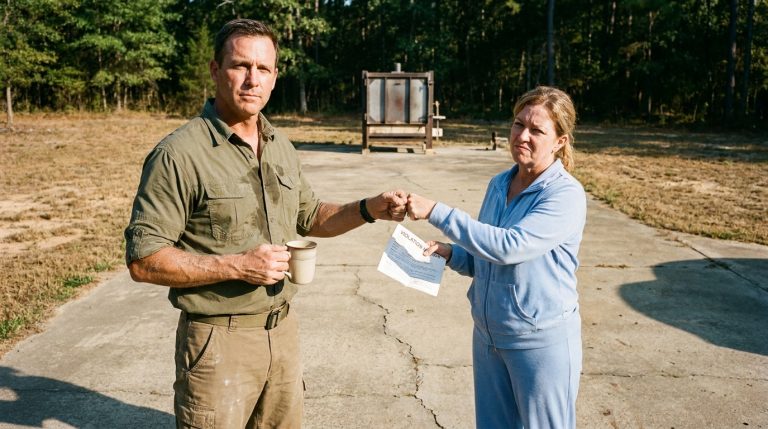
The desk lamp cast a harsh, yellow pool of light over the stack of certified mail receipts and the original USDA conservation agreement.
I pulled the HOA covenants closer, running a calloused finger down the dense legal text of Article 7, Section 3.
It was vague enough to give a petty tyrant room to flex, but tight enough to choke anyone who actually read the preamble.
“Responsible stewards of the environment,” I muttered, the words tasting like dry ash.
Karen had weaponized the first part of that clause while entirely ignoring the binding federal contract stamped right on page four.
A faint, out-of-place scent drifted into the room—cheap stale coffee mixed with the metallic tang of an idling vehicle engine lingering too long by the mailbox.
I didn’t waste time wondering who was creeping by the curb.
The strategy was already mapped out in my head, built on thirty years of logistics where a single missed decimal point could sink a pontoon bridge.
I pulled a fresh sheet of heavy cardstock toward me and clicked my pen.
This wasn’t going to be a shouting match over a fence line.
I drafted the cease-and-desist letter with clinical precision, addressing every single board member by name to break the false safety of their group chats.
Point one: the federal CRP contract number 88-19-C-4510.
Point two: the crippling daily fines under Title 7 of the Code of Federal Regulations.
Point three: the personal liability trap waiting in their D&O insurance exclusions.
I printed five copies, collated each one with meticulous care, and slid them into stiff manila envelopes.
The quiet hum of the refrigerator in the corner was the only sound keeping time as I drove down to the post office before the noon rush, laying down the certified mail receipts like stones on a foundation wall.
CHAPTER 3: THE ALLIANCE AT THE FENCE LINE
I crossed the patchy lawn toward the western fence where Mark Miller was wrestling with a sputtering gas-powered string trimmer.
The motor coughed a cloud of blue exhaust before dying completely against the high fescue.
Mark wiped a smear of grease across his forehead, his shoulders slumping under the weight of suburban software stress.
“Morning, Jack,” he breathed, looking down at the dead machine with quiet frustration.
“That thing is going to be the death of me.”
“Carburetor’s flooded,” I said, leaning my palms against the weathered cedar boards of the property line.
“Let it sit for ten minutes, and she’ll turn over clean.”
I didn’t waste time easing into the problem.
I told him about Karen’s visit, the five years of soil work, and the federal conservation contract backing every wildflower in the dirt behind us.
Emily stepped out from their back patio holding a ceramic mug, her eyes narrowing as she listened to the details of the upcoming parking lot scheme.
“Our kids love that field,” she said, her voice dropping into a quiet, protective register.
“Lily spent all last summer sketching the butterflies out there. They can’t just pave over a living thing.”
“They’re going to try,” I replied, holding her steady gaze. “And I’m holding the line. But I need to know who’s standing with me when the dust settles.”
Mark looked back and forth between his wife and the humming prairie, a subtle tension tightening the skin around his eyes.
“We’re not ones to make waves, Jack,” he muttered, shifting his weight against the grass trimmer shaft. “We get fines if our trash cans sit out past noon.”
“I’m not asking you to storm a barricade,” I said, my voice steady against the wind. “Just be a witness when the rules start bending.”
Emily set her coffee mug down on the fence rail with a sharp clink, her jaw tightening.
“We’re with you, Jack.”
CHAPTER 4: THE YELLOW BLADE AT THE BOUNDARY
The flatbed truck swung hard around the corner, its air brakes hissing a sharp, metallic warning into the morning stillness.
Chained right to the center of the bed was a midsize yellow bulldozer, its heavy steel blade gleaming like a guillotine under the rising sun.
Across the street, a pristine white SUV pulled into position near the curb, parking at a slight, arrogant angle.
The driver’s window rolled down an inch, revealing Karen’s silhouette peering out like a queen watching a routine execution.
I didn’t flinch.
I stepped off the porch with Dave right behind me, his professional camcorder humming softly against his shoulder.
The heavy equipment operator hopped down from the cab, wiping grease off his thick forearms while scanning the edge of Sarah’s prairie.
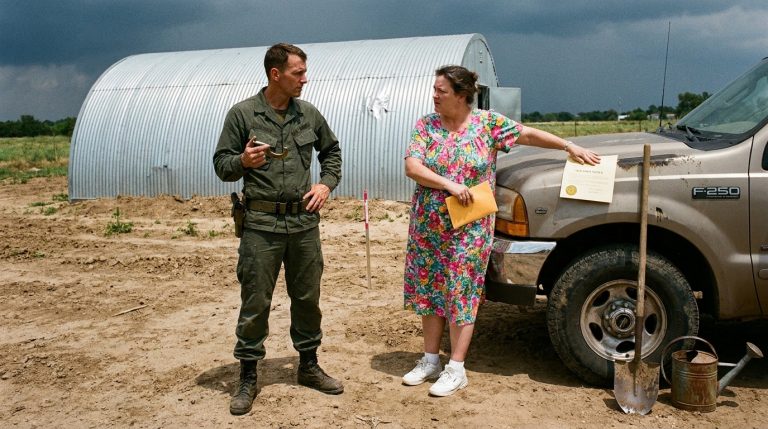
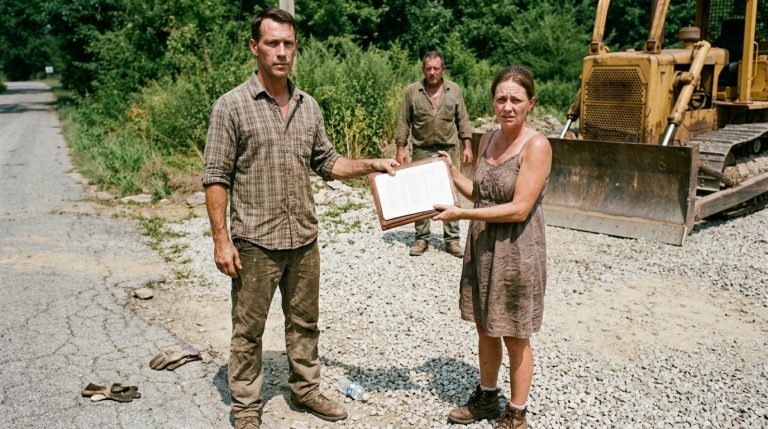
“Morning,” I said, my voice cutting cleanly through the diesel exhaust. “Before you drop a single track on this dirt, you need to read what’s in my hand.”
The boss of the operation strode over, a weather-beaten man with a clipboard tucked under his arm.
“We got a signed work order from the association,” he barked, his face twisting into an impatient frown. “Move out of the way.”
I didn’t raise my voice.
I handed over the laminated federal notice detailing the CRP contract and the half-million-dollar statutory penalties.
His eyes scanned the bold red header, tracking down to the official USDA seal, and his expression instantly curdled from annoyed confidence into cold terror.
He didn’t argue.
He keyed his radio instantly—”We got a federal site, I’m not risking my business”—and waved his driver off.
The heavy truck ground into reverse, leaving Karen standing alone by her vehicle with her mouth open and her clipboard looking like a child’s toy.
CHAPTER 5: THE POISON PILL AND THE FRACTURED FRONT
I snatched the receiver on the second ring, listening to Mark Miller’s voice drop a frantic octave through the line.
“Jack, you need to look out your front window right now,” Mark urged, his breathing shallow. “There’s a FedEx courier dropping a massive packet at Arthur Pinter’s house across the street.”
I didn’t answer right away.
I stepped over to the front window, peering through the blinds just in time to see Arthur—the HOA treasurer—staring down at a thick legal envelope with a face completely drained of color.
The insurance company’s reservation of rights letter had landed.
It was the poison pill Maria Diaz had engineered, cutting straight through the board’s collective defense and exposing every single director’s personal retirement account to crushing liability.
By late Thursday, the cracks turned into a full-scale rupture.
Arthur’s new private attorney contacted Maria directly, trading a complete chain of internal emails in exchange for personal indemnity from the federal probe.
I scrolled through the digital printouts on my desk screen, reading the smoking gun in plain text.
“Don’t worry about it,” Karen had written to the panicking board weeks ago when my first certified warning arrived. “I’ve spoken to our lawyer. It’s just some frivolous paperwork Thompson printed off the internet to get out of mowing.”
She had lied to her own team, deliberately burying the federal risks to protect her unearned authority.
The board was no longer a unified weapon.
They were individual targets scrambling for cover, leaving their former leader completely isolated on an eroding island of her own making.
CHAPTER 6: THE TOWN HALL RECKONING AND THE PERMANENT EASEMENT
Karen stood at the front of the sterile beige room, her bright red power suit looking like battle armor that had finally cracked under direct fire.
She banged her gavel uselessly against the table as Arthur Pinter slammed his printed email chains down in front of her.
“She lied to us,” Arthur shouted, his voice shaking with the raw terror of a man whose personal savings had just been held hostage by ego. “She told us the federal warnings were just internet printouts. She put every single one of us on the line!”
The crowd erupted into a deafening wall of anger and vindication.
Maria Diaz sat beside me with a calm, predatory smile, her briefcase resting quietly on her lap as the motion from the floor was immediately seconded and voted through.
Karen’s desperate attempt to play the victim collapsed under the weight of her own documented overreach.
She grabbed her purse, shoved past the staring cameras, and fled the room without looking back.
Months later, the neighborhood had settled into a quiet, hard-earned peace under Gunny Dave’s pragmatic leadership.
The permanent conservation easement was fully recorded with the county, locking Sarah’s prairie into the land deed so no future board could ever threaten it again.
I knelt down in the soft dirt, gently brushing my thumb against a cluster of swamp milkweed as the afternoon sun caught the iridescent wings of a passing swallowtail.
Lily Miller stood by the fence holding up her new sketchbook, proudly pointing at a blue-winged butterfly she had drawn.
I pulled the worn photograph of Sarah from my wallet, pressing my thumb gently against the corner.
“We did it, honey,” I whispered into the warm breeze. “It’s safe now.”