Forged Fences And County Deeds: How A Retired Firefighter Quietly Bought Out A Corrupt HOA
CHAPTER 1: THE MORNING VISIT
The silence on the four-acre patch wasn’t peaceful that morning. It carried the thick, humming weight of an engine idling just out of sight.
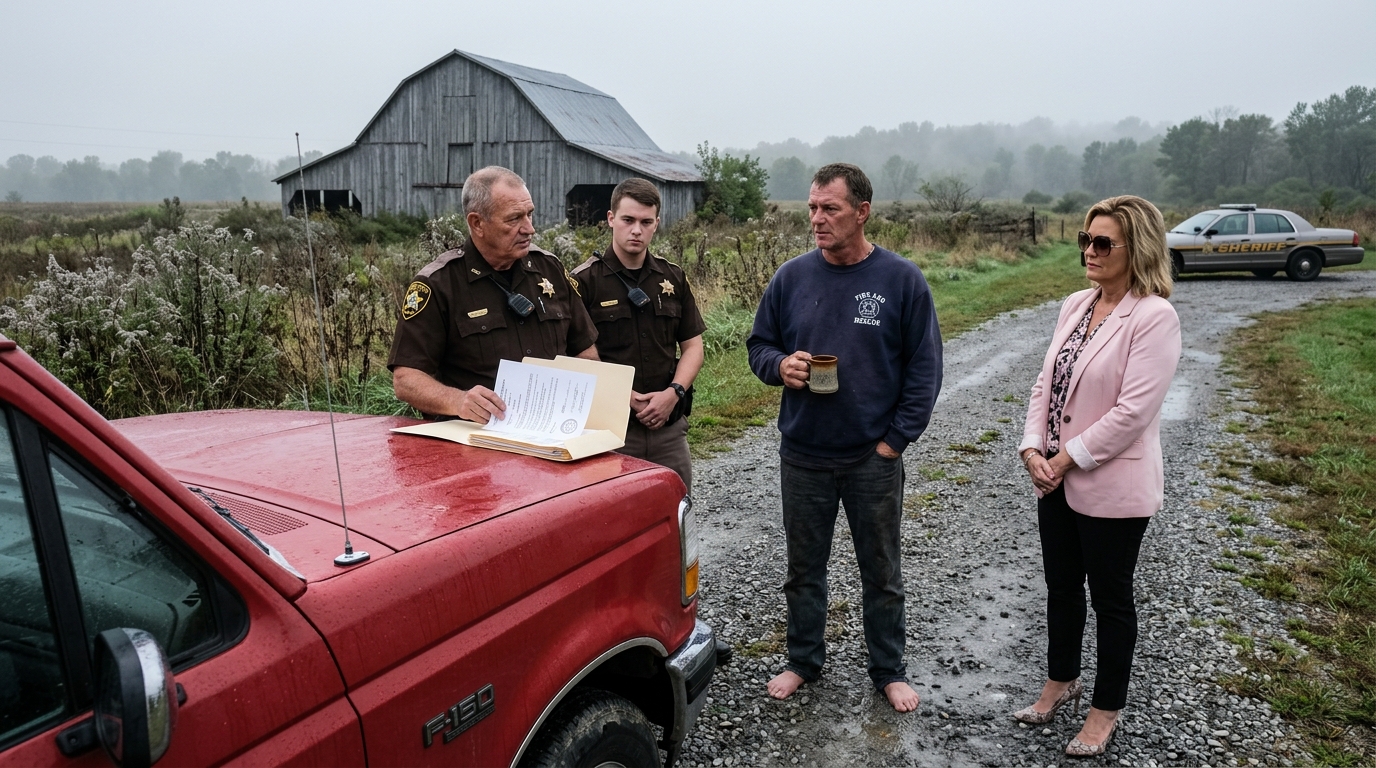
I stood barefoot on the gravel drive with an old fire and rescue sweatshirt pulled over my shoulders, steam curling faintly from my coffee mug. My toes went numb against the stones, less from the October chill and more from the expression hardening on the faces of the two sheriff’s deputies standing by their cruiser.
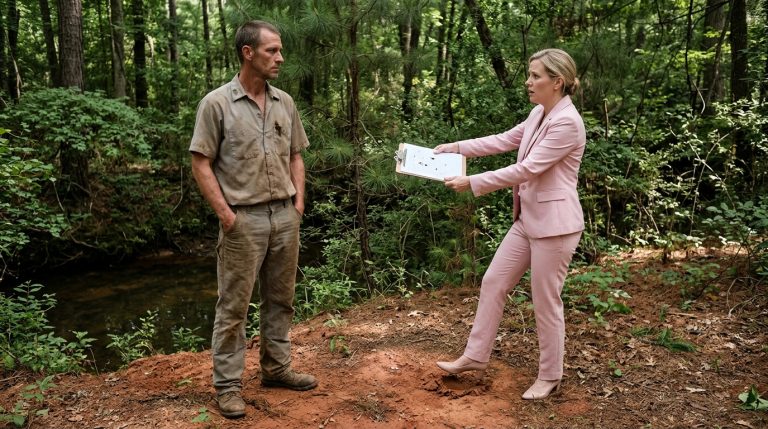
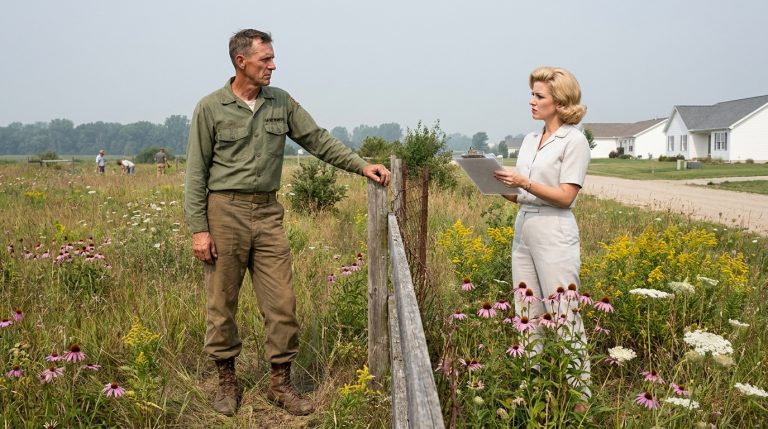
Across the asphalt boundary, Claudine Mercer waited with the posture of someone about to cut a ceremonial ribbon. Her pastel blazer stood out sharply against the gray weeds, and her oversized sunglasses caught the weak morning light.
“That man is trespassing on HOA property,” Claudine called out, her voice cutting across the quiet morning with theatrical precision.
The younger deputy shifted his weight, looking down at his notepad with visible reluctance. “Sir, we got a report of a squatter refusing to leave this designated common lot.”
I took a slow sip of the coffee, letting the heat register before speaking. “If this is trespassing, I’ve been breaking the law every single morning for six months.”
I set the heavy mug down on the hood of my truck, where dew ran in thin tracks across the faded red paint. Reaching down to the concrete step, I picked up the thick manila folder holding the county clerk’s embossed seal and handed it directly to the senior officer.
The older deputy flipped the deed over, his thumb tracing the inked registration numbers and the official county stamp. He looked past my shoulder toward the leaning barn, then glanced back at his partner with a flat, unambiguous look.
Across the street, Claudine’s posture snapped tight. The triumphant smile flickered at the edges, replaced by the sudden, sharp realization that her paperwork hadn’t reached as far as she thought.
CHAPTER 2: PAPER TIGERS AND PASTRIES
The cruiser’s brake lights flared red against the wet asphalt as the deputies climbed back into their vehicle, exchanging a final, cautious glance with Claudine.
She stood frozen on the other side of the property line, her pastel blazer looking suddenly absurd in the gray morning mist.
“Have a good day, Mr. Reeves,” the senior officer said, tossing the deed back onto my truck’s hood before pulling away without a word to the HOA president.
Claudine spun on her heel, her designer heels clicking sharply against the concrete as she retreated toward her white Lexus parked half on my grass.
I didn’t yell or wave; I simply picked up my heavy ceramic mug, wrapped my fingers around the rough clay, and watched her drive off in a cloud of exhaust.
By afternoon, the physical mail brought the first wave of retaliatory paperwork—another crisp envelope bearing the golden emblem of Maple Hollow Estates.
I didn’t open it immediately, choosing instead to set it beside a box of rusted carriage bolts on the workbench.
The gossip in town moved faster than the postal service, as evidenced by the way the clerk at the hardware store abruptly stopped talking when I walked down the aisle.
People love a quiet villain, especially one wearing an old fire and rescue sweatshirt who refuses to bow to a clipboard.
That evening, a sharp rap echoed against my front door, breaking the low hum of the refrigerator.
I pulled the wood open to find Miguel standing on the porch, wiping grease from his hands with a dirty shop rag and eyeing my driveway with genuine concern.
“They’re starting up with the delivery trucks, Mark,” Miguel said, his voice dropping low as he leaned against the doorframe. “Saw two guys taking photos of your fence line about twenty minutes ago.”
CHAPTER 3: THE BLUE LINE MAP
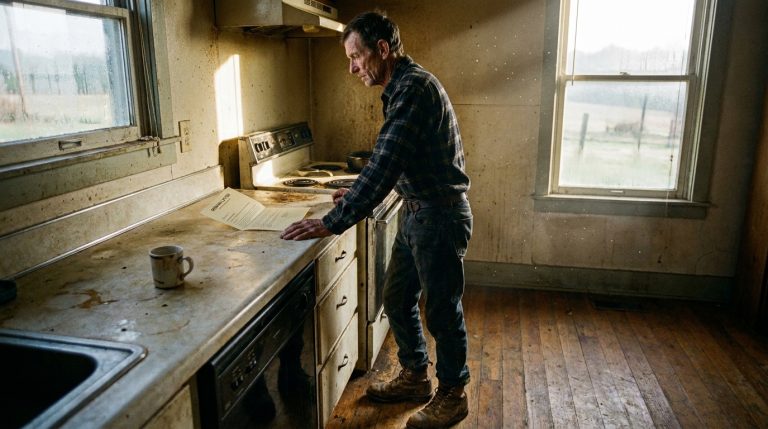
Miguel tossed the rag onto the workbench and gestured toward the kitchen table where I had spread out the paper.
“They aren’t just sending letters anymore, Mark,” Miguel said, his jaw tight as he stared down at the documents. “They’re marking out utility easements right on the edge of your timber line.”
I picked up my ceramic mug, feeling the cold weight of the empty clay before setting it down beside the county records.
“Let them measure all they want,” I replied, my voice level. “Paper doesn’t change where the iron pins were driven fifty years ago.”
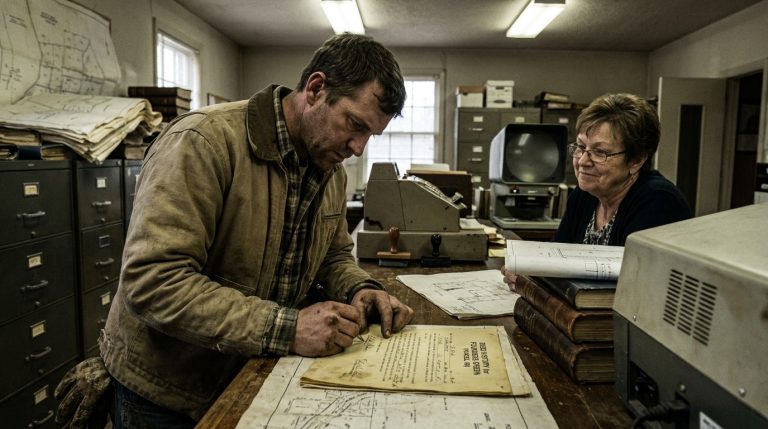
I pulled the official county plat map from the stack and slid it directly over the glossy brochure the association had mailed out last week.
The mismatch was immediate and glaring, leaping out from the stark difference in ink and registry signatures.
The county’s official survey line ran a full twenty feet past my fence, enclosing the very gravel drive the deputies had questioned that morning.
The digital plat published on the association’s website, however, had shifted that boundary inward, painting my entire front yard and barn into a shaded common buffer zone.
It wasn’t a clerical oversight or a simple mapping error made by a tired draftsman.
It was a deliberate, calculated land grab drawn up with a digital brush to swallow four acres of private property whole.
Miguel leaned closer, pointing a grease-stained finger at a blank box in the corner of the forged map where a state seal should have been.
“There’s no county stamp on their version,” he muttered, his eyes narrowing in realization. “They fabricated the whole thing to lock you out.”
“They wanted a fight,” I said, running a thumb along the rough edge of the wooden table. “They just didn’t expect anyone to check the records.”
CHAPTER 4: THE WAR ROOM PORCH
Sonia snapped her leather briefcase open and dropped a thick stack of color-coded violation notices directly over the forged maps.
“They aren’t just targeting your driveway, Mark,” Sonia said, her voice sharp as she flipped through the paperwork. “They’ve systematically squeezed half the retired residents on this side of the county with illegal fines.”
I shifted my coffee mug across the table, watching the dark liquid settle against the rim.
“Mrs. Keen got hit with a lien over some rosebushes that were planted during the Carter administration,” I noted, my eyes fixed on the itemized penalty log.
“Worse than that,” Sonia replied, sliding a certified bank statement across the wood. “Look at the routing numbers on these community enhancement fees.”
Miguel leaned over the table, his forehead creasing under a smear of motor oil as he scanned the financial columns.
“That’s not going back into road paving or landscaping,” Miguel muttered, shaking his head. “That’s flowing straight into a private corporate account.”
“A shell company registered under Claudine Mercer’s maiden name,” Sonia added, tapping a finger against the corporate filing. “One hundred and sixty thousand dollars siphoned out of community accounts in eighteen months.”
The room fell into a heavy, suffocating silence, broken only by the hum of the refrigerator.
It wasn’t a messy clerical oversight or a neighborhood dispute anymore; it was a calculated financial trap designed to bleed people dry.
I picked up the heavy ceramic mug, gripping the handle until my knuckles turned white.
“Paperwork built her little empire,” I said, setting the cup down with a sharp clack against the wood. “And paperwork is going to tear it down.”
CHAPTER 5: THE AUCTION BLOCK
Caleb dropped a heavy canvas sack of certified bank drafts onto the floorboards with a dull thud.
“That’s every cent we could pull together from the credit union, Mark,” Caleb said, wiping sweat from his forehead with the back of a weathered hand. “The bank auction starts in ten minutes, and those corporate investors aren’t planning on losing.”
I kept my fingers wrapped around the rim of my coffee mug, feeling the cold clay anchor my pulse against the rising tension.
“They think they’re buying a quiet residential subdivision,” I said, sliding the loan default clause across the grain. “They don’t realize the entire association’s debt is leveraged against a collapsing foundation.”
Sonia packed her files into her leather case with brisk, mechanical efficiency.
“If the balloon payment defaults and you hold the winning bid on the master deed, the governance rights transfer directly to the auction buyer,” Sonia reminded us, her eyes sharp. “That means you own the association lock, stock, and barrel.”
We walked out into the gray afternoon air, the gravel crunching beneath our boots as we made our way up the courthouse steps.
Inside the municipal chamber, the room smelled of damp wool and old carpet, thick with the impatient murmurs of real estate speculators whispering among themselves.
Claudine sat in the front row, her pastel blazer smoothed down over her knees, holding her clipboard like a shield as she spotted us walking through the double doors.
The auctioneer stepped up to the wooden podium, tapped his gavel once, and started rattling off parcel numbers at a blinding pace.
“Parcel four hundred, Maple Hollow common assets and governance rights,” the auctioneer called out, his voice echoing off the high plaster ceiling. “Opening bid six hundred thousand.”
An investor in the second row raised a hand without hesitation. “Six hundred and fifty.”
Claudine let out a visible breath of relief, her posture relaxing as she flashed a cold, confident smile back toward our row.
I didn’t blink, stepping forward past the wooden partition.
“Six hundred ninety-one thousand,” I said, my voice cutting cleanly through the murmur of the room.
The auctioneer slammed the gavel down before anyone else could catch their breath.
“Sold, to the gentleman in the fire and rescue sweatshirt.”
Claudine shot out of her seat, her face draining of color as her clipboard slipped from her fingers and clattered hard against the linoleum floor.
“You can’t buy a neighborhood!” she shrieked, her voice cracking with sudden, unhinged fury as she lunged toward the aisle.
“Ma’am,” I replied, standing my ground as the county bailiff stepped squarely into her path. “Apparently, I just did.”
CHAPTER 6: UNDER THE OLD OAK
Claudine scrambled across the courthouse linoleum, her fingers clawing frantically at the fallen papers as her desperate counter-move took shape.
“This is an illegal stunt,” she shrieked, her voice bouncing off the high plaster walls while her lawyer desperately tried to shield her from the county detective stepping forward. “We have emergency injunctions pending! You can’t just seize community assets!”
Detective Miller ignored her panic, pulling a pair of cold steel cuffs from his belt and stepping squarely into her path.
“Ms. Mercer, you’re being detained for questioning regarding corporate embezzlement, wire fraud, and falsified public records,” Miller stated, his voice flat and routine.
The heavy click of the handcuffs echoed through the chamber like thunder, putting a swift end to her shouting and exposing the hollow core of her authority.
Sonia stood quietly beside me, sliding her legal folder shut with a clean, definitive snap.
Within forty-eight hours, the old association was legally dissolved, its assets transferred entirely to a community trust managed by the people who actually lived there.
The fake fines were wiped clean, Mrs. Keen’s rosebushes remained untouched, and the neighborhood finally exhaled.
Now, the evening air smells like damp earth, sawdust, and drifting woodsmoke from the old barn.
Miguel leans against my fence post, holding a cold beer and watching the kids chase each other down the gravel drive.
I sit beneath the sprawling branches of the oak tree with a heavy ceramic mug in hand, the rough clay warm against my calloused palm.
There are no sirens wailing in the distance, no white Lexus creeping past the gate, and no envelopes waiting in the box.
Just the steady rustle of leaves overhead, the quiet hum of the evening, and the deep, hard-earned peace of a boundary held against the storm.