A Lesson in Starlight: How the Weight of an Inherited Fortune Shattered Against a Child’s Quiet Wisdom
CHAPTER 1: THE GOLDPLATED CAGE
The morning light did not so much enter the Montgomery dining room as it did stage a takeover. It spilled through the floor-to-ceiling glass, turning the dust motes into tiny, suspended diamonds and striking the silver service with a brilliance that made Caleb squint. Everything in this room—the mahogany table that could seat a small parliament, the hand-woven rug that cost more than a family home, the heavy crystal glasses waiting for wine that never came—was meticulously placed.
Caleb sat at the far end of the table, his posture a mirror of his father’s: rigid, upright, and utterly hollow. He poked at his eggs benedict. The chef, a man recruited from a three-star kitchen in Paris, had toasted the English muffin to a precise, golden-brown crisp.
Caleb felt nothing.
He didn’t taste the rich, buttery tang of the Hollandaise. He didn’t appreciate the perfection of the meal. He looked out the window, past the olympic-sized swimming pool, toward the garage that housed a collection of vintage automobiles he’d never bothered to learn the names of. They were just objects. Like the watch on his wrist, like the private jet waiting in a hangar three towns over. They were pieces of a stage set for a play he had never auditioned for, yet was being forced to perform.
Across the vast expanse of polished wood, Harrison Montgomery moved with the efficiency of a predator. He was a man carved from ambition, his tablet glowing with the cold, shifting numbers of the stock market. Harrison didn’t look up. He didn’t need to. He knew exactly what was happening at his end of the table: a son who was currently a liability.
“The school called again, Caleb,” Harrison said. The voice was neither loud nor angry; it was worse. It was disappointed. “Another failing grade. History, this time.”
Caleb sighed, a sound that felt too loud in the cavernous room. “It’s boring, Dad. The textbook is just a list of things that already happened.”
“Your great-grandfather built a railroad with his bare hands,” Harrison replied, finally looking up. His eyes were the color of a winter storm, sharp and unforgiving. “Your grandfather built a steel empire from the ashes of the Depression. We are a family of architects. And you? You are a drift-wood heir.”
“It’s your story, not mine,” Caleb muttered, pushing his plate away.
“Then what is your story?” Harrison stood, his suit tailored to such perfection it looked like a second skin. “Because right now, the only thing you’re writing is a tragedy of indifference. I’m flying to Tokyo. When I return, I expect you to have found a reason to exist. Try not to let the house fall down in my absence.”
He turned and left. The silence he left behind was a physical weight, pressing down on Caleb’s chest.
Caleb stared at the untouched, perfect eggs. His eyes drifted to a small, dark smudge on the baseboard near the doorway—a tiny oversight in a room that was supposed to be flawless. It was the only real thing in the entire house.
Suddenly, he heard it. A soft, rhythmic sound from the hallway. Not the bustling of the high-priced staff, but something quieter. A faint, melodic humming.
He stood up, his chair scraping harshly against the marble floor, and followed the sound into the grand library. There, tucked away in the shadows of a towering shelf, he found a girl no older than eleven, cleaning the baseboards with a fierce, concentrated intensity, a worn paperback book propped open against a chair leg—an anomaly in a room filled with decorative leather-bound sets that no one ever read.
CHAPTER 2: THE FRACTURE
The transition from the Montgomery estate to Northwood Preparatory Academy was not a change of scenery, but a descent into a different kind of vacuum. The air in the Academy’s hallways smelled of floor wax and the faint, lingering scent of expensive cologne. It was a place of polished surfaces and sharp corners, designed to cultivate the next generation of titans, and Caleb was currently its most prominent crack.
He walked into his Advanced Physics class ten minutes late. The heavy oak door groaned as he pushed it open, the sound echoing like a gavel strike against the murmur of the room. Mr. Gable, a man whose skin seemed to be made of parchment paper and patience, stopped mid-sentence. The silence that followed was heavy, textured with the collective judgment of thirty students who had their futures neatly mapped out in bullet points.
“Nice of you to join us, Mr. Montgomery,” Gable said, his voice clipped. He didn’t look angry; he looked exhausted.
Caleb didn’t offer an excuse. There were no excuses that could explain why he had sat at the dining table for an hour staring at a smudge of dirt on a baseboard. He slid into his seat in the back row, the desk—a faded, scarred laminate surface—feeling oddly cold beneath his fingertips. He pulled out his phone, the familiar weight of it in his palm acting as a shield against the eyes he knew were boring into his back.
He didn’t care about the whispers. He couldn’t distinguish the envy from the scorn anymore, and frankly, both felt equally hollow.
Mr. Gable turned back to the whiteboard, his marker squeaking as he drew the complex, swirling diagrams of a nebula’s birth. “The collapse of a star is not an end, but a transformation,” he said, his voice rising with the passion of a man who believed in the cosmic order. “The gravitational pressure builds until it can no longer be contained. It is a moment of absolute, undeniable change.”
Caleb watched the screen of his phone. A video played on a loop: a cat misjudging a jump from a table, tumbling into a heap of laundry. It was senseless, chaotic, and somehow more coherent than the lecture on stellar fusion. He felt a sudden, sharp ache in his chest—not for the cat, but for the girl in the library. He could still see her. The way she had looked at the book as if it were a map to a hidden city.
He didn’t realize he had stopped scrolling until the phone’s screen went dark, reflecting his own face back at him. He looked pale, gaunt, like a ghost haunting his own life.
The bell rang, a shrill, piercing sound that acted as a violent butterfly detour to his wandering thoughts. It was the end of the period, the transition to the next block of academic performance. Caleb didn’t move. He watched as the students gathered their belongings, their movements fluid and purposeful. They knew where they were going. They knew who they were.
He remained in the back of the room, staring at the whiteboard. The diagram of the collapsing star looked less like physics and more like a warning. He thought of the maid’s daughter, Clara. She was currently in this building—or perhaps she had already left, moving back into the silent, invisible spaces of his father’s estate. He felt a strange, desperate urge to find her, to ask her how one learns to look at a mess and see a pattern instead of just a disaster.
“Mr. Montgomery,” Mr. Gable called out, his voice closer now.
Caleb looked up. The teacher was standing at the front of his desk, holding a pop quiz that Caleb hadn’t even looked at.
“I’m sorry,” Caleb said. It was the first time he had apologized to a teacher in his life, and the unfamiliarity of the words made his throat constrict.
Gable sighed, placing the paper down on the desk. There was a mark on it—a bright, aggressive red circle where a grade should have been. Caleb glanced at it. He hadn’t bothered to answer a single question. Instead, he had scrawled a crude, lazy dollar sign in the center of the page. It was an act of rebellion that now felt like a desperate plea for help.
“This is not a personality trait,” Gable said, his eyes scanning Caleb’s face. “And it’s certainly not a strategy. You are a person, Caleb, not a bank account. At some point, you’re going to have to decide if you’re going to be the architect of your own collapse or the one who catches the falling pieces.”
Caleb didn’t answer. He stood up, shoved his phone into his pocket, and walked out into the hallway. The laughter of his peers hit him like a physical wall. They were talking about internships, about summer programs, about the life that was already waiting to claim them. He pushed through the crowd, the texture of his own isolation becoming increasingly tangible, a cold weight he couldn’t shake.
He knew he had to leave, to get back to the estate, to the quiet library, to the only person who hadn’t looked at him with the cold, sterile gaze of a judge. But as he stepped out into the bright, blinding glare of the afternoon, he realized the bus wouldn’t arrive for another hour. He was trapped in the middle of a world he didn’t belong to, waiting for a ride back to a house that wasn’t a home.
He walked toward the edge of the campus, toward the perimeter fence where the manicured landscaping gave way to the wild, unkempt woods. He needed to be somewhere that didn’t smell like floor wax. He needed to find a spot where he could just stop, breathe, and try to understand why the sight of a cleaning girl had made him feel more alive than a billion dollars ever could.
He sat down at the base of an old, gnarled tree just beyond the fence line. The bark was rough against his back, a sensory contrast to the velvet seats of his father’s sports car. He closed his eyes. The memory of Clara’s blue eyes—startlingly intelligent, utterly devoid of the usual social masks—flashed behind his lids. He realized, with a quiet, terrifying clarity, that he wasn’t just bored anymore. He was searching.
And for the first time, he didn’t have a map.
CHAPTER 3: THE LIBRARY ALCOVE
Caleb stayed by the tree until the shadows grew long and thin, stretching across the grass like reaching fingers. The walk back to the estate was a slow, deliberate trudge. Every step over the manicured gravel felt heavy, a rejection of the high-speed, status-driven life he had been born into. When he finally reached the side entrance, he didn’t head for the kitchen or the grand dining room. He moved toward the library.
The house was cavernous, its air conditioned to a sterile, uniform temperature that made the skin prickle. He passed a suit of armor in the hallway, its iron visor permanently locked in a hollow, sightless stare. Once, it had been a piece of decor; tonight, it looked like a tomb.
He pushed the library doors open. They moved on silent, well-oiled hinges, revealing a two-story cathedral of knowledge that no one ever actually used. The shelves climbed toward the ceiling, packed with leather-bound volumes that looked more like wallpaper than literature. Shakespeare, Tolstoy, Faulkner—titles he had been forced to glance at but never actually feel.
He heard it before he saw her: a low, rhythmic sound. Hum-hmmm. Hum-hmmm.
Tucked into the far corner, near the fireplace that was never lit, was the girl. She was sitting cross-legged on the floor, surrounded by a stack of paperbacks that looked as though they had been rescued from a flood. They were soft, fraying, and lacked the gold-leaf vanity of the books surrounding them. She was cleaning the baseboards with a rag, but her attention was pinned to an open book leaning against a chair leg.
Caleb moved closer, his footsteps muffled by the thick, dust-heavy rug. He expected her to jump, to hide the book, to revert to the subservient posture he was accustomed to seeing from the house staff. But she didn’t flinch. She simply turned the page, her finger tracing a line of text with a deliberate, slow grace.
He stopped ten feet away. He realized he was holding his breath. “You’re reading Marcus Aurelius,” he said. His own voice sounded foreign, raw.
The girl looked up. Her eyes were a startling, clear blue, holding the kind of steady focus that made his chest ache. There was no apology in her expression, no startled deference. She didn’t look like a girl who was supposed to be cleaning; she looked like a scholar who happened to be holding a rag.
“It’s not just a book,” she replied, her voice soft but surprisingly resonant. “It’s a conversation. He’s talking to himself, trying to figure out how to stand straight when the world wants him to bend.”
Caleb stepped closer, his boots sinking slightly into the pile of the carpet. “I was assigned this last semester. I couldn’t get past the first two pages. It felt like… noise.”
She tilted her head, a strand of bright blonde hair falling over her eyes. She tucked it behind her ear, her movements precise. “That’s because you were reading it to finish it. You have to read it to understand why he was writing it. The words are just the surface, Caleb. The truth is in the pressure that forced him to put pen to paper.”
Caleb looked down at the book. It was worn at the edges, the spine taped, the pages yellowed. It was an object of labor, unlike anything else in the Montgomery estate. “Who are you?” he asked, though he already knew.
“I’m Clara,” she said. She didn’t offer a surname. She didn’t need to. She gestured to the surrounding shelves, the thousands of decorative, pristine spines. “People fill houses with books because they want the weight of wisdom without the effort of carrying it. My great-grandpa said that the truth is rarely comfortable. If you’re looking for comfort, you’re in the wrong room.”
Caleb felt a strange, jarring shift in his perspective. He looked at the room and, for the first time, saw it for what it was: a storage unit for unused potential. The smell of the old, frayed paper she was reading suddenly overwhelmed the faint, chemical scent of the library’s floor polish. It was the smell of something real.
“My father thinks I’m a failure,” Caleb said, the words slipping out before he could filter them through his pride. He immediately regretted it, waiting for the mockery, or perhaps the pity.
Clara simply picked up her rag and wiped a section of the baseboard, her motions rhythmic. “Your father thinks you’re a mirror. He’s looking at you and expecting you to reflect his own success back at him. When you don’t, he gets angry. It’s not about your grades, Caleb. It’s about his own fear that he’s the only one who believes in his story.”
Caleb stood frozen. The sheer, terrifying simplicity of her observation hit him with the force of a physical blow. He had spent his entire life in this house, yet he had never possessed the language to describe the suffocating air he breathed every day. This girl, the maid’s daughter, had dismantled the architecture of his misery in a single sentence.
He crouched down, the rough texture of the rug scraping his palms. He didn’t look at her; he looked at the baseboard she was cleaning. There was a thin, gray line of dust trapped in the corner—a detail that had gone unnoticed for years.
“I don’t know how to see it like you do,” he whispered. “I don’t know how to stop the noise.”
Clara stopped cleaning. She leaned back, her knees drawn up to her chest, the book still resting on the floor between them. “You don’t stop the noise, Caleb. You learn to listen past it. But you have to be willing to lose everything you think is yours before you can see what’s actually there.”
She stood up, her movements light and fluid. She didn’t look at him with disdain or curiosity. She looked at him with a strange, quiet patience, as if she were waiting for a storm to pass. She picked up her supplies, her gaze lingering on the closed book for a second.
“The sun will be up in a few hours,” she said, heading toward the library door. “If you want to stop looking at the mirror and start looking at the world, meet me in the garden at dawn. If you’re late, I’ll assume you’ve decided you prefer the reflection.”
She left the room, the door clicking shut with a soft, final sound. Caleb remained on the floor, the scent of dust and old paper clinging to his clothes. He stared at the empty space where she had been sitting, the silence of the library now pressing in on him from every side, but for the first time, it didn’t feel empty. It felt like a space waiting for him to decide who he was going to be.
CHAPTER 4: THE GARDEN LESSONS
The morning mist was a living thing, a cold, gray shroud that clung to the hem of Caleb’s trousers as he made his way toward the ancient oak tree. His watch read 5:15 a.m. The estate was a graveyard of ambition at this hour—dark, silent, and imposing. He felt like an intruder in his own home, a feeling that had become increasingly difficult to shake since the encounter in the library.
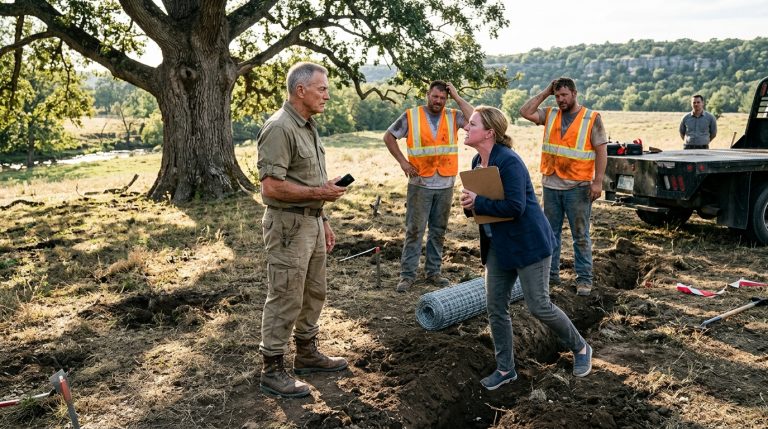
When he reached the great oak, he found Clara already there. She was dressed in simple, dirt-stained overalls, her hands buried deep in the pocket of an oversized jacket. She didn’t turn when he approached. She was staring at the ground, her gaze so intense it seemed she were trying to peel back the layers of the earth itself.
“You’re on time,” she said, her voice cutting through the stillness.
“I didn’t want to be late,” Caleb replied. He felt awkward, his expensive, unworn clothes contrasting sharply with the raw, earthy atmosphere of the garden. He felt like a prop in a scene where he didn’t know his lines.
Clara turned then, and her blue eyes seemed to take in every detail of his hesitation. She didn’t smile. She pointed to a patch of dark, damp soil at the base of the tree’s massive, gnarled roots. “Look. What do you see?”
Caleb crouched, his knees protesting against the hard, damp ground. He looked at the patch of soil. He saw dead leaves, a scattering of pebbles, and the damp, dark earth. It looked like any other patch of dirt in Connecticut. He felt the familiar, prickly irritation of his father’s voice echoing in his mind—Boring. Waste of time. Get to the point.
“It’s dirt,” he said, his voice flat.
Clara knelt beside him, her movements effortless. She didn’t sigh, nor did she express frustration. She reached out and brushed a layer of dead leaves away, revealing a tiny, pale green shoot forcing its way up through the compacted soil. “Look closer. Don’t look at the dirt. Look at the pressure.”
Caleb leaned in until the smell of damp earth and decaying vegetation filled his senses. He looked at the shoot. It was impossibly small, a fragile sliver of life fighting against the weight of the world. Then, he saw it: the soil around it was cracked, pushed aside by the sheer, quiet force of the plant’s growth. It wasn’t just a plant; it was a testament to persistence.
“It’s pushing,” Caleb whispered, the observation catching him off guard.
“Everything here is pushing,” Clara said. “The tree, the weeds, the worms. The soil is hard, the sun is scarce, and the wind is constant. But they don’t stop. They don’t complain about the conditions. They just exist, and in existing, they change the ground they stand on.”
She stood up and handed him a small, metal trowel. It was old, the handle worn smooth by years of use. “Dig. Not for a goal, not because you were told to. Just dig until you see how the roots connect.”
Caleb took the tool, the cold metal biting into his palm. He began to dig. At first, he did it with the impatient, calculated precision of someone used to immediate results. But the soil was stubborn. It was tangled with hidden roots, anchored by stones, and resistant to his efforts. He found himself sweating despite the early morning chill.
His mind wandered, his father’s voice intruding again. Why are you doing this? You’re a Montgomery. You have people to do this for you. He almost dropped the trowel, the phantom of his father’s disapproval feeling like a physical weight on his shoulders. He looked up, his face flushed. “Why are we doing this? I don’t see the point.”
Clara was standing a few feet away, watching him with that same calm, unblinking intensity. “The point is the resistance, Caleb. You’ve never had to fight for anything in your life, so you think anything that requires effort is a waste of time. You’re like the soil—compacted, hard, and closed off. You’re not going to see anything until you break yourself open.”
Caleb looked back down at the dirt. He felt a sudden, sharp anger, but for the first time, he didn’t aim it at her. He aimed it at the ground. He drove the trowel into the earth with a new, raw intensity. He hit a stone, a jagged piece of gray slate, and he pried it out, his fingers slipping into the cold, wet mud.
He didn’t stop until his hands were stained with dark earth, until his lungs were burning, and until his fingernails were caked with the gritty residue of the garden. He found a tangle of roots—thick, knotted, and interconnected. They were supporting the great oak, drawing nutrients from the shadows, anchoring the massive weight of the tree against the unseen forces of the wind.
He sat back on his heels, his chest heaving. He looked at his hands. They were dirty, marked, and raw. He looked at the root system he had uncovered, a hidden map of life that had been thriving beneath his feet every time he had walked past this tree.
“I see it,” he said, his voice quiet.
Clara knelt beside him, her gaze resting on the exposed roots. “That’s the first step. Understanding that the most important parts of the world happen in the dark, where no one else is looking. You think your life is about the cars, the house, the name. But that’s just the surface. You’re the root, Caleb. And if you’re not connected to anything real, you’re just waiting for the next wind to knock you over.”
She stood up, brushing the dirt from her overalls. “We’re done for today. Wash your hands. Don’t use the expensive soap—it won’t get the grit out. Use the sand by the basin in the garage.”
She turned and began to walk toward the house, her silhouette small against the rising sun. Caleb remained by the tree, his stained hands resting on his knees. He looked at the tiny green shoot, then back at the exposed roots. He realized that for the first time in his life, he didn’t feel like a prince in a palace. He felt like someone who had finally, painfully, begun to belong to the earth.
He stood, his legs trembling, and walked toward the garage. He wasn’t thinking about his grades, his father, or the school bus. He was thinking about the resistance of the soil, the strength of the roots, and the strange, terrifying possibility that he was finally, truly, waking up.
CHAPTER 5: THE KITCHEN SYMPHONY
The garage door slid shut behind Caleb with a heavy, pressurized hiss that echoed in the vast, silent space. He walked toward the utility basin near the workbench, his boots clicking sharply against the polished concrete. The air here was perfectly climate-controlled, yet it felt stagnant. He scrubbed his hands, the coarse, gritty sand catching on the mud beneath his nails. He watched the dark, muddy water swirl down the drain—an undignified end to the morning’s labor.
He didn’t want to go back inside. The mansion felt different now, stripped of its seamless, golden veneer. He could see the cracks in the artifice—the way the staff moved in practiced, silent patterns, the way the silence was intentionally curated to keep the world at bay.
As he dried his hands on a rough rag, a sudden, sharp clatter broke the quiet. He turned. One of the catering staff was hurrying toward the kitchen entrance, carrying a heavy tray of silverware. The man looked frantic, his eyes darting toward the main house as if expecting a reprimand. Caleb followed him. He didn’t know why—only that the quiet, orderly routine of the household had become something he now viewed with a desperate, burgeoning suspicion.
He slipped into the kitchen behind the man. It was a space of blinding, clinical brightness, where stainless steel surfaces mirrored everything with harsh, unforgiving clarity. Jean-Pierre, the head chef, stood at the center of a workstation, his posture rigid. He was barking orders in rapid-fire French, his face a mask of calculated fury.
Caleb pressed himself against the pantry door, watching. This was the engine room of his father’s life. The chefs, the sous-chefs, and the servers moved with the mechanical precision of cogs in a watch. If one hesitated, the entire rhythm collapsed. It was a symphony of pressure.
Close your eyes, Clara’s voice echoed in his mind.
Caleb obeyed. He leaned his head against the cool, steel frame of the pantry door and listened. At first, the sound was an assault—a cacophony of clanging pans, the hiss of boiling water, and the rhythmic, terrifying thwack-thwack-thwack of a knife hitting a chopping board. But then, he began to separate the layers. He heard the tremor in a young kitchen hand’s breath. He heard the way Jean-Pierre’s voice fluctuated, not just with anger, but with a deep, grinding exhaustion.
It was a performance. Every movement, every shout, was a calculated move in a game of survival. They weren’t cooking dinner; they were defending their livelihoods against the inevitable, silent judgment of the man who lived at the head of the long mahogany table.
A sudden, sharp clang of a dropped saucepan cut through the rhythm.
“Imbécile!” Jean-Pierre’s voice rose, a jagged blade of sound. “This is not a house of amateurs! Do you think Mr. Montgomery cares if you are tired? Fix it, now!”
Caleb opened his eyes. The young kitchen hand was kneeling, his face burning with a mixture of shame and terror. He was trying to scoop up the spilled vegetables, his hands trembling violently.
Caleb felt a cold, familiar knot tighten in his stomach. This was the same dynamic—the same pressure, the same hollow performance of perfection—that had defined his own life. The kitchen was just a microcosm of the estate. Everyone was afraid of failing, not because the stakes were high, but because the person in charge couldn’t tolerate the sight of anything that wasn’t perfectly aligned with his own expectations.
He walked out of the pantry.
The staff froze. Jean-Pierre turned, his expression darkening as he recognized the billionaire’s son. “Mr. Montgomery? This is a restricted area. We are in the middle of service.”
Caleb didn’t look at the chef. He walked to the young hand, the one still struggling with the mess. He knelt down, the floorboards cold against his jeans. “It’s just a spill,” he said, his voice quiet but steady.
“Mr. Montgomery, please,” Jean-Pierre barked, stepping forward. “This is not your concern.”
Caleb grabbed a towel and helped the boy scoop the vegetables. He looked up at the head chef, his eyes locking with the man’s. “It’s a kitchen, Jean-Pierre. Not a courtroom. People make mistakes. Maybe if you spent less time yelling and more time teaching, you wouldn’t be losing so many staff members.”
The kitchen went dead silent. The sound of the boiling water seemed to drop to a low, ominous hum. Jean-Pierre looked as if he had been struck. He stared at Caleb, his mouth opening, then closing. He saw something in Caleb’s eyes—not the usual, entitled apathy of a wealthy son, but a cold, clear, and unyielding judgment.
“Get out,” Jean-Pierre whispered, his face pale.
Caleb stood, wiping his hands on the towel. He looked at the kitchen hand, who was staring up at him with wide, incredulous eyes. He felt a sudden, dizzying sense of displacement. He had crossed a line, he realized. He had broken the invisible contract of his status. The mansion’s walls felt closer now, the fluorescent lights humming with an aggressive, antiseptic intensity.
He walked out of the kitchen, his heart beating a frantic, uneven rhythm against his ribs. He had intervened. He had acted. He had disrupted the symphony, and he knew, with a certainty that chilled him to the bone, that the silence he had just created would not last. The estate was a closed system, and he was the glitch.
He didn’t go back to his room. He headed for the library. He needed the smell of old paper. He needed the anchor of reality. He needed to know if Clara had seen him, if he was finally starting to understand how to move within the machine without being crushed by it. The air in the hallway seemed thick, cloying—a scent of lavender that he suddenly realized wasn’t coming from the flowers in the garden, but from the memory of the guidance counselor’s office.
He was being watched. He could feel it. The walls of his father’s kingdom were listening, and for the first time, he realized that if he kept pushing, the palace would eventually find a way to collapse on top of him.
CHAPTER 6: THE STUDY OF SCARS
Caleb pushed the heavy oak doors of the study open. It was a space he had always avoided, a gilded cage where the artifacts of his father’s singular, ruthless ambition were displayed with religious reverence. The room smelled of polished mahogany, old money, and a kind of sterile, high-end pressure. He stepped inside, his boots quiet on the intricate geometric patterns of the rug.
He didn’t come to steal anything or to snoop—at least, not consciously. He came because he needed to look at the photos. Clara’s words—He thinks you’re a mirror—had haunted him since the morning in the garden. He needed to see the man who had cast that reflection, and he needed to see if there was anything behind it.
He walked to the wall where the awards and magazine covers hung. They were the usual suspects: Harrison Montgomery on the cover of Fortune, Harrison Montgomery shaking hands with a president, Harrison Montgomery looking down from a podium at a sea of anonymous, admiring faces. Caleb looked at the eyes in the photos. They were flat. Cold.
He moved to a bookshelf in the corner, a dark, dusty nook where the light from the hallway barely reached. There, tucked behind a collection of economic journals, was a small, silver frame. He reached for it, his hand trembling slightly.
It was a photograph of a young man, barely older than Caleb, standing in front of a cramped, oil-stained garage. He looked thin—dangerously so. His clothes were ill-fitting, his skin pale from lack of sunlight, but his eyes were bright, fierce, and burning with a terrifying hunger. There was no arrogance there, only a raw, desperate need to prove he wasn’t what the world expected him to be.
Caleb felt a sudden, sharp ache in his throat. This was the man who had built the empire. He hadn’t been born into a palace; he had carved it out of a desert.
He searched the shelf further, finding a smaller, older picture tucked behind a heavy encyclopedia. He pulled it out. It was a black-and-white print of a stern-faced man standing next to a boy in overalls. The boy was Harrison. He held a report card in his hand, his head bowed, his posture one of crushing disappointment. The man next to him was his father—Caleb’s great-grandfather—a man whose hand rested on the boy’s shoulder with the weight of a judge passing sentence.
Caleb traced the boy’s face. He realized he was looking at the original sin of the Montgomery line. His father hadn’t been a monster born in a boardroom; he had been a boy who was taught that he was only as valuable as the approval he could extract from a man who didn’t know how to give it.
“Looking for something, Caleb?”
The voice was low, resonant, and cold—like the slow grinding of tectonic plates. Caleb spun around. Harrison Montgomery stood in the doorway, his silhouette framed by the harsh, clinical light of the hallway. He hadn’t just returned; he had arrived with the suddenness of a natural disaster.
Caleb didn’t drop the photo. He held it in his hand, his knuckles white. “I was just looking,” he said, his voice steadier than he felt.
Harrison stepped into the room, his movements slow, deliberate. He stopped a few feet away, his gaze falling on the small, black-and-white picture in Caleb’s hand. The cold, impenetrable mask he wore flickered for a fraction of a second, a shadow passing over his eyes.
“You don’t understand what you’re looking at,” Harrison said, his voice devoid of emotion.
“I think I do,” Caleb replied. He felt a sudden, inexplicable surge of clarity. “He didn’t give it to you, did he? The approval. No matter how much you did, no matter how much you built, it was never enough.”
Harrison’s face hardened. He took a step forward, his presence filling the room, pressing against Caleb like a physical weight. “My life is not a subject for your amateur psychology. You are a seventeen-year-old who has failed every test in front of him. You do not have the right to analyze the man who created the foundation upon which you stand.”
“But I’m not the one who’s failing,” Caleb said, and for the first time, he didn’t look down. He looked directly into his father’s eyes. “You’re still waiting for him to tell you you did a good job. You’re still living in that garage, Harrison. Everything you’ve built—the jets, the estates, the companies—it’s not for progress. It’s just to show him you’re better than he thought.”
The grandfather clock in the corner struck the hour, the deep, resonant tolling of the bell vibrating through the floorboards. It was a heavy, mournful sound, creating a silence that felt infinite.
Harrison was frozen. He stood there, his jaw clenched, his hands balled into tight, white-knuckled fists at his sides. For a moment, it seemed like he was going to explode, to lash out with the full weight of his authority, to silence the boy who had dared to see through the armor.
But he didn’t move. He stood, staring at his son, his breath ragged and shallow. The air in the study felt suddenly, dangerously thin.
“You know nothing,” Harrison whispered, his voice trembling with a raw, buried grief that he clearly didn’t know how to express. “You know nothing of what it cost.”
“I know what it cost you,” Caleb said, his heart hammering against his ribs. He felt the walls closing in, the scent of lavender from the library and the grit of the garden still under his fingernails. “It cost you everything that actually mattered. And I’m not doing it, Dad. I’m not playing the game anymore.”
He set the photograph down on the desk, right in the center of the polished mahogany, between his father’s tablet and his smartphone. He walked toward the door, his heart pounding in his ears. He expected his father to stop him, to roar, to threaten.
But as he passed, he saw his father reach out—not to grab his shoulder, not to berate him, but to touch the edge of the photograph. His hand hovered over the black-and-white image for a second, a fleeting, ghost-like gesture of hesitation.
Caleb didn’t stop. He walked out of the study and into the hallway, the silence of the mansion now feeling not like an absence, but like an ending. He knew he had crossed a line that could never be uncrossed, and he knew that somewhere, in the dark corners of this house, the machine was already starting to break.
CHAPTER 7: THE REVELATION
Caleb moved through the mansion like a man possessed, his footsteps light and frantic against the marble. The confrontation in the study had left him hollow, a shell of the person he had been an hour ago. He didn’t go to his room. He didn’t seek out Clara. He went straight to the heart of the machine: the home office workstation, a desk cluttered with the tools of a global empire.
His father’s login had been etched into his memory for years—a simple, elegant code that Harrison Montgomery used for everything. Caleb sat in the heavy leather chair, the leather creaking under his weight. He opened the terminal. The screen glowed with a soft, clinical blue, illuminating the room in an unnatural, cold light.
He began to search. He didn’t look for numbers or stock prices; he looked for the narrative of the breach. He remembered the story his mother had whispered about Clara’s uncle—a loyal programmer fired for a crime he hadn’t committed. He searched the archives, digging through layers of encrypted folders, his fingers dancing across the keys with a frantic, desperate rhythm.
The data wasn’t labeled “Sabotage.” It was buried within maintenance logs and routine security updates—a digital trail of breadcrumbs that were so expertly disguised they looked like noise. He traced the transactions, the timestamped logs, and the internal memos, his eyes burning as he parsed the complexity of it.
There, in a sub-folder labeled Legacy_Internal, it revealed itself.
A series of encrypted transfers had been routed through the accounts of a senior board executive. Not just any executive—Kyle Jennings Senior. The father of the boy who had mocked Caleb in the cafeteria. The man who had been Harrison’s fiercest rival, a shark circling the Montgomery firm for years, waiting for a single, fatal opening.
The digital coup had been a masterpiece of corporate engineering. They had used Clara’s uncle as a proxy, embedding malicious code that mirrored his signature, then triggering the breach that ruined him. It was a cold, calculated hit, designed not just to steal money, but to dismantle the man who guarded the system’s integrity.
Caleb sat back, the air in the room suddenly feeling very thin. He had the proof. The printed pages—the network logs, the signatures, the trail of the ghost accounts—sat in a neat, lethal pile on the desk. This wasn’t just a discovery; it was a bomb.
He stood up, his legs shaking. He didn’t feel triumph. He felt a profound, aching sadness. The Montgomery empire was built on a foundation of such callous efficiency that even the people who kept it running were expendable in the face of a corporate skirmish. His father hadn’t been the architect of this specific tragedy, but he had been its enabler. He had been so obsessed with the speed of his own success that he hadn’t bothered to look at the collateral damage.
He grabbed the folder and walked back toward the study. The mansion felt different now, the silence more menacing. He felt as if the very walls were watching him, recognizing the danger he was holding in his hands.
He found his father in the study, just as he had left him. Harrison was still standing by the desk, his hand still resting near the photograph. He looked up as Caleb entered, his face tight with a mixture of apprehension and something else—a flicker of genuine, unmasked shock at the intensity in his son’s expression.
Caleb didn’t speak. He walked across the room and placed the folder on the mahogany desk, right on top of the financial reports.
Harrison looked down at the folder. He opened it, his fingers moving slowly over the pages. He read the logs, the signatures, the evidence of the Jennings plot. Caleb watched as his father’s face went through a storm of emotions: confusion, then irritation, then a slow, dawning comprehension that seemed to drain the color from his skin.
He was looking at the end of his own myth. He was looking at the proof that he had been played, not by a genius, but by a predator who knew exactly where to strike.
“You found this,” Harrison whispered, his voice cracking. He looked up at Caleb, his eyes glassy, the arrogance finally stripped away to reveal a man who was deeply, fundamentally alone. “How?”
“I learned how to see,” Caleb said. His voice was steady, even as his heart hammered against his ribs. “You were so busy looking at the balance sheet that you missed the theft. You were so busy playing the game that you forgot who you were actually playing against.”
Harrison didn’t answer. He slumped into his chair, the weight of the years seemingly crushing down on his shoulders. He looked old—not powerful, not ruthless, just old. He began to read the logs again, his eyes darting across the data, the realization of his error sinking in with a devastating finality.
Caleb stood in the center of the room, the silence between them now bridged by the truth. He had done it. He had brought the reality into the light. But looking at his father, he realized that the victory was less of a triumph and more of a burial. The Montgomery empire would survive, but the man he had once feared was gone, replaced by someone who was finally, painfully human.
CHAPTER 8: THE QUIET DAWN
The days that followed were not an explosion, but a slow, tectonic shifting of the earth. The Montgomery mansion, once a monument to sterile perfection, began to feel like a home. It was a subtle transformation: the catering staff didn’t move quite as quickly, the silence in the hallways felt less like a vacuum and more like a pause, and the heavy mahogany doors of the library were finally left standing open.
Caleb walked through the garden toward the ancient oak tree. His hands were clean now, though he often found himself looking at his own palms, remembering the grit and the deep-seated stain of the soil he had worked. He felt a quiet, persistent strength in his fingers, a physical resonance of his own labor.
He found Clara sitting on the porch steps. Beside her was a small, worn crate filled with the books he had seen her reading. She wasn’t cleaning anymore. She was waiting.
“My uncle called,” she said, her voice soft but clear. She looked up, her blue eyes reflecting the orange haze of the setting sun. “He told me he’s been cleared. He has his job back, his name back.”
Caleb sat down on the step below her. The wood was warm, holding the day’s heat. “My father initiated it. He didn’t just clear his name—he apologized. It wasn’t perfect, and he’s still the man he was, but… he’s trying to be something else, too.”
Clara nodded, a small, knowing smile touching her lips. “Growth is a process, not a destination. Your father spent thirty years building a wall. You can’t expect him to tear it down in a week.”
Caleb looked out over the estate. The sun was dipping below the horizon, painting the manicured lawn in shades of amber and violet. The view was beautiful, but he saw it differently now. He didn’t see a kingdom; he saw a landscape that had been carefully maintained to hide the reality of the hands that worked it.
“I have to decide where I go from here,” Caleb said, his voice thoughtful. “I’m not going back to Northwood. I’ve enrolled in the local public high school. I want to see what a world looks like when it’s not being managed by a board of directors.”
Clara stood up and picked up the crate of books. She walked over to him and held it out. It was heavy, containing the weight of a dozen different lives and a thousand different lessons. “You don’t need these anymore,” she said.
Caleb took the crate. The books were warm. “Why not?”
“Because you have the way of seeing,” she replied. She looked at him with an expression of profound, quiet pride. “You don’t need a book to tell you who you are anymore. You’ve done the work. You’ve looked at the broken pieces and you’ve found a way to fit them back together. That’s not a secret. That’s just life.”
She turned and began to walk toward the back gate, her mother waiting for her in the soft, fading light. Caleb watched them go, two silhouettes against the deepening twilight. He didn’t feel the familiar, hollow ache of loss. He felt a sense of clarity.
He walked back into the library, his boots clicking softly on the floor. He went to the bookshelf where the ancient philosophy volumes were kept, the ones that had been purely decorative for as long as he could remember. He took a single book—the same title Clara had been reading—and placed it on the small table by the window.
He didn’t open it immediately. He looked out the window at the garden, at the roots of the oak tree he had helped uncover.
The door opened behind him. Caleb didn’t turn. He knew the gait—the measured, precise steps of his father.
“You’re reading?” Harrison asked. His voice was different—less like a judge, and more like a man who had finally realized he was sitting in a courtroom where he was also the defendant.
Caleb turned. His father was standing by the door, his hands clasped behind his back. He looked tired, the lines around his eyes deeper, the mask of the titan worn thin.
“I’m starting to,” Caleb said. He held up the book. “It’s about how to be a person when things are hard. I thought it might be useful.”
Harrison hesitated. He looked at the book, then at the window, then back at his son. For a moment, the distance between them—the thirty years of armor and the legacy of the garage—seemed to stretch out, a vast, unbridgeable chasm. But then, Harrison took a step forward. He reached out and touched the window frame, his fingers resting on the glass.
“I don’t know if I can ever fix what I broke,” Harrison said, his voice raw.
“You don’t have to fix it,” Caleb replied, his voice calm. “You just have to stop building the wall. The rest… we’ll figure out.”
Harrison nodded slowly. It was a small, fragile gesture, the most honest thing he had done in years. He didn’t offer a platitude. He didn’t try to reclaim his authority. He simply walked to the other side of the window, standing beside his son, and together, they looked out at the garden.
The sun was gone, the world settling into the quiet, cool embrace of the night. It was a new landscape, one that held no promises and no guarantees, but for the first time in Caleb’s life, it belonged to him. He took a breath, the air cool and clean, and felt the weight of his legacy finally, fully, fall away. He was not a Montgomery, not an heir, not a failure. He was just a person, standing in the quiet, finally ready to start.