The Weight of Clearwater Shoreline: A Sovereign Legacy of Broken Wire and Blood-Earned Rest
CHAPTER 1: THE BROKEN HASP
The cold grease from the fence-staple bucket coated my thumbs, thick and smelling of zinc. A low mist crawled off Clearwater Lake, dragging the scent of damp cedar across the bottom pasture where the cows used to run. I drove the iron pry-bar into the dirt, letting the weight of the steel anchor my shoulder against the morning chill. The ranch moved by the pull of the water and the rust on the wire, exactly the way the old man left it.
Then the gravel road rattled.
Four black SUVs cut through the fog in a tight line, their tires chewing the washboard dirt with the aggressive speed of people who didn’t care about suspension. The blue and silver logos of the Lakeshore Estates Homeowners Association caught the first pale light. They stopped ten feet from the perimeter gate, engines idling with a synchronized diesel hum that choked out the crickets.
Elaine Mercer stepped down from the lead vehicle. Her polished riding boots hit the grass like she was claims-staking a gold mine, her squared shoulders tight under a tailored khaki jacket. She didn’t look at the pasture, and she didn’t look at me. She looked at the heavy iron chain wrapped three times around the red cedar gateposts.
A worker in a high-visibility vest stepped up beside her, the long handles of a pair of heavy bolt cutters tucked under his arm.
“Elaine,” I said, my voice flat against the roar of the idling engines. I didn’t drop the pry-bar. I just turned the scratched brass Zippo over in my left pocket, my thumb feeling the deep notch my grandfather had filed into the casing forty years ago.
She didn’t blink. She waved a manicured hand toward the padlock. “Cut it. The resort staging begins on the northern quadrant today.”
The jaws of the cutters bit the hardened steel hasp. The snap echoed off the gray surface of the lake like a small-bore rifle shot. The broken lock hit the gravel with a dull, heavy clink, tossing a spray of grey dust against the hem of her clean trousers. The worker threw the gate wide, the rusted hinges groaning as the trucks began rolling through the gap into the grass.
CHAPTER 2: THE PAPER SHIELD
The diesel exhaust sat heavy in the damp morning air, turning the clean scent of the lake into something sour. Elaine Mercer didn’t wait for the dust to settle around her boots. She stepped across the severed links of the chain, her face set in the hard, smooth expression of a woman who had spent twenty years forcing subdivisions through reluctant county boards.
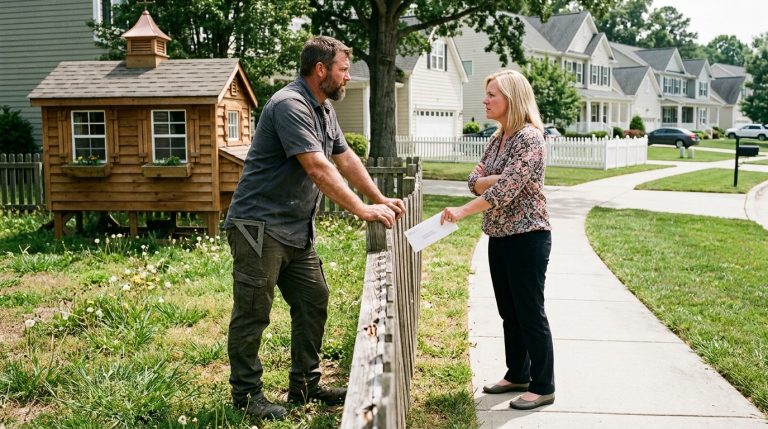
“Daniel,” she said, her clipboard raised like a small shield between us. “You can leave the tool in the dirt. This isn’t an argument.”
I didn’t move my boot from the clay. I let my left hand stay deep in my pocket, my thumb rubbing the deep notch on the old brass Zippo. The metal was cold, but the weight of it kept my arms steady.
“You’re three feet past the county line, Elaine,” I said, keeping my breath even. “The gate was locked for a reason.”
She cracked a thin, tight smile that didn’t reach her eyes, the professional mask of a real estate broker closing a difficult deal. She tapped the top page on her clipboard with a French-tipped fingernail.
“The 2008 municipal expansion incorporated the western fringe of the lake basin,” she said, her voice dropping into that rhythmic, rehearsed cadence she used at the clubhouse meetings. “The Lakeshore Estates charter was granted full infrastructure variance over the entire easement zone last November. The county signed off on the zoning adjustment three weeks ago.”
She held the board out, thrusting the white paper toward my chest. The official blue ink at the bottom looked fresh, the county clerk’s stamp stamped perfectly straight within the margin.
I didn’t take the board. I looked past her shoulder, where the first flatbed trailer was already backing down the pasture slope, its heavy steel ramps rattling against the frame as it prepared to drop a twenty-ton grading unit into the grass. The crew supervisor, a thickset man with a radio clipped to his collar, stood by the cab, waiting for her nod.
“The county clerk doesn’t own the dirt under your boots,” I said.
Elaine’s shoulders squared, her posture stiffening until the tailored seams of her jacket pulled tight against her back. Her fingers gripped the edge of the clipboard so hard the plastic groaned.
“We have two million dollars in municipal bonds backed by the district development fund riding on the first phase of this shoreline corridor,” she said, her voice cracking slightly under the strain of keeping her tone level. “If you obstruct the crew, you’re not just violating an HOA ordinance anymore, Daniel. You’re interfering with a county-approved public utility project.”
She turned toward the supervisor, her hand raising to signal the drop.
—”Elaine.”
The word cut through the idle of the trucks, low and dry as cracked cedar. She paused, her arm hanging half-raised in the gray light.
“Take the paper back to the courthouse,” I said, shifting my grip on the iron bar until the cold steel bit into the calluses of my palm. “Tell them they forgot to look at the trees before they stamped the ink.”
CHAPTER 3: THE EXPOSED ROOT
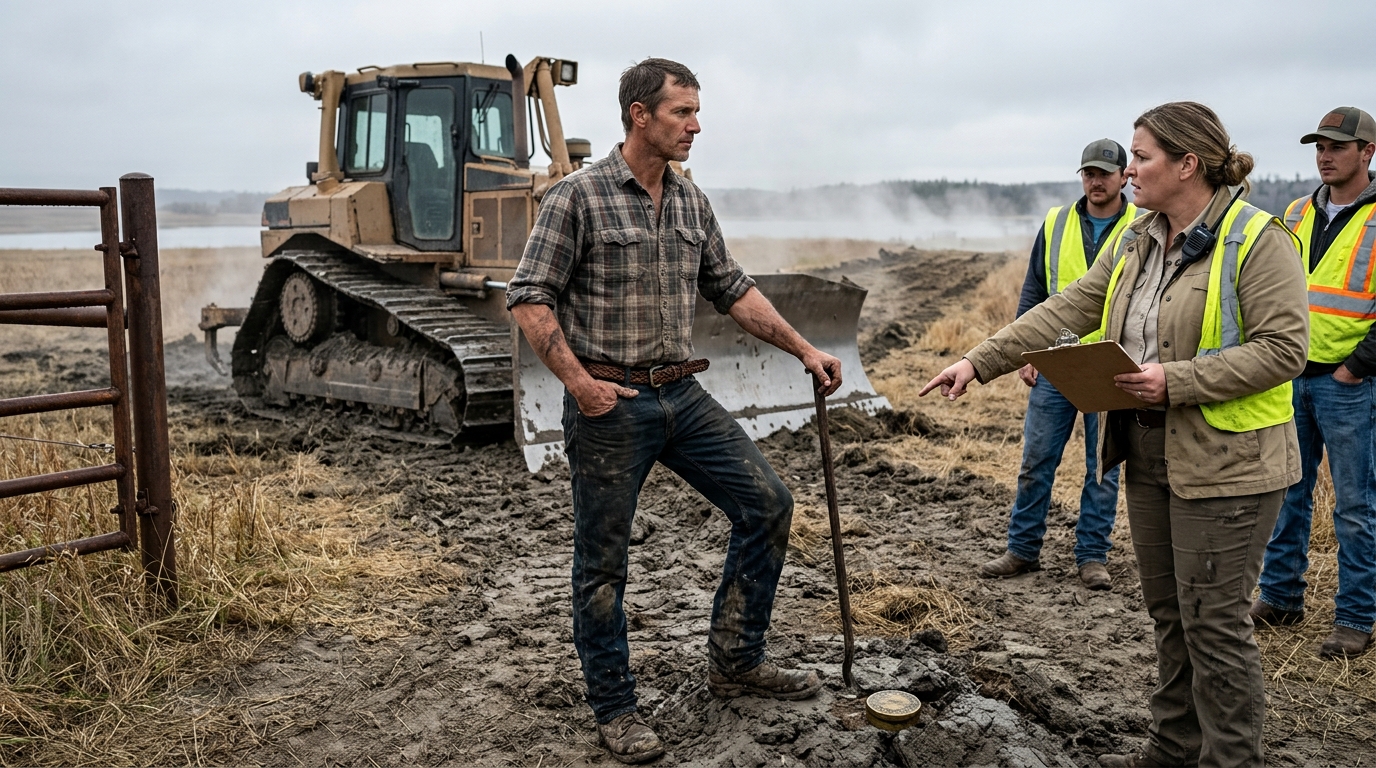
The bulldozer engine groaned fifty yards behind me, its steel tracks tearing up clods of damp switchgrass as the supervisor positioned the blade. Elaine Mercer was still shouting directives near the gate, her voice carrying over the rattle of hydraulic lines. I dropped the iron pry-bar into the dirt, knelt down on one knee in the thick mud, and used my bare fingers to scrape away the remaining layer of rotted cedar needles.
My knuckles scraped against hard metal.
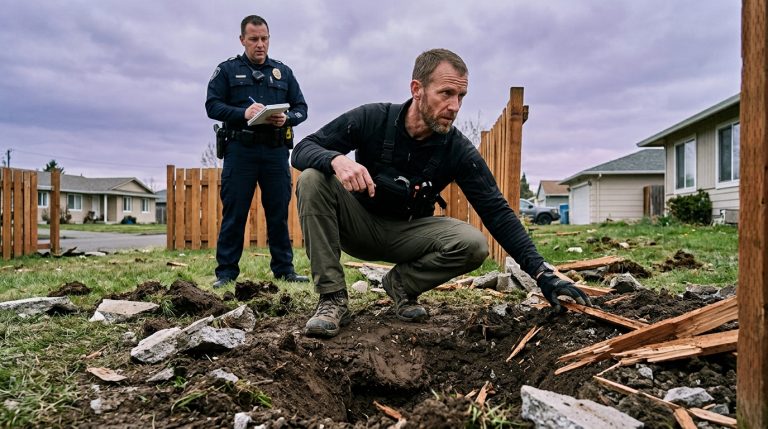
It wasn’t a piece of discarded scrap or an old tractor part left behind by my father. It was a heavy, circular survey cap made of solid brass, bolted deeply into a subterranean concrete pillar that anchored it beneath the frost line. The surface was heavily tarnished, green patina creeping into the deep stamped lettering, but the words were perfectly legible under the gray morning light.
United States Department of the Interior — Fish and Wildlife Service Land Boundary.
A thick, dark vein of oil from the bulldozer’s hydraulic line had leaked down the slope, pooling directly in the groove of the federal seal. This wasn’t a local municipal line, and it wasn’t something a county clerk could redraw over a steak dinner with a real estate developer. This marker meant the soil under my boots was anchored directly to a federal deed registry that had been locked in place before Elaine Mercer ever sold her first suburban lot.
I straightened up slowly, my knee popping from the damp cold. My left hand went back into my pocket, the brass casing of the old Zippo warming against my palm as I clicked the heavy lid shut with a dull, metallic snap.
The crew supervisor was already climbing down from the bulldozer cab, a blueprint rolled into a tight weapon under his arm. Elaine followed right behind him, her polished boots tracking thick gray clay up the slope, her breathing coming in short, irritated puffs that fouled the crisp lake air.
“Daniel, I told you to move,” she said, her clipboard clicking against the gold buttons of her jacket. “The grading crew has an aggregate schedule to keep, and every hour these operators sit idle is coming out of the development district’s contingency fund.”
The supervisor stopped five feet away, his boots sinking two inches into the churned soil. He glanced down at the scraped earth between my feet, his brow furrowing as he caught the glint of the brass cap.
—”What’s that?” he asked, pointing with the rolled blueprint.
“That’s the fence line,” I said, my voice dropping into a flat, quiet rhythm. “The real one.”
CHAPTER 4: THE MUDDY STAND
The ground vibrated right through the thick soles of my work boots. The operator inside the glass cab didn’t look at me; his eyes were glued to the crew supervisor, who had frozen mid-stride on the slick embankment. The diesel exhaust belched in a sharp, dark cough from the stack, showering fine soot onto the freshly scraped roots of the old cedar tree.
“Daniel, get out from in front of that machine,” Elaine Mercer snapped, her polished boot slipping a half-inch into the wet clay before she caught her balance. “You’re trespassing on an active development easement, and I will have the county marshal remove you within the hour.”
I didn’t step back. I reached into my coat pocket, the worn edges of the brass Zippo cold against my bare knuckles as I rolled the casing over in a silent, slow circle.
“The marshal works for the grid, Elaine,” I said, my voice deadpan against the screaming roar of the hydraulic pump. “This marker right here belongs to the interior registry. Your contractor touches this dirt, and he’s damaging federal property before breakfast.”
The supervisor wiped a streak of greasy sweat from his forehead with the back of his hand, leaving a dark smudge across his brow. He looked from the tarnished brass seal beneath my heel up to Elaine’s stiff, pale face, his posture slouched under the exhausting weight of realizing he was caught between an unhinged board member and a federal boundary.
“Elaine, the blade can’t drop if there’s a registered marker,” the supervisor muttered, his hand dropping to his tool belt. “The liability clause in the infrastructure contract doesn’t cover federal boundary violations.”
—”Drive around it!”
Her scream was sharp enough to make the operator inside the cab flinch, her hand pointing a trembling finger toward the steep, muddy slope that led straight down to the fragile shoreline rocks.
“The corridor goes through,” she yelled, her clipboard shaking against her side as her carefully maintained composure finally split at the seams. “We have the bond funding cleared, and I am not letting an old piece of scrap metal derail this entire marina project.”
I leaned my weight hard onto the iron pry-bar, anchoring the steel tip into the limestone shelf beneath the mud.
“Try the slope,” I said, locking my eyes straight on hers. “The shale at the bottom gives way under six tons. Let’s see how fast that bond funding pulls a twenty-ton grading unit out of the lake water.”
CHAPTER 5: THE CHECKMATE COLLAPSE
The three heavy trucks rolled to a halt in a cloud of fine gray grit, their white and green door shields catching the flat sunlight. The regional conservation inspectors stepped down with hard, unhurried precision, their thick leather field binders held under their arms like iron plates. Behind them, the county sheriff’s deputy kept his hand loosely resting on his utility belt, his eyes scanning the raw, yellow scar the bulldozer had already cut into the upper pasture.
“Elaine Mercer?” the lead inspector called out, his voice a low, gravelly rasp that completely severed the hum of the idling grading unit.
Elaine stormed forward, her heels tearing deep wedges into the damp sod, her fingers white where they clamped around the edge of her clipboard. “I am the association president. If Daniel here called you with some fabricated complaint about a local property line, you are wasting municipal time. We have an infrastructure bond cleared by the county board.”
The inspector didn’t take the paper she tried to thrust into his chest. He reached down, flipped open his heavy binder, and pulled out a large, multi-layered map stamped with the red wax seal of the state environmental registry.
“This isn’t a municipal boundary dispute, Mrs. Mercer,” the inspector said, his thumb pointing directly down toward the concrete marker where my boot was still anchored. “Your contractors just broke a 1978 federal preservation easement co-signed by the state conservation board. Your county zoning variance has zero authority over this shoreline.”
Elaine’s face drained of its color, the expensive foundation on her cheeks suddenly looking like dry plaster. Her jaw went rigid, a tiny muscle along her jawline pulsing with an involuntary, erratic rhythm.
“That’s impossible,” she stammered, her voice rising an octave as she turned aggressively on the crew supervisor. —”Jerry, tell him the county cleared the grading corridor! Show him the expansion maps!”
Jerry, the thickset supervisor, didn’t move a finger toward his pocket. He took two steps back into the mud, completely separating himself from her side. “The liability is on the board, inspector. We were operating strictly under the president’s signed project directive.”
The inspector turned his gaze back to Elaine, his expression as unyielding as the limestone under the pasture. “All operations are frozen under state environmental emergency code. Jerry, tag your equipment. Nothing leaves this site until the damage assessment is filed.”
Elaine’s fingers trembled so violently the papers on her clipboard rattled like dead leaves in a gale. “You can’t do this! The association has two million dollars wrapped up in the marina timber alone! We will appeal this before the county council by Monday morning!”
“You can appeal to whoever you like, Mrs. Mercer,” the inspector said, handing her a bright orange cease-and-desist packet. “But right now, the state is filing personal administrative liability against the signing authority. That’s you.”
CHAPTER 6: THE DUSTY GRAY NORMAL
The large orange seizure tags fluttered against the hydraulic arms of the abandoned bulldozer, their plastic edges making a tiny clicking sound in the breeze. Elaine Mercer had left hours ago in the back of a county vehicle, still screaming at her lawyer through a cracked window, her clipboard dropped and forgotten in the yellow pasture clay. The four black luxury vehicles were gone, their deep tires tracks already filling with the slow seepage of underground spring water.
A lone blue heron descended onto the rocky point near the orchard, its long legs cutting the glassy surface without a ripple.
Jerry’s grading crew had left their trailers behind, chained to the state inspector’s lock until the environmental mitigation hearings concluded in the capital. The neighborhood group chats had fallen silent by noon, replaced by the grim realization that the association’s development fund was now tied up in a multi-agency penalty lien.
I reached into my pocket, pulled out my grandfather’s brass Zippo, and turned it over once to feel the deep notch in the casing before sliding it back into the denim.
The cedar trees along the bluff stood exactly where they had since 1978, their dark needles catching the last orange glow of the day. A pair of river otters emerged near the crooked pier, their wet heads glistening as they slipped back into the deep water where the resort docks were supposed to be anchored.
I stood up from the rail, picked up my heavy iron pry-bar, and dropped it into the rusted bed of the old farm truck with a dull, satisfying thud.
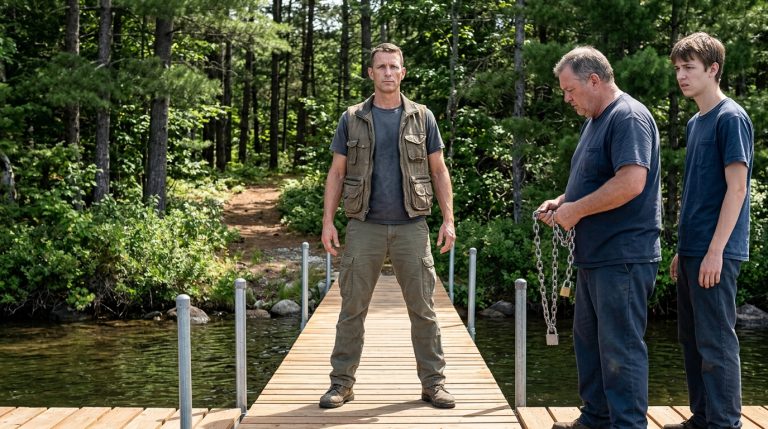
The broken hasp from the morning lay in the weeds by the gatepost, a useless piece of snapped steel already beginning to gather the evening dew. I pulled the new galvanized chain tight around the heavy cedar posts, slipped a fresh brass padlock through the links, and pushed the cylinder home until it clicked in the quiet air.
The ranch was quiet again, moving at the slow rhythm of the water and the seasons, exactly the way the old man wrote it down.