Rust, Rubber, and Real Boundaries: How a Quiet Neighborhood Learned the Cost of Unchecked Entitlement
CHAPTER 1: THE FIRST SCRATCH
The engine pinged as it cooled in the evening air. I reached for a rag on the workbench, wiping a smear of dark grease from my thumb.
We moved to this subdivision two years ago for one reason. We wanted a quiet place where the grass was cut and nobody bothered us.
Instead, we got a tiny fiefdom run by bored people with too much time and zero respect for private property.
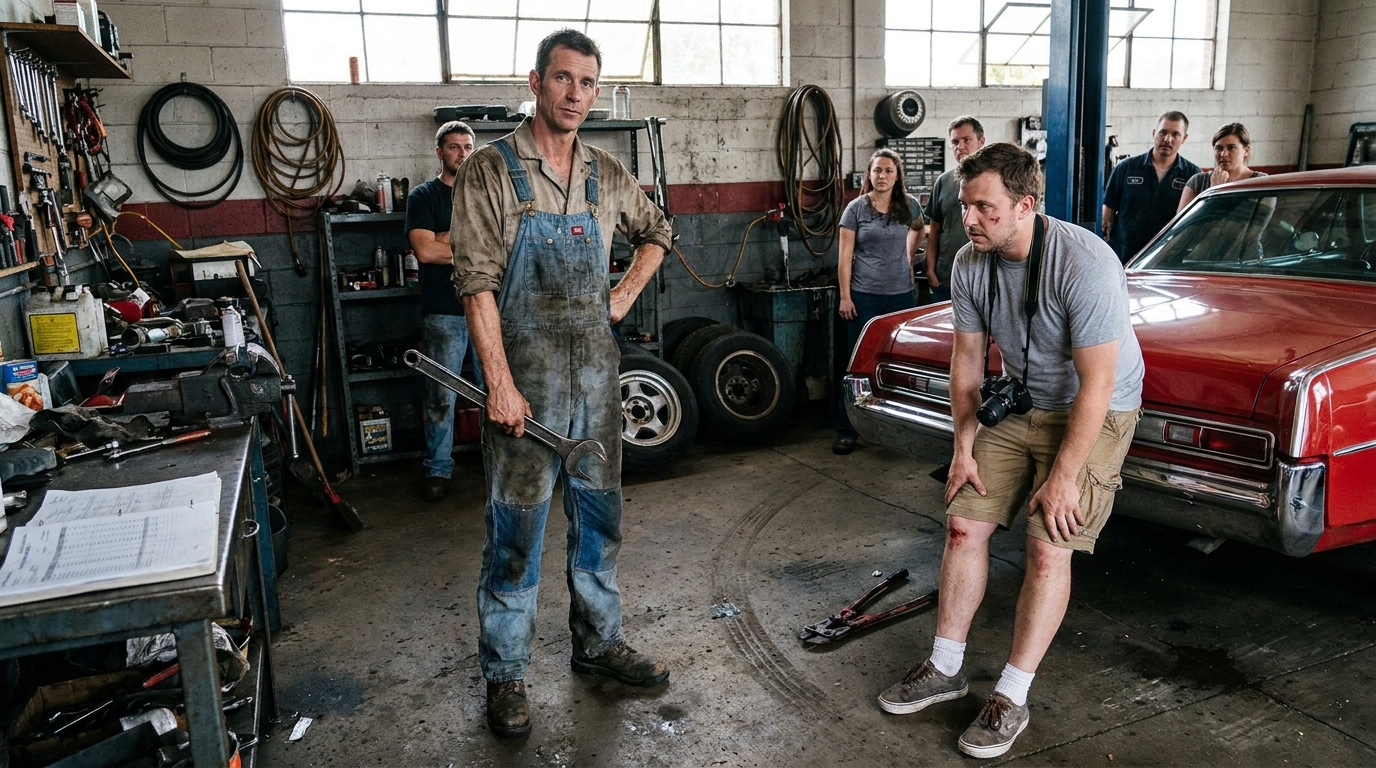
Chad stood right by the fender, his chest puffed out like a pigeon in a park. He wore a camera strapped tight across his jacket, recording a world he assumed belonged to him.
“This car is mine now,” he said. His voice didn’t carry a hint of doubt.
I looked at the smudge of dirt on the bumper where his hand had hit the paint. My lower back ached from the drive, and the last thing I wanted to deal with was another rich kid playing lord of the manor.
Lisa didn’t even blink. She stood by the driver’s side door, wiping her own hands on a clean cloth.
“You ever driven anything that hits back harder than your mother’s golf cart?” she asked.
Her voice was flat. No shouting, no theatrics. Just cold metal meeting stone.
Chad’s smile faltered for a fraction of a second before his arrogance rushed back in to fill the gap. He dug his hands into his pockets, leaning his weight against our quarter panel.
“Everything’s for sale around here,” he said, shaking his head. “And the community owes me anyway.”
I dropped the rag onto the metal workbench. The iron clanged in the quiet garage, echoing off the concrete floor.
CHAPTER 2: THE BOARDROOM DEMAND
Lisa didn’t even look up from the engine manifold when the second notice arrived by hand.
It wasn’t mailed. Someone had slid it straight beneath the garage door, the crisp white envelope catching the concrete dust.
I picked it up, my thumb brushing over the embossed community seal that looked far too official for a group of people arguing about lawn trimming heights.
Inside, the summons demanded our presence at the monthly assembly to address an ownership misunderstanding regarding our primary vehicle.
The wording was neat, cold, and entirely designed to weaponize petty authority under the guise of neighborhood harmony.
Lisa wiped a streak of grease across her forehead with the back of her wrist, leaving a smudge that only added to her absolute lack of patience for bureaucratic theater.
“They really think a piece of paper changes a title,” she muttered, her voice dropping into that low, flat register that meant someone was about to learn a hard lesson.
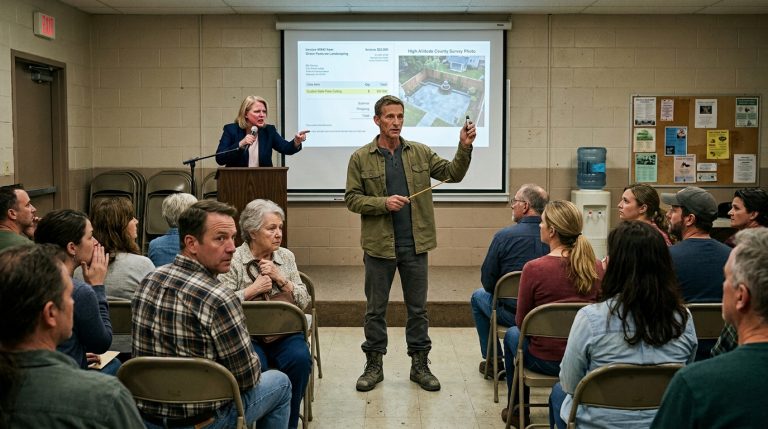
We walked into the community clubhouse twenty minutes before the meeting started, the air inside smelling of cheap carpet cleaner and stale municipal coffee.
Chad’s mother sat at the head of the long oak table, her posture rigid, flanked by two board members who looked like they wished they were anywhere else on earth.
She didn’t offer a greeting, sliding a fresh stack of agenda papers across the polished wood with a sharp click of her acrylic nails.
“We’re here to discuss the community grievance regarding shared asset access,” she announced, her voice pitched for the small audience of onlookers gathered in the plastic folding chairs.
Lisa didn’t take a seat. She placed both hands flat on the edge of the table, leaning forward until the wooden frame groaned slightly beneath her weight.
“The only thing shared in this neighborhood is the air, and even that’s getting thick with nonsense,” Lisa said, her gaze locking onto the president’s eyes without a flicker of doubt.
A quiet murmur rippled through the folding chairs as a couple of residents shifted uncomfortably, staring down at their own copies of the agenda.
Chad’s mother forced a tight, brittle smile that didn’t reach her eyes, tapping a silver pen against the paperwork like a judge preparing to hand down a sentence.
“The board has full authority to reallocate non-essential performance assets for community morale,” she replied, doubling down with absolute, unearned entitlement.
I reached into my jacket pocket, my fingers brushing against the cold brass of a heavy wrench I had slipped in before leaving the garage.
CHAPTER 3: THE MIDNIGHT GARAGE
The motion sensor light clicked on outside the window with a sharp, electronic snap that cut straight through the quiet night.
I didn’t rush. I kept my hand wrapped around the heavy tool, feeling the cold steel absorb the heat of my palm while the dashboard screen on my phone lit up with three silent figures moving across the concrete apron.
Chad led the small group, his steps clumsy and light-footed in that eager way people move when they think nobody is watching them break the rules.
Behind him, two of his shadows carried a heavy plastic toolbox and a pair of bolt cutters, their silhouettes stretching long and distorted against our brick wall.
They thought they were conducting a late-night raid on an undefended prize, completely blind to the fact that Lisa had wired the vehicle’s diagnostic port directly into an independent local security relay.
I glanced over at the bed. Lisa wasn’t panicking, wasn’t sitting up in a cold sweat; she just reached across the nightstand with a slow, deliberate motion and tapped the master override icon on her tablet screen.
The first boy reached out, his fingertips brushing against the chrome door handle of the red classic with a proprietary grin.
He never even had time to wrap his hand around the latch.
The garage speakers didn’t just beep; they woke up with a deep, bone-rattling engine roar that shook the window glass in its wooden frame and sent a sudden, explosive burst from the rear exhaust pipes that smelled of unburned high-octane fuel.
It sounded less like a car alarm and more like a fighter jet breaking the sound barrier inside a tin shed.
The boys screamed in unison, stumbling over their own feet so violently that the one carrying the bolt cutters tripped backward straight into our prized rose bush.
They scrambled across the gravel drive like a litter of panicked raccoons, abandoning their tools right beneath the bumper as they tore down the street toward the corner lot.
Lisa pulled the duvet back up over her shoulder, her breathing slow and steady in the dark room.
“They’re lucky I was feeling generous,” she murmured into the pillow, closing her eyes without another word.
I looked back down at the audit papers resting on the workbench, noticing for the first time the slight mismatch in the signature line where quarterly funds had been quietly siphoned away into private accounts.
CHAPTER 4: THE TRANSPORT TRUCK
The low, rumbling drone of a heavy diesel engine shook the subdivision pavement long before the vehicle actually turned the corner.
A massive racing transport truck rolled down our quiet suburban street with the grace of an avalanche, its dual tires kicking up dust against the manicured hedges.
Neighbors poked their heads out from front doors and opened second-story blinds, staring in utter disbelief as air brakes hissed a sharp warning right in front of our driveway.
Out stepped a full professional performance crew in matching grey uniforms, unloading toolboxes, diagnostic rigs, and two spare track cars like they were setting up camp for a major league circuit.
Lisa walked out of the garage wearing her driving suit, tucking a heavy fiberglass helmet under one arm with an expression that looked like Christmas had arrived early.
The driver’s side door of the transport swung open wide, offering a clear view of heavy-duty winches and precision alignment tools that made the local HOA regulations look like children’s coloring books.
Chad’s mother appeared at the end of her driveway down the block, her phone pressed tight against her ear, watching the crew set up mobile lighting rigs right across the asphalt.
Lisa didn’t wait for her to march over. She strode straight across the property line, holding a thick packet of certified legal documentation bound in heavy cardboard.
“Thought you might want to look over these papers before your next batch of violation letters goes out,” Lisa said, dropping the packet onto the hood of a neighbor’s sedan with a heavy thud.
The president’s face tightened into a pale, rigid mask of institutional panic as she stared down at the subpoena notices covering property harassment and financial overreach.
“You can’t bring commercial equipment into a residential zone,” she snapped back, her voice cracking slightly under the sudden weight of public attention.
Lisa leaned in close, her eyes locked steady on the panicked tremor in the other woman’s hands.
“The only thing residential around here is your bad paperwork,” Lisa replied, turning her back on her before a single word of rebuttal could form.
CHAPTER 5: THE ASPHALT SETTLEMENT
The makeshift racing circuit at the end of the block looked less like a professional track and more like a county fair for poor decision-making.
Folded lawn chairs lined the curbs, coolers cracked open under the mid-morning sun, and neighbors whispered behind cupped hands as Chad strutted toward the starting line.
He wore a rented racing suit that looked like it had been tailored for a television commercial, complete with sponsor patches for local lawn care companies.
Lisa didn’t rush out to meet his performance. She stepped out of her red classic wearing her everyday driving jacket, her helmet already clipped securely under her arm.
Chad slammed his rented sports car door shut with an audible bang, marching right up to our fender with a camera crew trailing his every step.
“Winner takes the title, no rules, no board interference,” he announced, projecting his voice for the assembled crowd of folding-chair spectators.
Lisa gave him that tight, unblinking smile that signaled someone had wandered completely past reason.
“You lose, you scrub,” she said, her voice dropping into a flat, level register that cut through the engine idle.
The flag dropped. Chad hammered his throttle, spinning his rear tires on the straightaway in a cloud of white rubber smoke that smelled of cheap compound.
Lisa didn’t try to match his reckless burst off the line. She rolled forward with steady, calculated traction, keeping her RPMs locked right where the engine delivered maximum torque.
The first sharp corner arrived with a wall of chain-link fence and loose gravel.
Chad tried to brake late, locking his front wheels up and sliding wide toward the curb like an amateur on ice.
Lisa took the inside line with ruthless precision, her tires gripping the asphalt without a squeak of panic as she sailed right past him on the apex.
By the second lap, she had stretched a five-car lead over his sputtering engine, leaving him trailing in a cloud of dust and exhaust.
The crowd erupted into sudden cheers and laughter from the lawn chairs as Lisa crossed the finish line with clean, unbroken momentum.
Chad crawled out of his car a minute later, his face flushed red with humiliation, his hands gripping the steering wheel like he was trying to strangle it.
CHAPTER 6: THE DUSTY YARD
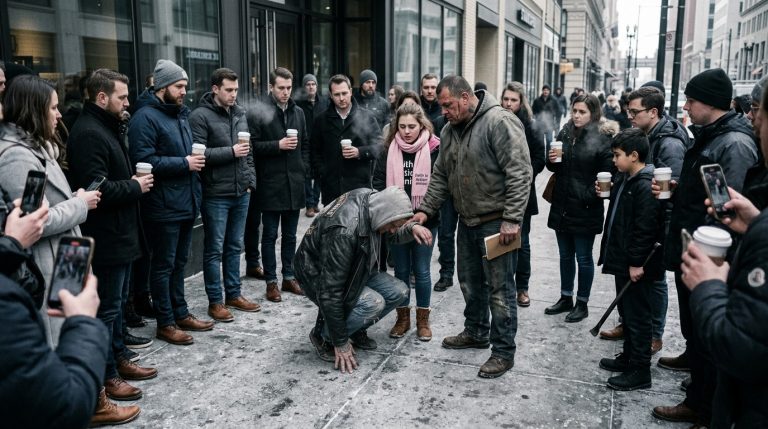
The high-visibility safety vest hung loosely over Chad’s shoulders as he knelt beside the bucket of sudsy water, his fingers wringing out the grey sponge with slow, mechanical exhaustion.
Four weeks of community vehicle detailing had stripped away every layer of his arrogant theater, leaving behind a humbled teenager who finally understood how gear ratios worked against gravity.
Across the street, his mother’s name had been permanently removed from the neighborhood board roster after the residents reviewed the undeniable financial audit trail.
The new board president had already pushed through real oversight rules, putting an end to fake property claims and weaponized paperwork once and for all.
Lisa stood by the driver’s side of her red classic, her fingers tracing the polished chrome fender where the afternoon light caught the paint without a single speck of dust.
She tossed a fresh, dry microfiber towel straight through the air toward the curb.
“Don’t miss a spot,” she said, her voice carrying that calm, unbothered rhythm that needed no extra decoration.
Chad caught the towel against his chest, nodding quietly as he dipped his sponge back into the water without a single word of defiance left in him.
I leaned against the garage door frame, watching the sunlight stretch long and golden across our driveway while the engine of the red car sat cold, silent, and entirely secure.