Reclaiming The Last Acre From Petty Tyranny Through Cold Calculation And Unyielding Resolve
CHAPTER 1: ASSESSING THE COLD RUBBLE
The aluminum racking dangled like severed nerves over the roof of the old barn.
I stood in the damp soil, my thumb rubbing the smooth, cold metal casing of the Zippo lighter in my pocket.
The silence after the work van vanished was heavier than any drop zone I had ever walked.
Karen’s floral print blouse was already fading from my immediate vision, replaced entirely by the jagged edges of shattered silicon.
My retirement project was ruined.
I didn’t blink.
Two decades of combat engineering don’t leave room for panicked shouting.
They leave room for inventory.
I pulled out my phone and framed the first high-resolution photo of the bent metal frames.
The scratch on the galvaloom roof was deep, gouged with malicious intent.
I moved systematically, capturing every severed wire and every crushed micro-inverter.
My phone buzzed against my palm, a reminder of the quiet waiting inside the house where Sarah breathed through a machine.
The local sheriff had already backed down our gravel drive and driven away, dismissing felony destruction as a civil dispute.
The system outside my gate was useless.
That meant the response belonged to me alone.
I pocketed the phone, stepped over a tangle of copper cable, and walked toward the house to pull the blueprints.
CHAPTER 2: GATHERING THE BROKEN PIECES
The engine turned over with a heavy diesel rumble that rattled the rusted fender.
I drove past the subdivision’s manicured lawns without slowing down, keeping my eyes fixed on the asphalt.
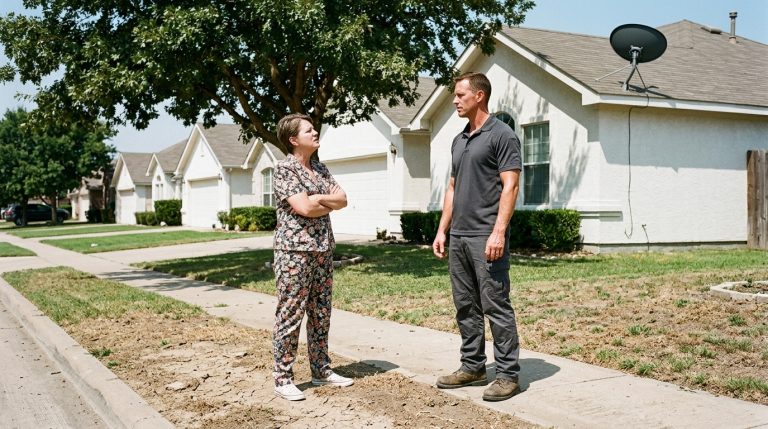
Mrs. Gable was kneeling by her rose bushes, her hands deep in the damp mulch.
She did not look up when the truck door slammed.
A small, brightly painted garden gnome peeked out from behind an azalea leaf, its fishing rod pointed toward the empty street.
—You’ve got a visitor, Mrs. Gable, — I said, leaning against the wooden fence post.
She flinched, her trowel scraping against a stone before she slowly straightened her back.
Her eyes searched my face for the familiar threat of a clipboard before recognizing the veteran from the farm.
—That woman sends letters every week, — she whispered, her voice trembling slightly as she gestured toward the hidden ceramic figure. —George gave me that for our anniversary thirty years ago. Now I have to hide it like contraband.—
I pulled a blank notepad from my pocket and rested it against the rough wood of the fence.
—She didn’t send a warning for my barn, either, — I replied, keeping my voice flat and steady. —She just sent a crew to tear it down.—
The old woman’s jaw tightened as the real weight of the neighborhood’s shared misery settled between us.
—Tell me what to sign, — she said, reaching for a pen with work-worn fingers. —I’m tired of tip-toeing around my own yard.—

CHAPTER 3: ENGAGING THE SHARK
The downtown skyscraper lobby smelled of polished marble and expensive coffee, a sharp contrast to the damp soil of the farm.
I pushed open the heavy glass door of the top-floor suite with my shoulder, the folder of evidence pressed tight under my arm.
Eleanor Albright did not stand up from her mahogany desk when I walked in, her sharp eyes already scanning the empty air before me.
—You brought me a civil dispute, Mr. Garrison, — she said, her voice cutting through the quiet office without an ounce of warmth. —Tell me why I shouldn’t send you back to the local magistrate.—
I dropped the thick three-ring binder onto the center of her desk with a heavy thud.
—Because she didn’t just break a fence panel, — I replied, pulling out the printed architectural review records. —She bypassed every single procedural safeguard in their own bylaws to commit willful property destruction.—
Her fingers tapped once against the edge of the leather desk mat as she pulled the binder toward herself.
—Show me the liability shield, — she murmured, her gaze locking onto the highlighted sections of the neighborhood covenants.
I leaned forward, resting my palms on the cold wood, and laid out the drone photographs of the mangled aluminum frame.
—She acted alone, and the board has no record of a vote, — I said quietly. —That corporate veil is paper-thin.—
CHAPTER 4: DELIVERING THE SHOCK WAVE
The kitchen table was buried under certified mail slips and thick legal notices.
I pressed the corner of a heavy manila envelope down against the grain, sliding my thumb over the taped seal.
Marcus Thorne’s home address was written in crisp black ink, right beside four others destined for the rest of the board.
—They’re getting them right now, — Sarah said from the doorway, her oxygen tube hissing softly as she watched the stack dwindle. —The treasurer is going to look at that figure and realize his own savings account is on the line.—
I didn’t answer right away.
I picked up the Zippo lighter, flipping the metal top open and shut with a sharp clack that broke the tense kitchen silence.
—They thought they could hide behind a corporate shield and a clipboard, — I muttered, sliding the final envelope into place. —Let’s see how they defend a three-hundred-thousand-dollar liability when they realize they were kept in the dark.—
My phone buzzed against the wooden tabletop with an incoming email notification.
The sender address flashed across the screen: Marcus Thorne.
—Open it, — Sarah urged, stepping closer.
I tapped the screen, letting the cold blue light illuminate the quiet kitchen as I read his frantic first line.
CHAPTER 5: EXECUTING THE PUBLIC EXECUTION
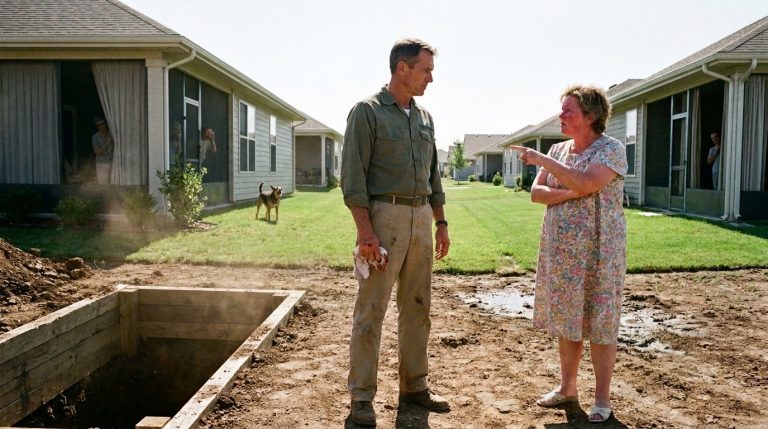
Karen stood at the center of the stage behind the long laminate table, her floral print blouse smoothing down over her hips as she adjusted the microphone.
—There are a lot of rumors circulating, — she began, her voice ringing out through the PA speakers with practiced self-righteousness. —Some individuals want to dismantle our community standards.—
I sat in the third row, my hand sliding into my jacket pocket to grip the smooth, cold casing of the Zippo lighter.
Beside me, Marcus Thorne stared straight down at his folded hands, refusing to meet her gaze.
—She didn’t issue a stopwork order, — I said, my voice cutting across the empty space between the rows without shouting. —And she didn’t get a board vote.—
Karen’s face mottled into a dark shade of fury as she slammed her palm down against the wooden tabletop.
—You are out of order, Mr. Garrison! Sit down or I’ll have security remove you from this building!—
Dave Kowalski stood up directly behind me, his broad shoulders blocking the aisle.
—Let him speak, — Dave boomed, his voice carrying the immovable weight of an Air Force commander.
I pulled the USB drive from my pocket, stepped past the folding chairs, and walked straight toward the projector controls while the screen behind her flickered to life.
CHAPTER 6: RECLAIMING THE QUIET GROUND
The final settlement documents rested flat against the kitchen table wood, weighted down by my thumb.
Marcus Thorne’s signature was dry, inked in dark blue at the bottom of a check that covered every single cent of the damage.
Outside the window, Tom’s crew hoisted the brand-new black panels onto the sturdy timber rafters of the old barn.
—She’s putting up a for sale sign, — Sarah said softly, her oxygen concentrator humming a steady, reliable rhythm from the corner.
I looked out across the 10 acres of green pasture, watching the wind move through the tall grass without a single notice or restriction in sight.
Karen walked past the gravel drive in a gray sweatsuit, her head down, avoiding our gaze entirely as she climbed into a packed sedan.
She didn’t offer a final word or a defiant glare; she simply vanished into the suburban asphalt.
I reached out and closed the Zippo lighter with a crisp, final snap that echoed in the quiet room.
The war for the last acre was over, and the grid was humming entirely on the sun.