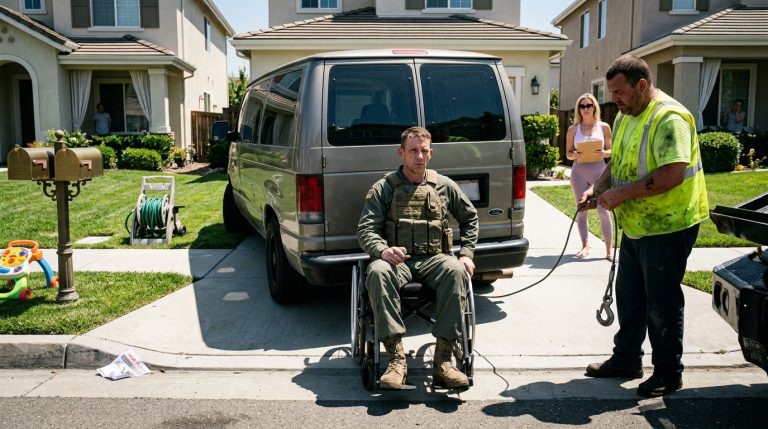
The Iron Gate of Whispering Pines: A Century-Old Deed, an Entitled HOA President, and a Quiet Reckoning
CHAPTER 1: THE FIRST NOTICE
The soil beneath my knees was cold, damp with the morning mist that always clung to the low spots of the five acres. I pressed my palms flat against the turned earth of my late wife’s rose garden, feeling the coarse grit beneath my fingernails.
The voice arrived before the face could clear the hedgerow—a cloying, sugary slide of syllables that grated like dry sandpaper.
“Your little patch of dirt is an eyesore, Major, and according to this bylaw, it’s now our patch of dirt.”
I did not turn immediately. I finished pressing a clump of dark loam around a dormant root, letting the silence stretch just long enough to make the weight of my presence felt.
When I rose, my right knee gave its familiar, dull click—a souvenir from a ridge line in a country most mapmakers had long since forgotten. I stood to my full height, wiping my palms clean against the front of my canvas work trousers.
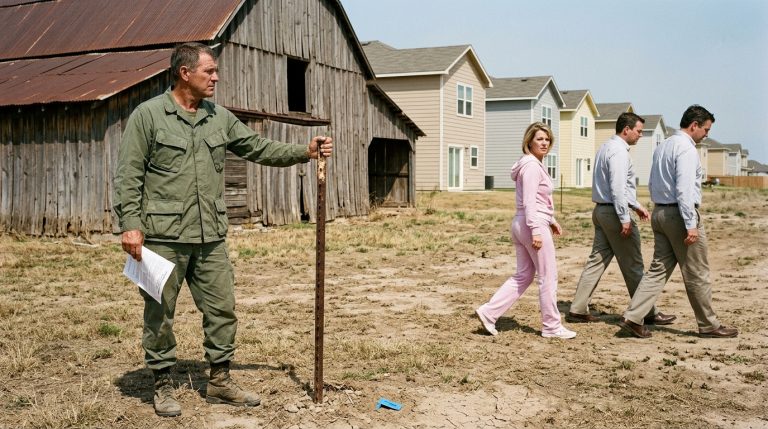
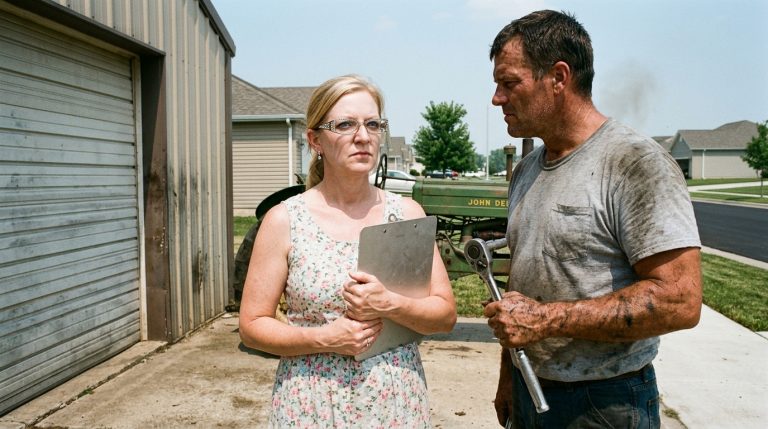
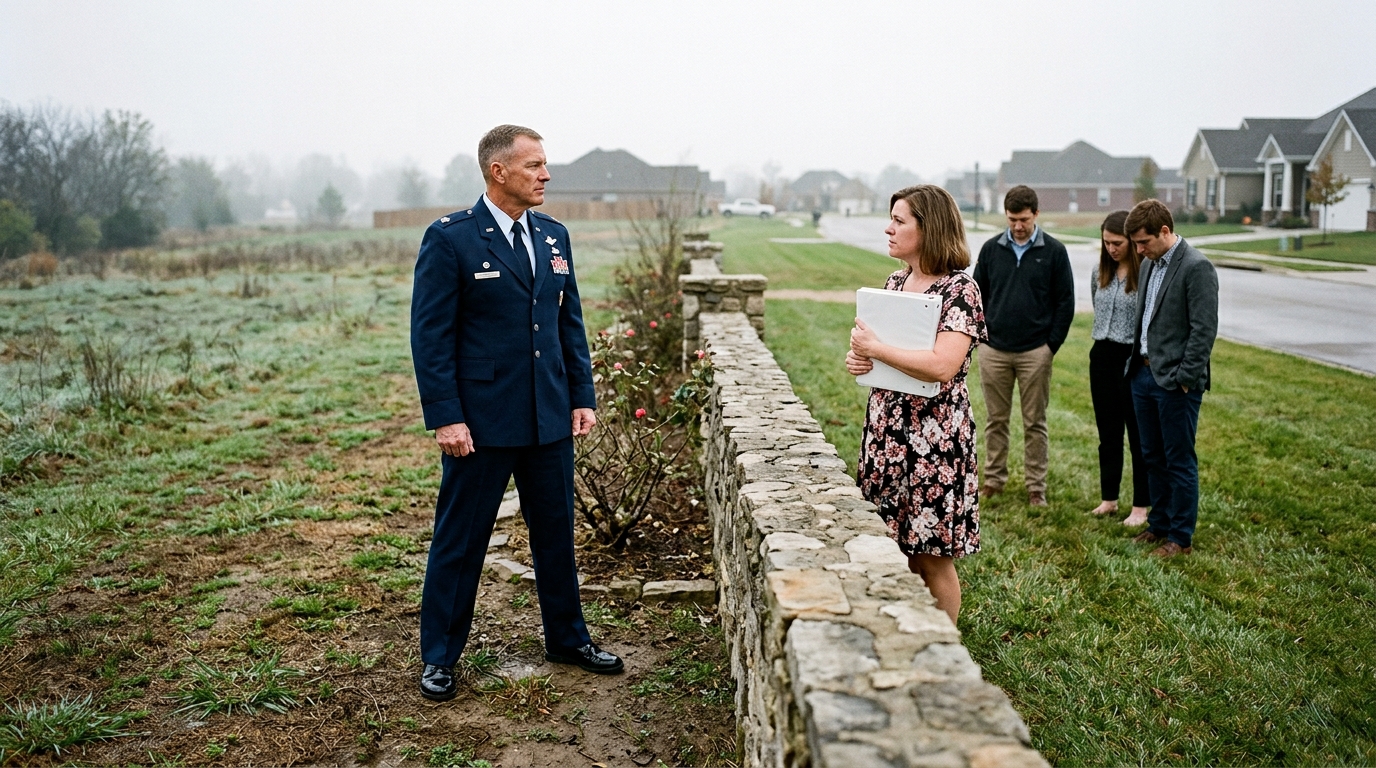
Karen Thompson occupied the other side of the waist-high stone wall, her floral-print dress clashing violently with the muted greens and grays of the pasture. A three-ring binder was clutched to her chest like a shield. Behind her, two junior board members shifted their weight on the manicured turf of the newer subdivision, their eyes fixed firmly on the grass between their shoes.
“This dirt has been the McIntyre homestead since 1922,” I said, keeping my voice down to the steady, level register I had used to brief battalion commanders. “It has never been part of your association. It never will be.”
Karen let out a short, clipped sound that passed for a laugh in her circles. “The developer folded five years ago, Major. In bankruptcy, the master covenants rolled over to the HOA. Every parcel within the perimeter boundary is ours by default.” She tapped the binder with a manicured nail. “Ninety-two thousand, four hundred and fifty dollars in back dues and penalties. Pay it, bring the property into compliance, and get rid of that rusty tractor by sundown.”
She gestured toward the 1953 Farmall resting near the weathered timber of the barn—the very restoration project I had promised my son before he deployed.
I did not blink. I did not raise my voice. I merely looked at the precise spot where her shoe crossed the legal boundary of my property line.
“You’ve made your position clear, Mrs. Thompson,” I said, turning my back on her before she could parse the flatness in my tone. “I suggest you take your clipboard off my stones.”
CHAPTER 2: THE METAL TUBE
The rolltop desk stood in the quiet corner of the study, smelling of lemon oil and dry cedar. I slid the metal tube from the hidden slot in the back of the bottom drawer.
My fingers traced the scratched brass threading. I pulled the rolled document free, laying it flat across the scarred mahogany surface of the desk.
The parchment was yellowed like old ivory, brittle at the edges where time had nibbled away the margin. The ink was a deep, rust-brown iron gall script, faded but entirely legible under the glare of the brass desk lamp.
I flattened the corners with two lead paperweights. My eyes tracked down the flowing, elegant cursive of 1922 legal drafting until they hit the middle paragraph.
“Be it known that the five-acre parcel designated as the McIntyre homestead is hereby and in perpetuity excluded from any and all covenants…”
The phrasing was dense, unyielding, and completely unambiguous. Old Judge Miller had not written clauses for compromise; he had written them for war.
Beneath that primary exemption sat the longer, heavier paragraph detailing the reversionary rights. Any administrative or legal overreach by a governing body would instantly trigger a title transfer of every common area in the surrounding development.
The room was dead quiet except for the low hum of the refrigerator in the kitchen down the hall. I ran a thumb along the edge of the brittle paper, calculating the inevitable reaction when Karen Thompson’s next move collided with iron-bound law.
A sharp rap echoed through the front of the house—three rapid, aggressive strikes against the wooden frame of the screen door.
CHAPTER 3: THE TRACTOR BREACH
The low, rumbling drone of a heavy-duty diesel engine vibrated straight through the floorboards of the study.
I set the brass cap back onto the metal tube with a dull click and walked out to the front window. A commercial tow truck, its yellow emergency beacon rotating in slow, lazy arcs, was backing directly across the eastern pasture.
Deep, churning ruts opened behind its dual wheels, tearing through the wild grass my father had planted.
A burly man in a stained jumpsuit hopped down from the cab, holding a laminated work order, and strode straight toward the 1953 Farmall.
The cold knot of fury in my chest tightened, but I kept my breathing slow and deliberate as I pushed open the front screen door.
“Hold right there,” I said, my voice cutting through the mechanical clatter of the winch cable spooling out.
The driver paused, glancing back with a scowl over a shoulder covered in grease stains. “Got an impound order right here from the Whispering Pines association—says this iron heap is abandoned property.”
Before I could answer, a familiar electric whine hummed up the drive, stopping abruptly beside the muddy tracks.
Karen Thompson stood up from the golf cart steering wheel, her floral print dress stiff with triumph.
“I told you the first time, Major—we are clearing out your eyesores whether you like it or not,” she called out, gesturing toward the winch with her clipboard. “Hook it up, driver. We don’t have all day to argue with trespassers.”
The driver looked at the clipboard, then at me, hesitating as he reached for the towing chain.
I did not raise my voice, nor did I rush toward them. I pulled my phone from my pocket with steady fingers.
“Son, if you hook that tractor without a signed judge’s warrant, you are assisting in grand theft on private property,” I said, locking my gaze onto the driver’s eyes. “I am dialing the county sheriff right now.”
Karen scoffed, leaning against the steering wheel of her cart with a sharp laugh. “He’s bluffing, driver. Hook it!”
“She can say what she likes,” I told the driver, pressing the call button against my ear. “The liability falls on your bond when the deputies arrive.”
CHAPTER 4: THE LEGAL WALL
The young tow driver dropped his winch cable into the mud, his hands hovering waist-high as the squad car door clicked shut.
Sergeant Miller surveyed the scene with a long, slow exhale that plumed white in the crisp morning air—the deep ruts in the pasture, the idling diesel truck, and Karen rigid behind her golf cart steering wheel.
“Morning, Mac,” Miller said, nodding in my direction before turning his gaze toward the asphalt edge. “What seems to be the trouble on private land today?”
Karen thrust her clipboard forward, her voice rising into a sharp, defensive register. “This man is obstructing a legal recovery order issued by the Whispering Pines association—we are removing an abandoned nuisance vehicle under standard community bylaws.”
Miller took the paper, stared at it for three seconds with a completely blank expression, and handed it right back.
“Ma’am, this is a civil dispute over community rules, and I don’t enforce HOA rules,” Miller said, his tone flat and immovable. “More importantly, you’re standing on private property directing a commercial vehicle to hitch up private property without a judge’s signature.”
He turned back to the pale-faced driver. “Son, unless you want me writing up an impound-theft report and towing your own rig to the county impound lot, I suggest you unhitch right now and get off this acreage.”
The driver didn’t wait for a second invitation; he scrambled back into the cab, slammed the door, and ground the transmission into reverse, kicking up a spray of loose dirt as he backed out past the stone wall.
Karen’s mouth worked soundlessly, her face mottling into an ugly shade of plum as she realized her muscle had vanished.
“This isn’t over, Major—we have corporate counsel drafting formal foreclosure papers as we speak,” she spat, wrenching her golf cart around so hard the rear tires spun in the turf.
I watched her drive away without saying a word, knowing full well what was coming next through the mail slot.
CHAPTER 5: THE CLUBHOUSE RECKONING
I pulled the envelope free from the latch and slid a thumb under the gummed flap, unfolding three stiff pages of heavy bond paper.
The language was dense with legal jargon, but the core demand leaped off the page—pay ninety-eight thousand dollars in accumulated fees or face immediate foreclosure proceedings within thirty days.
It was the final, overextended lunge I had been waiting for.
Without legal counsel to help me file or interpret the counter-move, I had to walk into the community clubhouse alone with nothing more than the original metal tube and a handful of photocopies.
The room was packed to the point of suffocation, two hundred residents murmuring anxiously beneath the flickering fluorescent lights of the ceiling.
Karen stood at the podium in the front, her floral dress stiff and unyielding, flanked by Gerald and the remaining board members.
“We are facing an aggressive actor trying to steal our shared amenities,” Karen announced into the microphone, her voice dripping with calculated panic. “If we do not stand united tonight, every home value in Whispering Pines drops to zero.”
“That’s a lie,” I said, my voice carrying cleanly across the tense silence without needing a microphone.
Heads whipped around as I stepped down the center aisle, holding a single manila folder against my chest.
Karen’s face mottled a dark, furious crimson as I reached the front row. “You have no right to be here—this is a private meeting!”
“You’ve made me the sole subject of it,” I replied, setting the folder down on the edge of the table. “And the people in this room deserve to know why their high-priced lawyers just abandoned ship.”
Gerald leaned forward, his hands trembling slightly on the wood. “What are you talking about?”
“I’m talking about due diligence,” I said, pulling out a crisp copy of the 1922 master deed and laying it flat under the lights. “Your president didn’t tell you that her demands triggered a reversionary clause transferring ownership of every road and pool in this subdivision straight to my family line.”
Murmurs erupted into a wall of shouting as neighbors snatched up the printed copies I left on the front chairs, their eyes widening at the iron gall text.
Karen slammed her fist onto the podium—the final, desperate snap of a cornered tyrant refusing to let go.
“It’s a fake! A worthless piece of paper designed to steal your homes!” —she screamed, her voice cracking as the entire room turned their backs on her in sudden, icy realization.
CHAPTER 6: THE RESTORED ACRE
Karen’s car slowed down as it passed the property line, her eyes catching mine through the driver’s side window.
I did not move from my spot beside the tractor, keeping my posture balanced and my expression entirely neutral against her final, bitter glare.
She pressed the accelerator down hard, the engine whining as she vanished around the curve of Whispering Pines for good.
The moving truck’s exhaust drifted away on the light breeze, leaving the pasture wrapped in a deep, unbroken quiet.
Gerald and the new board members had signed the permanent exemption papers three days prior, erasing every fabricated fine and officially recognizing the boundary line once and for all.
No grand speeches had saved the homestead, and no outside help had tipped the scales; only an iron-bound parchment from 1922 and the cold, unyielding patience to let an overextended adversary collapse under her own weight.
I set down the clean rag I had been using to polish the chrome headlight ring and wiped my palms on my trousers.
The air smelled of warm dry earth, fresh red enamel paint, and cut grass.
My son would be home from deployment by the end of the week, and the tractor was finally ready for the field.
I reached out and laid my palm flat against the cool steel of the tractor hood, feeling the solid, enduring weight of the land beneath my boots.