The Iron Stand: How a Quiet Generator and Unyielding Resolve Brought Down a Neighborhood Tyrant
CHAPTER 1: THE FIRST LINE
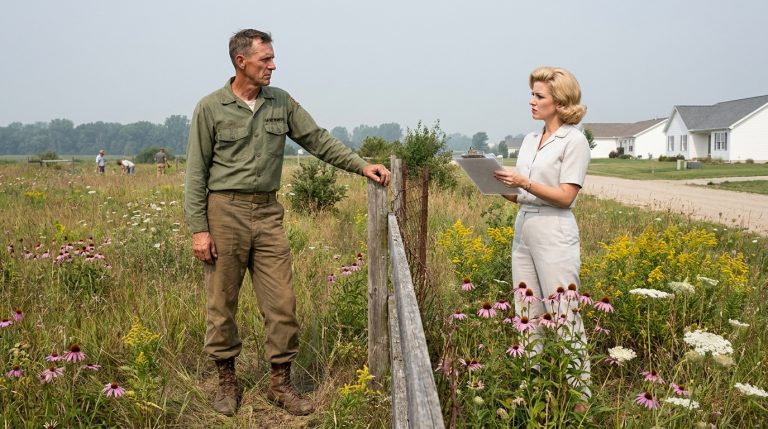
The clipboard came down on the porch railing with a sharp, performative snap that set my teeth on edge.
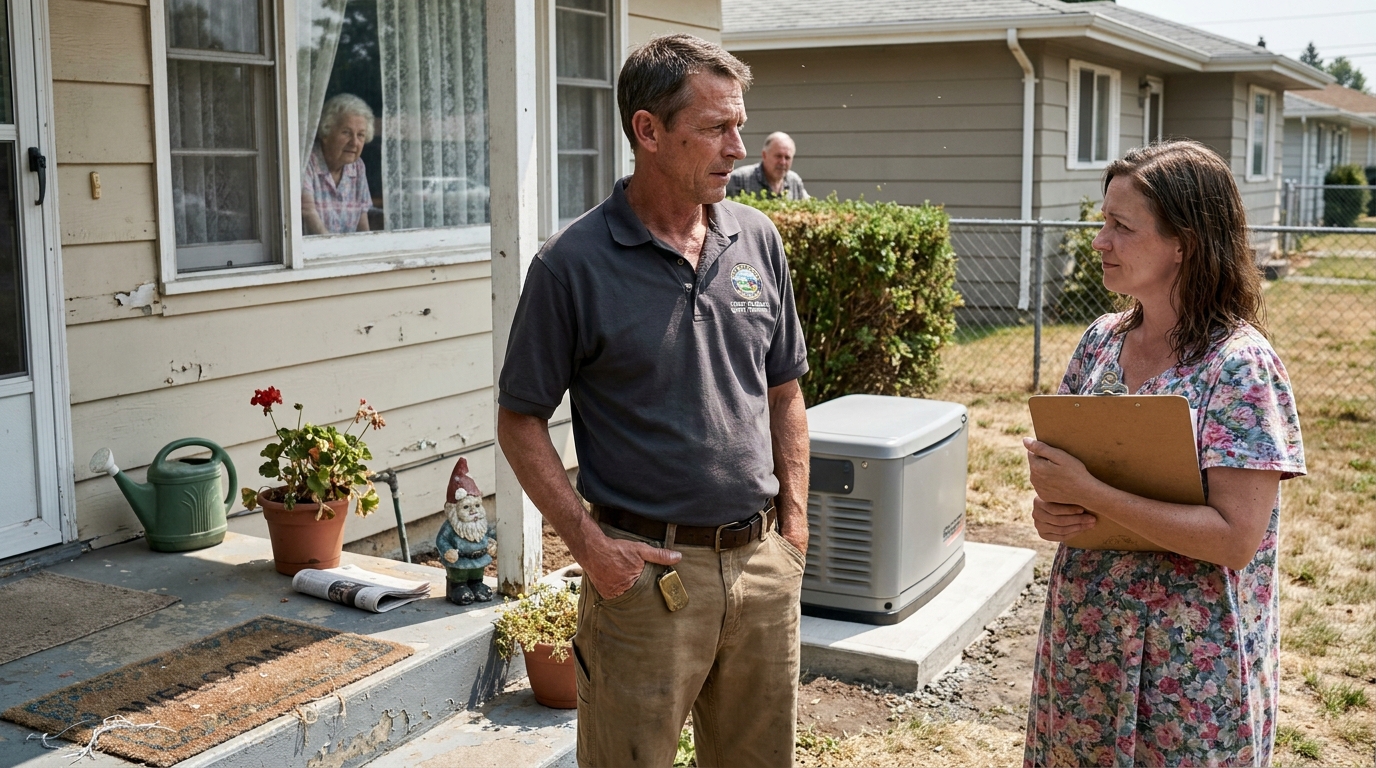
Karen stood on my newly poured concrete pad, her floral mumu damp with humidity, eyes locked onto the quiet gray housing of the generator like a hawk eyeing a field mouse.
“Forty-eight hours, Mr. Riley,” she announced, her voice pitched for the benefit of any neighbors watching from behind their curtains. “Or the daily compounding fines begin.”
I didn’t blink. I kept my hand resting casually inside my pocket, my thumb slowly tracing the worn brass edges of a scarred pocket knife—the subtext object keeping my pulse steady beneath a rising tide of cold fury.
I had walked through minefields in Fallujah and stared down real threats with a clear head, and I certainly wasn’t going to let a woman with a laminated badge dictate whether my eight-year-old daughter lived or died during a blackout.
“The unit complies with every county ordinance on the books, Karen,” I said, keeping my tone deliberately flat and conversational. “I sent the paperwork two months ago.”
Her smile was a thin, tight slash of absolute arrogance. “The board decides what complies here, not you. The clock is ticking.”
She turned on her heel, her fabric rustling like a retreating flag, leaving me alone in the oppressive afternoon heat.
I looked down at the silent machine, then back toward the house where Sarah was watching through the kitchen window with a pale, worried face.
This wasn’t a dispute over landscaping or gray concrete hues; it was a line drawn in the dirt, and I knew right then I had no intention of stepping backward.
CHAPTER 2: THE PAPER TRAIL
Sarah stood right behind me, her fingers resting lightly on my shoulder while her eyes scanned the escalating numbers printed at the bottom of the page.
Two hundred dollars a day for a violation that didn’t actually exist in the community bylaws.
“We can’t afford to let this pile up, Mark,” she whispered, the quiet tension in her voice cutting deeper than any threat Karen had barked from the porch.
I picked up the scarred pocket knife from the table, opened the brass blade with a faint click, and used the tip to slice open the certified mail receipt from the original notification I had sent two months ago.
“We aren’t paying a dime,” I said, keeping my voice steady as I lined up the green return card next to the new fine notice. “She’s banking on us getting scared and backing down because it’s easier than fighting.”
The bylaws were clear on one specific point that Karen had conveniently chosen to ignore: any architectural notice left unanswered by the board within thirty days automatically defaulted to an approved status.
I had the green signature card signed by her own loopy hand, the acoustic report proving the generator ran quieter than a household appliance, and a stack of medical necessity forms from Lily’s pediatric specialist.
This wasn’t a legitimate code dispute; it was an paper trap designed to intimidate, but she had handed me every single piece of evidence required to dismantle her authority piece by documented piece.
I sat down at the wooden table, pulled out a fresh legal pad, and began drafting a formal written appeal with the cold, meticulous precision of an engineer clearing a minefield.
If Karen wanted to play a game of rules and regulations, I was going to give her a masterclass in how a proper paper trail is built.
CHAPTER 3: THE ALLIED LINE
Dave let go of my hand, his eyes scanning the paperwork scattered across my garage table before looking out toward the streetlamp.
“Karen tried the exact same playbook on my boys’ basketball hoop a year ago,” Dave said, his voice dropping into a low, gravelly register. “She counts on people folding because they don’t want the headache of a fight.”
I picked up a wrench, turning the cold steel over in my palm to ground myself against the mounting frustration of the daily fines.
“She hasn’t read a single line of the actual covenants,” I replied, setting the tool down with a sharp metallic clack. “She’s just running a pure intimidation racket.”
The silence between us wasn’t heavy; it was the practical quiet of two men who recognized a tactical boundary when they saw one.
Mrs. Gable shuffled into view down the driveway a moment later, her frail hands trembling as she stopped near the garage threshold to speak in a hushed whisper.
“She tried to force us to take down George’s medical ramp last year,” Mrs. Gable said, her eyes darting nervously toward Karen’s empty lot. “We’re terrified of what she’ll do if we try to install backup power for his oxygen.”
The perimeter was shifting, and the lonely defense was turning into an organized front.
We didn’t need a crowd; we just needed common sense and an airtight dossier to flip the board’s entire strategy upside down.
CHAPTER 4: THE EYE OF THE STORM
The power grid blew with a sharp electric snap down the block, throwing every surrounding home into immediate, suffocating blackness.
Our house remained brightly lit, the quiet generator humming steadily behind the holly bushes as it handled the load without a single hiccup.
An email notification pinged on my phone screen right through the digital router, carrying a fresh emergency warning bulletin sent straight from Karen’s account.
“In the event of a power outage, the use of unapproved non-compliant machinery is strictly prohibited,” Sarah read aloud over my shoulder, her voice tightening in disbelief.
She was publicly threatening maximum fines in the middle of a hurricane just because she couldn’t stand the sight of our lights staying on.
I locked my jaw, thumbing the edge of my pocket knife as I looked out the living room window at the wind-lashed street.
Let her send her threats and write her emails.
The storm outside was tearing down power lines, but inside our walls, the medical refrigeration unit kept Lily’s life-saving medicine at a safe, unyielding temperature.
She thought the darkness would bring us to our knees, but it only proved that our preparation was the difference between safety and exposure.
CHAPTER 5: THE THRESHOLD OF DESPERATION
Karen blinked against the porch illumination, her hair plastered to her temples and her floral mumu soaked through with storm spray.
“Mark,” she croaked, her voice stripped of its usual bureaucratic authority as her eyes darted past my shoulder into the bright, air-conditioned hallway. “My phone is dead, and the freezer—my special ice cream and the meat delivery—it’s all turning.”
I didn’t step back, keeping my hand flat against the doorframe to block any attempt at an uninvited entry.
“It’s a liability issue, Karen,” I replied, my voice level and entirely devoid of malice. “Running extension cords across properties violates manufacturer recommendations and local codes.”
She stared at me, the sheer absurdity of her current position finally crashing through her mental defenses as she realized the exact words she had weaponized against me were now being used to lock her out.
“Just a power strip,” she whispered, her voice cracking under the humiliation. “Just for a little while.”
“The rules are the rules,” I said softly, and closed the door with a quiet, solid click.
Outside, down the block, Mrs. Gable’s oxygen machine hummed steadily through the heavy-duty cord running across our lawn, proving that power wasn’t the problem—entitlement was.
CHAPTER 6: THE CLUBHOUSE RECKONING
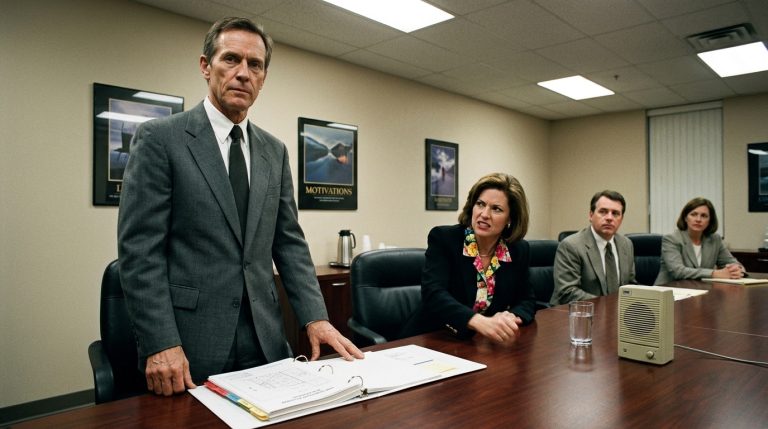
Karen sat at the far end of the long table, her expression frozen in stark disbelief as the remaining board members unanimously voted to strip her of her title.
Dave stood at the front of the packed community room, playing the clear recorded proof of her demanding restrictions while a man’s medical device hummed safely down the street.
I stepped forward, placed the original board letter regarding aesthetic harmony right on top of her unverified paperwork, and spoke with calm finality.
“The board’s insurance carrier has been notified of willful discrimination, which means every fine is rescinded and personal liability rests entirely on those who signed away a child’s safety,” I said, letting the stark reality settle over the room.
Stan, the quiet accountant who had served as a rubber stamp, broke down first and pushed for an immediate settlement that wiped out every fabricated penalty and secured a formal community donation to the medical foundation.
Karen sat in total isolation as the neighbors she had bullied walked past her without a single word, her reign of paperwork tyranny collapsing under the simple weight of truth and common sense.
Months later, the moving truck rolled away from her fading lawn, leaving behind a neighborhood restored to quiet order.
I sat out on the back porch during the fading twilight, watching Lily chase glowing fireflies across the lawn while the quiet gray generator hummed softly in its place.
The battle was over, the boundaries were held, and the evening air carried nothing more complicated than the sound of a child’s carefree laughter in the safe, warm light of home.