The Desert Dust Never Settled: How an Ordinary Soldier Dismantled a Corrupt Neighborhood Empire
CHAPTER 1: DUST ON THE BOOTS
The kitchen floor felt too solid beneath my boots, missing the rolling pitch of a transport truck.
A stranger stood by the stove flipping eggs in my dead grandmother’s old iron skillet.
A man with his ankles crossed rested his sneakers directly on the arm of my living room sofa.
“Who are you people?” I asked, my voice flat, scraping against the walls of the home I built at twenty-eight.
The woman at the stove didn’t flinch, turning around with a spatula gripped like a truncheon.
“Excuse me, sir, but you’re trespassing,” she said, her tone dripping with rehearsed authority as she slid a piece of paper toward me across the counter.
My address was printed right at the top, bold and clear, beneath a signature that didn’t belong to me.
From the frontway came the sharp, rhythmic clack of high heels on hardwood and the heavy, cloying scent of cheap vanilla air freshener.
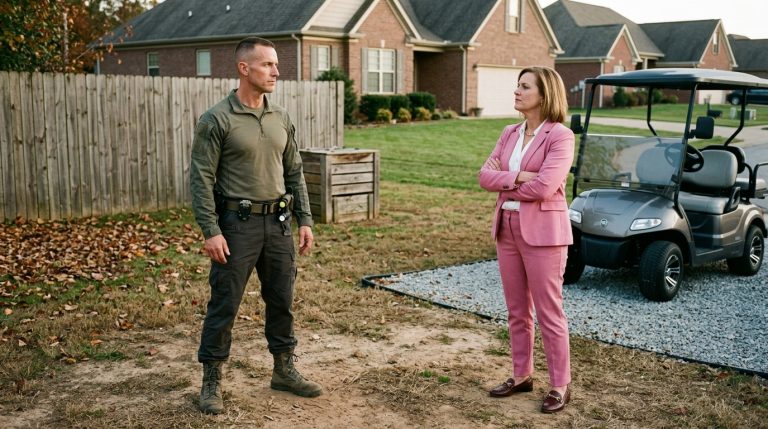
Margaret appeared in the doorway, her white Lexus gleaming through the front window like an uninvited guest.
“Jake, you’re back early,” Margaret said, her smile stretched thin over teeth that had spent years chewing up people who couldn’t fight back. “You know, abandonment requires proper HOA procedures.”
Eighteen months getting shot at in a foreign country was what she called abandonment.
My fingers curled around the heavy, scarred socket wrench sitting on the entryway table, the cold metal grounding my breathing against the rising heat in my chest.
Margaret thought she held all the cards because my digital files were wiped and my cameras were dead.
She didn’t realize I still had the most dangerous tool in the world: stubborn patience.
CHAPTER 2: THE VANILLA OFFICE
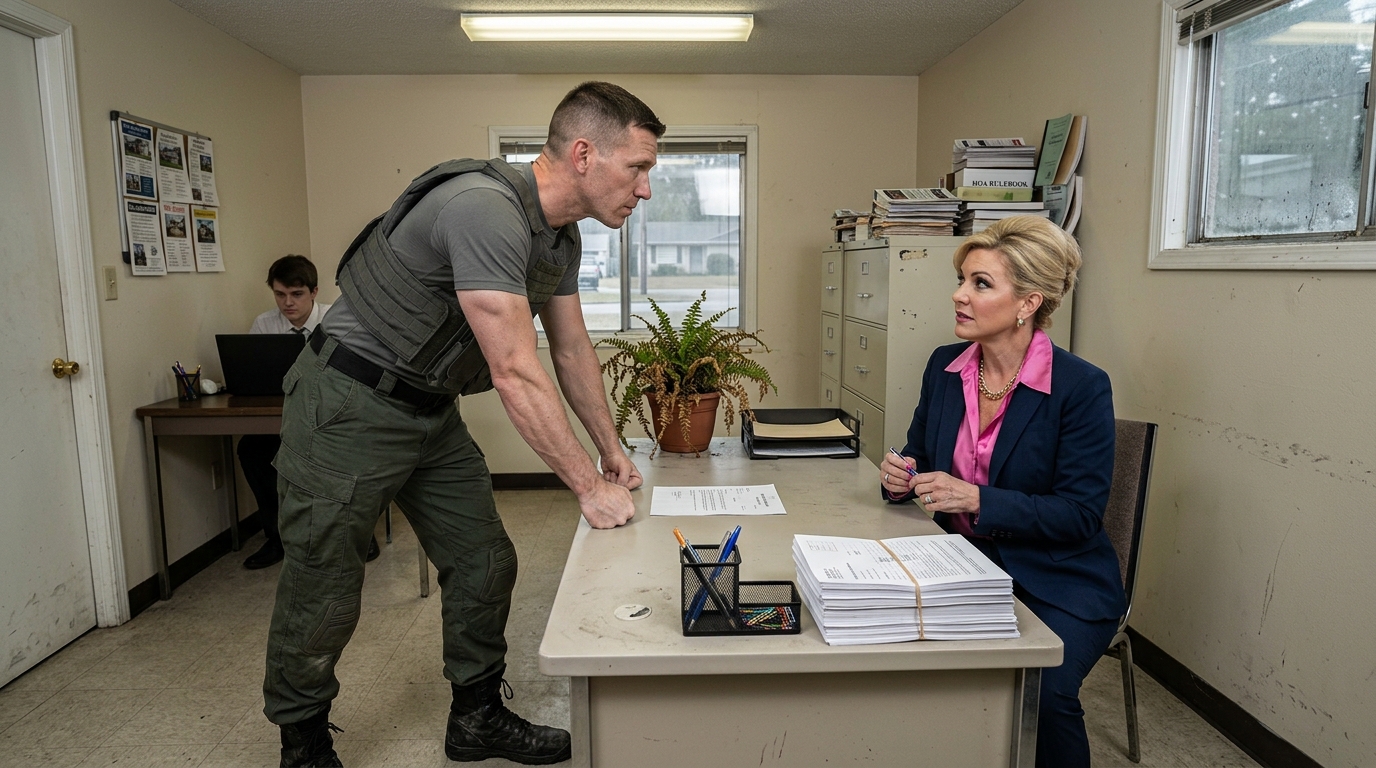
Margaret’s office smelled like an industrial chemical spill of artificial vanilla and desperation.
She sat behind a desk cluttered with past-due notices, sliding a folder toward me with a practiced flick of a manicured finger.
“You really should have checked your mail before flying halfway across the world, Jake,” she said, her voice dropping into that fake-sympathetic register real estate agents use right before they fleece a buyer. “The 90-day abandonment clause is standard HOA protocol for absentee owners.”
I picked up the notification letter she had just handed me.
The postmark stamped in the corner was fresh as this morning’s coffee, yet the paper stock had been intentionally scuffed at the edges to look old.
In Afghanistan, you learn real quick how to spot altered documents when intelligence packets cross your desk.
The ink density on the signature block didn’t match the body text, and the date alignment was off by a fraction of a millimeter.
“This stamp was pressed four days ago,” I said, dropping the paper back onto her desk with a dry thud. “And the ink hasn’t even fully cured.”
Margaret’s smile twitched, the skin around her eyes tightening like a pulled knot.
“That is a very serious accusation, and I run this board by the book,” she snapped, her composure cracking just enough to let the panic bleed through.
She thought I’d take the forged eviction notice, pack my duffel, and walk away like a whipped dog.
She didn’t know I spent eighteen months tracking supply discrepancies in hostile territory where paperwork was the only thing standing between order and total chaos.
CHAPTER 3: THE PAPER TRAIL
My fingers flipped through the ledger pages, searching for a tracking number that should have been logged eighteen months ago.
The clerk three aisles over sneezed, the sound echoing off the concrete walls like a warning shot.
Margaret’s name was supposed to be attached to every official property seizure filed under the community hardship clause.
Instead, the entry slots were blank, skipped over with casual laziness by someone who assumed nobody would ever come back to check.
“Looking for something specific, Sergeant?” a voice asked from behind the shelf.
Sarah Rodriguez stepped out from the shadows, her briefcase tucked under her arm and a stack of printed appellate briefs in her hand.
“She didn’t just bend the rules,” I said, tapping the empty ledger line with a calloused knuckle. “She never filed the abandonment forms at all.”
Sarah set her briefcase down, the metal latches clicking open with a sharp, metallic bite that cut through the basement hum.
“Which means every dollar she collected from that family renting my house wasn’t a administrative fee,” she said, pulling a red pen across a manifest. “It’s grand larceny under state law.”
We didn’t need security cameras or digital backups to prove what happened when the paper trail itself was missing the vital ink.
Margaret had built an empire on the assumption that paperwork is too boring for a working man to investigate.
CHAPTER 4: THE RUSTED GARAGE
A shadow flickered past the frosted side window of the garage, moving with the hurried caution of someone who knew they shouldn’t be breathing my air.
I didn’t turn on the overhead lights.
Instead, I stayed low beside the motorcycle lift, listening to the soft scrape of a sneaker against the gravel drive just beyond the roll-up door.
Mrs. Fiona had called forty minutes earlier to warn me about a hooded figure loitering near the mailboxes, her voice tight with neighborhood watch anxiety.
The side latch clicked, and a gloved hand slipped through the gap, setting a small plastic bag down near the toolbox.
Margaret stepped into the dim amber glow of the security light, her breath fogging in the night air as she planted the manufactured evidence.
“Looking for something you lost, Margaret?” I asked, stepping out from the shadow of the workbench.
She froze, her jaw going slack before her face hardened back into that mask of unearned entitlement.
“You’re harassing me on community property,” she hissed, trying to mask her panic by waving a stamped envelope in my face.
“That bag you just dropped isn’t community property,” I said, pointing down at the plastic wrap with the toe of my boot. “And the local police are already rounding the corner.”
CHAPTER 5: THE CLOSING TRAP
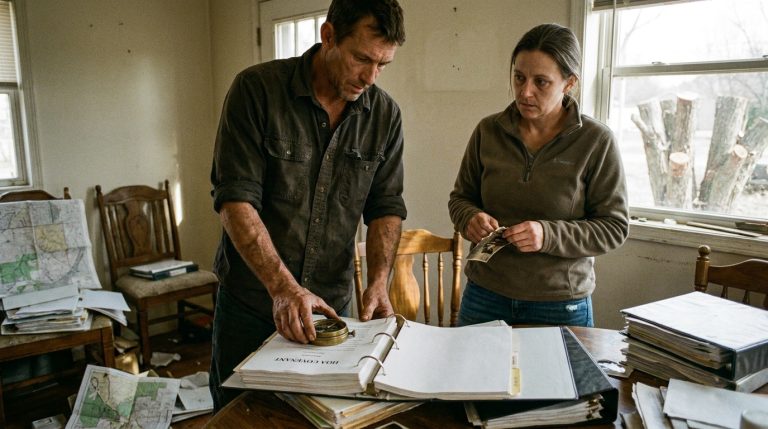
Sarah Rodriguez laid three thick paper binders side by side, their metal rings snapping shut with the sharp crack of a rifle shot.
Every page contained physical bank statements, hand-verified county audit receipts, and signed affidavits from six military families in our subdivision.
“You didn’t just misplace deployment records, Margaret,” Sarah said, tapping the certified mail return slips with her pen. “You systematically targeted deployed personnel under forged corporate templates.”
Mrs. Fiona sat in the front row, her hands resting quietly on a yellow legal pad filled with chronological logs of every car that had parked at my house for six months.
Margaret’s face flushed a deep, blotchy red, her fingers clutching her designer handbag so tight the leather groaned.
“This is an illegal kangaroo court!” she shrieked, slamming both palms down onto the oak surface. “You think a handful of faded paper and neighborhood gossip holds any legal weight against the elected board president?”
She didn’t know that three postal inspectors and a county prosecutor were standing quietly near the back doors, taking detailed notes on every word leaving her mouth.
“You have no video, no digital recordings, nothing!” Margaret sneered, her voice cracking as she glared at me across the table. “You’re an unstable veteran making wild claims because you can’t handle basic neighborhood rules!”
She backed toward the side door, her chin jutted out in pure, unyielding defiance, completely refusing to yield an inch of her stolen authority.
CHAPTER 6: THE DUSTY GRAY PORCH
The federal restitution order landed on the side table with a solid, final thud.
Margaret’s white Lexus was long gone from the curb, replaced by the humming engine of a young family’s sedan unpacking down the block.
Mrs. Fiona walked up the steps with a fresh plate of snickerdoodles, setting them down beside my coffee without a word of dramatic praise.
“The paperwork cleared downtown this morning,” Sarah Rodriguez said, pulling her car keys from her pocket as she leaned against the railing. “Restitution is being disbursed to every family she scammed, starting with the back rent she stole from your kitchen.”
I took a slow sip of the coffee, letting the familiar warmth settle deep in my chest.
There were no more forged notices in the mailbox, no more strangers cooking in my grandmother’s skillet, and no more fake authority lording over an honest neighborhood.
Some fights don’t need a hero with a loud megaphone or high-tech gear.
Sometimes all it takes is a working man refusing to move an inch when someone tries to steal the ground beneath his boots.
I looked out past the porch rail as the evening sun dipped low behind the trees, painting the street in quiet shades of dusty gray and gold.
The engines hummed down the block, kids laughed in the distance, and for the first time in eighteen months, the house felt entirely like my own.