The Concrete Line: How a Quiet Ex-Tactical Instructor Dismantled a Neighborhood Tyrant Using Cold Logic and No Shouting
CHAPTER 1: THE BREACH
The vibration against my hip cut through the drone of the tactical briefing.
I paused mid-stride, my hand resting on the back of a rookie’s shoulder to check his angle.
The phone screen blinked in the afternoon glare. Motion alert. Front hallway interior camera.
Years of perimeter work wire that reflex straight into your spine. Most alerts are nothing—a stray delivery box, a heavy gust shaking the eaves, a local cat cutting across the concrete.
I swiped the notification open without breaking my cadence.
The live feed didn’t show a shadow or a stray pet. It showed a beige cargo vest moving past my living room wall, keeping low against the baseboards like it was clearing a hostile room.
Behind the vest came a weathered fishing hat, followed closely by a plastic walkie-talkie swinging from a belt loop.
I didn’t yell. I didn’t drop my tablet. I simply zoomed in on the fabric patch above the vest’s left pocket.
It read: Neighborhood safety enforcer, Karen’s patrol.
Of course it was Karen. Two weeks earlier, she had plastered a pink voluntary safety notice on my front door, threatening administrative escalation because my privacy shrubs breached her aesthetic code of conduct.
I had laughed it off and tossed the paper into the recycling bin.
That was my mistake. I treated her unhinged entitlement like a harmless neighborhood quirk instead of an escalating operational threat.
Now, looking at the timestamp, my kitchen window was being bypassed, and three amateurs were rummaging through a house that belonged to a man who trains law enforcement for a living.
I dismissed the training squad with a sharp hand gesture, told them real-world case study just landed, and tapped my screen to activate the silent alarm.
The drive home took six minutes of steady, unhurried focus.
I parked three houses down, slipped past the side fence, and entered through the heavy metal garage door.
Inside the dim quiet of the house, muffled voices drifted from the kitchen.
They were debating whether they had the legal authority to open my locked equipment shed.
Then came the sharp, distinct clink of bolt cutters meeting steel.
That sound strips away all ambiguity. It tells you exactly who you are dealing with and what language they understand.
I reached to my left, my thumb finding the heavy, scarred metal padlock I had removed from the gate earlier that morning, rolling its weight in my palm to anchor my temper.
I reached across the wall and threw the main breaker switch, dropping the entire house into absolute, suffocating darkness.
CHAPTER 2: THE THRESHOLD
The darkness inside the house was absolute.
A sharp intake of breath cut through the silence near the entryway, followed by the frantic fumbling of plastic buttons on a cheap walkie-talkie.
—Get the light back on, someone hissed, the panic in the voice leaking through the muffled acoustics of the drywall.
I didn’t answer. I didn’t need to.
Years of handling spatial orientation in zero-visibility conditions taught me that patience is a weapon against the unprepared.
I kept my back pressed against the hallway partition, my fingers rolling the heavy scarred padlock over and over in my right palm, measuring the rhythm of their clumsy retreat toward the kitchen exit.
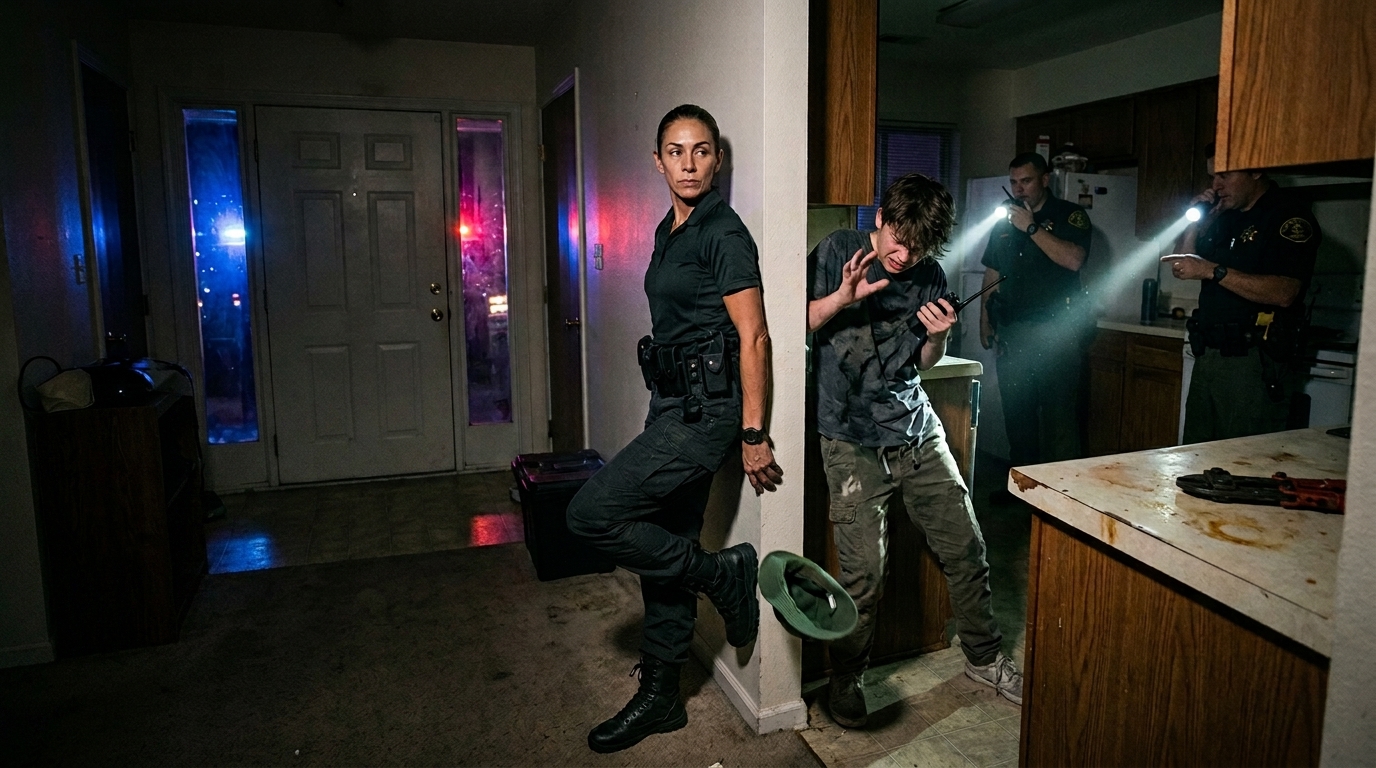
A flashlight beam suddenly stabbed the dark, slicing upward in a blind arc as Kyle, Karen’s teenage son, tried to sweep the ceiling instead of the floor.
He moved too fast, his boots slipping on the entryway mat.
I stepped out from the partition, closing the distance instantly.
He didn’t see me until his shoulder slammed square into the reinforced doorframe with a dull, heavy thud that knocked the wind straight out of his lungs.
—Hey! Stay back!— he gasped, clawing blindly at the air while clutching his plastic radio like a shield.
The fishing hat tumbled off his head, rolling across the floorboards to stop against my boot.
I didn’t touch him, and I didn’t raise my voice above a conversational murmur.
You are standing in a private residence without authorization, and your bolt cutters are currently resting on my kitchen counter.
Behind him, the heavy front door swung wider as the second intruder tried to pry the latch from the outside, only to freeze when red and blue emergency strobes began painting the driveway through the sidelight glass.
The local patrol cars had arrived right on schedule.
Lieutenant Marquez stepped out of the lead cruiser into the glare of the flashing lights, his boots crunching against the gravel driveway with quiet, deliberate authority.
Karen pushed past the doorframe before Marquez could even secure the perimeter, her beige safety vest pulled tight across her chest like dress armor.
—Officer, thank goodness!— she called out, her voice pitching up in an instant, rehearsed performance of righteous indignation. —We were conducting a mandatory neighborhood wellness sweep and we found this property abandoned and unsecured! He’s running an illegal compound in here!
Marquez stopped dead at the edge of the porch, his hand resting casually on his utility belt as he looked past her at the open door.
He didn’t blink. He didn’t nod.
He just stared at her with the flat, unblinking silence of a man who had spent a decade listening to excuses he didn’t believe.
—Step back off the property, Karen,— Marquez said, his tone entirely level. —Right now.—
Karen’s face tightened, her jaw locking as she realized her uniform patch wasn’t buying her the automatic compliance she expected.
—You don’t understand, we logged every detail, we have the paperwork— she insisted, reaching frantically into her clipboard pouch to yank out a sheaf of papers.
As she pulled the documents free, a single sheet detached and fluttered down onto the wet concrete of the porch step.
I caught a glimpse of the header before the wind caught it—a corporate billing address for a private security vendor registered three towns over, complete with a line-item estimate for neighborhood surveillance contracts.
CHAPTER 3: THE LEDGER LEAK
The morning air smelled of wet asphalt and cooling engines.
Karen snatched at the loose paper on the ground, her face flushing a dark, mottled crimson as she tried to tuck the corporate invoice into her clipboard pouch.
—That’s an administrative draft, it doesn’t mean anything— she snapped, her voice cracking slightly under the sudden weight of the lieutenant’s stare.
Marquez didn’t argue. He simply pulled a small digital recorder from his breast pocket and clicked it on.
—You stated you were conducting a municipal wellness check under HOA authority, Karen. Private security estimates don’t fall under community volunteer guidelines.—
He didn’t raise his voice, but the acoustic weight of his tone carried across the quiet front lawn where two neighbors had already stepped out onto their porches to watch.
The illusion of institutional backing dissolved right there on the concrete.
Kyle shrank back toward the squad car, refusing to look at his mother, his fingers nervously twisting the strap of his plastic radio.
I rolled the heavy metal padlock in my palm, feeling the cold steel ground my patience against the rising tide of her excuses.
—We’ll review the logs at the station— Marquez said, signaling for his deputies to secure the remaining equipment left in my kitchen.
Karen stood frozen on the step, her clipboard clutched to her chest like a shield, realizing for the first time that her laminated badge carried zero legal weight outside her own imagination.
The neighborhood clubhouse was packed to capacity by the following Tuesday evening.
Folding chairs scraped loudly against the linoleum floor as residents filled every available inch of space, leaning against the wood paneling with arms crossed and expressions set in stone.
Dennis, the quiet treasurer of the board, sat at the front table looking exhausted, thumbing through a stack of yellowed bank statements that didn’t match the community ledger.
Karen arrived five minutes late, flanked by two teenage recruits wearing matching polo shirts, trying to project an air of unbothered authority.
She marched straight to the podium, tapping her laminated badge against the microphone to cut through the low murmur of the crowd.
—This meeting is out of order, we have safety protocols to discuss— she announced, her voice pitched to override the room.
Nobody moved. Nobody nodded.
Dennis slowly slid a single printed banking report across the laminate table toward the central microphone.
—Karen, explain why three thousand dollars from the community maintenance fund went directly to an out-of-town security vendor in Shelby County last month.—
The room went dead silent.
Karen opened her mouth, her eyes darting across the rows of familiar faces, looking for the easy compliance she had relied on for years.
Instead, she found forty adults staring at her with the cold, unyielding patience of people who were finally done staying quiet.
CHAPTER 4: THE FINANCIAL FAULT
The hum of the ceiling fan felt deafening in the packed room.
Karen dropped her clipboard onto the wooden lectern with a sharp slap that echoed against the back wall.
—That account transfer was approved under executive committee discretion for community asset protection— she said, her voice tightening into a defensive rasp as she tried to reclaim the narrative.
Dennis didn’t blink, keeping his thumb pressed firmly against the printed line of the ledger.
—Executive discretion doesn’t cover private security retainers for out-of-town corporations, Karen, especially when the vendor shares a registered address with your brother’s LLC.—
A low, collective murmur rippled through the rows of folding chairs as neighbors leaned in to catch every syllable.
The fiction of a volunteer safety patrol evaporated under the weight of simple arithmetic and public documentation.
Karen’s face flushed a deep, mottled red, her fingers clawing at the edge of the podium wood as she realized the paperwork had completely outflanked her authority.
—You’re twisting the timeline to sabotage the neighborhood safety initiative— she spat out, pointing a trembling finger straight at Dennis.
I rolled the heavy metal padlock in my palm, letting the cold steel ground my patience against her escalating panic.
She wasn’t defending the community anymore; she was desperately trying to patch a sinking ship using rules she had invented herself.
The room remained entirely motionless, refusing to offer her the blind agreement she demanded.
—The vote to audit the account and suspend the patrol’s operational status is on the table— Dennis announced, looking past her straight at the assembly.
Hands shot up across the room before he even finished the sentence, sealing the collapse of her manufactured mandate with quiet, unyielding finality.
CHAPTER 5: THE LEGAL DOCKET
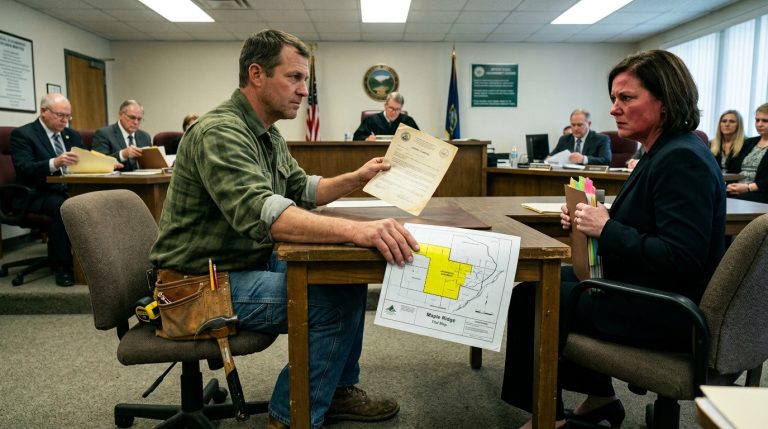
The courtroom air was dry, smelling of floor wax and old paper.
Karen leaned across the oak partition, her legal counsel shaking his head as she shoved a handwritten memo toward him with an impatient flick of her fingernail.
—Your honor, the defendant’s community audit is entirely fabricated to harass a registered neighborhood advocate— her attorney began, standing up to address the bench.
The judge didn’t look up immediately, instead tracing a finger down the line of financial discrepancies highlighted in yellow marker.
—Counsel, your client allocated community maintenance reserves to a private security vendor that shares an incorporation address with her family member,— the judge said, his voice flat and unimpressed. —That is not advocacy. That is embezzlement.—
Karen bolted upright in her chair, her face draining of color before flushing a hot, defensive crimson.
—It was an emergency defensive measure for community safety! Everyone on that block was at risk!— she blurted out, her voice echoing off the high ceiling before her lawyer forcefully pulled her back down by the sleeve.
I sat quietly in the back row, rolling the heavy metal padlock over and over in my palm to keep my focus steady against her desperate performance.
She wasn’t willing to accept accountability; she was doubling down on the fiction that everyone else was the enemy.
The judge slowly closed the manila folder, resting his hands flat on the mahogany surface.
—Heavy financial restitution, a ten-year prohibition from holding any community association office, and mandated public accountability are the baseline here.—
Karen stared open-mouthed at the bench, her hands trembling as she grabbed her clipboard, realizing too late that her self-invented rules had finally collided with actual law.
CHAPTER 6: THE QUIET PORCH
The neighborhood felt noticeably lighter, stripped of the low-frequency hum of manufactured panic and unsigned pink warning notices.
A delivery truck rolled past at a sensible speed, its tires humming softly against the fresh asphalt.
Across the street, the blinds on Karen’s front window remained drawn tight, casting a cold, uninviting shadow over an empty yard devoid of gnomes or clipboards.
The desperate counter-moves, the courtroom denials, and the corporate paper trails had all collapsed under the weight of simple documentation and unyielding boundaries.
There were no grand speeches left to make, and no lingering threats to calculate.
I set the heavy glass down on the wooden side table, the condensation leaving a clean, dark ring against the grain.
Dennis walked past the front gate a moment later, pausing to give a brief, respectful nod before continuing his evening walk without a hint of tension in his stride.
The gate hinge was quiet now, freshly oiled and fully restored after Kyle spent an afternoon tightening the bolts under direct supervision.
Real protection doesn’t come from costumes, badges, or midnight surveillance.
It comes from clear limits, calm execution, and refusing to let unearned audacity dictate your peace.
I leaned back against the porch rail, letting the late afternoon breeze carry away the last remnants of the noise.
The street belonged to the neighborhood again, quiet and entirely ordinary.