A Sanctuary of Choice: The Quiet Revolution of a Home Built on Presence, Not Position
CHAPTER 1: THE WEIGHT OF THE APRON
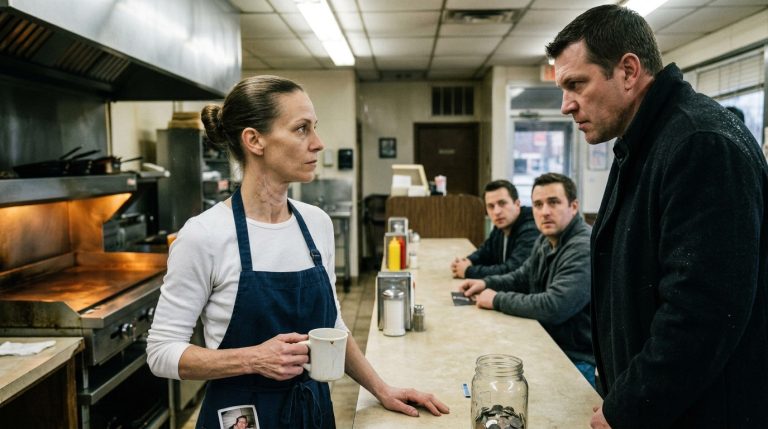
Kora stood in the center of the kitchen, her fingers curling into the fabric of her apron. The bread was rising, the heavy iron pots were still cooling on the stove, but the air felt thin, stripped of its usual frantic rhythm. For over a decade, this room had been the axis of her world; the clatter of the knife against the chopping block had been her heartbeat. Now, the space felt strangely cavernous, echoing with the absence of a small, persistent shadow that usually hovered by the pantry door.
She looked down at her hands. They were calloused, stained slightly with the remnants of morning prep, yet they felt untethered. The transition had been finalized in a few sharp, administrative sentences from Adrienne, but the physical reality of it—leaving the flour-dusted sanctuary for the sterile, polished quiet of the upstairs nursery—felt like stepping onto a different planet.
A soft knock sounded at the kitchen door. It was Mrs. Prut, the house manager, her expression a careful mask of professional neutrality. She surveyed the room, her eyes lingering for a second too long on the empty space where Kora should have been stationed for the remainder of the morning shift.
“The study is ready,” Mrs. Prut said, her voice dropping into the low, practiced register of the Vance household. “Mr. Vance expects you to assist with the transition of the library books. Apparently, Miss Lily has specific requests for her new space.”
Kora nodded, though the instruction felt surreal. She untied her apron, a movement that had been automatic for eleven years. As she folded it, she felt the phantom weight of the kitchen tools she wouldn’t be touching today. The apron, usually a badge of servitude, suddenly felt like a discarded skin. She hung it on the hook by the pantry, but her hand lingered there, tracing the frayed edge of the hem.
“Is something wrong, Miss Bennett?” The house manager’s voice carried a sharp edge of impatience.
“No,” Kora replied, turning toward the stairs. “Nothing at all. I was just… checking the bread.”
As she walked through the long, quiet hallways, the house seemed to adjust to her presence, or perhaps it was her own perception shifting. The heavy velvet curtains felt less like barriers and more like soft, shielding layers. She climbed the grand staircase, each step purposeful. She wasn’t walking to a duty; she was walking to a promise.
She reached the library, where the afternoon light slanted through the windows, illuminating dust motes dancing in the air. Lily was already there, perched on a stack of floor cushions, holding a book that looked far too heavy for her small frame. When she saw Kora, her face didn’t break into a wide, bright smile, but rather a quiet, profound expression of relief.
“You came,” Lily said.
Kora walked over, feeling the texture of the thick, woven rug beneath her shoes. “I told you I would,” she answered, the words feeling heavier and more significant than any instruction she had ever given in the kitchen.
Lily held out the book. It was an old collection of stories, its leather spine cracked and peeling—a texture that matched the weary, steady comfort Kora felt in her own bones. “Can we read?”
Kora sat, not on the designated chair, but on the floor beside the child. She felt the cool draft from the window and the way the light made the worn fabric of her own dress look like it was woven from threads of soft, fading sunlight. She realized then that the change wasn’t about titles or salaries. It was about the distance between the kitchen door and this library rug.
Just as she reached for the book, a shadow fell across them. It wasn’t Adrienne. It was a man she had never seen before—tall, wearing a dark gray suit that seemed to absorb the light, holding a leather folder that looked like an ultimatum. He stared down at Kora with eyes that were as cold and unyielding as the marble floor in the foyer.
“Miss Bennett,” he said, his voice a low, raspy warning. “I believe there are a few documents from the agency that require your immediate signature. Mr. Vance may have forgotten to mention that the promotion comes with a very specific, and quite rigid, set of legal codicils.”
Lily clutched Kora’s sleeve. The room, which a second ago had been filled with the soft promise of a story, suddenly felt suffocatingly small.
CHAPTER 2: THE PAPER ARCHITECTURE
The man’s presence was an immediate, jarring friction against the soft light of the library. Kora felt Lily’s grip tighten—a sharp, instinctive pinch that mirrored the sudden contraction in her own chest. The man did not move to sit; he stood like a pillar of cold iron, his eyes tracking the way Lily had pulled closer to Kora’s side. He wasn’t looking at the books or the grand architecture of the room; he was looking at the way Kora’s fingers held the child’s shoulder, mapping the contact as if it were a tactical error he intended to correct.
“Mr. Vance is currently occupied with a conference call,” the man continued, his voice devoid of any warmth. “He delegated the finalization of the transition to me. My name is Mr. Sterling. You will find that the Vance household’s efficiency relies entirely on the precise documentation of personnel duties. Your previous role in the kitchen, while… serviceable, did not require this level of administrative overhead.”
Kora remained on the floor. She refused to stand, not out of defiance, but because moving would mean breaking the quiet circle she and Lily had formed. The library air, usually filled with the scent of dust and ambition, now felt heavy with the sterile tang of the man’s suit—a sharp, synthetic contrast to the faded, comforting texture of her own cotton dress.
“I am aware of my duties,” Kora said, keeping her tone low and steady. She looked up at Sterling, noticing the way his suit cuff didn’t have a single fray, the way his shoes lacked even the faintest scuff of real-world travel. He was a man who lived in the spaces between lines, a man who viewed people as variables in an equation he had already solved.
“Are you?” Sterling stepped closer, the floorboards groaning slightly beneath his weight. He tilted his head, peering at the leather folder he held. “The codicils are not merely about scheduling, Miss Bennett. They outline the mandatory detachment required for a professional caregiver. Mr. Vance’s interest in… unconventional arrangements… has been noted. However, the agency’s insurance premiums and the household’s liability coverage necessitate a return to standard operational protocols. By the end of this week, we expect the nursery and the school schedule to be entirely managed according to the approved pedagogical framework. That means no more kitchen-side interventions, no more emotional proximity during rest hours, and certainly no more of these informal reading sessions.”
Kora felt a phantom urge to reach for her apron, to smooth it with her thumb, but her hands were busy holding Lily. The memory of the kitchen—the rhythmic, honest sound of chopping vegetables, the heat of the oven, the simple, tangible reality of feeding someone—flashed through her mind, clashing violently with the sterile, paper-thin reality Sterling was attempting to impose. This man didn’t just want to manage her time; he wanted to edit the nature of the care she provided.
Lily looked up, her eyes wide, scanning Kora’s face for a reaction. “We were reading,” the girl said, her voice small but insistent. “Miss Kora is teaching me the stories.”
Sterling didn’t look at Lily. He looked at Kora. “Reading is a scheduled activity, young lady. There is a time and a place for everything in a house of this stature.” He extended the folder, holding it out with a silent, iron-clad expectation. “The signature, Miss Bennett. If you wish to remain on the payroll, you will align with the structural requirements of your new title. We do not pay for sentiment; we pay for results.”
Kora looked at the folder. The paper was crisp, the ink black and precise. It represented a world where every action was documented, where every act of kindness was logged as a variable to be mitigated. If she signed it, she would be safer on paper, but she would be shackled by a definition that stripped the life out of her work. If she didn’t sign, she would be disposable.
She thought of the storm, the night Lily had been so frightened she had shaken like a trapped bird. She thought of the pancakes, the ones that weren’t on the menu but were exactly what was needed. Those moments hadn’t been efficient. They had been messy, and human, and necessary.
“I will sign,” Kora said, her voice barely a whisper in the vast library. She didn’t let go of Lily. She reached out with her free hand, her skin rough and warm against the man’s perfectly manicured nails. As she took the folder, she felt the stark contrast of textures—the cold, smooth leather of the folder against her calloused palm. It was a physical manifestation of the bargain she was making.
Sterling’s expression did not soften; it simply clicked into a state of satisfied completion. He pulled a pen from his breast pocket, the movement practiced and fluid. “Excellent. We appreciate your cooperation. A house like this is a machine, Miss Bennett. It runs best when every gear understands its friction.”
Kora pressed the tip of the pen to the paper. Her hand trembled, not from fear of the man, but from the sudden, sharp realization that the “friction” he spoke of was the very thing that made her presence in Lily’s life meaningful. She signed her name, the letters looking jagged and unrefined compared to the elegant, printed text of the contract.
As soon as the pen left the paper, Sterling plucked the folder from her hand. He didn’t offer a polite farewell. He simply turned, his heels striking the hardwood with a rhythmic, hollow sound that seemed to mock the warmth of the room. When he reached the door, he paused and glanced back.
“Mr. Vance will be pleased,” he said. “Efficiency is the foundation of legacy.”
When the door clicked shut, the silence that rushed back into the room was different. It wasn’t peaceful; it was heavy. Lily squeezed Kora’s hand again, her small face clouded with a confusion that was rapidly turning into something sharper—the dawning realization that the world outside their quiet circle was a hostile force, one that used paper and rules to try and define what they felt.
“Did you sign away being my nanny?” Lily asked.
Kora took a deep breath, the smell of old paper and dust settling into her throat. She looked at the child, the two braids, the steady, serious eyes that were already learning the hard lessons of a house like this.
“No, Lily,” Kora said, and she meant it with a resolve that felt like iron in her blood. “I signed a piece of paper. That isn’t the same thing as being your nanny. But we have to be careful. The house is listening.”
She felt the texture of the library rug beneath her, the way the light began to fade as the afternoon waned. She hadn’t resolved the threat; she had only acknowledged it. She knew, with the clarity of a person who had lived a long, hard life, that Sterling wouldn’t be the last obstacle. The “gear” had been identified, and she would have to be very quiet, very efficient, and very dangerous to keep the promise she had made in the dark.
CHAPTER 3: THE GLASS NURSERY
The transition from the library to the upstairs nursery felt like walking through a series of increasingly compressed airlocks. Every door Kora passed seemed to click shut with a deliberate, metallic finality. She felt the heavy silence of the house pressing against her eardrums—a silence that felt less like peace and more like an observation. The Vance house was no longer just a building; it had become a set of eyes, watching to see how the new variable would behave.
She reached the nursery door. It was white, pristine, and entirely alien to her. For eleven years, she had known the kitchen—its grease-slicked counters, the frantic heat of the oven, the comfortable disorder of a place where things were actually made. Here, everything was curated. The shelves were filled with books organized by size and color, not by the stories they contained. The air smelled of lavender oil and expensive wood polish, a scent so clean it was almost offensive.
Lily stood by the window, her hands pressed against the glass, looking down at the driveway.
“Mr. Sterling is leaving,” the child said, not turning around. “He didn’t even look back.”
Kora moved further into the room, her footsteps muffled by the thick, cream-colored carpet. She kept her hands clasped tightly behind her back, trying to hide the lingering sensation of the pen’s sharp point against her palm. “People like him rarely do, Lily. They only look where they’re going, never at what they’ve left behind.”
Lily turned. Her face was pale in the afternoon light. “Does that mean he’s going to tell my father I’m difficult?”
Kora walked over and knelt, finding herself face-to-face with the child. She ignored the way the room seemed to watch them—the clinical arrangement of the furniture, the way the light hit the polished surfaces with a surgical precision. She focused entirely on the small, fraying hem of Lily’s sleeve. “He might. He probably will. But your father asked me to stay, and he asked because he saw something that isn’t on a paper contract. We have to be the proof, Lily. Not in what we say, but in how we are.”
“But I don’t want to be ‘proof,'” Lily said, her voice rising in a thin, fragile tremolo. “I just want to be here. With you. Without the rules.”
The door creaked—a subtle, almost imperceptible sound that made Kora’s skin prickle. She didn’t look up, but she knew the rhythm of the household. Someone was standing in the hall, just out of sight. A house manager, a guest, or perhaps just the ghost of the life she used to have downstairs. The sensation of being watched grew thick, almost tangible. She realized then that her “promotion” was a double-edged sword; she was no longer invisible, and in this house, to be visible was to be scrutinized.
“We have to play their game for a little while,” Kora murmured, keeping her voice low. “If we show them that I can be the nanny they want—punctual, organized, distant—then they will stop watching so closely. And when they stop watching, we can be ourselves again.”
“That sounds like a lie,” Lily whispered.
Kora felt the weight of her own words. It was a lie. Or at least, a performance. She had spent a decade being the cook, an anchor of stability in the background. Now, she was thrust into the foreground, an object of intense curiosity and quiet hostility. She stood up and walked to the closet, opening it to find the new uniforms Sterling had mandated. They were dark, severe, and utterly devoid of the warmth of her old, flour-dusted apron.
She reached for one, but as her fingers touched the fabric, she noticed something. Tucked into the corner of the shelf was a small, hand-painted wooden rabbit, its paint chipped and worn. It was the one Lily held every night. In this sterile, glass-cased nursery, it looked like a survivor.
She picked it up and held it for a second. It was cool to the touch, familiar. The presence of the toy felt like a small, quiet rebellion against the clinical perfection of the room. She tucked it back into the corner, but the action left her hand feeling exposed.
“I need you to show me the schedule,” Kora said, shifting her tone to something firmer, something that would satisfy anyone listening behind the door. “The one Mr. Sterling mentioned. If we are to be efficient, we must know the hours.”
Lily sighed, a sound that was far too old for her six years, and walked over to the desk, pointing to a rigid, typed list pinned to the corkboard. “8:00 A.M. to 8:30 A.M.: Breakfast. 9:00 A.M. to 10:30 A.M.: Structured Reading. 10:30 A.M. to 11:00 A.M.: Supervised Physical Activity.”
The list went on, each block of time a cage. Kora scanned the items, her eyes narrowing as she saw the gaps. There was no time for spontaneity, no room for the sudden, quiet moments of connection that had defined their relationship in the kitchen. She felt a surge of cold, pragmatic anger. They weren’t trying to care for a child; they were trying to build a perfect, obedient output.
She began to move around the room, picking up stray toys, organizing them into the prescribed bins, all while keeping one eye on the door. She was learning the new choreography of her life. Every move she made had to be measured. She was no longer just the cook; she was a target.
“Tomorrow,” Kora said, her voice echoing slightly in the overly clean space, “we will follow these times perfectly. We will be so perfect they will have nothing to say. And then, when they have finally stopped waiting for us to fail, we will find the time in between. The time they haven’t put on the paper.”
Lily looked at her, and for a fleeting second, the shadow of fear in the child’s eyes vanished, replaced by a glint of the same stubborn, quiet resolve Kora felt.
“Like a secret?” Lily asked.
Kora picked up a brush and began to smooth Lily’s hair, the tactile sensation of the task helping to steady her hands. “Yes, baby. Like a secret. The most important things in life are always the ones that aren’t on the schedule.”
As the sun dipped lower, casting long, bruised-purple shadows across the nursery floor, Kora stood at the window, watching the groundskeeper begin the evening lock-up. She realized that she was no longer just protecting a child; she was protecting a reality that the house—and the men who ran it—couldn’t understand. She had signed the paper, yes, but as she looked at the reflection in the glass, she saw a woman who was slowly beginning to understand that the house wasn’t just built of brick and mortar; it was built of assumptions, and she was going to be the one to dismantle them, one quiet, unobserved moment at a time.
CHAPTER 4: THE GLASS MENAGERIE
The groundskeeper secured the final gate, the heavy iron latch dropping with a dull thud that carried up to the second-story window. Kora watched him retreat into the shadows, the estate now sealed for the evening. But the real intrusion wasn’t coming from outside the walls; it was already inside, waiting in the dining room below. Tonight was the quarterly trustees’ dinner—a social mechanism designed to evaluate not just Adrienne’s financial acumen, but the stability of his household.
“Is it time?” Lily asked from the rug. She was sitting very still, her hands resting in her lap, wearing the stiff, dark velvet dress Mrs. Prut had laid out earlier. The dress looked heavy, weighing down the child’s small shoulders.
“Almost,” Kora said. She turned from the window, feeling the sudden, overwhelming restriction of her new uniform. It was charcoal gray, impeccably tailored, and entirely devoid of the loose, comfortable wear of her kitchen days. It felt like a costume, armor constructed from someone else’s idea of respectability.
She moved to Lily, adjusting the collar of the velvet dress. The fabric felt suffocating under her fingers, a tangible representation of the world they were about to step into. “Remember what we talked about. We are going to be very quiet, and very polite.”
Lily nodded, her eyes reflecting the lamplight. “I’m supposed to say ‘Good evening’ and then go back upstairs when they start talking about the market.”
“Exactly,” Kora murmured, smoothing a stray lock of hair. “Just a quick visit. You don’t have to stay long.”
The journey down the grand staircase felt longer than usual. The house hummed with the low, steady vibration of a dozen simultaneous conversations, the clink of crystal glasses, and the soft tread of the catering staff—people who, until a week ago, had been Kora’s peers. As they reached the landing, Kora saw Mrs. Prut near the dining room entrance, her posture rigid, her eyes sharp as they darted over Kora’s uniform, checking for any flaw, any sign that the cook was playing dress-up.
“They are seated for the first course,” Mrs. Prut whispered as Kora and Lily approached, her voice dropping into a conspiratorial register that lacked any actual warmth. “Mr. Vance requested Miss Lily’s brief appearance before the soup is cleared. Do try to keep her moving, Miss Bennett. The Stantons are here, and Mrs. Stanton is… particular about disruptions.”
Kora didn’t answer. She merely placed a hand lightly on the center of Lily’s back—a small, steadying pressure—and guided her toward the heavy mahogany doors.
The dining room was a blinding contrast to the dim hallways. The chandelier blazed, reflecting off silver cutlery and polished wood. The air was thick with the scent of roasted meat, heavy perfumes, and the sharp tang of gin. At the head of the table sat Adrienne, his expression a carefully constructed mask of relaxed authority. But as the doors opened and Lily stepped in, Kora saw the briefest flicker in his jaw—a micro-tension that betrayed his own uncertainty about how this experiment was going to play out in front of his peers.
“Ah, there she is,” Adrienne said, his voice carrying easily over the muted chatter. “Lily, come say hello.”
Lily walked forward, her steps measured, her eyes fixed entirely on her father. Kora remained three paces behind, stopping exactly at the invisible line that separated the family space from the staff perimeter. She stood still, her hands clasped, adopting the posture of a phantom.
“Goodness, she’s growing so fast, Adrienne,” said a woman seated to his right—Mrs. Stanton. Her voice was loud, melodic, and entirely artificial. She turned her gaze to Lily, a smile pasted on her face that didn’t reach her cold, appraising eyes. “And look at that beautiful dress. Do you like school, dear?”
“Yes, ma’am,” Lily recited, her voice small but clear.
Mrs. Stanton’s gaze drifted from the child, moving slowly, deliberately, to Kora standing in the background. The smile on the woman’s face thinned, revealing the sharp edges of calculation beneath. “And this must be the… new arrangement we’ve heard so much about.”
The table went quiet. It was the kind of quiet that precedes an ambush.
Adrienne set his water glass down, the soft clink echoing in the sudden silence. “Miss Bennett is Lily’s nanny, yes. She’s been with the household for many years.”
“Oh, I know,” Mrs. Stanton said, leaning back slightly, her eyes never leaving Kora. “We were just discussing it at the club, weren’t we, Richard? The trend of promoting from within the service staff. It’s terribly modern of you, Adrienne. Very progressive.”
The word progressive was wielded like a velvet-wrapped brick. It implied recklessness. It implied a breakdown of the established order.
“It wasn’t a matter of modern trends, Eleanor,” Adrienne replied, his tone remaining even, though the knuckles on his hand resting on the table had gone white. “It was a matter of finding the person best suited to care for my daughter.”
“Of course, of course,” Mrs. Stanton agreed too quickly. She took a sip of her wine, her eyes still locked on Kora. “It’s just that one has to wonder about the long-term effects. A child’s development requires a certain… intellectual rigor. Someone who understands the complexities of the world they are being raised to inherit. Not simply someone who knows how to keep them warm.”
Kora felt the words hit her, cold and precise. They were an echo of Sterling’s contract, a reminder that in this room, her eleven years of labor, her quiet vigils during fevers, the pancakes shaped like animals—all of it was reduced to mere physical maintenance. It was deemed insufficient.
She looked at Lily. The child had stopped looking at her father. She was looking at Mrs. Stanton, her small brow furrowed, absorbing the insult disguised as polite conversation. Kora felt a sudden, terrifying urge to step forward, to break the invisible line, to speak. But she knew that any reaction would be used as evidence of her unsuitability. She was trapped in the silence of her role.
“I think,” Adrienne said, his voice dropping slightly in pitch, a dangerous signal that Kora recognized, “that the complexities of the world are easier to navigate when a child knows they have a secure foundation. And Miss Bennett provides exactly that.”
Mrs. Stanton offered a patronizing tilt of her head. “Well, let us hope so. It would be a shame for the child to fall behind because of a sentimental decision.”
Lily shifted on her feet, the velvet of her dress rustling loudly in the tense air. She turned away from the table, looking back at Kora. In the child’s eyes, Kora saw the same question that had hung in the nursery: Are we going to let them win?
“It’s time to go upstairs, Lily,” Kora said, her voice steady, cutting through the heavy atmosphere of the room. It was the first time she had spoken, and the sound of it—unapologetic, firm—made Mrs. Stanton blink in surprise.
Lily didn’t argue. She turned back to her father. “Goodnight, Daddy.”
“Goodnight, Lily,” Adrienne said softly, his eyes meeting Kora’s for a fraction of a second. There was a silent understanding passing between them—a recognition that the battle lines were no longer just drawn on paper contracts; they were being drawn in this very room.
As Kora guided Lily out, she felt the collective gaze of the table burning into her back. The heavy mahogany doors clicked shut behind them, cutting off the polite murmurings that immediately resumed.
They walked toward the stairs in silence. Kora’s hands were shaking slightly, the adrenaline of the encounter coursing through her veins. She had survived the dinner, but she understood the mechanics of the household well enough to know that the attack had only just begun. The Stantons of the world didn’t just disapprove; they acted.
“She didn’t like you,” Lily said suddenly, stopping at the first landing.
“No,” Kora agreed, keeping her voice neutral. “She doesn’t.”
“Why?”
Kora looked down at the child, seeing the heavy velvet dress that didn’t fit right, the stiff posture she had been forced to adopt. She realized that trying to play their game was a losing strategy. They would never be accepted on those terms.
“Because,” Kora said slowly, feeling a cold, pragmatic truth settle into her bones, “people like her believe that love is something you buy, not something you build. And when they see something built, it makes them realize how fragile their own world really is.”
Kora looked up toward the shadowed hallway leading to the nursery. The tension hadn’t dissipated; it had merely changed shape, coalescing into something darker and more imminent.
CHAPTER 5: THE AUDIT OF INTENT
The ascent to the second floor felt like a long, deliberate march through deepening water. Kora’s pulse was a steady, rhythmic thrum in her ears, matching the hollow echoes of their footsteps on the oak stairs. Lily walked beside her, her hand gripping Kora’s uniform sleeve so tightly that her knuckles were white. The child was silent, her earlier frustration replaced by a watchful, adult-like wariness that mirrored Kora’s own.
They reached the nursery door. Kora paused, her hand hovering over the cold brass handle. She sensed it before she opened it—the subtle shift in the room’s atmosphere. It was the feeling of a space that had been invaded, a violation of the fragile order she had been curating all week.
She pushed the door open.
The room was exactly as they had left it, yet entirely wrong. The shelves, which she had meticulously ordered, were undisturbed. The clothes were hung with precision. But the desk—the small, mahogany surface where she kept the ledger of Lily’s schedules and school notes—was stripped. The ledger, a frayed, dog-eared thing she had kept since she first started tracking Lily’s reading progress, was gone.
Kora crossed the room in two strides, her heart hammering against her ribs. She checked the drawers. Empty. She scanned the floor, the space beneath the bed, the closet. Nothing.
“What is it?” Lily asked, standing in the middle of the room. She was looking at the desk, her brow furrowed. “Where is the book, Miss Kora?”
Kora didn’t answer. She stood frozen, the silence of the room now feeling like a physical weight. Someone had been here. Not a burglar, not a thief—someone who knew exactly what to take to destabilize the nursery. The ledger didn’t contain secrets of the Vance fortune or sensitive financial data; it contained the only map of their lives—the hours they spent reading, the notes on when Lily was restless, the simple, honest chronology of their connection.
“Someone took it,” Kora whispered, the realization sinking into her gut like ice.
The door behind them clicked.
Kora spun around. Mrs. Prut stood in the doorway, her hands clasped in front of her apron. Her face was a mask of placid indifference, but her eyes held a predatory glint, a cold, unwavering focus.
“Is there a problem, Miss Bennett?” Mrs. Prut asked, her voice soft, dangerously smooth. “You seem distressed.”
Kora walked to the doorway, placing herself firmly between Mrs. Prut and the child. “The ledger,” she said, keeping her voice steady despite the tremor in her hands. “It was on the desk. It’s a record of Lily’s lessons. I need it back.”
Mrs. Prut’s expression didn’t flicker. “Oh, that old thing? The management requested an audit of all nursery materials to ensure they align with the approved curriculum. It was… insufficient. It has been moved to the archives for review.”
“It wasn’t just a schedule,” Kora said, her voice rising, though she kept it controlled. “It was a record of her development.”
“And that,” Mrs. Prut replied, stepping into the room and letting her gaze drift over the perfectly ordered shelves, “is precisely why it was deemed a liability. Unsupervised documentation leads to misconceptions. Mr. Sterling was quite clear about the need for standardization. You are here to follow the plan, Miss Bennett, not to write your own.”
She turned to leave, but stopped, looking back over her shoulder. “Mr. Vance is hosting a follow-up meeting with the trustees in the study tomorrow morning. I suggest you focus your attention on the upcoming school preparations. Do not go looking for things that have already been filed away.”
The door closed, the latch clicking with the same finality Kora had felt downstairs.
Lily looked at the empty desk. “It had my reading scores in it,” she said, her voice trembling. “And the story you wrote for me.”
Kora knelt beside her, pulling her close. She realized now that the “audit” wasn’t about education; it was about erasing the evidence of their bond. By removing the record, they were trying to prove that Kora’s “care” was unquantifiable, unscientific, and therefore unnecessary. They were trying to manufacture a narrative where Kora was nothing more than an expensive, temporary variable.
“They can take the book,” Kora said, her voice tight with a cold, sharpening resolve. She held Lily’s shoulders, looking into her eyes. “They can take the paper and the ink. But they can’t take the time we spent. They don’t know what we talked about in the dark. They don’t know the words you learned.”
“Are they going to fire you?” Lily asked, her voice barely a breath.
Kora felt the fragility of their situation—the way the house seemed to be closing in around them, the way the walls themselves felt like they were shrinking. She knew that tomorrow’s meeting would be the crucible. They weren’t just auditing a ledger; they were auditing her life, her history, and her right to be in this house.
“They want us to be afraid,” Kora said, standing up and walking back to the window. The groundskeeper was gone, the driveway dark and empty. “They want us to stop acting like family because it’s inconvenient for their machine. But you and I know what we are.”
She turned to the closet, taking out the gray uniform she had dreaded wearing. It felt heavier now, like armor. She had come to the Vance house an invisible servant, and she had survived by being useful. Now, she would have to be something else entirely. She would have to be the memory of the house, the keeper of the truth they were trying to scrub away.
She began to braid Lily’s hair, the familiar rhythm of the task grounding her. Tomorrow, she would walk into that study. She would face the trustees, the Stantons, the Starlings, and she would not apologize. She would stand as the person who stayed when no one else would, and she would tell them exactly what a home was supposed to look like.
“They think they’re auditing us,” Kora whispered, her fingers moving with precision through the soft hair. “But they don’t understand, Lily. You can’t audit a person who has already decided to stay.”
The house seemed to hold its breath. Kora looked at her reflection in the glass, the faint, weary face of a woman who had worked for decades to remain silent, now staring back with eyes that were ready to speak the truth, regardless of the cost.
CHAPTER 6: THE ARCHITECTURE OF BELONGING
The study was cool, the air filtered through a complex system of vents that seemed designed to keep the temperature as clinical as the arguments held within. Adrienne stood by the floor-to-ceiling windows, his silhouette sharp against the morning light. Opposite him, at a long, polished walnut table, sat the trustees—a collection of gray suits and unreadable faces. Mrs. Stanton sat in the center, her presence a silent, looming judgment.
As Kora entered, the conversation stopped. It was a practiced, synchronized cessation of sound. She felt the weight of twelve pairs of eyes, all of them dissecting her appearance, her posture, the very fact of her presence. She didn’t look at the floor. She didn’t look for a place to hide. She walked to the center of the room and stood, her hands clasped loosely in front of her.
“Miss Bennett,” Adrienne said, his voice level. “The board has been reviewing the recent adjustments to the household staff. They have expressed concerns regarding the ‘standardization of care’ for Lily.”
” concerns,” Mrs. Stanton said, her voice dripping with a rehearsed, saccharine concern. “We are simply looking out for the child’s future. An environment of… unstructured sentimentality… is not a stable foundation for a Vance. We require a formal, qualified approach. We were told there was a proposal to reverse the recent staffing changes.”
The room went still. Kora looked at the table. She saw the empty space where the ledger had once been, the missing evidence of their days together. She didn’t need the book. She had the truth of the last eleven years etched into her memory.
“I didn’t come here to defend my qualifications on paper,” Kora said, her voice clear, echoing slightly against the high, vaulted ceiling. She didn’t look at the ledger; she looked directly at Mrs. Stanton. “You’ve asked about intellectual rigor and professional boundaries. You’ve asked about the ‘long-term effects’ of having someone who actually knows this child.”
“We are discussing the integrity of the household,” Mrs. Stanton countered, her mouth tightening.
“You’re discussing the inventory,” Kora corrected. “You see a house. You see a set of assets. You see a child who is a future transaction.”
The room seemed to vibrate with the tension. Adrienne moved from the window, his expression unreadable, but he didn’t move to stop her. He stayed in the periphery, a silent observer to the defense he could never have built himself.
“I have cooked in this house for eleven years,” Kora continued, her voice gaining strength, the years of quiet service fueling the words she had kept locked behind her teeth. “I have scrubbed these floors. I have watched this family change, break, and struggle. When the fevers came in the night, I was the one who stayed. When the storm broke the windows, I was the one who sat by the bed. Was that ‘intellectual rigor’? Was that ‘standardized care’? No. It was the only thing that mattered.”
She stepped forward, placing both hands on the walnut table. The wood was cold, smooth, and utterly impersonal.
“You talk about stability. But you cannot create stability with a title or a contract. You create it by showing up. I am the only person in this room who has shown up for Lily consistently for a decade. If you want to talk about what is best for her, you aren’t auditing my experience—you are auditing your own failure to understand that a home isn’t a place you manage. It’s a place you inhabit.”
“That is a very touching sentiment,” Mrs. Stanton said, though her face was flushed, her hands gripping her pen so hard it threatened to snap. “But sentiments do not run an estate. We have a reputation to maintain.”
“Then maintain it,” Kora said. “But do not mistake your reputation for her well-being. Lily knows who loves her. She knows who stays. And she has already made her choice.”
She turned to Adrienne, then back to the room. The absolute truth of it—the Layer 2 realization—was plain: she wasn’t arguing for her job. She was arguing for the child’s right to a life that wasn’t designed to be disposable.
Adrienne stepped forward then. He looked at the trustees, his gaze sweeping over them with a cold, devastating calm.
“The decision has been made,” Adrienne said, his voice final. “Miss Bennett is not just an employee. She is the foundation upon which this home is currently built. If the board finds that unacceptable, then the board will find themselves without a partner in this estate. I am finished with the audit. We are done.”
The silence that followed was not the tactical silence of the dinner party; it was the heavy, suffocating silence of defeat. Mrs. Stanton stood, her chair scraping harshly against the floor. She looked at Adrienne, then at Kora—a look of pure, unadulterated shock. She had expected a negotiation. She hadn’t expected a declaration of war on behalf of a cook.
“You are making a grave error,” she said.
“I am finally making a correct one,” Adrienne replied.
As the trustees packed their folders and filed out, the room began to exhale. Kora stayed where she was, her hands still pressed against the table. She felt a sudden, profound exhaustion, a physical unraveling of the tension she had carried for so long. She looked at Adrienne, and for the first time, he offered her a small, genuine smile—a ghost of the man he might have been if he hadn’t spent his life behind high walls.
“Thank you,” he said.
“I didn’t do it for you,” Kora replied, her voice soft. “I did it for her.”
Later that afternoon, the house felt different. The tension had vanished, leaving behind a quiet, atmospheric peace. The windows were open, the breeze carrying the scent of the garden—fresh, damp earth and the first blossoms of spring. Kora returned to the nursery. Lily was waiting, sitting on the floor with her rabbit.
“Are you still the nanny?” Lily asked, looking up.
Kora walked over, the gray uniform feeling lighter now, as if it were simply fabric, not armor. She knelt down and wrapped her arms around the child. “I am,” she said. “For real.”
She walked to the desk, the space where the ledger had been, and pulled out a fresh, plain notebook she had bought that morning. She set it down and opened it to the first page. It wasn’t an audit. It wasn’t a schedule. It was just a place to write down the stories, the words, the small, ordinary moments that belonged to them, and them alone.
Kora picked up a pencil, the wood rough against her calloused skin. She looked at Lily, who was watching her with that steady, serious, and deeply loved gaze. She began to write. The world outside could keep its titles, its contracts, and its cold, clinical arguments. They had something else. They had the time in between. They had the home they had built in the dark, and now, for the first time, they were going to live in it in the light.
The house settled around them, a structure not of stone, but of presence. Kora closed her eyes for a moment, listening to the sound of Lily’s breathing, the rustle of the pages, and the soft, steady rhythm of a life that finally belonged to itself. The repair was complete. The Kintsugi was finished. The gold was in the cracks, and for the first time in eleven years, there was no need to hide the seams.