A Legacy of Silent Echoes: Finding the Human Path Through the Dust of Broken Fields
CHAPTER 1: THE WEIGHT OF RED CLAY
The red dust of Fort Benning didn’t just coat your boots; it settled into the creases of your life, a permanent reminder of where you stood. Elena inhaled the scent—gun oil, ozone, and the sharp, metallic tang of sweat—and felt the phantom pull of the desert. Twenty-eight years had passed, but the geography of the past was etched into her lungs.
She stood at the perimeter of the obstacle course. Twenty-four recruits were currently tearing themselves apart trying to master the wall. They hit the structure like desperate, blunt instruments, their bodies fueled by an aggression that lacked direction. It was a chaotic, loud, and inefficient display of force.
Elena’s eyes, quiet and observant, caught the flicker of frustration in the tallest recruit—Bennett. He was slamming his palms against the wood, his breathing jagged. He wasn’t failing because he was weak; he was failing because he was fighting the wall, not navigating it.
She stepped forward, her movements economical, her presence barely a ripple in the humid air. She didn’t call out, didn’t bark, didn’t use the sharp, serrated tone that the instructors favored. She simply stopped near the base of the wall and waited for the silence to find the group.
“You’re treating the world like an adversary,” she said, her voice low, carrying easily through the quiet. “The wall doesn’t know you’re angry. It just exists. Stop trying to conquer it and start understanding the geometry of the climb.”
Bennett froze, his chest heaving. He looked down at her, his eyes clouded with that specific, defensive confusion young men wear like armor. “It’s a wall, ma’am. You jump, you climb, you get over.”
“If you fight the physics, you lose the energy,” she replied, her gaze fixed on the rough, uneven surface of the wood. “Look at the grain. Look at the handholds you’re ignoring because you’re too focused on the top. The strength isn’t in your reach, Bennett. It’s in the support.”
She didn’t demonstrate with a grand flourish. She merely placed her fingers on a section of the wall that looked like nothing more than a jagged splinter, shifted her weight, and stepped up. It was a motion of total fluidity—a transition of weight so subtle it looked like a trick of the light. She was up and over before the recruit could process the shift.
When she landed on the other side, she didn’t look back at them with a smirk of victory. She simply stood, her breathing as calm as a steady sea, and reached down to wipe a smear of red clay from her sleeve.
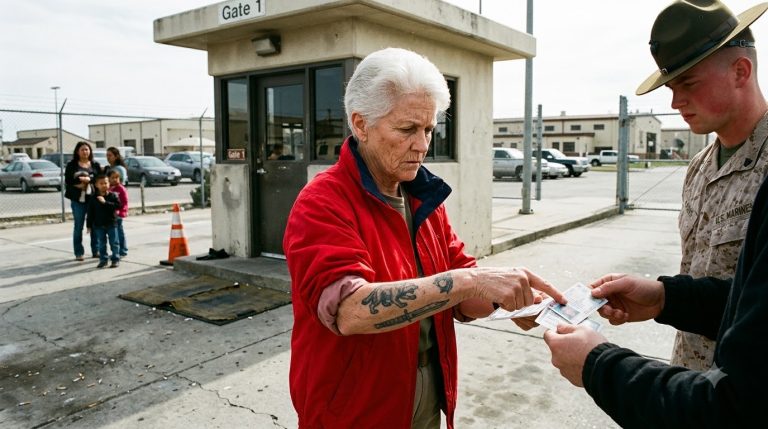
Beneath the thin fabric of her shirt, the movement tugged the edge of a shadow against her skin—a hint of black ink. It was just a curve, a snippet of a serpentine design that looked entirely out of place in a modern training yard.
Bennett squinted. The moment of pedagogical clarity had passed, replaced by a creeping, unsettling curiosity. He looked at the wall, then at the woman standing on the other side, waiting for her to move, to speak, or to reveal why, for a brief second, she had seemed to be everywhere and nowhere all at once.
The Zeigarnik effect tugged at his mind—a puzzle without a frame. He didn’t know yet that the tattoo was a map of a place that didn’t officially exist, and the woman in front of him was the only part of that map that hadn’t been erased.
CHAPTER 2: THE ANATOMY OF RESILIENCE
The silence following the climb didn’t have the clean, sharp edge of a resolved moment. It hung in the air, thick and humid, clinging to the recruits like the red clay dust itself. Elina turned away from the wall, her boots making a soft, rhythmic crunch against the earth. She didn’t acknowledge Bennett’s stare; she didn’t need to. In her experience, the most dangerous eyes were the ones that had stopped looking for a target and started looking for a pattern.
She walked toward the water station, her pace consistent, economical. A gust of wind shifted the pines, bringing with it the dry, scorched smell of grass that had been baked too long under a Southern sun. For a fraction of a second, the scent didn’t smell like Georgia. It smelled like the desert air of Kuwait in 1991, the kind of heat that felt like a physical hand pressing down on your shoulders. Her hand twitched toward her neck, brushing the hidden shape of the compass. She suppressed the phantom memory before it could take root, forcing her breathing to remain shallow and controlled.
“Break time is over,” Brennan’s voice cut through the stillness like a serrated blade. “Get into formation. Standard PT assessment. Sprints, then the course.”
The recruits moved, but the cadence was different. It was less like the chaotic stamping of cattle and more like a unit beginning to sense the rhythm of a shared struggle. They formed up, faces glistening with sweat, eyes flicking toward Elina, then toward each other. The mockery that had defined the morning was eroding, replaced by the friction of genuine uncertainty.
Elina took her place at the end of the line. She was there to observe, to provide feedback, but the “Kintsugi” lens required more than just watching. It required participation. You couldn’t teach someone how to hold themselves together if you weren’t willing to show them how to handle the cracks.
“Begin,” Brennan barked.
The push-ups started. It was a brutal, repetitive motion—a test of structure over sheer muscle. Elina moved with them, her form perfect, a study in quiet efficiency. Every time she reached the bottom of the movement, she felt the familiar pull of the earth, the way it tried to anchor her to the past. She didn’t resist; she let the gravity pull her, then used the tension of her own muscles to spring back.
She wasn’t looking at the recruits, but she heard them. She heard the change in their breathing. The initial aggression had died out. Now, it was just the heavy, rhythmic grunting of bodies reaching their limit. She counted the repetitions in her head, 70, 71, 72—the point where the mind usually gave up before the body did.
She kept going, her rhythm unchanging. By the time they reached 90, the sounds around her were desperate—gasping, strained, the frantic scrabbling of palms against the clay. She finished her 100th, stood up, and didn’t even flush.
She looked at Bennett. He was at 92, his arms shaking so violently that his entire frame vibrated, yet his eyes were locked on her. He wasn’t looking at her face; he was looking at her posture, trying to figure out why she wasn’t breathing like he was.
“Don’t hold your breath,” she said, her voice soft but piercing the sound of their collective struggle. “If you hold your breath, you’re telling your body the danger is immediate. If you exhale, you’re telling your brain you’re still in control. Exhale, Bennett. Find the rhythm.”
He gasped, a raw, ragged sound, and forced a long, shuddering breath out. His arms steadied. He hit 95, then 98, then 100. He collapsed onto his stomach, eyes tracking her as she moved toward the start line for the sprints.
She wasn’t just an observer anymore. She was a barometer.
As they lined up for the 400-meter sprint, the heat intensified. The air shimmering off the red clay created a mirage-like distortion, making the distance seem impossibly long. She didn’t look at the track as a distance to be conquered. She looked at it as a path of least resistance.
“Sprints! Move!”
They tore off. The first hundred meters were pure, wasted effort. They were running like they were in a race, their strides too long, their arms flailing, their energy burning off in a frantic bid for speed. Elina started slower. She moved with a compact, efficient stride, her weight centered. She wasn’t running against them; she was running with the terrain.
She saw the tactical reality of their errors. One recruit, Parker, was pumping his arms so hard he was throwing his entire balance off-center. Another, Hammond, was over-striding, his heels slamming into the ground, wasting kinetic energy with every step.
By the 200-meter mark, the fatigue set in. The “civilian softness” they had arrived with was being hammered out of them by the heat and the load. Elina maintained her pace, her breathing still that strange, reserve-fed rhythm. She passed Hammond, then Parker. She didn’t look at them as she overtook them. She just kept the same, precise tempo.
When she crossed the line, she felt the familiar weight of the compass against her sternum. It wasn’t just a physical object anymore; it was the anchor for the debt she was trying to pay. Every sprint, every obstacle, every lesson was a piece of that repayment.
She walked to the water station and took a measured drink. Bennett crossed the line shortly after, his face a mask of exhaustion and curiosity. He didn’t go for the water. He walked toward her, his chest still heaving, his gaze lingering on the sleeve of her Henley.
“How?” he asked, the word barely a whisper. “How do you keep your breathing like that? You’re not even sweating like we are.”
Elina looked at him. She saw the suspicion behind the curiosity—the decoy secret he was trying to solve, the idea that she was something “more” or something “fake.” She didn’t give him the answer he wanted. She gave him the answer he needed to grow.
“I’m not fighting the heat, Bennett,” she said, her voice as calm as a summer morning. “You’re running away from the struggle. I’m just moving through it. There’s a difference.”
She walked toward the obstacle course, the next phase of the lesson beginning. She knew the recruits were whispering behind her back, trying to build a narrative out of her behavior. Let them whisper. Let them build their theories. By the time they reached the final exercise, they would learn that the truth wasn’t a story to be told; it was a weight to be carried.
CHAPTER 3: THE BARRACKS AUDIT
The barracks did not sleep. Not really. It breathed in the rhythmic, heavy exhales of two dozen men who had been pushed past the point of physical exhaustion and were now beginning to fray at the edges. Elina sat on her cot in the temporary quarters assigned to her near the command office, her eyes fixed on the dim, yellow glow of a single lamp.
The silence was the most dangerous part of the day. In the light, with the physical movement of drills and the structure of the training yard, she could keep the past relegated to the periphery. But in the dark, the memories had room to expand. She reached into her bag and pulled out the small, worn kit she had brought with her. It wasn’t tactical gear. It was a collection of mundane things—a whetstone, a spool of heavy-duty thread, and a compass that had seen more geography than most people would see in a lifetime.
She began to maintain her equipment, the repetitive, soothing friction of the whetstone against a small pocket knife echoing the rhythm she had taught the recruits that afternoon. Think. Adapt. Never quit.
A soft, hesitant creak of the floorboards drifted through the wall from the main bay. She stopped, the blade still in her hand. She didn’t turn her head, but her body shifted, muscles coiled for action without a single wasted movement. She knew the cadence of the footsteps. It was Bennett.
He didn’t knock. He hovered in the doorway, the silhouette of his frame blocking the sliver of light from the hallway. He was holding his notebook, his knuckles white against the cover.
“You’re not sleeping,” she said, her voice barely a ripple in the still air.
“Neither are you,” Bennett replied. He stepped inside, his eyes immediately going to the kit on her cot. He caught a glimpse of the compass, the dull, aged brass reflecting the low light. “You talked about the compass earlier. And the tattoo. Colonel Vaughn confirmed what you said about the program.”
“He did.”
“But he didn’t say why you were here.” Bennett walked closer, his hesitation warring with a profound, gnawing need to understand. He looked at her, really looked at her, noticing the way she held her shoulders—a permanent, subtle bracing against a blow that never quite arrived. “You don’t need the money. You don’t need the recognition. You’re teaching us things that aren’t in the manuals. Why?”
Elina set the knife down. The silence between them grew, weighted with the years she had spent ensuring that the secret remained just that—a secret. She could have fed him a line about duty or standard contractor protocol. It would have been easy, and it would have closed the door. But the Kintsugi lens, the method of teaching through shared vulnerability, demanded more.
“When you lose everyone you started with,” Elina said, her voice devoid of inflection, “the question isn’t why you’re here. The question is why you’re still breathing.”
She stood up, the movement fluid and silent. She didn’t move toward him; she moved to the small desk where she had tucked away her personal notes—the ones that weren’t for the curriculum. She opened the folder and took out the black-and-white photograph she had shown Hammond. She held it out to him.
Bennett took it. His thumb brushed the edge of the paper, his eyes scanning the faces of the six—the team that had been ghosts for nearly three decades.
“They were my family,” she said, her eyes tracking the movement of his fingers over the image. “We were supposed to be invisible. We were supposed to go in, disrupt, and vanish. But the world doesn’t let you vanish without a toll.”
“You said Major Summers saved you,” Bennett murmured, his voice thick.
“She didn’t just save me,” Elina corrected, her tone sharpening. “She gave me a life that didn’t belong to me. She died so that I could reach the extraction point, and I have spent every day since then wondering if I have done enough to earn the space she vacated.”
Bennett looked up, his suspicion finally giving way to a raw, uncomfortable clarity. He realized that the mystery he had been trying to solve—the decoy secret of whether she was a “super soldier”—was entirely irrelevant. The truth was far heavier: she was a survivor who had been trying to build a monument to the dead, one lesson at a time.
“That’s why you’re training us,” he said. “Not for the army. For her.”
“I am training you so that you don’t end up on a piece of paper like that,” she said, her gesture sharp toward the photo. “I am training you because if you have the knowledge, if you have the discipline, and if you have the capability to think your way out of a nightmare, then maybe you won’t have to carry the debt I carry.”
Bennett looked back down at the photo. He saw the missing, worn patch on the jacket of the woman standing next to Elina—the unit insignia that had been scratched out by time and intent. It was a small detail, a discrepancy he hadn’t noticed before, and it suddenly felt like the most important thing in the room.
“You won’t tell them,” Elina said. It wasn’t a question.
“I won’t,” Bennett promised. He handed the photo back. “But you’re not going to stay, are you? Once this cycle is over.”
“No,” Elina said, turning back to her cot. “I don’t stay. I just pass the compass along.”
She sat back down, the whetstone finding its rhythm again. Bennett stood there for a moment longer, the weight of the barracks’ silence pressing in on them. He finally turned and walked back to the bay, his stride less confident, his head filled with the echo of her words.
Elina watched his silhouette disappear, the cold, faded textures of the barracks finally feeling like home. She had planted the seed. She had provided the context. Now, she just had to wait for the final exercise to see if they could actually survive their own potential.
CHAPTER 4: THE FOREST OF BROKEN PATHS
The woods did not care about the tactical plans etched into Bennett’s notebook, and they certainly did not care about the carefully curated lesson plan Elena had brought from her past. As the recruits moved out under the leaden sky of the final exercise, the Georgia humidity finally broke. It started as a low, ominous rumble in the distance, followed almost immediately by a deluge so intense it turned the forest floor into a slick, treacherous slide.
Elena followed at a distance, her hood pulled back. She felt the cold rain wash over her skin, a sharp contrast to the heat that had defined the last few days. She watched the recruits react to the sudden shift. The formation, which had been tight and efficient only an hour ago, began to wobble. The rain muted their signals, obscured their vision, and turned the soft, red clay of the trails into a mire.
“Hold!” Bennett’s voice cracked through the thunder. He stood at the edge of a ravine that had suddenly become a fast-moving, muddy stream. “We can’t cross this. The route map is useless.”
Elena watched from the shadows of a pine grove. She wasn’t an instructor now; she was an observer of the consequence. They had relied on the planned route, a logical construct that the storm had rendered moot. She saw the panic begin to flicker in the eyes of the younger recruits, the realization that their ‘master plan’ was dissolving in the rain.
“We have to turn back,” someone shouted. “We’ll lose the time advantage.”
“If we turn back, we walk right into the OPFOR’s main line,” Bennett countered. His voice was ragged, losing its edge of command. He looked at the map, then at the swirling, brown water of the ravine, his hands shaking—not from the cold, but from the fear that he didn’t have the answer.
Elena waited. She felt the urge to step in, to guide them, to show them how to navigate the terrain as she had once navigated a war-torn border. But she caught herself. To intervene was to fail them. They needed to see that the plan was not the objective; the objective was survival.
She moved closer, her boots making no sound on the needle-strewn ground. She stayed just out of their direct line of sight. “The map is a suggestion,” she whispered to herself, a quiet echo of Major Summers’ voice from twenty-eight years ago. “The terrain is the reality.”
Bennett was still staring at the map. He looked ready to make a fatal error—the decision to push through, to force the crossing where the water was deepest.
“The ravine,” Elina said, her voice rising just enough to be heard over the rain, but not enough to seem like an instructor’s order. “It’s a natural funnel, but it’s also a boundary. If you can’t cross it, you use it.”
Bennett whipped around. He didn’t see her at first, his eyes darting through the curtain of rain. When he finally caught sight of her shadow, his expression tightened. He didn’t ask how she got there; he didn’t ask for permission. He looked at the ravine, then back at her, and the light of understanding flickered in his eyes.
“We don’t cross,” he said, the realization hitting him with the force of a physical blow. “We use it as cover. We move parallel to the water line. It hides our scent, masks our noise, and forces the OPFOR to look for us on the ridge.”
“That’s a thought,” Elena said, her voice neutral. She turned away before he could ask for validation. She had done her part. Now, they had to move, or they would be caught in the open when the OPFOR team tracking the noise of the rain discovered their position.
The recruits moved—slowly, painfully—down the bank. Elena trailed them, her mind drifting to the desert. The terrain there had been unforgiving in a different way, but the principles of the Kintsugi lens remained constant: you find the beauty in the breakage. You don’t hide the cracks; you use them to rebuild.
They were halfway along the ravine when the first flare went up. It was a brilliant, blinding white light against the dark, rainy sky, illuminating the entire stretch of the ravine. They had been spotted.
“Contact!” Bennett roared.
The forest erupted. The recruits scrambled for cover, their previous tactical rhythm shattered by the sudden, intense proximity of the enemy. Elena moved, too, but not toward the fight. She moved to a high point on the bank, watching as the squad reacted. They were failing—there was no other word for it. They were clumping together, they were missing their fields of fire, and their communication was a frantic mess.
She saw a recruit, Hammond, freeze. He was standing in the open, his weapon raised but his finger locked, the fear of the “kill” preventing him from acting.
This was the escalation. This was the moment where the decoy of their “competence” broke down, and they were left with nothing but the raw, messy reality of their own limitations. Elena watched as an OPFOR team, dark and professional, swept through the pines. They weren’t fighting recruits; they were cleaning up a disorganized rabble.
She had to make a choice. She could watch them fail, a failure that would leave them broken, or she could push them to the very brink where failure became the only catalyst for survival. She pulled her radio, not to call the instructors, but to broadcast on the frequency she knew the squad was using.
“Bennett,” her voice was cold, stripped of empathy. “You’re running away from the reality of the terrain. If you don’t break the formation and initiate a flanking maneuver, you aren’t just losing an exercise. You’re proving that the past—that everything I’ve tried to show you—was for nothing.”
She didn’t wait for a response. She cut the connection and watched. She saw Bennett freeze, his head snapping up as if he had been slapped. He looked around at the chaos, at his squadmates struggling, and then, for the first time, he stopped trying to be the leader who followed the rules and started being the one who dictated the terrain.
“Flank!” he screamed, his voice raw. “Leave the gear if you have to! Move!”
The momentum shifted. It wasn’t clean, and it certainly wasn’t textbook, but for the first time, the squad stopped reacting to the OPFOR and started forcing the OPFOR to react to them. They moved through the rain, a desperate, disorganized, but undeniably active unit.
Elena watched them vanish into the thicket, the sound of the engagement fading into the thunder. She stood alone in the rain, the cold water soaking through her clothes, feeling the ghost of Major Summers standing beside her, waiting to see if the debt could ever truly be paid.
CHAPTER 5: THE PASSING OF THE COMPASS
The transition from the forest to the parade ground was not a journey of miles, but of gravity. The recruits stood in formation, their dress uniforms standing in stark, ironed contrast to the mud-caked, torn tactical gear they had worn only hours before. The rain had stopped, leaving the Georgia sky a bruised purple, fading into the deep, inevitable indigo of night.
Elena stood in the shadows of the command building, her back against the cool, concrete wall. She wasn’t wearing dress blues. She was in her civilian Henley and pants, the dust of the forest still clinging to the hem. She was an observer, a ghost in the periphery, watching the final act of a play she hadn’t written but had nonetheless spent her life preparing for.
Colonel Vaughn walked to the dais, his silver hair catching the stadium lights. He didn’t speak with the booming, performative cadence of a man who enjoyed the sound of his own voice. He spoke with the clipped, rhythmic precision of someone who understood that every word was a transaction.
“Competence is not a state of being,” Vaughn said, his eyes scanning the lines of recruits. “It is a process of refinement. You are not graduating because you are finished. You are graduating because you have learned how to begin.”
Elena watched Bennett. He stood at the end of the front row, his posture rigid, his gaze locked on the horizon. He looked older than he had three days ago—the softness of his face stripped away, replaced by the hard, angular lines of a man who had seen the limit of his own endurance. When Vaughn moved down the line, stopping at each recruit to hand them their certificate, Elena saw the shift in their reactions. They weren’t just taking a piece of paper; they were accepting a marker of their own survival.
When Vaughn reached Bennett, he didn’t just hand over the certificate. He held it for a beat, his gaze lingering on the younger man.
“I hear the ravine taught you more than the manual, Bennett,” Vaughn said, his voice low, private.
“It did, sir,” Bennett replied. His eyes flicked momentarily to the shadows where Elena stood.
“Remember the lesson,” Vaughn said. “It is the only one that stays with you when the adrenaline fades.”
Elena pulled her gaze away. She didn’t want the recognition. She didn’t want the gratitude. She had done exactly what Major Summers had asked of her, and as the ceremony drew to a close, she felt the phantom pressure of the compass against her skin. The debt, however, was not one that could be paid in full; it was a recurring interest.
As the formation broke, the yard erupted into a chaotic, messy reunion of families and graduates. The air was filled with the sounds of pride, relief, and the mundane chatter of civilian life crashing into the reality of the military. Elena stepped out from the shadows, her intention to walk straight to her truck and disappear, as she always had.
But Bennett was waiting. He had navigated the crowd with a singular, focused intensity, his eyes searching for her. He caught her halfway to the parking lot, his expression grave.
“You’re leaving,” he said. It wasn’t a question.
“The cycle is complete,” Elena said, her voice steady. “My role is finished.”
“You said it was a promise,” Bennett said, his voice rising just enough to be heard over the background noise. “You said you were keeping a promise to someone. Does that promise end here?”
Elena stopped. She looked at him—really looked at him—and saw the reflection of her younger self in his eyes. The desperation for meaning, the hunger for something that wasn’t just a mission, but a reason. She reached inside her shirt and felt the brass compass. The cool metal was a grounding wire, a reminder of every mile she had traveled since Kuwait.
She unhooked the cord from around her neck. The brass was warm from her body heat, the surface smooth from decades of touch. She took Bennett’s hand and pressed the compass into his palm, closing his fingers over it.
“It doesn’t end,” she said softly. “It just changes hands. You think you’ve graduated, but the truth is that you’re now the one holding the North. You find your own way home, Bennett. And when you find someone else who is lost, you pass it on. That’s the only way the promise survives.”
Bennett stared at the compass, his expression shifting from confusion to a profound, weighted awe. He looked up, about to speak, about to ask for the impossible—for her to stay, to guide him further—but Elena had already turned away.
She walked toward her truck, her stride even, her silhouette dissolving into the darkness of the parking lot. She didn’t look back. She didn’t need to. She had done the work. She had walked the path. And for the first time in twenty-eight years, the weight of the debt didn’t feel like a burden; it felt like a legacy. She climbed into the truck, the engine turning over with a steady, reassuring growl, and began the long drive toward a horizon that, for the first time, held no shadows.
CHAPTER 6: THE MONTANA HORIZON
The transition was not marked by a sudden change in climate or geography, but by the cessation of the noise that had hummed in the back of Elena’s mind for twenty-eight years. Montana was different. Here, the mountains didn’t loom like sentinels; they stood like witnesses. The air was thin, cold, and stripped of the humid, clinging weight of the red clay.
She had been here for three months. The shop class at the local high school was a chaotic, beautiful mess of splintered pine, unvarnished cedar, and teenagers who had yet to learn that the world was built on entropy. They were loud, careless, and spectacularly indifferent to the history that lived in the ink on her left arm. They were perfect.
Elena stood in the back of the shop, her hands wrapped around a piece of sandpaper. She was smoothing the edge of a joint on a cedar bookshelf, the rhythm of the work steady, deliberate. It was a tactile, grounded labor. There were no missions here, no intelligence extractions, no tactical maneuvers to negotiate. Just the grain of the wood, the tension of the glue, and the simple, undeniable truth of a project brought to completion.
She felt the weight of the compass in her pocket. She had replaced the brass one—the one that had belonged to Rebecca Summers—with a simple, modern version, but she still caught herself reaching for it whenever the shop went quiet. It was a phantom limb, a habit of a life she no longer lived.
A student, a quiet kid named Leo with sawdust in his hair, approached her. He held up a wooden joint he had been struggling with for days. It was imperfect—a bit loose, the edges not quite aligned—but it held.
“I think I got it, Ms. Crawford,” he said, looking at the wood with a mixture of surprise and pride. “It’s not perfect, but it’s sturdy.”
Elena looked at the joint. She saw the tiny, microscopic gaps where the wood didn’t meet, the imperfections that had forced him to adapt, to shim, to adjust until the structure held. It was Kintsugi in its own, humble way.
“Perfection is a goal, Leo,” she said, her voice soft. “But durability is the standard. If it holds when you put weight on it, that’s all that matters.”
“You have a lot of patience,” Leo remarked, looking at her with a curiosity that felt entirely untainted by the suspicious, tactical assessment of the recruits back at Benning. “My dad says you talk like someone who’s seen a lot of stuff, but you don’t really tell anyone about it.”
Elena looked out the shop window. The sun was beginning to dip behind the peaks, casting long, sharp shadows across the valley. She thought about Major Summers, about the team that had stayed behind in the desert, and about the weight of the debt that she had finally, truly, paid off. She had kept the promise. She had passed the North to Bennett, and she had built a life that didn’t require her to be a ghost.
“I’ve seen enough to know that the best work is the kind you don’t have to explain,” she replied.
When the final bell rang, the shop emptied in a clatter of laughter and slamming lockers. Elena stayed behind to sweep. She enjoyed the quiet, the way the sound of the broom bristles against the concrete floor mimicked the sound of a distant, dying echo.
She walked over to her workbench and picked up the compass from her pocket. She opened it, watching the needle settle into the North. It was the direction of home, the direction of peace. She realized then that the debt hadn’t been to Summers, and it hadn’t been to the recruits, and it hadn’t even been to the truth of the Black Viper program. The debt had been to herself. She had been carrying the weight of a survivor for so long that she had forgotten how to live as a person.
She took the compass and placed it on the workbench, right next to the cedar bookshelf Leo had built. It looked small, insignificant against the backdrop of the sawdust and the tools, but it was there—a tiny, functioning instrument that knew exactly where it was going.
She turned off the shop lights, the room plunging into the cool, blue dusk of the mountain evening. She walked toward the door, her pace even and unhurried. There was no one waiting in the shadows. There were no missions to fulfill, no more secrets to bury, and no more promises that needed the silence of the grave to be honored.
She opened the door and stepped out into the crisp, high-altitude air. She breathed in, filling her lungs with the scent of pine and impending snow. It was a clean, honest scent. She started her truck, the engine turning over with a steady, reassuring hum, and began the short drive home. As she pulled out onto the quiet mountain road, she didn’t look at the rearview mirror. She didn’t need to. The past was exactly where it belonged: in the work, in the wood, and in the quiet, sturdy promise of a life that finally, irrevocably, belonged only to her.