The Architect of Ash: How a Disgraced Veteran Used the HOA’s Own Greed to Burn Them Down
CHAPTER 1: THE BORDERLINE
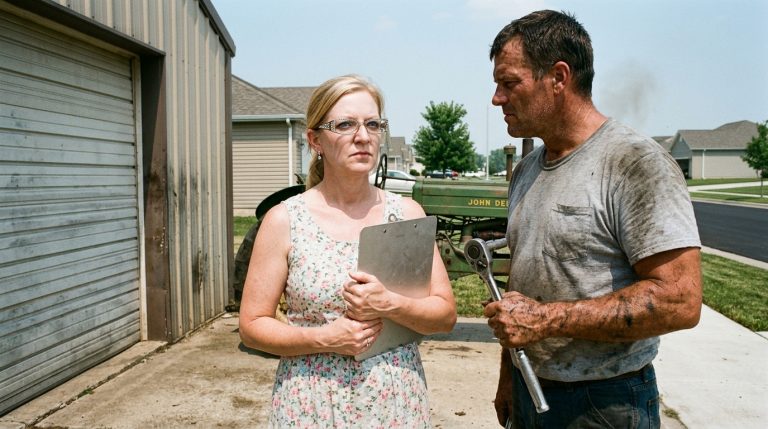
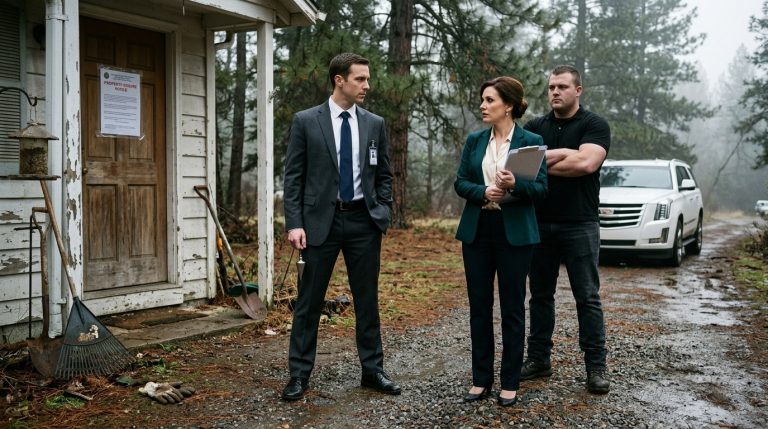
The notice crinkled in my grip, a flimsy sheet of cheap paper that carried the weight of a death sentence for my work. Karen Miller stood on the edge of my property, her powder-blue tracksuit a jarring, synthetic intrusion against the natural quiet of the woodland beyond my line. She didn’t look like a woman declaring war; she looked like a woman who enjoyed the sound of her own voice echoing off the beige siding of her neighbors’ homes.
“Seventy-two hours, Mark,” she said, the words smooth, practiced, and dripping with a venomous kind of self-satisfaction. “Dismantle the structure or the fines begin. Section 4, subsection C is quite explicit.”
I looked past her. The Raku kiln sat behind me, a silent cathedral of fire-brick and steel that I had built with my own scarred hands. It was the only thing that had quieted the hum of debris rattling inside my skull since I’d come home. To her, it was an eyesore. To me, it was the only piece of ground I still held that was truly mine.
The tremor in my left hand, a souvenir from that road outside Kandahar, began to pulse. I shoved my hands into the pockets of my canvas jacket, feeling the cold steel of my truck keys. My focus shifted, narrowing. I stopped seeing a bored HOA president and started mapping the terrain: her stance, the exact position of her feet on the property line, the way she held her chin, the slight flicker of uncertainty in her eyes when I didn’t immediately scramble to apologize.
“You’ve miscalculated,” I said. My voice was level, calibrated to be as unremarkable as a dial tone.
“I’ve read the covenants, Mr. Turner,” she snapped, a hint of genuine irritation breaking through the veneer of professional detachment. “The architectural review committee has zero tolerance for unapproved modifications. You’re done.”
She didn’t realize that in my previous life, I didn’t clear obstacles; I studied them until I found the structural flaw that would bring the whole thing down. She had just handed me my first lead, and the irony was already starting to taste like copper in the back of my throat.
I watched her walk away, her gait heavy and rhythmic, her back turned to the very thing she intended to destroy. She thought she was leading. She didn’t know she was already being tracked. As she disappeared behind the manicured hedge of her driveway, a familiar silence settled over the yard—not the silence of defeat, but the quiet, predatory calm that settles over a ridge before a coordinated strike. I turned back to the kiln, the fire-bricks cool to the touch, and I started the count. The war hadn’t started with her arrival; it started the moment she stepped onto my land and gave me a target.
CHAPTER 2: THE INTELLIGENCE BRIEF
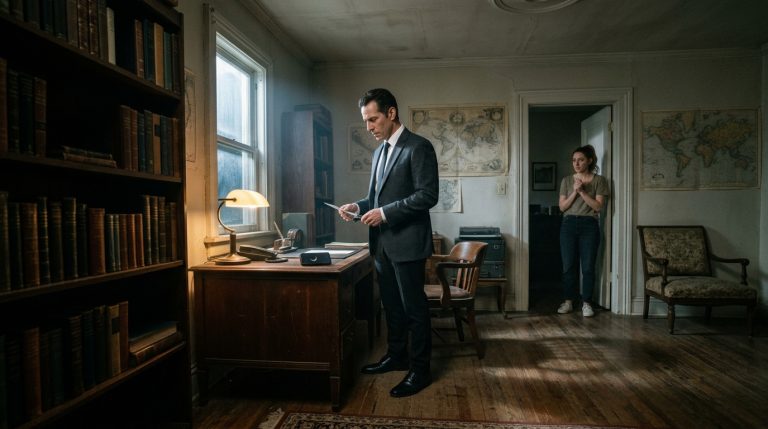
The office was a small, windowless box at the back of the workshop, smelling of sawdust and old coffee. I sat at my desk, the violation notice spread out under the pool of a single, harsh desk lamp. The paper felt too thin, its edges sharp against my fingertips. I ran a thumb over the printed text—Section 4, subsection C—and a sudden, sharp memory flared, white-hot and intrusive.
The pressure plate. The instant, deafening compression of air before the world went sideways, tumbling through the dust of a road that didn’t have a name. The tremor in my left hand flared, my knuckles whitening as I gripped the edge of the desk. I forced myself to breathe—in for four, hold for four, out for four. My therapist’s voice echoed in the back of my mind: Just feel the texture, Mark. Find the ground.
I focused on the desk. The grain of the pine. The cold, unyielding reality of the wood. The phantom roar of the explosion receded, replaced by the low, steady hum of the ventilation system. The logic returned, cold and surgical.
I picked up the legal pad. At the top, I wrote: Operation: Trojan Horse. Beneath it, I listed the assets. Not weapons, not combat equipment, but things that looked ordinary enough to escape notice. A body camera. Four high-definition security cameras. A secure cloud server. A logbook.
The kiln was the bait, but the paperwork was the cage.
I stood up and moved to the corner of the room, opening the heavy metal safe where I kept my service records and financial documents. It felt like assembling a kit before a drop—every item required, every item accounted for. I pulled out my old contact list, the names of the men I’d served with who had moved on to law, logistics, and government positions.
The phone felt heavy as I pulled it from my pocket. I looked at the contact for Dave, a former Judge Advocate General officer who had handled my property purchase. He was a man who understood that rules were not walls, but grids; you could walk through them if you knew the coordinates.
I dialed. The connection clicked, a sterile, digital sound in the quiet room.
“Turner,” Dave’s voice was professional, cautious. He knew why I was calling. I didn’t waste time on pleasantries.
“They’re using the architectural review committee to bypass the original zoning exemptions,” I said, my voice as neutral as a report. “They’ve passed an amendment I wasn’t notified about. They want the kiln gone, and they want the fines to bleed me out.”
“Standard HOA playbook, Mark,” Dave replied, the sound of a keyboard clacking in the background. “They count on people being too tired, too broke, or too intimidated to look at the fine print. What’s your position?”
“I’m not paying the fines,” I said. “I’m setting up an escrow account. I’m going to deposit the daily penalty, but it stays in a neutral holding pattern. I’m going to contest the validity of every notice.”
“That’s risky,” Dave said, his tone shifting into a warning. “If you don’t handle the escrow strictly according to state statutes, they’ll call it a default. They’ll slap a lien on your property before you can even get a hearing.”
“I have the statutes open in front of me,” I said, staring at the screen of my laptop. The blue light cast long, sharp shadows across my face. “I need the precise language for the dispute of debt notice. I need to ensure that every cent is accounted for, documented, and traceable. I’m building a paper trail that will make it impossible for them to claim I acted in bad faith.”
“You’re moving from defense to intelligence gathering,” Dave observed, his voice turning sharper. “That’s a different kind of war, Mark. You sure about this?”
“I’m sure,” I said.
I hung up and started the process. The banking app was simple, but the action felt monumental. I transferred the initial amount, watching the numbers drain from my savings and lock into the digital escrow. It was a physical loss, a weight lifted from my pocket and placed into a neutral void, but it felt right. It was a tactical commitment. I was no longer a victim waiting for a notice in the mail; I was an adversary actively managing the terrain.
I walked back out into the workshop. The kiln loomed in the center of the room, a hulking, dark shape that seemed to absorb the light. I walked around it, inspecting the seams of the steel frame, the integrity of the fire-bricks. Every bolt was tightened, every safety valve verified. It was an engineering marvel, something designed to survive the heat of a volcano. Karen Miller didn’t see the safety, the planning, or the discipline. She saw a threat to her uniformity.
She wanted a war of attrition? I looked at the security cameras, now mounted in the corners of the ceiling, their red status lights blinking like a heartbeat. I had the ground. I had the high ground. The silence of the night was no longer oppressive; it was heavy with potential, the kind of silence that precedes a perfectly executed strike. I sat back down at the desk, picked up the pen, and began to chart the calendar—a seventy-two-hour countdown that was already, in my mind, a closed loop.
CHAPTER 3: THE GARGOYLE CAMPAIGN
The early morning light was thin and grey, filtering through the workshop windows to illuminate the fine layer of clay dust settling on every surface. I stood over the workbench, my hands moving with a fluid, practiced grace that belied the tension coiled in my shoulders. The sculpture was finished. It was a grotesque, heavy thing—a bloated figure wrapped in a strained tracksuit, its face twisted into a permanent, screeching indictment. I’d spent the last four hours refining the sneer, ensuring the proportions were just exaggerated enough to be recognizable, but not so cartoonish that they lost their bite.
I reached for the glazing brush. My hands, which had once calibrated firing pins and checked detonators in the dark, were steady now. I dipped the brush into the bucket of sickly, mottled green glaze and began to paint. Every stroke was a calculated decision. I wanted this piece to look like it belonged in the neighborhood—the same cheap, synthetic color palette as the plastic lawn ornaments the HOA mandated—but with a texture that caught the light in a way that felt wrong, unsettling.
When I finished, I sat back on my stool and wiped my hands on a rag. The garage workshop felt smaller than it had yesterday. I looked at the security monitor mounted near the door. The cameras were live. The driveway was empty, the Oakmont Estates street lamps still flickering in the dawn. It was a quiet morning, the kind where the silence usually felt like a reprieve. But today, the silence was just the space between two collisions.
I grabbed the gargoyle. It was heavier than it looked, the clay dense and solid. I walked out into the yard, the dew-soaked grass wetting my boots. I moved with a soldier’s economy of motion, keeping my eyes on the perimeter of the property. I knew Karen Miller. I knew her kind. She didn’t look for truth; she looked for deviations. Anything that didn’t fit the beige-and-grey uniformity of her vision was a threat. This sculpture wasn’t just art; it was a beacon, a signal flare I was lighting on the front lawn.
I set the figure down on a patch of dirt directly next to the mailbox, positioning it so it faced the street—so it faced her house. It looked jarring, an ugly, organic wound in the middle of a perfectly manicured lawn. I took a step back, my hands brushing off the dust. It wasn’t perfect, but it was provocative.
As I walked back to the house, the air felt colder. I could almost hear the click of blinds being adjusted across the street, the secret, watchful eyes of neighbors who had been trained to report anything out of order. I felt exposed, a singular point of resistance in a sea of compliance. But that was the point. I needed her to notice. I needed her to react. I needed her to do exactly what she always did: try to enforce a rule that hadn’t been written for a piece of ceramic art.
I reached the porch and heard the back door slide open. Sarah stood there, a mug of coffee in her hand, her brow furrowed as she looked at the creature on the lawn. She didn’t say anything, but her eyes caught mine. She understood the cost. She saw the risk. We had agreed on this, but seeing the actual object—the physical embodiment of the conflict—made it feel real in a way the planning had not.
“It looks… intense,” she said, her voice quiet.
“It’s meant to,” I replied. I walked past her into the kitchen, the warmth of the house hitting me like a physical barrier. I didn’t want the warmth. I wanted to stay in the loop, to keep the momentum going. I picked up my phone and opened the banking app, checking the escrow balance. Another morning, another five hundred dollars. It was a ritual now, a daily payment of my resolve.
I sat at the kitchen table and watched the street through the window. It wouldn’t take long. Karen’s patrols were nothing if not predictable. She would walk her dog, or she would take the long route to her car, and she would see the violation. I felt the familiar, cold pulse in my gut—the same feeling I had when we laid a tripwire. You wait for the pressure, and you wait for the noise.
I didn’t have to wait long. A half-hour later, a navy-blue car—the same one she had driven during our first confrontation—slowed down in front of the house. It didn’t stop, but it crawled. I could see the silhouette of her head turn, her eyes locking onto the sculpture on my lawn. I didn’t flinch. I kept my gaze steady, watching her through the glass. She didn’t stop, and she didn’t get out, but the car accelerated away with a sudden, sharp jerk.
I picked up my pen and opened the logbook. Entry: 07:45. Target sighted. Escalation initiated.
The war wasn’t fought with explosions anymore. It was fought with violations, fines, and the slow, grinding pressure of rules. But I had the advantage of knowing that the rules were just a language, and for the first time in years, I was speaking it better than they were. I stood up and walked back to the workshop, ready to start on the second gargoyle. Gerald needed a face. And I was just getting started.
CHAPTER 4: THE DESIGNERS CALL
The workshop was cooling, the late afternoon sun casting long, skeletal shadows across the floor. I stood by the workbench, the air feeling heavy with the fine, clinging dust of dried clay. I had been cataloging the files, grouping the violation notices by date and violation type, building a map of Karen’s campaign. But there was a gap. My memory was a precision instrument—I recalled filing the internal invoice for the ‘Riverflow’ project, the one that proved the timeline of the work—and yet, as I flipped through the binder, the folder was empty.
I froze. A soldier doesn’t lose his kit. I checked the drawer, then the secondary file box, my breath hitching as I pulled out every scrap of paper. Nothing. The invoice was gone.
My pulse spiked, a sharp, cold jab in my chest. I looked toward the house, then back at the door. Had Sarah moved them? No, she knew the system. Had I been compromised? The thought of someone entering the workshop, picking through my life with gloved fingers, sent a jolt of genuine adrenaline through me. I didn’t panic—panic was a waste of resources—but the calm I’d cultivated was replaced by a taut, brittle alertness. I walked over to the security monitor. The playback showed nothing—no shadows, no movement, no breach.
The invoice hadn’t been stolen; it had been misfiled, or worse, I had never brought it back from the firm. I looked at the phone. Seline. The interior designer. She was the only other person who held the master copy of that project’s history.
I didn’t call right away. I stood in the center of the room and let the tension work through me. If I called her now, I needed to be the architect, not the desperate client. I needed to sound like I was in control of the narrative, not like a man losing his grip on his own evidence. I went to the small, detached shed where the fire-blanket was mounted, pulled the heavy canvas door shut, and dialed the number from memory.
“Prestige Interiors, Seline speaking,” her voice was crisp, efficient, the sound of a woman who managed millions in assets and didn’t suffer delays.
“Seline,” I said, my voice steady, stripped of any emotion. “It’s Mark Turner.”
There was a micro-second pause. “Mark. You’re calling about the project records? I assume you’re checking on your status.”
“I’m checking on the integrity of the record,” I corrected her, my grip tightening on the phone. “I have a discrepancy in my ledger regarding the 2022 commission. I need the original invoice for the Riverflow mosaic.”
“We don’t typically release those to independent contractors after the contract is closed,” she said, the defensive edge sharpening. “You were paid, Mark. The work was accepted. What is the issue?”
“The issue is that your client is currently using her leverage to attempt to dismantle my business, Seline. And my records, which I am certain I brought home, are now absent.” I let the implication hang there—that her firm’s data security might be the weak link, or that she herself might be playing both sides. “If the records are missing from my office, I have to assume they’re missing from everywhere. Unless, of course, you know something I don’t.”
“I don’t know what you’re implying,” she shot back, her tone now icy.
“I’m implying that if my studio is forced to close, the provenance of the materials used in that mosaic becomes a public matter,” I said. “I’m an engineer, Seline. I keep logs of every firing, every batch of glaze, and every commission. If that invoice doesn’t exist, I have to start looking at who benefits from its disappearance.”
There was a long silence on the other end. I could hear the faint, ambient hum of her office—the sound of a world that didn’t know how close it was to catching fire.
“I will look into the archives,” she finally said, her voice strained. “But you need to be careful, Mark. Karen Miller is a very difficult person to deal with. She expects discretion.”
“She expects people to be afraid,” I replied. “I stopped being afraid a long time ago.”
I hung up, my hand trembling just slightly. I had pushed her. I had forced the issue of the missing invoice into the light. Whether she had been leaned on by Karen or whether she was merely protecting her own reputation, she was now firmly in the middle of this.
I walked out of the shed. The sun was dipping below the tree line, leaving the workshop in a deep, bruised purple light. I looked at the gargoyle on the lawn. It seemed to watch me, its twisted, screeching face an echo of my own inner state. I had identified the first major friction point—the information was being manipulated. My reconnaissance was no longer just about the neighborhood; it was about the network of people Karen had bought and sold.
I locked the workshop door, the click of the deadbolt satisfyingly final. I walked toward the house, but I didn’t go in. I stood on the porch for a moment, looking out over the five acres of dark, silent land. The fight was expanding, reaching out beyond the property line, touching the professional world that had once been my sanctuary. I had to be faster than them. I had to be more precise. I was no longer fighting a woman in a tracksuit; I was fighting an entire system of influence, and if I was going to win, I had to ensure that the next time Seline picked up the phone, she was working for me.
CHAPTER 5: THE UNDERGROUND SUMMIT
I didn’t turn around. I kept my hand on the cold iron of the deadbolt, listening to the cadence of the footsteps outside. Three men. They moved with the purposeful, heavy tread of people who felt they owned the ground they walked on. I didn’t need to look through the monitors to know who it was; Karen didn’t come herself anymore. She sent the enforcers—the ones who preferred the intimidation of a late-night survey to the overt theater of a notice.
I took a breath, letting the tension in my shoulders drop. I walked away from the door, moving toward the center of the workshop where the stacks of lumber created a makeshift amphitheater. The meeting wasn’t about the kiln anymore. It was about survival.
The low light from the workshop’s emergency battery pack flickered once, casting long, erratic shadows across the piles of clay and the hulking, silent shape of the kiln. I checked my watch. 19:00. They would be here any minute—the ones who had finally decided that the cost of silence was higher than the risk of speaking out.
The door to the shed creaked open. Bob was the first through, his face etched with the kind of tired frustration that comes from years of being pushed around. Behind him came the Garcias, Maria holding her shawl tight against the evening chill, her eyes darting toward the darkness of the yard. Finally, Alex, the young lawyer, stepped inside, his briefcase looking absurdly professional in the rugged, dusty workspace.
“They’re out there,” Bob said, nodding toward the window. “Surveying the property line. Looking for a reason to claim encroachment.”
“Let them look,” I said, moving to the workbench. I pushed the file of violation notices aside to clear space. “We have the original plats. We have the exemptions. Every minute they spend measuring my grass is a minute they aren’t harassing the rest of you.”
The group settled onto the overturned buckets and stacks of timber. The smell of earth and clay—my sanctuary—was now filled with the sharp, nervous energy of a resistance. I looked around the room. These weren’t soldiers. They were homeowners, mechanics, teachers, and grandparents who had been systematically bullied out of their own lives.
“We aren’t here to play defense,” I said, my voice echoing slightly in the small space. “We are here to trigger the recall. I have the petition.”
I pulled the document from my bag. It felt heavy, a thick stack of papers bound in simple twine. I placed it on the workbench, the sound of it hitting the wood a dull, resonant thud.
“The bylaws say we need sixty percent,” Alex said, leaning forward into the flickering light. “We have the numbers, Mark. But Karen will fight the signatures. She’ll claim they were coerced or fraudulent. We need a secondary layer of verification for every single name on this list.”
“I have copies of every violation notice we discussed,” Maria added, her voice gaining strength. “I kept them. Every time she sent a fine, I kept the records. She thought she was erasing us, but she was just building our case.”
As the hours stretched, the room felt less like a workshop and more like a war room. We went through the documentation, cross-referencing names with addresses, checking the dates of the fines against the board’s meeting minutes. The pattern was undeniable. It wasn’t about aesthetics. It was a refined, calculated machine of extortion, designed to extract money from people who thought the rules were meant to protect them.
Then, a sudden, sharp pop echoed through the workshop. The lights died completely, plunging us into a thick, suffocating darkness. The silence that followed was absolute.
“What was that?” Maria whispered, her voice tight with panic.
“Power’s out,” I said, already moving. I didn’t need to see; I knew the layout of this room in the dark. I reached for the backup light, the cold metal of the switch familiar under my fingers. The space lit up, a harsh, yellow beam slicing through the gloom.
Outside, the silhouette of the three men remained, illuminated by the beam of a flashlight, their focus still fixed on the property boundary. They hadn’t touched the power, but the coincidence was too convenient. I walked to the monitor. The connection was dead. She hadn’t just sent surveyors; she had cut the feed to my security grid.
“They’re not just measuring,” I said, my voice dropping to a low, dangerous register. “They’re blinding me. They think if they shut down the cameras, they can make their next move without being recorded.”
I looked at the group—at Bob’s steady hands, at Alex’s determined set of the jaw, at the Garcas’ quiet, stubborn resilience. The fear I had felt earlier was gone, replaced by a cold, sharp-edged clarity. They thought they were dismantling my ability to defend myself. They didn’t realize they had just given me the justification to bring this into the open.
“Tonight is the last time we play by their rules,” I said. “We don’t wait for them to come to us. We take this petition to the full board meeting next week. And we do it with the evidence we’ve been building in the dark.”
I locked eyes with Alex. “File the petition,” I said. “And prepare the injunction. If they want to play dirty, we’ll make sure they have to do it in front of a judge.”
The group nodded, their faces hardened by the flickering light. The workshop felt like a powder keg, the fuse already lit. As they filed out into the dark, passing the surveyors who were still huddled by the fence, I stayed behind, standing in the center of the room. The silence was back, but it wasn’t empty anymore. It was charged, waiting for the spark that would turn everything to ash.
CHAPTER 6: THE ANNUAL MEETING PART I
I didn’t open the envelope immediately. I stared at it for a long, controlled minute, my fingers itching with the urge to rip it apart. It was a classic move—a signature. Karen Miller didn’t just want to win; she wanted me to know that she was watching, that she could touch my property whenever she chose. I stepped off the porch and walked into the cool night air, the envelope held between my thumb and forefinger like a live wire.
Inside was a single, typed sheet: a formal notice of an “Emergency Board Session” scheduled for the following morning, two hours before the Annual Meeting. She was holding a pre-meeting. A kangaroo court to ratify the survey results and issue a permanent injunction before I could even reach the clubhouse floor. It was a desperate, panicked move, and it meant she was terrified. She knew the signatures were growing. She knew the tide was turning.
I walked back into the workshop, the smell of damp clay grounding me. I sat at the desk and opened the binder. The weight of the evidence we had collected—the signatures, the towing receipts, the affidavits—felt like armor. I began to organize my notes. I wouldn’t go to her emergency session. It was a trap, a venue where she could force a procedural technicality to disqualify me. Instead, I would focus on the main event.
I picked up the phone and dialed Alex.
“She’s moving the goalposts,” I said, skipping the preamble. “She’s calling an emergency session tomorrow morning to lock in an injunction.”
“I expected it,” Alex replied, his voice calm, the antithesis of the chaos swirling in my head. “It’s a move of pure desperation, Mark. If she tries to pass an injunction in an unscheduled, closed-door session, she’s violating the association’s own transparency bylaws. It’ll be the fastest way to get a judge to slap her with a contempt order. Let her do it. We’ll show up at the Annual Meeting with a motion to invalidate every action taken during that morning’s emergency session.”
“You’re sure?”
“Mark, she’s building the rope for us. Let her tie the knot.”
I hung up, but the restlessness didn’t fade. I paced the length of the workshop, the shadows cast by the sculptures stretching and contracting in the flickering light. For a moment, the figures—the gargoyles—seemed to lean in, their twisted faces mocking my impatience. My vision blurred; the stress was playing tricks on my depth perception. I leaned against the workbench, pressing my palms into the wood until the pain forced my focus back.
I spent the rest of the night reviewing the timeline. I had to be perfect. The presentation had to be surgical. No emotion, no venting, just the hard, cold facts of the tile commission and the fiscal malfeasance. I practiced the delivery until my throat was dry, the words clicking into place like the components of a well-oiled machine.
By dawn, the workshop was still, but the air felt thin, ionized. I showered, changed into my best shirt—the one I’d worn to my retirement ceremony—and packed the binder. It was the heaviest thing I’d ever carried.
When I drove toward the community clubhouse, the streets of Oakmont Estates looked different. The beige houses and identical mailboxes, which had always felt like a stifling, artificial facade, now looked fragile, brittle. I wasn’t just a veteran, and I wasn’t just a potter anymore; I was a pivot point. The neighborhood’s latent anger was coalescing, and I was the one holding the lens.
I parked near the clubhouse. The parking lot was already filling up. I saw Bob standing near his truck, his arms crossed, watching the front entrance. He caught my eye and gave a sharp, imperceptible nod. The Garcas were there too, huddled in conversation with a group of parents—the ones who had been harassed over their kids’ swing sets.
Karen’s car pulled in, gliding through the lot with a predatory grace. She didn’t look at us. She stepped out, her pantsuit sharp, her movements precise and arrogant, and marched toward the entrance. She looked like a woman who had never lost a day in her life. She had no idea that the foundation of her world was already cracked.
I opened the car door and stepped out. The morning air was crisp, tasting of iron and dew. I reached into the passenger seat, grabbed the binder, and held it to my chest. Every eye in the parking lot turned to me. They didn’t see a neighbor; they saw the resolution to a conflict that had defined their lives for years.
“It’s time,” I muttered to myself.
I didn’t wait for her. I walked straight toward the clubhouse entrance, my footsteps steady and rhythmic on the asphalt. The war of paper, fines, and petty malice was over. The war of truth was about to begin.
CHAPTER 7: THE REVEAL
The room smelled of stale coffee, industrial floor wax, and the palpable, sweaty anxiety of a hundred people holding their breath. I walked down the center aisle, the floorboards creaking under my boots, each step measured. My vision narrowed, filtering out the blurred faces of neighbors—the Garcas, Bob, the young families—until only the target remained: Karen Miller at the front table. She was flanked by Gerald and Stan, their expressions a mixture of confusion and practiced indignation.
Karen’s fingers gripped her gavel, her knuckles white. She looked at me, then at the binder, and for the first time, I saw the flicker of genuine, unvarnished fear in her eyes. It was a small thing, a momentary dilution of her usual performative arrogance, but it was enough.
I didn’t stop until I reached the base of the dais. I didn’t speak; I simply placed the binder on the folding table with a sharp, metallic clack.
“Mr. Turner, you are out of order,” she snapped, though her voice wavered. “This is an official board session. You will return to your seat.”
“This is an annual meeting,” I said, my voice cutting through the room, steady and resonant. “And the residents of Oakmont Estates have a right to know how their community is being managed.”
I turned to face the crowd, ignoring her gavel as she began to strike it rhythmically, a desperate, pathetic attempt to regain control. I looked at the Garcas, then at Bob, who stood up in the back row.
“I have the records,” I announced. I opened the binder, the pages crisp and orderly. I didn’t reach for the violation notices. I reached for the high-gloss magazine spread I had printed in large format. I unfurled it. It took up the entire space of the table.
“Karen Miller talks about aesthetic standards,” I said, pointing to the article. “She talks about preserving the woodland character of this estate. She talks about the rules that govern all of us.” I leaned in, my shadow falling over her, trapping her in the space between her chair and the evidence. “And yet, you’ve spent thirty-two thousand dollars to decorate your bathroom with the very ‘prohibited commercial activity’ you’ve been fining me for.”
The room went dead. A silence so heavy it felt like the floor was tilting. I pulled the notarized affidavit from the Prestige Interiors firm—the final, notarized nail—and laid it over the photo of her bathroom.
“I made these tiles, Karen,” I said, my voice dropping to a whisper that traveled to the back of the room. “I made them in my workshop. The same kiln you called a fire hazard. The same studio you tried to shut down. You aren’t a guardian of community values. You’re a customer. A hypocrite who buys what she pretends to ban.”
Karen stood up, her chair screeching against the floor. “This is slander!” she shrieked, the mask of the composed president shattering completely. “This man is unstable! He’s a veteran with a history of—”
“Stop,” Alex’s voice boomed from the side, a thunderclap in the room. He walked up the dais, his briefcase in hand. “Mr. Turner’s mental health is not on the agenda, Mrs. Miller. But your breach of fiduciary duty, your documented kickbacks, and your illegal use of HOA funds certainly are.”
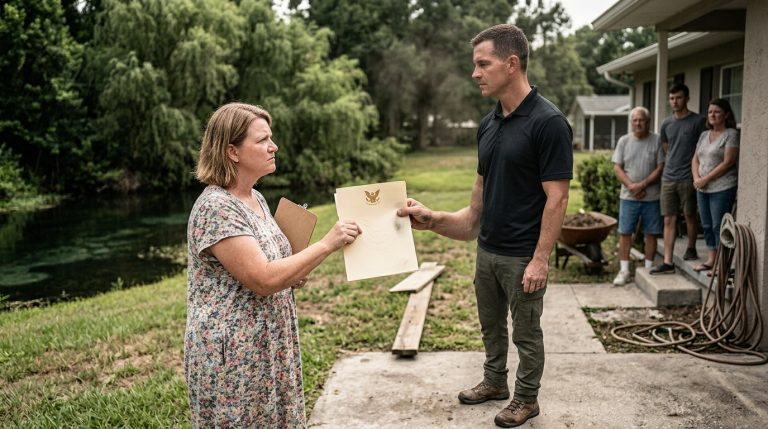
He didn’t wait for her to respond. He slapped the lawsuit—the real, legal document—onto the table, right next to her hand.
“You are being served,” he said.
The room exploded. It wasn’t the sound of a meeting anymore; it was the roar of a dam breaking. People were on their feet, the shouting coming from everywhere. I watched Karen, her face drained of its performative color, her eyes darting between the crowd and the exit. She looked small. The power she had wielded for so long—the power of paper, of rules, of the arbitrary enforcement of her own will—was useless here. It was all theory, and she was currently being buried under the weight of the reality we had built.
I didn’t gloat. I didn’t need to. I saw the look on her face—the realization that the trap had been sprung, and there was no exit. She turned and fled, her heels clicking rapidly on the floor as she pushed through the side exit, Gerald and Stan stumbling behind her like shadows detached from a fading light.
I looked at the binder. The evidence was laid bare. I looked at the crowd. The shift was absolute. We had stopped being subjects. We were finally the owners of our own lives. The air in the room, once stale and oppressive, felt suddenly, sharply clear. I walked down from the dais, the weight in my chest gone, replaced by a cold, hard sense of accomplishment. The fight wasn’t just about the kiln anymore. It was about the fact that we had chosen to face the fire, and in doing so, we had finally cleaned the ash from our own house.
CHAPTER 8: THE AFTERMATH
The morning sun bled through the workshop windows, illuminating the dust motes dancing in the air like suspended memories. The room felt different now. The gargoyles still stood guard near the mailbox, but they seemed less like weapons and more like milestones of a war that had reached its conclusion. I walked over to the kiln, the surface cold and inert under my hand. I hadn’t fired it since the night of the reveal, but I could feel the ghost of the heat it had held, the controlled fury that had been the foundation of my own restoration.
The settlement had been signed two days ago. I watched from the porch as a moving van pulled away from 124 Magnolia Lane, the house looking hollowed out, its lifeblood drained by the very scandal that had ended Karen’s reign. The developer who had bought the property was already planning the renovations, and I knew—with a dark, quiet satisfaction—that the master bathroom would be the first thing to go. The tiles, the mosaic of my labor, would be pulverized into construction debris, a fitting end for a centerpiece of such profound hypocrisy.
I turned back to the workbench, where my tools were laid out in the meticulous order I’d maintained throughout the ordeal. I picked up a small, hand-thrown vessel I’d been working on weeks before the confrontation. The rim was uneven, the clay still damp and yielding. It was a simple, unfinished thing, but it was mine.
Sarah stepped into the workshop, the soft creak of the floorboards the only sound in the room. She stood beside me, her hand coming to rest on my shoulder. She didn’t speak, but the weight of her touch was a tether, grounding me in the present.
“It’s over,” she whispered.
“Is it?” I looked at the vessel, then at the kiln. The legal papers were filed, the escrow account was empty, and the neighborhood had reclaimed its identity. The HOA was under new, common-sense leadership; the Garcia’s garden was flourishing with a vibrant, chaotic mix of vegetables and flowers; and the fear—that low-grade, constant hum of surveillance—had vanished from the air. We were no longer a collection of properties bound by the will of a petty tyrant. We were a community, scarred, perhaps, but coherent.
I thought about the five-pillar catharsis Alex had spoken of during our final debrief. The payoff was clear: I had watched the antagonist’s influence evaporate as surely as smoke from a kiln. The poetic justice wasn’t just in the legal defeat, but in the fact that her own ego had provided the weapon that dismantled her. The cool down, the denouement, was this silence—the absence of the notices, the fines, and the threats.
I picked up a ceramic file and began to smooth the edge of the vessel. My hand was steady. The tremor that had plagued me since Kandahar was barely a ripple in the clay. The discipline of the craft, the centering of the mind required to coax life from inert soil, had finally locked into place. I wasn’t just surviving; I was building.
I looked at the workbench, noticing a small, hairline fracture in the wooden surface I had damaged during the early days of the fight—when the pressure had been at its peak. I reached for a bit of wood filler, my movements precise, methodical. I worked the filler into the crack, smoothing it over until the surface was flush. It was a small, necessary repair, a symbolic act of restoration. The wound in the workbench, like the wound in my life, would always be there, but it was no longer structural. It was just a mark of what the wood had endured.
“The classes,” Sarah said, her voice bright with a new, quiet optimism. “The first one starts on Saturday. The kids are excited.”
I looked up at her, a genuine, easy smile breaking through the mask I’d worn for months. I thought about the kids, the way they looked at the kiln now—not as a hazard, but as a place where the fire lived. I was no longer a soldier protecting his perimeter; I was a teacher, a creator, a part of a larger whole.
I set the tool down and stepped back from the bench. The sunlight caught the metallic flecks in the glaze of a finished piece sitting nearby, the same cobalt and bronze tones I’d once poured into Karen’s bathroom. Here, in the context of my own space, the colors felt different—they weren’t signs of status or tools of arrogance. They were just pieces of art.
I walked to the door and pulled it wide, letting the morning air flood the workshop, washing away the last traces of the war. I didn’t look back at the gargoyles or the empty file boxes. I didn’t think about the legal motions or the board meetings. I thought about the clay. I thought about the next firing. The fire, which had once been a source of danger, was now a source of warmth, and for the first time in a very long time, I was ready to live in the glow.