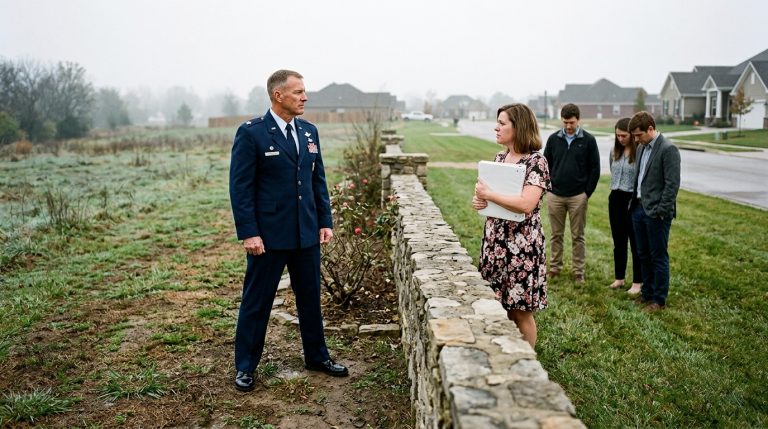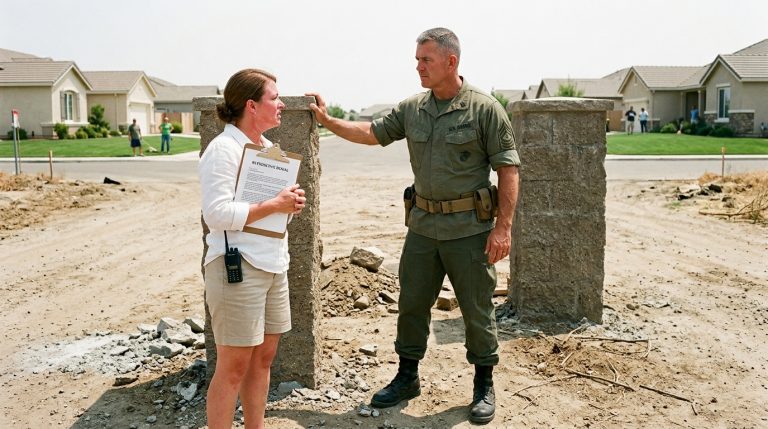
The Iron Island: How a Stubborn Patch of Wildflowers Broke the Neighborhood Dictator’s Grip on Reality
CHAPTER 1: The First Notice
The ink on the envelope was fresh, smelling faintly of cheap toner and petty spite. I didn’t open it right away. Instead, I finished oiling the rusted pivot of the garden shears, the metal hinge groaning softly before sliding home with a clean, dull snap.
Brenda was already standing by her side-yard azaleas, three houses down, pretending to clip dead blooms while her eyes stayed locked on my porch. She wore a pristine linen visor that blocked the late afternoon glare and made her look like an executioner taking attendance.
“Five hundred dollars,” I muttered to myself, reading the bold print of the fine notice without touching the paper again.
According to her neatly typed sheet, my small birthday gathering with four friends eating burgers and playing cornhole had violated municipal noise thresholds and aesthetic codes. The paper threatened an immediate property lien if the balance wasn’t settled within forty-eight hours. It was an impressive piece of fiction, crafted with enough legal-sounding jargon to scare someone who didn’t know the history of the dirt beneath their boots.
Brenda shifted two paces closer to our shared property line, her clipboard tucked firmly against her ribs like a shield. She didn’t wave. She simply watched to see if the weight of her manufactured authority would make me flinch.
I folded the letter once, slid it into my back pocket, and reached down to pull a stubborn dandelion from the base of the tomato bed. The soil was dry, biting back against my knuckles with the stubborn grit of land that had refused to change for eighty years.
Across the lawn, Brenda raised her phone, the glass catching the sun as she aimed the camera directly at my hands. She wanted a reaction, a shouted threat, or a sign of panic that she could log into her daily report.
I didn’t give her the satisfaction of a glance. I stood up slowly, brushed the loose dirt from my palms, and walked toward the kitchen screen door. The heavy wood groaned on its hinges, a sound older and deeper than any rule she had ever printed.
CHAPTER 2: The Brass Latch
The sun beat down against the back fence, turning the tall rows of unmanaged sunflowers into a thick, golden wall that blocked out the uniform beige of Brenda’s property line.
I set the mug down and picked up a clean rag, wiping a streak of dark machine oil across the heavy brass latch of the garden gate. The mechanism was stiff, choked by years of dust and morning dew, refusing to turn without a sharp, grating protest that echoed across the lawn.
“Going to need more than oil for that,” a voice called out from the edge of the shade.
Dennis stood by the tool shed, holding a rusted pair of loppers with a cautious, neutral expression. He wasn’t part of Brenda’s inner circle, but living thirty feet from the association president meant he spent half his life walking a tightrope between being a good neighbor and a target.
“It just needs leverage,” I said, applying another heavy drop to the rusted pivot.
“Brenda’s got the board meeting scheduled for tomorrow evening,” Dennis said, leaning against the doorframe without looking directly at me. “She’s already circulating copies of that fine among the other directors, claiming you’re running an illegal commercial venue out here.”
I kept my eyes on the brass pivot, working the rag into the deep grooves of the screw heads.
“She’s welcome to try,” I replied, my voice flat. “The fence line hasn’t moved an inch in forty years.”
“She’s not just talking about the fence,” Dennis lowered his voice, glancing nervously toward the back corner where Brenda’s sprinkler system clicked rhythmically against the turf. “She pulled the maintenance logs from five years back. She’s claiming your drainage runs onto association property.”
I stopped wiping the latch, the metal cold and slick under my thumb.
The drainage claim was entirely fabricated, a physical impossibility given the natural slope of the old farm grade, but it gave the board an excuse to vote on an emergency assessment without needing a public hearing.
“Let her pull whatever she wants,” I said, standing up and dropping the greasy rag onto the workbench. “Paper doesn’t change where the water flows.”
Dennis shook his head slowly, the loppers clinking against his belt as he turned back toward his yard without offering any reassurance.
I picked up the cold ceramic mug, walking down the steps to check the base of the tomato bed where the soil remained stubbornly dry, untouched by their rules.
CHAPTER 3: The Board Room
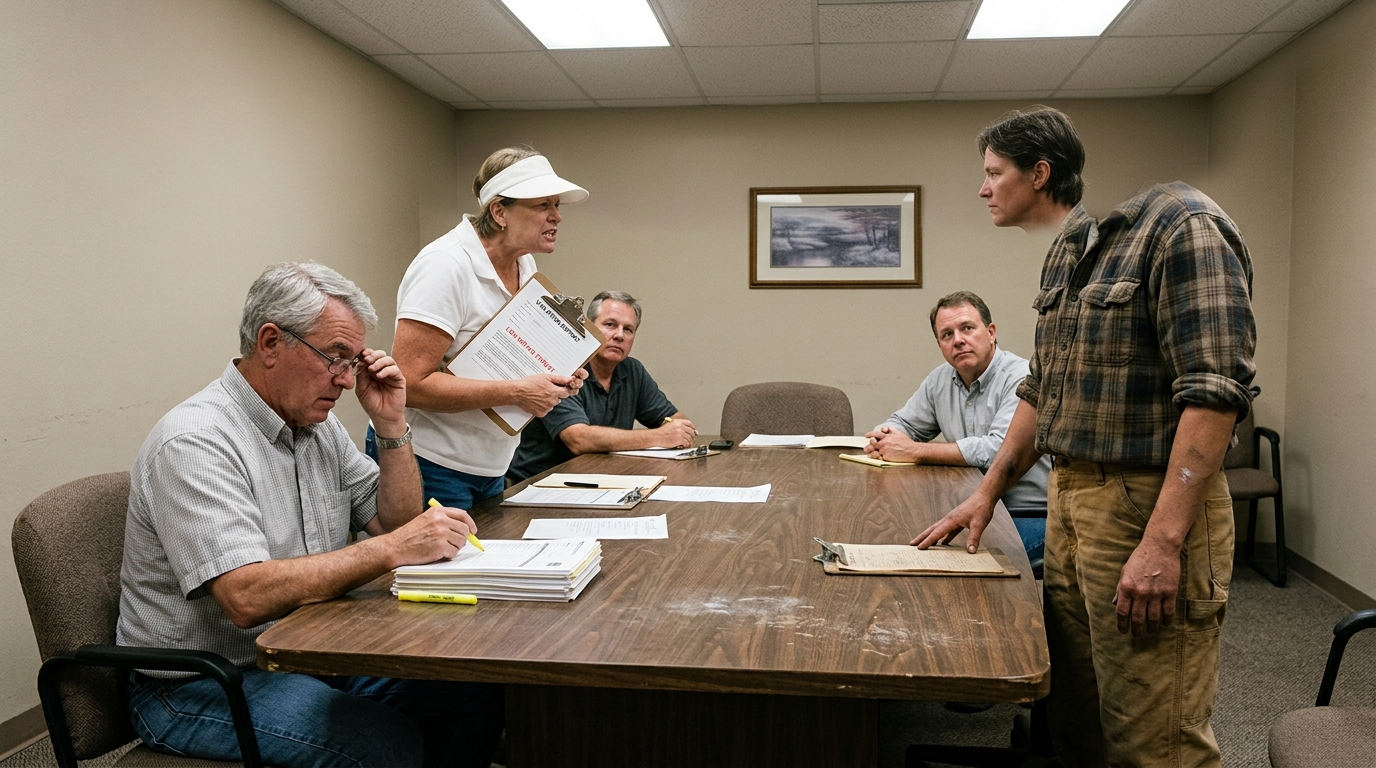
The room smelled of stale coffee and industrial carpet cleaner. Three members of the community board sat around a faux-wood conference table, looking up with identical expressions of mild irritation as I pulled out a chair and sat down uninvited.
“This is a closed administrative session,” Brenda’s voice cut sharp from the head of the table.
She stood beside a projector screen, her clipboard clutched to her chest like a weapon, her visor still casting a harsh shadow over her eyes.
“It’s a public association meeting under state guidelines,” I said, placing the worn clipboard flat on the wood. “And since we are discussing property boundaries and monetary penalties affecting the perimeter, I have a right to be at the table.”
Brenda’s jaw tightened, a faint twitch flexing the skin near her mouth.
“You aren’t even a member of this association,” she snapped, leaning forward over her papers. “Your property is an anomaly, a zoning oversight that the board is currently reviewing for legal annexation.”
“Is that what you told the other directors?” I asked, looking past her toward the treasurer, a gray-haired man named Arthur who was squinting down at a thick stack of assessment forms.
Arthur adjusted his glasses, looking uncomfortable under the sudden silence.
“Brenda brought us the violation report regarding the noise levels and the boundary runoff,” Arthur said cautiously, his fingers tapping against the edge of a yellow highlighter. “The board has authority to levy fines for disturbances that impact neighborhood property values.”
“Without a recorded vote or a verified property survey?” I asked.
I didn’t reach into my pocket for the county document I wasn’t allowed to use; instead, I tapped my finger against the blank assessment form on the desk, forcing them to look at the absence of legal backing.
Brenda slammed her palm against the table, the sharp crack making Arthur flinch.
“He’s stalling,” she demanded, her voice rising an octave as she glared at the other directors. “Approve the lien notice now or our entire enforcement schedule becomes a joke.”
CHAPTER 4: The Ledger Crack
The financial summaries for the past three fiscal years didn’t add up.
I traced a dry finger down the column of miscellaneous violation fees, noting how the collected fines from unmanaged lawn infractions consistently matched the exact deficit in the neighborhood landscaping budget.
“You shouldn’t be looking at those,” Arthur murmured, his eyes darting toward Brenda at the far end of the hall where she was arguing on her phone near the water cooler.
“Someone had to,” I said, pointing to an unexplained variance in the late-summer maintenance tallies. “Look at this entry from July. Three thousand dollars logged under emergency legal review, but no corresponding invoice from the town attorney.”
Arthur swallowed hard, his skin paling under the fluorescent light as he leaned closer to the paper.
“Brenda handles all the direct filings with the accounting firm,” he whispered, his voice dropping an octave as he realized the missing numbers weren’t just a clerical error. “She told us the county court fees ate up our reserve fund last quarter.”
Across the room, Brenda slammed the phone down onto its cradle, the plastic snap ringing sharply against the drywall.
She turned around, her face flushed with sudden panic as she caught us examining the open assessment records.
“Put those down,” she demanded, striding back toward the table with her hands clenched into tight fists at her sides. “Those documents contain private homeowner data protected by association bylaws.”
“They contain public accounting records,” I replied, not bothering to look up as I turned another page to reveal the altered ledger entries. “And right here, it looks like a lot of people’s hard-earned money has been disappearing into a very specific administrative black hole.”
CHAPTER 5: The Collapse of Power
“You are manufacturing lies to disrupt a legally constituted assembly,” Brenda’s voice shook, her fingers digging white into the grain of the wood as Arthur slid the open ledger away from her reach.
“The numbers don’t lie, Brenda,” Arthur said, his voice dropping all trace of its former hesitation. “Three thousand here, two thousand there. None of these emergency expenditures were ever voted on by the director committee.”
Brenda straightened up abruptly, her face twisting into an expression of furious disbelief as she scanned the silent faces of the other board members.
“I kept this community from turning into a slum!” she shouted, her composure cracking completely under the weight of the exposed accounts. “If I didn’t enforce the standards, property values would have dropped twenty percent by next fiscal year!”
“You enforced your own rules using other people’s money,” I said, remaining seated while the rest of the room shifted away from her.
Brenda spun around, her eyes locking onto mine with desperate malice.
“You think you’ve won something, don’t you?” she spat, her chest heaving as she pointed a trembling finger at my chest. “Your little island won’t last another month. The county is already rewriting the municipal zoning map, and your precious historic loophole is the first thing on the chopping block.”
“The map was drawn in nineteen-forty-two,” I replied, standing up slowly and letting the heavy wooden chair slide back against the floor. “And paper written yesterday doesn’t erase eighty years of concrete reality.”
Arthur picked up the gavel, turning it over once in his hand before setting it firmly in the center of the desk.
“Effective immediately,” Arthur announced, looking directly at Brenda, “your position as president is suspended pending a full independent financial audit.”
Brenda snatched her clipboard off the table, her visor slipping sideways as she stormed toward the exit, slamming the heavy glass door so hard the entire frame shuddered.
CHAPTER 6: The Quiet Porch
The music from the deck speakers drifted out over the grass without restraint, carrying the low murmur of conversation and the steady clink of ice in a glass.
Thirty people moved across the lawn between the old fruit trees, completely ignoring the invisible property lines that used to dictate every shade of green in the subdivision.
Brenda’s house three doors down sat in total darkness, the pristine windows reflecting empty curtains and a driveway devoid of a clipboard-toting warden.
I set my ceramic mug down on the weathered planks of the railing, the wood smooth beneath my fingers after years of holding fast against every manufactured rule thrown its way.
Dennis walked up the porch steps carrying a fresh plate of burgers, his expression relaxed as he set the ceramic platter down next to the chair.
“Auditor’s office finished reviewing the receipts this morning,” Dennis said, leaning against the post and looking out over the crowded yard. “Looks like Brenda’s little administrative system is going to take a long time to untangle.”
“Paper always catches up when you stop hiding it,” I said, picking up a pair of metal tongs and turning a burger on the grill.
The heat from the coals rose against my face, smelling of hardwood smoke and open air, completely unbothered by municipal ordinances or neighborly complaints.
No one was watching the fence line anymore.
The sunflowers stood tall and untrimmed along the perimeter, swaying gently in the evening wind as another laugh rose from the crowd below.
I leaned back against the support beam, took a slow sip from my mug, and watched the sun finish sinking below the horizon, leaving behind nothing but the quiet weight of land that finally belonged only to itself.