The Infinite Gambit: A Billionaire, A Maid’s Daughter, and the Silent Architecture of Redemption
CHAPTER 1: THE IVORY SHADOW
The scent of the Montgomery library was not of wisdom, but of preservation. It smelled of ozone, old leather, and the heavy, metallic tang of money that had been sitting stagnant for too long. Abigail stood on the plush rug, her fingers itching to touch the spine of a first edition she knew she wasn’t allowed to disturb. Her mother, Susan, was a ghost in the periphery, her hands shaking as she wiped the mahogany side table for the third time.
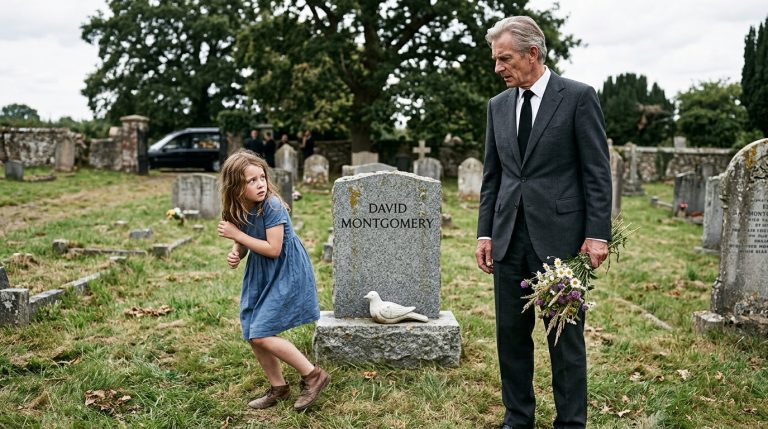
Preston Montgomery paced the marble floor, his shoes clicking with the rhythm of a ticking clock. He stopped abruptly. The air in the room seemed to thin, sucked away by his sudden, localized gravity. He looked at Susan, then down at the small girl with the bright, shining hair.
“You play, child?” His voice was a flat, surgical instrument.
Abigail felt the familiar tug of her grandfather’s voice in her mind, a low, gravelly rumble warning her about the difference between a master and a bully. She didn’t look at the expensive set on the pedestal. She looked at Preston’s hands. They were clenched, the knuckles white, the skin stretched tight over bone. He was not looking at her. He was looking through her, at a scoreboard only he could see.
“My mother plays through me, sir,” Abigail said. Her voice didn’t tremble. It felt like standing on a dock, watching the tide pull the water away from the shore, revealing the jagged rocks underneath.
Preston laughed, a sharp sound that shattered the room’s stillness. “A gambler, then. Fine. One hundred million. Your future against your mother’s history.”
He wasn’t joking. Abigail saw the slight twitch in his left eyelid—a sign of a man who had already planned how to delete them from his life before the first piece was even touched. He was setting a trap, not a game. He wanted the humiliation to be complete.
She walked to the pedestal. The ivory pieces were cold, smooth, and utterly devoid of history. She reached out, her small hand contrasting sharply against the dark marble. She knew, with a sudden, sinking clarity, that if she walked away now, her mother would remain a shadow in this house forever. If she stayed, she was stepping into a furnace.
She placed her hand on the pawn. It felt light, insignificant—the perfect weapon.
“I accept,” she said.
The room groaned as the heavy doors clicked shut, sealing them in. The library vanished. There was only the board, the ticking clock, and the man across from her whose soul was currently as brittle as the dry rot in the bookshelves.
The first move was hers. She pushed the pawn forward. The sound of the piece hitting the board was a singular, sharp note that echoed into the ceiling, announcing that the war for the Montgomery legacy had officially begun.
CHAPTER 2: THE SYMMETRY OF LOSS
The library had become an airless box. The silence that followed the pawn’s movement wasn’t merely the absence of noise; it was a physical weight, pressing against Abigail’s chest, demanding an answer. Preston Montgomery didn’t move. He stood on the opposite side of the jade and marble board, his hand still hanging in mid-air, frozen like the claw of a bird of prey that had just missed its mark.
Abigail didn’t look at his face. She kept her eyes on the board, on the exact square where her pawn now rested. She noticed, with a sudden, sharp clarity that she couldn’t explain, that the knight sitting on Preston’s side of the board was slightly misaligned. It was rotated three degrees to the left, a tiny, almost invisible deviation in a room defined by absolute order. It was a fragment of chaos in his perfect, polished world.
“Your turn, sir,” she said. Her voice was thin, but it didn’t shake.
Preston blinked. The color returned to his cheeks in a flush of irritation that sat poorly on his pale, aristocratic features. He didn’t just move a piece; he lunged for his knight, his fingers thick and clumsy as they grasped the ivory figure. He slammed it down on the board with a force that made the other pieces rattle in their sockets.
He was angry. That was the first lesson her grandfather had taught her: a player who played with their temper was a player who played with their own defeat.
Abigail felt the familiar, cool detachment wash over her. She saw the board not as a collection of wood and stone, but as a series of tension lines. Preston was lashing out, throwing his heavy pieces into the center to disrupt her, to intimidate her. He was trying to turn the game into a brawl. She, however, had the patience of a girl who had spent her winter afternoons in a room without heat, watching the frost form patterns on the windowpane.
She moved her bishop, a quiet, sliding motion that felt almost like a whisper.
Preston’s sneer deepened. He began to talk, a low, constant stream of psychological poison meant to erode her focus. He spoke of the world outside, of the “real” stakes—the electricity that wouldn’t get paid, the eviction notice that was already gathering dust in her mother’s mailbox, the simple, grinding reality of being poor in a city that only measured worth in zeroes. He was trying to make the board disappear, trying to force her to confront the fear that was surely gnawing at her insides.
But Abigail wasn’t listening to the words. She was listening to the rhythm of his breathing. He was breathing too fast. He was expending energy on anger that he should have been conserving for strategy. He thought he was the hunter, but he was the one doing all the running.
She watched a dust mote drift through a shaft of sunlight, landing gently on the edge of the jade board. It was a small, fragile thing, completely insignificant in the grand scheme of this mansion, yet it occupied a space that could not be taken away from it. That was what he didn’t understand. He thought that by threatening her mother, he could strip away her agency. He didn’t realize that for a girl who had been raised on stories of sacrifice and survival, the threat was just background noise.
“You’re quiet,” Preston observed, his voice dripping with a false, oily warmth. “Do you realize the magnitude of what you’ve walked into? I can buy this neighborhood. I can buy the very ground you stand on. This board? It’s worth more than your entire life, Abigail.”
“It’s just stone,” she replied softly, finally meeting his gaze.
For a second, their eyes locked. She saw the flicker of something behind his icy exterior—a deep, well-hidden reservoir of fear. He wasn’t just defending his title; he was defending his identity. If he lost to her, what did that make him? If a nine-year-old could see through his walls, how flimsy were those walls, really?
He moved his queen, a desperate, aggressive thrust that left his king exposed. It was a rookie mistake, the kind of move someone made when they were more interested in the kill than the preservation of their own position.
Abigail didn’t hesitate. She didn’t feel triumph, only a cold, clinical understanding that the game was already tilted in her favor. She had studied his rhythm. He played like a storm—lots of sound, lots of fury, but ultimately predictable, eventually fading into nothingness. She was the mountain. She simply had to stand still, and the storm would eventually break itself against her.
She shifted her knight. A quiet, defensive maneuver.
Preston laughed, but it didn’t reach his eyes. “You’re stalling, child. You’re just delaying the inevitable.”
“I’m not stalling,” Abigail whispered, her gaze drifting back to that slightly misaligned knight on his side of the board. She wondered, in that quiet, intense moment, if he even realized he was falling apart, or if he thought he was winning right up until the very end.
The silence returned, tighter now, more suffocating. The shadows in the library lengthened, the sun dipping lower behind the arched windows, turning the room into a theater of gold and charcoal. The clock on the mantelpiece ticked, each second feeling like a hammer blow against the heavy, oppressive stillness. Abigail reached out for her pawn, but she didn’t move it yet. She let her hand hover, feeling the cool, smooth texture of the material, waiting for him to make the mistake he was already spiraling toward.
CHAPTER 3: THE MIRROR MAZE
The sun had finally surrendered its hold on the library, leaving the room in a state of suspended twilight. The long, arched windows, once filled with golden light, were now frames of deep indigo, casting long, bruised shadows that crawled across the marble floor toward the pedestal. The temperature in the room had plummeted; it was a damp, biting cold that seemed to seep out of the stone itself.
Preston Montgomery remained motionless, his eyes fixed on the board. The arrogance that had defined his posture only minutes ago had sharpened into something more dangerous—a quiet, predatory stillness. He watched Abigail’s hovering hand with the intensity of a vulture. He wanted her to push. He wanted her to commit to the move that would trigger the cascade of consequences he had so carefully laid out.
Abigail withdrew her hand slowly, not because she was afraid of his trap, but because she felt the shift in the room. The air was heavy with the smell of old paper and the metallic tang of the cooling radiator. She looked away from the board and noticed that the light reflecting off the ivory pieces was changing. The white pieces, which had seemed brilliant and pure earlier, now looked jaundiced and brittle in the failing light. It was as if the library itself was stripping away the mask of grandeur to show the decay underneath.
“The light is fading,” Abigail said, her voice small but clear in the cavernous space.
“The game doesn’t care about the light,” Preston replied, his voice a low, raspy friction. “The board remains, regardless of what you can see.”
He was testing her, looking for a break in her concentration. He wanted her to acknowledge the gloom, to admit that she was intimidated by the encroaching dark. She realized then that this entire match was a theater of attrition. He didn’t need to checkmate her with logic; he just needed her to get tired, to get hungry, to get frightened enough to make a move he could exploit.
She turned back to the board. Her pawn remained in its position. She took a breath, letting the cold air fill her lungs, grounding herself in the physical sensations—the hardness of the chair beneath her, the slight prickle of the wool in her sweater. She looked at the knight she had noticed earlier—the misaligned piece. It seemed to have moved again, or perhaps it was just the trick of the shifting light, but it leaned now, a subtle, desperate tilt toward the center of the board.
She didn’t move the pawn. Instead, she reached out and adjusted the position of her own rook, a quiet, non-committal slide that kept her defenses intact.
Preston’s jaw tightened. “A staller,” he muttered, mostly to himself. “Your grandfather taught you to hide behind wood and stone. He never had the stomach for the win.”
“He taught me that you don’t chase the win,” Abigail corrected, her tone devoid of offense, just a statement of fact. “You wait for the board to tell you where the win is.”
Preston’s hand moved quickly, capturing a bishop of hers that she had left intentionally vulnerable. It was a trade, a sacrifice she had calculated ten minutes ago. She watched him take the piece, his eyes lighting up with a brief, frantic flicker of victory. He thought he was gaining an advantage, but all he was doing was thinning his own ranks, clearing the board of the very obstacles he needed to maintain control.
He was beginning to sweat. A fine, glistening sheen had appeared on his forehead. He wiped it away with a silk handkerchief, his movements jerky, lacking their earlier practiced elegance.
Abigail felt a pang of something akin to pity. He wasn’t a monster, at least not in the way she had imagined. He was just a man who had never been told “no,” a man who believed that the world was an extension of his own will. But the board didn’t care about his will. It followed the rules of geometry, of cause and effect, of physics. And right now, the physics of this match were turning against him.
She began to notice the small discrepancies in his side of the library. There was a stack of papers on the nearby desk, official-looking documents with bold, black text, sitting just within her periphery. She couldn’t read the words, but she saw the logo—a stylized eagle, the same symbol she had seen on the letterhead in her mother’s sparse file cabinet back home, the documents relating to the “restitution” of assets her mother had been too frightened to touch.
Was this the trap? Was he letting her play this game while the legal papers sat there, waiting to be signed, waiting to turn this victory into a hollow shell?
She didn’t look at the papers again. She couldn’t afford to. She focused on the board, on the way the shadows had completely consumed the far corner of the table. Preston was leaning in now, his face hovering over the pieces, his eyes wide and unblinking. He was fully immersed in the trap, so convinced of his superiority that he didn’t even notice his own physical collapse.
She realized then that her grandfather’s philosophy of “letting the board speak” was about more than just strategy. It was about allowing the opponent to reveal their true nature. Preston Montgomery was currently stripping himself bare, layer by layer, driven by a desperation he couldn’t hide. He was no longer playing a game of chess; he was trying to exorcise a ghost, and he was failing.
She reached out and moved her pawn again—not a strike, but a quiet, methodical step forward. A quiet, patient assertion of presence.
Preston didn’t respond immediately. He just stared at the board, his breath hitching in the silence, while outside, the last of the sun died, plunging the library into a deep, velvety, and unforgiving night.
CHAPTER 4: THE GAMBIT
The library felt smaller now, the shadows having claimed the corners where the first-edition spines once glittered. Preston’s breathing had become shallow, a rhythmic hiss that marked the beat of the room. He reached for a glass of water on a nearby side table, his hand trembling just enough to make the crystal clink against the marble. He didn’t drink. He just held the glass, the liquid within shivering in time with his erratic pulse.
“You’re making a mistake,” Preston murmured, his voice sounding thin, stripped of the booming authority he usually projected. “A child shouldn’t play with things she doesn’t understand.”
Abigail didn’t look up from the board. She was tracing the grain of the wooden table with her fingertip. The texture was rough, worn smooth by generations of hands—nothing like the cold, sterile luxury of the jade board Preston insisted on. The scent of the library’s wax polish suddenly vanished, replaced in her memory by the sharp, earthy smell of her grandfather’s workshop: cedar shavings, linseed oil, and the persistent, grounding odor of old, honest tools.
She felt a phantom sensation—the weight of her grandfather’s calloused hand on her shoulder, his low voice telling her that every piece on the board had a soul. If you respected the piece, it would fight for you. If you treated it as a tool for vanity, it would eventually betray you.
“I understand more than you think,” Abigail said, her voice steady. She took her queen, the heavy piece cool and substantial in her hand, and placed it on a square that seemed defenseless. It was a blatant, inviting offer—the “decoy” that Preston had been waiting for.
She saw his eyes widen. The trap. He thought he had lured her into the exact position he wanted.
Preston’s face, pale and drawn in the dim light, finally cracked into a smile—a sharp, hungry thing that looked more like a grimace. He pounced. He took her queen with his rook, his fingers moving with a sudden, uncharacteristic speed. He was so focused on the material gain that he didn’t notice the way the light caught his own pieces, revealing their isolation. He had gained the center, but he had lost the architecture of his defense.
“There,” he breathed, leaning back, the glass of water finally forgotten on the edge of the table. “The game is decided. You’ve lost your most powerful asset.”
“Have I?” Abigail asked.
She didn’t show panic. She didn’t mourn the loss of the queen. She simply reached out and adjusted a minor piece—a knight—that she had left tucked away in the shadows of the board’s edge. She had been moving this knight toward the back rank for the last twenty minutes, a slow, invisible trek that Preston had completely ignored, blinded by the lure of the queen.
The realization hit him like a physical blow. The color drained from his face, leaving him looking like a statue of himself. He shifted his gaze from the spot where the queen had been to the trajectory of the knight. He saw the path. He saw the final, silent convergence of her pieces that he had enabled by his own greed.
“That’s not…” he began, then stopped. He reached for the legal documents on the desk, his hands fumbling, his movements uncoordinated. “This doesn’t change the contract. The bet was a legal arrangement. You forfeit, you lose the claim.”
He was grasping at straws, trying to pull the legal world into a room that was governed by the laws of strategy. He picked up one of the thick folders, intending to wave it as a shield, but his fingers slipped. The folder hit the floor with a heavy, final thud, spilling papers across the marble.
Abigail didn’t look at the papers. She knew what they were. They were the mechanisms of her own destruction—the tax liens, the predatory fine-print, the clauses that would turn a $100 million “gift” into a lifelong prison sentence of litigation and debt. She had seen the outline of them when he first invited them into the library.
“I didn’t come here for the money, Mr. Montgomery,” she said, her voice soft but carrying the weight of a decree. “I came here because you forgot how the game is played.”
He didn’t answer. He couldn’t. He was staring at the scattered papers on the floor, the documents he had spent the morning crafting to ruin her, now looking like nothing more than confetti in the dark. He looked old. The power, the aura of the billionaire, the invincibility—it all seemed to evaporate, leaving behind a man who was, in the end, quite small, quite frightened, and entirely alone in his own library.
Abigail stood up. The game wasn’t over, not yet, but the momentum had shifted permanently. She didn’t have to win the rest of the match to know the outcome. She had already dismantled the foundation of his confidence. She walked toward the heavy oak doors, her steps silent on the marble, leaving him there in the cooling shadows, staring at the empty board and the ruins of his plans, while the grandfather clock in the corner began to chime the hour, a low, solemn sound that signaled the end of his long, unchallenged reign.
CHAPTER 5: THE UNMASKING
The silence in the library was not empty; it was pressurized. Abigail stood over the scattered papers, the parchment-thin pages looking like bleached bones strewn across the dark, polished marble. She felt a shiver trace its way up her spine. The library—this sanctuary of wealth—felt as though it were constricting around her. She looked toward the door, then back at the desk, and for a fleeting, disorienting second, the geometry of the room seemed skewed. The shelves didn’t look parallel; they seemed to lean toward the center, as if the entire structure were a giant, gilded cage designed to trap the unwary.
She knew this was the stress. The “phantom perception” her grandfather had warned her about. When the mind is under extreme load, it starts to look for patterns in the geometry, trying to find a way out that doesn’t exist. She closed her eyes, forcing herself to breathe in the scent of aged leather and wax, grounding her consciousness in the physical reality of the room.
Preston was still sitting in his chair, a slumped, diminished figure. He hadn’t moved since she stood up. The silence was his armor now, but it was cracking.
Abigail knelt, her knees hitting the cold stone with a soft thud. She picked up one of the fallen documents. It wasn’t just a contract. It was a labyrinth of legal terminology, designed to entangle her mother in a decade-long web of tax obligations. If her mother signed this, she wouldn’t just be an employee; she would be a permanent debtor to the Montgomery estate. It was a masterstroke of predatory bureaucracy.
She looked at the signature line. It was blank, waiting.
“You really intended to ruin her,” Abigail said, her voice quiet. It wasn’t a question; it was a revelation.
Preston didn’t look at her. He stared at his own hands, which were now resting limp on his knees. “I was told she was just a housekeeper,” he rasped, his voice sounding like dry leaves skittering across pavement. “I was told she was disposable. That’s how this world works, girl. You are either the architect or you are the infrastructure. If you don’t build the foundation, you get crushed by the walls.”
“My grandfather built more than you ever will,” Abigail countered. She gathered the papers, her fingers finding the edges of the decoy trap. She noticed something then, a small, handwritten marginalia on the back of the final page—a date, fifty years old, and a set of coordinates written in ink that had faded to a sickly yellow.
It was a lead. A physical clue that wasn’t supposed to be there.
Preston’s head snapped up. His eyes were wide, the pupils dilated with a sudden, sharp fear that he had revealed too much. “Give that back,” he demanded, his voice suddenly surging with a flicker of his former, cold authority.
“Why?” Abigail asked. She kept the page hidden behind the stack of contracts. “Is this the part of the game you didn’t explain?”
She stood, the papers clutched in her hand like a weapon. The air in the room grew colder. She felt a sudden, inexplicable sense of vertigo—the library felt as if it were tilting, the heavy shelves groaning under the weight of thousands of books. She forced her focus to remain on the paper, on the tactile reality of the ink. This was the physical anchor. She had to remain present.
“You aren’t the hunter, Preston,” she said, her voice dropping to a whisper. “You’re the guard. You’ve been guarding this secret for half a century, terrified that someone would come to collect what’s owed.”
Preston lurched forward, his face a mask of desperation. He didn’t reach for her; he reached for the paper, his hands trembling. “You don’t understand the repercussions! If you open that door, the entire estate, the entire history of what this family stands for… it burns. You’ll be consumed by the same fire that destroyed your grandfather.”
“Then let it burn,” Abigail said.
She turned and walked toward the exit, the weight of the hidden paper against her palm feeling like a live coal. Behind her, she heard the sound of Preston falling back into his chair—the sound of a man who had finally realized that his castle was made of nothing but sand and history. She didn’t look back. She pushed the heavy library doors open, the hinges groaning in protest, and stepped out into the hallway, leaving the billionaire in his crumbling, shadow-filled kingdom.
She wasn’t running anymore. She was walking toward the light, following a map she had never expected to find, realizing that the game had shifted from a battle for money into something far deeper, far more ancient, and far more dangerous.
CHAPTER 6: THE SILENT PIVOT
The corridor stretched out before her like a throat—long, dark, and swallowing the light. Abigail didn’t look back at the library doors. She could still feel the phantom heat of Preston’s desperation radiating through the wood, a cold, suffocating reminder that she had just crossed a threshold from which there was no retreat.
She walked with a measured, deliberate gait, counting the steps. Her eyes darted to the walls, to the ornate, gilded frames that housed the portraits of the Montgomery lineage. They stared down at her with a uniform, aristocratic disdain. She felt like an intruder in their history, a glitch in the perfect continuity of their wealth.
Her hand tightened around the paper. Taped to the underside, she had felt the hard, irregular bump of a physical object—a key, small and cold, biting into her palm. It was the “something else” Preston had feared. The coordinates written in the faded ink pointed to a location she recognized from her grandfather’s old, hand-drawn maps of the valley. A place he had called “The Forge.”
The estate’s security lighting flickered—a harsh, clinical white that washed out the colors of the Persian runners and turned the shadows into deep, ink-stained pools. She realized then that the house was changing. It wasn’t just her perception; the sensors were tracking her movement. Every few steps, a motion light clicked to life, a sudden, blinding snap of artificial day that forced her to squint. She was no longer a guest, or a staff member. She was a moving target.
She reached the grand foyer. The air here was cooler, smelling of floor wax and the faint, underlying scent of fresh rain blowing in from the open transom above the door. She paused, listening. There was no sound of pursuit, but she could hear the house itself—the deep, rhythmic hum of the HVAC, the distant, muffled click of security relays cycling.
She needed to get out, but the front door was guarded by a deadbolt that would require a code she didn’t have. She looked at the key in her palm. If it was for The Forge, maybe it was also for the secondary access points Preston’s father used to monitor the estate’s periphery.
She ducked behind a massive marble pillar as the heavy thud of footsteps echoed from the east wing—Henderson, the security head. She remembered the name from her grandfather’s notes. Henderson was a man who didn’t take orders from anyone but the bottom line, and right now, his bottom line was keeping the Montgomery legacy intact.
She pressed herself against the cold stone, holding her breath until her lungs burned. The security chief passed within ten feet of her, his flashlight cutting a sharp, yellow arc through the darkness. He wasn’t looking for her; he was checking the perimeter of the library.
“The old man is off his rocker,” Henderson muttered to himself, his voice a low, gravelly rasp. “Giving a kid the keys to the kingdom. If he doesn’t handle this tonight, I will.”
The threat was clear. They were not waiting for the legal dust to settle; they were going to settle it physically, on their own terms.
Abigail felt a flash of cold clarity. She wasn’t playing against Preston anymore; she was playing against the system he had built to insulate himself from reality. She turned and headed not for the front door, but for the servant’s entrance near the kitchen—a path she had used for three years, a path that was etched into her memory.
She moved through the shadows, her footsteps soft on the hardwood. She found the small, unassuming door behind the pantry. It was locked, as expected. She pulled the key from her palm, its teeth sharp against her skin. She inserted it into the keyhole. It fit with a smooth, oiled precision that suggested it hadn’t been turned in decades.
The mechanism clicked—a heavy, satisfying sound that echoed in the small, cramped space. She pushed the door open, letting in a gust of cool, damp night air. She stepped out onto the gravel driveway, the transition so abrupt it felt like waking from a dream.
She didn’t run. Running attracted attention. She walked, keeping to the edge of the gravel where the shadows were longest, her eyes fixed on the distant, dark silhouette of the valley. She had the key, she had the coordinates, and she had the truth—a truth that was currently burning a hole in her pocket, a truth that Preston Montgomery would do anything to keep buried in the dark.
The game had shifted gears. She was no longer a pawn on the board; she was the wind, moving toward the Forge, ready to see what was buried in the ashes of the empire.
CHAPTER 7: THE GREAT LEVELING
The path to The Forge was a thin ribbon of mud and shale, winding through the valley like a scar. With every step, Abigail’s boots sank deeper into the saturated ground, the sound of her own labored breathing lost to the relentless drumming of the storm. The sky above was a bruise-colored void, occasionally illuminated by flashes of lightning that rendered the landscape in stark, monochromatic relief.
She reached the perimeter fence—a chain-link barrier that had long since surrendered to the oxidation of the valley air. The key in her pocket felt like an anchor. She found the gate, a sagging piece of metal that groaned as she pulled it open. Beyond it sat The Forge: a sprawling, skeletal facility of corrugated steel and broken glass. It wasn’t the vibrant factory her grandfather’s photos had depicted; it was a tomb, a hollowed-out carcass of industry that looked as if it were sinking back into the earth.
She didn’t hesitate. She knew that behind her, the estate’s security would be mobilizing. Henderson wouldn’t be far behind. She pushed into the interior of the main warehouse, the air suddenly thick with the scent of damp rust and ancient, oily machine grease.
Her flashlight beam danced over the debris: rusted pulleys, coils of wire that looked like coiled snakes, and the skeletal remains of precision drill presses that had been silent for half a century. This was the place where the Montgomery Empire had been baptized in greed.
She walked toward the center of the floor, where a heavy, reinforced concrete block sat partially covered by a rotting tarpaulin. She pulled the plastic away, the material stiff and cracking under her touch. Beneath it was a heavy iron trapdoor, its hinges seized by decades of exposure.
She inserted the key. It turned with a shriek of protested metal, the lock clicking open. She heaved the door upward, her muscles straining against the weight of the iron.
Below, a small, lit chamber waited. It wasn’t abandoned. It was a vault.
Abigail descended the narrow ladder, the air growing warm and dry, smelling of ozone and stored paper. She reached the bottom and stopped dead. The walls were lined with metal filing cabinets, all pristine, all organized. And in the center of the room sat a desk—a desk that looked exactly like the one in Preston’s library, but smaller, more utilitarian.
On the desk lay an ledger, open to a page dated fifty years ago.
She approached it, her heart thudding against her ribs. The handwriting was unmistakable—the precise, angular script of Preston’s father. But it wasn’t a record of profits. It was a confession. A meticulously detailed accounting of every asset stripped from Miller and Sons, every life-ruining contract, and, most importantly, the systematic redirection of funds meant for Frank Miller’s family into a private trust—a trust that had been growing, compounded by interest, for fifty years.
It wasn’t a debt of money; it was a debt of existence. Preston had known. He had been playing the game not to win, but to keep the vault closed.
A shadow fell over the doorway.
Abigail spun around. Preston Montgomery stood at the top of the ladder, his face pale, his expensive coat soaked through, his eyes reflecting the harsh, clinical light of the vault. He didn’t look like an antagonist anymore. He looked like a man who had finally run out of moves.
“You found it,” he said, his voice barely audible over the thundering rain above. He started down the ladder, his movements slow, deliberate. “You found the truth that makes everything I’ve done for the last twenty years a lie.”
He stepped off the ladder, his eyes scanning the room, landing on the open ledger. “You can take it, Abigail. You can take the keys, the documents, the whole damn thing. You can ruin me. You can tear the Montgomery name down to the studs.”
He walked over to the desk, his hand resting on the edge, his knuckles bruised and white. “But if you do, the trust dissolves. The legal mechanisms my father set up—they require a Montgomery to authorize the transfer. If I go down, the money stays locked in a labyrinth of corporate shells that will take you a hundred years to unravel.”
He wasn’t threatening her. He was stating a fact of the game he had been trapped in. He was a prisoner of his own inheritance.
Abigail looked at the ledger, then at the man who had been the architect of her mother’s struggle. She felt a surge of rage, but it was countered by the Kintsugi logic her grandfather had instilled in her: you didn’t fix a broken object by throwing away the pieces. You used them to build something that acknowledged the break.
“Then we don’t destroy it,” Abigail said, her voice steady. “We change the board.”
Preston looked at her, truly looked at her, for the first time. He saw the fire in her eyes, the same fire that had driven Frank Miller to fight in the frozen hills of a war he hadn’t asked for. He saw, finally, that he wasn’t facing a child. He was facing the resolution of a conflict that had been waiting for its ending for half a century.
The sound of a vehicle engine roaring to life outside broke the tension. Henderson had arrived. The security chief was coming to finish the game.
CHAPTER 8: THE NEW BOARD
The vault door hadn’t fully latched, and through the gap, Henderson’s silhouette appeared—a hulking, rain-slicked shape that blocked out the dim light of the warehouse. He held a heavy-duty flashlight in one hand and a suppressed pistol in the other. He didn’t look at Preston; he looked directly at the ledger on the desk, his eyes narrowing as he recognized the significance of what lay exposed.
“You really brought her here, boss?” Henderson’s voice was a low, dangerous rumble. “You really think this fixes anything? You’re just handing them the rope to hang us all with.”
Preston stood in front of the desk, shielding the ledger. “It’s over, Henderson. Put it away. We aren’t burying this anymore.”
“I’m not burying anything,” Henderson said, his gaze shifting to Abigail. “I’m just cleaning up. You’re a child, kid. You should have stayed in the kitchen.”
Henderson stepped forward, the barrel of his pistol steady. Abigail felt the cold, familiar logic of the game settle over her. She looked at the desk, at the heavy iron inkwell her grandfather had used decades ago, and then at the loose cable running from a junction box near the floor. It was a simple, grounded reality. Henderson was relying on the gun, on the singular, crude power of the threat. He had forgotten that a room like this—an industrial forge—was built on the physics of leverage.
“The money doesn’t matter, Henderson,” Abigail said, her voice cutting through the hum of the rain. “The bank has already received the digital keys from the trust. Even if you shoot us, the information is already moving. It’s not in this room anymore.”
Henderson paused, his brow furrowing. “You’re lying.”
“Check your phone,” Abigail said. “Preston sent the authentication to the foundation’s servers before we left the estate. He’s the only one who could authorize it, and he just did.”
It was a gamble—a desperate, calculated bluff—but Preston didn’t flinch. He played along, his face hardening. “She’s right, Henderson. It’s done. Look at your device.”
Henderson hesitated, his focus fracturing for a split second. That fraction was all the space the board required. Abigail slammed her heel down on the loose junction box cable, the sudden short-circuit causing the vault’s overhead work lights to explode in a shower of sparks. The room plunged into absolute, sensory-depriving darkness.
In the chaos, there was no sound of a struggle, only the sharp, metallic clang of the pistol hitting the concrete and Henderson’s grunt of pain as he collided with the heavy iron shelves. Preston surged forward, using his weight to pin Henderson against the wall.
“The game is over, Henderson,” Preston hissed in the dark. “Don’t make it worse.”
When the emergency backup lights flickered to life a few seconds later, Henderson was crumpled on the floor, his pride broken, the pistol kicked into a dark corner. Preston was standing over him, his breathing heavy, his hands trembling—not with fear, but with the adrenaline of a man who had just taken his first honest step in twenty years.
The aftermath was a blur of police sirens, the cold, sharp arrival of the morning light, and the slow, methodical dismantling of the Montgomery facade. Preston didn’t hide. He sat on the floor of the Forge, waiting for the authorities, and he spoke. He confessed to every audit violation, every hidden trust, every act of corporate intimidation. He didn’t ask for a lawyer; he asked for a pen to sign the statements.
In the months that followed, the world changed. The Montgomery empire didn’t collapse; it underwent a profound, agonizing, and necessary metamorphosis. The board was reorganized, with Susan Miller installed as the primary overseer of the Frank Miller Foundation. The funds were redirected, flowing not into hollow vanity projects, but into the resuscitation of small-scale industry across the valley—real, tangible businesses that hired people, repaired machines, and breathed life back into the local economy.
The final act of the transformation was the most quiet.
One crisp morning, Abigail walked through the grounds of the old Montgomery estate. The iron gates were gone, replaced by an open, park-like entrance that invited the public in. She found Preston sitting on a bench near the old garden, watching a group of teenagers playing a game of chess on a set of stone tables that had been installed for the community.
He looked older, thinner, and strangely lighter. He watched the game with an intensity that lacked its former cruelty.
“They’re playing the Ruy Lopez,” he remarked as Abigail sat down beside him. “The boy is playing it wrong, though. He’s trying to win too fast.”
“He’ll learn,” Abigail said.
She reached into her pocket and pulled out a small, worn piece of wood—a pawn, its edges smoothed by decades of touch. It was the one her grandfather had left her, the one she had carried through the entire ordeal. She placed it on the bench between them, a small, solid reminder of the struggle.
Preston picked it up, feeling the weight of the wood. “I still owe you a game,” he said, his voice soft, lacking the edge of competition.
“The board is always open,” she replied.
The estate, once a fortress of solitude and suspicion, was now a place of motion—people walked their dogs on the paths, children played by the fountain, and in the library, where the dust motes had once danced in the light of an ivory set, there were now rows of shelves filled with books that were meant to be read, not curated for status.
Abigail watched the life around her. The restoration wasn’t perfect; there were still scars—the legal battles were far from over, and Preston’s reputation would never fully heal. But the cracks were where the light was allowed to enter, just as her grandfather had predicted. The debt wasn’t fully paid, but the balance had been reset. She had played the game she was given, and in doing so, she had become something more than just a piece on the board. She was the one who had finally taught the king how to serve.
The air felt clean, washed by the storm and the rising sun, and for the first time in her life, Abigail felt that she was exactly where she was meant to be—not at the end of a mystery, but at the beginning of a life that was entirely her own.