The Iron Covenants of Oakwood Preserve: A Veteran’s Calculated Descent into Suburban Warfare and Ultimate Redemption
CHAPTER 1: The Weight of Steel and Authority
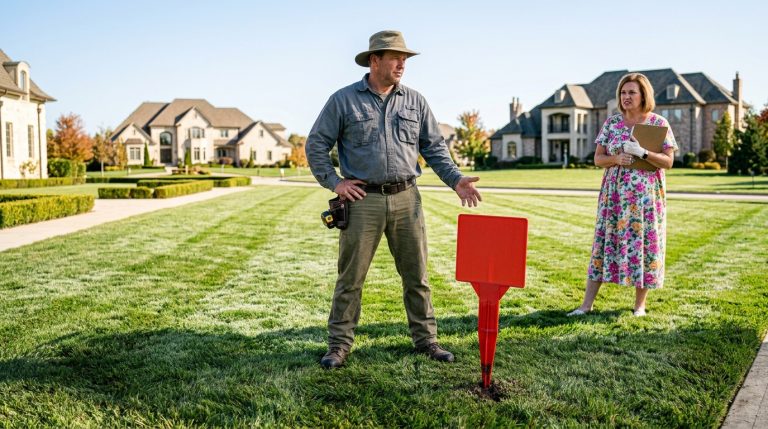
The words curled from her lips like sour milk, thin and acidic, while a jewel-encrusted hand gestured with casual cruelty toward ten years of sacrifice. The vehicle sat in the midday glare, a twenty-four-foot monolith of polished stainless steel that mirrored the cloudless sky and the manicured lawns of Oakwood Preserve. To her, it was merely an infraction, a commercial violation cataloged under section twelve, paragraph C. To me, it was the physical manifestation of twenty years of military logistics and every single cent of severance pay I had earned in dust and sand.
Her eyes were small, hard like river pebbles pressed into slits of unadulterated authority. Karen, the president of the homeowners association, did not walk through a neighborhood; she swept through it like a low-pressure weather system, bringing a chilling dread that settled heavily in the chest.
“You have twenty-four hours, Mr. Jensen,” she said, her voice dropping into a measured cadence designed to humiliate. “Remove it, or it will be towed at your expense. Plus a five-hundred-dollar initial fine, accumulating daily.”
I stood motionless on my own concrete, the warm afternoon sun beating against my neck, feeling a cold, familiar spike of adrenaline that had nothing to do with the weather and everything to do with incoming fire. My boots felt anchored to the earth, the old tactical instincts kicking in instantly—analyze the threat, calculate the angles, suppress the initial spike of blind anger. The machine behind me, polished to a mirror finish, was legally registered in my name as personal property. The magnetic lettering bearing the business title was detached and locked safely inside the cab. I had spent two full evenings with a legal highlighter dissecting the three-hundred-page covenant document before signing a single paper on this house. I had followed every rule down to the letter.
Yet, looking at the rigid set of her jaw and the cold calculation in her posture, I realized a terrifying truth: rules in her hands were not a fixed framework of civil order. They were fluid ammunition, sharpened and aimed precisely where they could draw the most blood.
“My driveway is its home base between private events,” I said, keeping my tone flat, level, and entirely devoid of defensive trembling. “It does not violate the code.”
Karen didn’t blink. A thin, triumphant smile touched the edge of her mouth, cold as winter iron. “The board defines what the code means here, Mr. Jensen. Not you.”
She turned on her heel, her heavy white SUV idling fifty feet away like a command vehicle waiting to report back to headquarters. I watched her retreat, the silence of the suburban afternoon rushing back in to fill the vacuum she left behind, thick with the heavy scent of cut grass and impending siege. My eight-year-old daughter, Lily, peeked out from the living room window, her small face pressed against the glass with an expression of quiet, uncomprehending worry that hit me harder than any physical blow ever could.
The calm, rational logistics officer inside me didn’t vanish, but he was instantly joined by something darker, colder, and far more lethal. The objective had shifted from de-escalation to total structural demolition.
CHAPTER 2: The Tactical Retreat
The front door clicked shut with a soft, padded thud, isolating the living room in a sudden, heavy vacuum. Through the double-paned glass, the late afternoon light caught the faint smudge of Lily’s small palm prints where she had pressed her face just moments before. I stood still in the center of the room, my fingers loose at my sides, listening to the hum of the refrigerator and the distant, muffled bark of a neighbor’s dog three streets over.
There was no immediate explosion of rage, no furniture overturned in a fit of hot fury. Twenty years in military logistics trains a man to strip emotion away from a critical asset when the perimeter is compromised. Anger was a waste of cognitive bandwidth; tactical calculation was the only currency that mattered now.
Sarah stepped out from the hallway, her expression drawn but composed, her legal paralegal mind already processing the parameters of the threat. She didn’t ask what Karen had said. She had seen the rigid set of my shoulders through the window.
“She’s formalizing the trap,” Sarah said quietly, her voice measured as she crossed the carpet to stand beside me. “A twenty-four-hour notice isn’t an enforcement action, Mark. It’s a positioning move. She wants us to react publicly—either by shouting, refusing outright, or doing something she can log into an immediate police report. She wants a paper trail of defiance before she slaps a lien on the deed.”
“She thinks she’s dealing with a civilian who folds at the first letterhead,” I murmured, my eyes fixed on the driveway where the twenty-four-foot stainless steel silhouette of the mobile kitchen still caught the harsh glare of the sun. “She doesn’t know what a hostile logistics chain looks like yet.”
The machine out there was my life’s work, purchased with the exact sum of a decade’s savings and the physical toll of dust, diesel, and sand. Leaving it exposed on my own concrete overnight played directly into her operational design. It turned my primary asset into a sitting duck, vulnerable to municipal tow trucks or retaliatory property damage disguised as code enforcement.
“We move it,” I said, my voice dropping into a low, gravelly cadence. “Pre-dawn. Before the neighborhood wakes up and before her morning patrol makes a pass down Maple Drive.”
“Where?” Sarah asked, her eyes sharp. “Every commercial storage lot within five miles requires corporate registration codes that match our residential address. She’ll flag them within a week.”
“Not Tom’s facility,” I replied, a cold, thin ghost of a smile touching the corner of my mouth. “Tom ran logistics out of my battalion in Helmand. He keeps heavy industrial vehicles in an enclosed, off-grid warehouse twenty miles out across the county line. No HOA jurisdiction, no municipal oversight, and zero paper trail linked to Oakwood Preserve.”
The transition out of the house required absolute precision. We didn’t rush, nor did we waste a single second of the dwindling daylight. While Sarah drafted a preliminary log of the interaction—recording the exact time, the verbatim text of Karen’s ultimatum, and the precise trajectory of her approach—I checked the mechanical systems of the truck. I crawled underneath the chassis in the gathering dusk, running my calloused fingers along the brake lines and suspension, checking the oil and the heavy-duty tires that had carried my post-military dream across three state lines. Every weld was clean; every bolt was tight.
By midnight, the neighborhood was completely dead, swallowed by an unnatural, oppressive stillness that felt less like peace and more like the quiet before an artillery strike.
I slipped out the front door, wearing dark, non-descript clothes that absorbed the sodium-orange glow of the streetlights. The air was crisp, carrying the metallic tang of late autumn and the dry scent of dead leaves skittering across the asphalt. I climbed into the cab of the truck, the heavy iron door closing with a solid, reassuring thud that echoed softly down the empty street.
Turning the ignition key brought the heavy diesel engine to life with a low, bone-deep rumble that vibrated through the floorboards. I kept the headlights off, relying entirely on the faint ambient glow of the dashboard instruments as I eased the massive vehicle out of the driveway. The tires crunched softly against the gravel before hitting the smooth, silent pavement of Maple Drive.
As I navigated the winding suburban curves, moving at a slow, deliberate crawl to avoid waking the sleeping houses, I caught a sudden flash of movement through the side mirror. Fifty yards back, parked half-concealed beneath the heavy boughs of an oak tree, sat a large, familiar white SUV.
It was empty, but its presence was a silent marker—a sentry left behind to watch the perimeter. Karen hadn’t just issued an ultimatum; she had locked down the avenues of observation.
I didn’t tap the brakes. I didn’t accelerate. I held a steady, unyielding pace, guiding the twenty-four-foot machine out of the neighborhood gates and into the dark, open highway beyond. The physical retreat was complete, but as the miles stretched out toward Tom’s warehouse, the tactical reality settled heavily over me: the truck was safe, but the war for our home had only just begun.
CHAPTER 3: Reconnaissance on Maple Drive
The heavy corrugated metal door of Tom’s warehouse rolled down with a sharp, echoing rattle that fractured the pre-dawn silence. Inside, swallowed by deep charcoal shadows and the faint smell of engine grease and industrial solvent, the twenty-four-foot mobile kitchen sat motionless under a canvas drop cloth. The engine block ticked softly as it cooled, metal contracting in the damp air.
Tom wiped his hands on a greasy rag, his eyes reflecting the harsh glare of a single overhead fluorescent bulb. “She’s safe here, Mark. Nobody comes out this far unless they’re hauling scrap or hiding from the county tax man. But leaving her parked isn’t a strategy. What’s your play?”
“My play starts back on Maple Drive,” I said, my voice steady as I slung my jacket over my shoulder. “She thinks by forcing me to move the truck, she’s neutralized the asset. She doesn’t realize she just cleared my schedule to look at the rest of the board.”
The return journey to Oakwood Preserve was conducted on foot, stepping off the highway and walking the final mile through the perimeter tree line just as the first gray streaks of dawn began to bleed across the horizon. The neighborhood was dead quiet, wrapped in an artificial, pristine perfection that felt entirely brittle. Manicured lawns stretched out like emerald carpets, identical brick facades caught the pale morning light, and every trash can was tucked away behind cedar slat fences in rigid compliance with the code.
At first glance, it was a sanctuary of middle-class order. But moving down Maple Drive with the analytical eye of an intelligence officer scanning a hostile grid, the micro-fractures began to show.
Three houses down from mine, a brand-new, twin-axle recreational boat sat propped on blocks in an open driveway, its glossy fiberglass hull towering over the fence line, twice the size of my mobile kitchen and infinitely more intrusive. Yet, as I paused by the curb for three slow heartbeats, noting the pristine white security cover and the complete absence of any orange violation sticker, the discrepancy stood out like an unexploded round in a training camp. The boat belonged to a man named Henderson, a local contractor who played weekly golf with Karen’s husband.
Rules in Oakwood Preserve were not applied by the text; they were applied by the pedigree.
I kept walking, my boots making no sound on the dew-soaked pavement, until I reached a modest split-level house near the cul-de-sac. It was easily distinguished from its neighbors not by its architecture, but by the desperate, stubborn defiance blooming in its front yard.
A patch of earth no larger than a dining room table had been carved out beneath the front window, overflowing with late-season marigolds and snapdragons. And standing sentinel in the center of the flowers, shoulder-to-shoulder in neat, stubborn rows, were a dozen ceramic garden gnomes. They wore bright red hats, held tiny fishing poles, and looked utterly, wonderfully out of place in a neighborhood governed by architectural tyranny.
As I watched from the shadow of a towering oak, the front door of the house clicked open. An elderly woman stepped out onto the porch, clutching a small plastic watering can. Her shoulders were slightly stooped, wrapped in a faded knitted cardigan, but her movements were precise. Her name was Eleanor Gable; according to Sarah’s preliminary property check, she had lived on Maple Drive for forty years—long before the corporate covenants, the fiberglass signs, or Karen’s reign of administrative terror had ever existed.
I stepped out from the shadows, making sure my approach was deliberate and non-threatening, keeping my hands visible to avoid spooking her.
“Morning, Mrs. Gable,” I said softly, halting a few feet short of the flower bed.
She froze, the watering can tipping slightly before she caught herself. Her pale blue eyes scanned my face, searching through layers of fatigue and morning chill. For a second, caution flickered in her expression—the instinctive guard of someone who had recently learned that every stranger in the street might be carrying a clipboard or a certified letter.
“Do I know you, young man?” she asked, her voice thin but remarkably steady.
“Mark Jensen,” I said, stepping closer. “I live three doors down. The house with the empty driveway.”
Recognition flashed in her eyes, sharp and immediate. A small, dry sound escaped her lips—half a sigh, half a humorless chuckle. “Ah. The man with the food truck. The one the queen bee has marked for execution.”
“It looks that way,” I replied, glancing down at the ceramic gnomes. “Though it seems I’m not the only one in her crosshairs.”
Mrs. Gable’s gaze dropped to the little figures guarding her marigolds, her fingers tightening around the handle of the watering can. The fragility in her posture hardened into something cold and brittle. “They’re a violation of article six, section four,” she said, reciting the bureaucratic edict with a bitter cadence. “Unapproved permanent lawn ornaments. I received a certified notice two days ago. Twenty-five dollars for every day they remain outside. By the end of the month, the fines will cost more than my social security check.”
“Have they been here long?” I asked quietly, keeping my eyes locked on hers.
“Five years,” she whispered, her voice dropping an octave. “My husband George gave me the first one the summer before he passed away at the VA hospital. Every year on our anniversary, the kids added another. They aren’t plastic flamingos, Mr. Jensen. They’re a history book of a life that happened here before this neighborhood sold its soul to a committee.”
The air between us grew cold, the sharp morning breeze carrying the distant scent of pine and asphalt. This wasn’t about aesthetics or property values. It was a calculated, predatory campaign designed to break the vulnerable, weed out dissent, and enforce absolute psychological submission through the slow bleed of financial pressure.
I took a slow breath, feeling the familiar, heavy anchor of resolve settle into my chest. “She’s banking on you being alone, Mrs. Gable. She counts on people quietly packing up their lives and slipping out the back door so she can maintain her illusion of control.”
“And what are you planning to do?” she asked, looking up, a faint, dangerous spark of light igniting in her watery blue eyes. “You can’t fight a machine with a polite letter.”
“No,” I said, my voice dropping into a low, uncompromising register. “You don’t fight a machine by asking it to stop. You find the gears, and you throw sand in them.”
CHAPTER 4: The Coalition of the Aggrieved
Mrs. Gable’s fingers remained locked around the handle of her green plastic watering can, her knuckles white against the faded molded plastic. The morning stillness of Maple Drive seemed to press inward, wrapping around us like a tightening tourniquet. She didn’t look away from my eyes; the initial caution had burned off entirely, replaced by the quiet, enduring wrath of someone who had survived forty years in the same footprint only to find a petty bureaucrat measuring the height of her memories.
“Sand in the gears,” she repeated softly, the phrase tasting foreign yet satisfying on her tongue. “You sound more like a sapper than a man who cooks meat for a living.”
“Logistics and engineering share the same foundation, Mrs. Gable,” I replied, keeping my voice low as a distant delivery van hummed past on the main road two blocks away. “You don’t break an organized blockade by shouting at the barricade. You find out who controls the supply lines, who signs the movement orders, and who stands to profit from the friction.”
Her gaze shifted past my shoulder toward the pristine, empty expanse of my driveway. “And what does your supply line need right now?”
“Information. And numbers.”
Two hours later, after stepping back through the perimeter and checking in with Sarah to map out the next operational sector, the baseline of our counter-offensive shifted from defense to recruitment. If Karen was operating as a localized commander enforcing arbitrary edicts under the color of community authority, she relied entirely on isolation. She needed every targeted resident to believe they were an individual anomaly—a lone outlier breaking the rules—rather than part of a pattern of systemic exploitation.
The Millers lived two turns down the loop, occupying a split-level house identical in brickwork to half a hundred others in Oakwood Preserve, distinguished only by the bright orange plastic base of a portable basketball hoop currently tucked out of sight against their garage door.
When I knocked twice on their front frame, the door swung open almost instantly. David Miller looked like a man running on raw caffeine and suppressed adrenaline. His hair was untamed, his collar slightly rumpled, and his eyes darted nervously toward the street before landing on my face. Behind him, the muffled sound of cartoons played on a television screen, punctuated by the high-pitched laughter of their two young children.
“Mark,” he breathed, stepping back and pulling me across the threshold before I could even offer a greeting. His wife, Chloe, stood by the kitchen island, her hands flat against the laminate surface, gripping the edge so hard her fingers were translucent.
“We got another notice this morning,” Chloe said, her voice shaking with a dangerous mixture of exhaustion and cold fury. “Not a warning this time. A formal escalation. Two hundred dollars because the hoop’s base was supposedly visible from the common sidewalk past sunset last Tuesday. Mark, we roll it inside every single night. Every single night.”
“I know you do,” I said calmly, stepping into the kitchen and setting my leather-bound logistics notebook on the counter.
“She’s stalking us,” David muttered, pacing a short line between the refrigerator and the pantry. “I caught her white SUV idling across the cul-de-sac four times yesterday afternoon. She sits there with a telephoto lens or a phone, waiting for a stray skateboard or a trash can left out ten minutes past the collection window. It’s not about the neighborhood, Chloe. It’s psychological warfare.”
I opened the notebook, revealing a clean, hand-drawn map of the neighborhood grid, marking specific nodes where infractions had been logged. “It’s worse than that. It’s selective enforcement designed to manufacture compliance. If you pay the fines to make it go away, you validate her authority. If you fight her individually, she drains you through legal attrition using association funds.”
Chloe crossed her arms, her eyes narrowing as she looked down at the tactical sketch on the counter. “And what happens if we don’t fight individually?”
“Then we stop being targets and start operating as a coalition,” I said, meeting her gaze with absolute, unyielding steadiness. “Mrs. Gable is already on board. She’s holding the line on the south loop with her gnomes. I’ve secured my primary asset off-site, which means the immediate threat of towing is neutralized. But we need more than defensive posture. We need every single violation notice, every timestamped photo, and every arbitrary fine your household has absorbed over the last twelve months.”
David stopped pacing. He looked from the map up to my face, a slow, grim realization settling over his features. The panic in his eyes receded, replaced by the hard, steady glint of a parent defending his home turf.
“You’re building a dossier,” David whispered.
“I’m building an audit,” I corrected, tapping the cover of the notebook with a calloused finger. “Karen thinks she’s running a tribunal. We’re going to hand her a formal discovery request that she can’t ignore, can’t stonewall, and can’t dismiss with a wave of her hand. But to do that, Sarah needs data from every corner of this preserve.”
Chloe didn’t hesitate. She turned to the kitchen drawer, pulled out a thick manila folder stuffed with crisp, official-looking violation letters and yellowed receipt slips, and laid it squarely in the center of the counter.
“Take the whole file,” she said, her voice dropping into a sharp, lethal register. “We’ve paid over six hundred dollars in bogus fines since spring just to keep our kids from living in a prison camp. Show us where to sign.”
The perimeter was expanding. The isolated pockets of resistance were linking up into a single, cohesive front. The paperwork war had begun, and the enemy command structure had no idea the trenches had already been dug beneath their feet.
CHAPTER 5: The Legal Stiletto
The manila folder from the Millers rested squarely on the passenger seat of my truck as I navigated the damp, concrete-lined streets toward downtown. The air carried the iron tang of exhaust and wet pavement, a stark contrast to the manicured, sterile quiet of Oakwood Preserve. In my pocket, Mrs. Gable’s collected notices and my own meticulous ledger of fines formed a dense, heavy block of evidence.
Marcus’s office occupied the second floor of a converted brick warehouse near the municipal center. The stairwell smelled of old paper, floor wax, and damp wool. When I pushed open the frosted glass door, Marcus didn’t look up from his desk immediately; he was sliding a heavy black fountain pen across a yellow legal pad with the methodical precision of an officer plotting grid coordinates.
He looked up as the latch clicked shut, his graying temples catching the harsh fluorescent glare. He wore a rumpled charcoal suit jacket over a crisp white shirt, the sleeves rolled up to his forearms, revealing forearms corded with muscle and old scars from a different lifetime in the JAG corps.
“You look like a man who just secured a beachhead,” Marcus said, leaning back in his swivel chair with a slow, dry creak.
I dropped the thick manila folder onto the center of his blotter. It landed with a heavy, satisfying thud that displaced a scatter of paperclips. “I didn’t just secure a beachhead, Marcus. I recruited the platoon. We’ve got forty-eight documented instances of targeted selective enforcement across twelve households over the last two years. Fines levied outside the statutory review window, bogus citations for lawn ornaments, and a complete absence of documentation for select properties belonging to board loyalists.”
Marcus opened the folder, his sharp eyes scanning the top sheet with practiced efficiency. A thin, critical smile touched the corner of his mouth. “She’s sloppy. Every amateur tyrant eventually starts treating public bylaws like a personal ledger. They forget that written edicts create a paper trail.”
“Can we stop her with a standard injunction?” I asked, pulling out the metal folding chair opposite his desk and sitting down, keeping my posture upright and braced.
Marcus flipped through several pages, his thumb tracing the margins where Chloe Miller had stapled her receipt slips. “An injunction is a blunt instrument, Mark. If we file a civil suit right now, the HOA’s defense counsel will drag this through municipal court for eighteen months. Karen will use association dues—your money and your neighbors’ money—to pay for her legal defense while you bleed out paying hourly retainers. It’s a war of attrition, and she’s holding the institutional treasury.”
“Then we don’t fight her in court,” I said quietly, the words dropping like lead weights onto the glass desktop. “We take away her supply lines.”
Marcus looked up, locking eyes with me across the narrow expanse of the desk. The silence stretched between us for three slow heartbeats, charged with mutual understanding. He closed the folder deliberately, smoothing the cardboard edge with his palm.
“What do you have in mind?”
“Information,” I said. “We don’t want a judge to tell her to play nice. We want the complete, unredacted financial record of every vendor contract, every board meeting minute, and every administrative disbursement approved during her tenure. State statute gives every homeowner the absolute right to inspect association books upon formal written demand. But I want it served not as a polite email, but as a formal legal discovery package.”
Marcus reached into his desk drawer, pulled out a fresh legal pad, and uncapped his fountain pen. “If we draft this under state commercial disclosure laws, they have ten business days to produce the books for inspection. If they stonewall, refuse, or try to slap us with arbitrary administrative fees to bury the request, they’re in direct violation of state civil code. At that point, the board itself faces personal liability, not just the association.”
“Make the demand exhaustive,” I instructed, leaning forward, resting my forearms on the edge of the desk. “Five years of unabridged financial statements, bank records, all vendor contracts, and unredacted meeting minutes. I want to see who is cashing the checks for the neighborhood upkeep.”
Marcus began writing, the nib scratching rhythmically against the yellow paper, throwing sharp, precise lines across the page. “She’s going to scream overreach, Mark. She’ll claim it’s an undue administrative burden and try to price-tag the inspection at thousands of dollars to scare you off.”
“Let her try,” I said, a cold, hard edge coming into my voice. “A logistics officer doesn’t fear a paperwork blockade. We just look for the weak point in the supply chain.”
The stiletto was forged right there under the hum of the fluorescent lights. By the time I walked out of the office into the gray afternoon drizzle, the formal demand package was sealed in a heavy manila envelope, addressed via certified mail with return receipt requested. The countdown had begun, and the administrative fortress on Maple Drive was about to receive its first direct incoming round.
CHAPTER 6: The FourHour Window
The heavy glass door of the Oakwood Preserve clubhouse swung open with a dry, squeaking latch, releasing a faint wave of stagnant air scented with chlorine from the indoor pool and old commercial carpet. Sarah walked in beside me, her briefcase catching the sterile, flickering light of overhead fluorescents. She didn’t drop her gaze or slow her pace; her paralegal mindset was locked into operational triage.
Across the long, beige-paneled room, seated at the center folding table like a presiding magistrate, was Karen. She wore a tailored beige blazer over a dark silk blouse, her posture stiff and unyielding. Flanking her on either side were her two permanent fixtures: Gary, whose heavy jaw set into an immediate, automatic scowl at the sight of us, and Albert, who nervously shifted a stack of manila folders back and forth across the laminate surface.
In the far corner of the room sat five bulky, brown cardboard boxes, sealed with industrial packing tape. They looked less like administrative records and more like contraband dumped by an evacuating garrison.
“You’re precisely on time, Mr. Jensen,” Karen said, her voice dropping into a smooth, artificial cadence that didn’t reach her small, hard eyes. “Though I must remind you, the board’s compliance window is strictly four hours. All materials must remain on these premises, and nothing leaves this room.”
“We didn’t come to take your boxes, Karen,” I said, my voice level and devoid of theatrical heat as I unzipped my leather folder. “We came to read them.”
We didn’t exchange pleasantries. Sarah took her place at the auxiliary folding table, snapping open her laptop and establishing a synchronized spreadsheet grid across the screen. My mission was document triage—sorting through the raw paper mass while Sarah ingested, cross-referenced, and flagged structural anomalies.
For the first ninety minutes, the room operated under a rigid, brittle silence broken only by the rhythmic clicking of my phone’s camera, the sharp rasp of turning pages, and the frantic, nervous tapping of Albert’s pen against the table. Karen sat motionless, her arms crossed over her chest, watching us with the cold calculation of a sentry waiting for a perimeter breach.
The first box yielded standard administrative clutter—landscaping maintenance schedules, pool chemical invoices, and routine architectural requests. But as I reached into the bottom of the second box, pulling out a faded binder containing the unredacted meeting minutes from the previous year’s summer session, a specific entry caught my eye.
It was a motion concerning the neighborhood’s multi-thousand-dollar groundskeeping contract. The previous provider had been abruptly terminated and replaced by a firm called Evergreen Solutions. The motion had passed by a narrow three-to-two margin. Karen, Gary, and Albert had voted in block to approve the contract, while the two dissenting board members had appended sharp handwritten notes questioning why the new firm’s bid was nearly forty percent higher than the historical baseline.
I didn’t react outwardly. My pulse didn’t spike, and my facial expression remained entirely flat. I simply angled the page toward my phone camera, framing the signatures under the harsh fluorescent glare, and snapped a clean, high-resolution digital record.
Across the table, Karen shifted uncomfortraply, her eyes narrowing as she noted the prolonged stillness of my hand over the page. “Find something amusing, Mr. Jensen?” she asked, a thin, sharp edge creeping into her tone.
“Just reading the fine print,” I replied without looking up, turning the page with deliberate slowness. “History has a way of leaving fingerprints in the margins.”
Sarah was already flying through the third box, her fingers moving across the laptop keyboard in a rapid, silent rhythm as she ingested balance sheets and income statements. The financial data began to coalesce into a sharp, undeniable pattern. Under Karen’s presidency, the association’s legal retainer fees had tripled, funneling thousands of dollars into retainer accounts for a single civil litigation firm—the exact firm used to draft warning letters and place liens on residents who questioned her authority.
She wasn’t just managing a suburban community. She was maintaining a self-sustaining financial engine, using association funds to pay for the legal weapons she used to silence her neighbors.
The four-hour window was ticking down. The fluorescent tubes overhead hummed with a low, grating frequency, vibrating against the quiet tension of the room. We had secured the preliminary intelligence, but the core engine of the conspiracy—the structural link between the inflated landscaping contracts and the board’s inner circle—was waiting in the final, un-opened box in the corner.
CHAPTER 7: The Ledger of Corruption
The fluorescent light hummed with a sharp, piercing pitch that seemed to press directly against the inner ear. My fingers, steady and methodical, sliced through the industrial packing tape sealing the fourth box. The cardboard flaps parted with a dry tear, releasing a faint wave of dust and dry paper.
Across the long folding table, Karen hadn’t moved. Her hands remained neatly folded over her lap, but her jaw was locked so tightly that the muscle along her cheekbone twitched once, twice, a microscopic leak of the icy pressure building beneath her composed exterior.
“Time is winding down, Mr. Jensen,” she said, her voice smooth as polished glass, though it carried a brittle edge. “Whatever grand revelation you’re hunting for in those archives, it won’t change the binding power of the community covenants.”
I didn’t answer. I reached into the box and pulled out a thick, plastic-bound ledger labeled Vendor Disbursements and Capital Outlays: FY Previous. Sarah immediately shifted her focus, her fingers hovering over the laptop keyboard as I laid the volume flat on the laminate surface between us.
We didn’t need to dig through months of entries. The fourth box contained the specific sub-ledger for groundskeeping and structural maintenance contracts. I flipped the heavy pages, my eyes scanning the corporate allocations until my thumb stopped dead on a line item dated twelve months prior.
Evergreen Solutions LLC.
The payout figures were staggering—nearly forty percent higher than the historical baseline we had verified from the older records in box two. But numbers on a balance sheet were merely abstract markers; they showed the weight of the drain without revealing where the pipe led. I turned the page, my breath catching slightly in the cold, dry air of the room as I reached the original contract documentation.
Attached to the corporate agreement was a physical address listed for Evergreen Solutions. It wasn’t an industrial park, nor was it a commercial warehouse downtown. It was a residential parcel located exactly three streets over from my own driveway.
I pulled out my phone, brought up the county’s public property registry database on the screen, and cross-referenced the parcel number. The name of the registered property owner popped up in sharp, unambiguous digital text: Gary Thompson.
Gary. Karen’s scowling right-hand man—the heavy-set gargoyle who flanked her left side during every tribunal and sat on the architectural control committee with a perpetual scowl for anyone under sixty. He owned the private landscaping firm that the board, through its own self-authenticated vote, had awarded an inflated, exclusive maintenance monopoly using association funds.
It wasn’t just selective enforcement. It was an extraction circuit. The fines levied against Mrs. Gable, the Millers, and myself weren’t just instruments of psychological control; they were supplementary revenue streams feeding an internal kickback loop.
Across the table, Gary shifted heavily in his chair, his thick neck flushing a dull, angry red as he caught me staring at the ledger page. He opened his mouth, a guttural warning rumbling in his throat, but Karen raised a single, manicured hand, checking him instantly with a sharp, imperceptible shake of her head.
“Is there a problem, Mr. Jensen?” Karen asked, her voice dropping an octave, losing its melodic sweetness and sharpening into cold metal.
I looked up from the ledger, meeting her small, hard pebble eyes directly across the narrow expanse of the table. The silence in the beige room grew heavy, charged with the undeniable weight of a compromised perimeter.
“No problem at all, Karen,” I said, my voice completely flat, stripped of all warmth. “We found exactly what we were looking for.”
Sarah closed her laptop with a sharp, decisive snap that echoed off the paneled walls, sliding the device into her briefcase as she stood up. We left the boxes scattered across the table, the raw intelligence captured and secured within our digital files. The decoy structure had peeled away, revealing the jagged machinery of the core operation beneath.
CHAPTER 8: The Ghost of David Petri
The heavy glass doors of the Oakwood Preserve clubhouse swung shut behind us, cutting off the fluorescent hum and leaving us standing in the chill of the late afternoon shade. The asphalt of the parking lot radiated a residual heat, mixing with the damp scent of decaying oak leaves carried by a stiff autumn wind. Sarah slid her briefcase into the back seat of her sedan, her fingers brushing the metal clasp with a precise, measured rhythm.
“We have the ledger entries, and we have Gary’s property registry link,” Sarah said, her voice low as she leaned against the car frame. “It’s enough to prove self-dealing and a direct conflict of interest under corporate code. But it doesn’t explain the scale of it. Why go to such lengths just to squeeze a landscaping contract out of the association budget?”
“Because a landscaping monopoly is just the visible layer,” I replied, my eyes fixed on the long, winding stretch of Maple Drive leading deeper into the subdivision. “A tyrant doesn’t build a surveillance network just to trim grass. She builds it to clear out anyone who asks questions.”
We needed a precedent. The financial ledger proved that Gary was cashing checks, but it didn’t capture the human cost of the regime—the long-term casualties left behind by years of systematic intimidation. According to the administrative margin notes we had skimmed during our document triage, there was an older case file, three years buried beneath layers of archived infractions and certified mailing receipts.
The name on the file was David Petri.
An hour later, sitting in the cab of my truck parked off-grid near the county records annex, I dialed the phone number listed on the faded archival printout. The line rang three times—flat, hollow tones—before a gruff, tired voice picked up on the other end.
“Yeah?”
“Mr. Petri?” I asked, keeping my tone steady and even.
“Depends who’s asking,” the voice replied, laced with an instinctive, defensive caution.
“My name is Mark Jensen. I live on Maple Drive in Oakwood Preserve.”
A heavy, absolute silence fell over the line. It wasn’t the silence of a dropped connection; it was the quiet of a man suddenly transported back to a battlefield he thought he had escaped years ago. When he spoke again, the defensive edge had vanished, replaced by a hollow, weary resignation.
“Is she still doing it?” Petri asked softly. “Is Peterson still running that place like a prison camp?”
“Worse,” I said. “She’s institutionalized it. But I’ve been through her ledger, Mr. Petri. I found your file from three years ago. The modified cargo van citation, the unceasing fines, the lien notice that forced you to put your house on the market and clear out within thirty days.”
A sharp, humorless chuckle rasped through the speaker. “She broke us, man. My wife didn’t want to leave that house—we poured our savings into the deck, the landscaping, a place for our kids to grow up. But every single week there was a new certified letter, a new threat of foreclosure, a new rule invented on the spot. By the time the legal fees mounted up, we were drowning. We sold at a loss just to stop the bleeding.”
“She didn’t beat you legally, Mr. Petri,” I said, gripping the steering wheel tight enough that my knuckles turned white under the dashboard light. “She exploited a rigged game. But the game is cracking.”
“What do you want, Jensen?”
“I want the pattern,” I said. “I want to know how far back her baseline goes. If you’re willing to talk, I’m coming to you.”
The journey across the county line took forty minutes through darkening asphalt and flat farmland. When I pulled up to the modest, single-story ranch house where Petri now lived, the porch light flickered against the gathering dusk. He was waiting on the front step, a tall man with silver-streaked hair and the unmistakable posture of a former Marine—shoulders squared, but worn down by a persistent, heavy fatigue.
We didn’t shake hands; we just traded the grim, evaluating nod of men who recognized the same uniform of stress.
“She has a template,” Petri said, inviting me into a cramped, warm living room smelling of coffee and old paper. He tossed a thick, dog-eared folder onto the coffee table. Inside were photocopies of the exact same style of violation notices, escalating penalties, and legal threats that Karen had weaponized against me. “She finds something legitimate—a work van, a trailer, an extra vehicle—and she weaponizes the covenant definitions until you’re forced into a corner. If you fight back, she bleeds you dry with association-funded lawyers until you pack up and leave. It clears the board for her friends.”
I opened my tactical notebook, laying his documents side-by-side with the Evergreen Solutions contracts we had pulled from the clubhouse. The geometry of the corruption clicked into place with absolute clarity. The petty tyranny wasn’t random; it was a calculated displacement strategy.
“She’s not just a bad neighbor,” I said quietly, tracing the signature block on his old lien notice. “She’s running a protection racket disguised as community governance.”
Petri looked up, his eyes catching the overhead light with a sudden, dangerous intensity. “She thinks nobody will ever call her bluff because fighting an association feels like fighting the sky. What are you going to do about it, Jensen?”
“We don’t fight her in court,” I said, sliding the notebook closed with a solid, metallic click. “We take her own stage away from her. The annual block party is in ten days. And she’s currently taking bids for a caterer.”
The escalation was locked. The ghost of the regime’s past had just handed us the blueprint for its destruction.
CHAPTER 9: Operation Trojan Horse
The county road unrolled beneath my tires like a strip of wet slate as I drove back from Petri’s house, the dashboard clock glowing pale green through the quiet dark of the cab. The puzzle was complete, the edges snapped tight into place. Karen wasn’t just enforcing rules; she was operating an enclosed corporate loop funded by neighborly terror. And now, she had left the front gate unlocked.
The annual Oakwood Preserve block party was ten days away. According to the flyers fluttering into suburban mailboxes across the neighborhood, the association was actively sourcing local vendors to cater the main course under the cheerful theme of a taste of Americana.
The next morning, sitting across the laminate kitchen table from Sarah while Lily was safely off at school, we initiated phase three.
“If we submit under my name or the original business title, she’ll reject it before the ink dries,” I said, sliding a clean sheet of paper across to Sarah. “We need a ghost entity. Something wholesome enough to bypass her initial filter, but structurally bulletproof.”
Sarah’s paralegal focus locked on instantly. Her fingers tapped a rhythmic tattoo against the edge of the table as she pulled up the state corporate registry portal on her laptop. Within ninety minutes, for a filing fee of ninety-nine dollars, Patriot Provisions Catering LLC was born. We secured a P.O. box in the adjacent township and activated a prepaid burner phone to handle routing inquiries.
The face of the operation had to be someone untraceable to our immediate household friction, yet completely legitimate. That was David Petri’s role. When I called him back to verify his agreement, his voice was steady, hardened by the memory of the cargo van and the forced sale of his home.
“My name goes on the proposal as owner and primary contact,” Petri had confirmed over the line. “She won’t look past the corporate header. She sees ‘Patriot Provisions’ and thinks about red, white, and blue banners.”
I spent the next forty-eight hours drafting the proposal with absolute tactical precision. The menu was a masterclass in classic American barbecue—slow-smoked brisket, rubbed pork shoulder, and sides designed to appeal to the association’s desire for upscale suburban comfort. But the real engineering of the document lay in the legal clauses Sarah embedded into the boilerplate agreement.
Clause one: Full payment due immediately upon completion of service delivery on the day of the event.
Clause two: A strict cancellation penalty stipulating that if the client cancels within seven days of the event date, the full contract sum remains payable in full.
Clause three—the Trojan horse: The vendor will provide all necessary equipment for food preparation, storage, and service on-site at the event location.
In standard catering terminology, “necessary equipment” meant warming boxes, folding tables, and a canopy tent. In our operational dictionary, it meant a twenty-four-foot stainless steel mobile commercial kitchen currently locked down in Tom’s off-grid warehouse.
We submitted the proposal via certified digital drop box on a Tuesday afternoon. Then came the waiting game.
Forty-eight hours dragged past with zero traffic on the burner phone. The silence began to stretch our nerves, the weight of the gamble pressing hard against the walls of the kitchen. If Karen smelled a trap, or if she simply chose a different local vendor from the municipal directory, our entire strategic counter-offensive would dissolve into static.
It was a Thursday afternoon when the prepaid phone finally buzzed against the wooden counter, breaking the stillness with a sharp, metallic ring.
David Petri answered on speaker, his expression calm as he tapped the screen. “Patriot Provisions. This is Dave.”
The voice that floated out of the small speaker was instantly recognizable—syrupy, dripping with artificial warmth and absolute, unquestioned authority.
“Hello, Mr. Petri,” Karen’s voice trilled across the line. “This is Karen Peterson, president of the Oakwood Preserve Homeowners Association. I’m calling regarding your proposal for our upcoming block party. The board was simply… enchanted by your menu selection.”
I crossed my arms, leaning back against the counter, watching the digital audio waveform bounce against the screen.
“We would like to officially award you the catering contract,” Karen continued, her tone buoyant with self-satisfaction. “I’ll be emailing the formal agreement over this afternoon. We are so looking forward to bringing a true taste of Americana to our residents.”
“We appreciate the opportunity, Ms. Peterson,” David replied, his voice entirely level, betraying none of the underlying irony. “We won’t let you down.”
The call clicked dead. A heavy, profound silence hung in the kitchen for three slow heartbeats before Sarah let out a low, breathless laugh, her shoulders dropping as the tension broke.
“She took the bait,” Sarah whispered, a fierce, brilliant grin spreading across her face. “Hook, line, and sinker.”
The signed contract dropped into our secure inbox sixty minutes later, bearing Karen’s ostentatious, sweeping signature at the bottom of the page. I printed out two physical copies, sliding one into my tactical folder. The enemy had just signed her own deployment orders, inviting the very monster she thought she had banished right into the center of her sacred parade ground.
CHAPTER 10: The CuldeSac Detonation
The massive offset smoker buried in the belly of the twenty-four-foot trailer began its low, rhythmic rumble at 3:00 a.m. inside Tom’s off-grid warehouse. The air inside the dark industrial bay filled instantly with the thick, rich, intoxicating perfume of burning hickory wood and rendering brisket fat. Every weld, every bolt, and every polished sheet of stainless steel had been scrubbed and checked twice under harsh work lights. This wasn’t merely a cooking operation; it was a military deployment disguised as a neighborhood barbecue.
By midday, under the harsh glare of a cloudless autumn sun, I eased the massive rig out of the highway lane and aligned its heavy bumper with the entrance of Oakwood Preserve.
The block party was anchored in the large cul-de-sac at the absolute end of Karen’s street. Brightly colored plastic barricades blocked vehicular access, and a massive, cheerful banner stretched between two oaks proclaimed a Taste of Americana. In the dead center of the festivities stood Karen herself, swathed in a garish red, white, and blue pantsuit, moving through the gathering crowd like a general inspecting a parade ground.
As the twenty-four-foot stainless steel monolith crept slowly around the final corner, tires crunching softly on the asphalt, the first heads began to turn.
Karen looked up, her welcoming smile fixed on her face, expecting her approved Patriot Provisions contractor to roll in with a modest catering van or a couple of folding tables. The moment her eyes locked onto the towering, mirror-bright reflection of the mobile kitchen, her smile froze, cracked, and completely dissolved into a mask of uncomprehending shock. Her jaw went slack, and her flushed face turned a violent, blotchy red.
I cut the diesel engine. The abrupt silence that followed felt heavy, dense, and electric.
I swung my boots down onto the hot pavement, my posture straight, and met her paralyzed stare with a flat, level expression. I reached back into the cab, slid my fingers into the tactical folder, and pulled out the signed contract.
Karen found her voice first, a piercing shriek that cut through the early afternoon chatter like a siren.
“You!” she yelled, stumbling forward, her fists clenched at her sides. “What is the meaning of this? You are trespassing! That monstrosity is banned from this neighborhood. I told you, I will have you arrested!”
The surrounding neighbors, who had been chatting near the bounce house and lemonade stands, fell utterly silent. They turned in unison, their eyes locking onto the confrontation unfolding in the center of the cul-de-sac.
I didn’t raise my voice. I held up a single hand, stopping her advance five feet short, and extended the contract. “Not trespassing, Karen. An invited vendor. I have a legally binding agreement.”
She snatched the paper from my fingers, her eyes darting across the corporate letterhead until they hit her own sweeping signature at the bottom. The cognitive dissonance was almost physical; she saw the trap she had built for herself with her own hand.
“This is fraud!” she screamed, waving the paper over her head. “You deceived me!”
“Did you?” a calm, authoritative voice stepped into the void.
Marcus slid through the gathering crowd, looking like an executioner in a sharp charcoal suit that clashed sharply with the festive atmosphere. He smoothed his tie, looked down at the paper in her hand, and addressed the growing ring of silent homeowners.
“I am Marcus Thorne, legal counsel for Patriot Provisions,” he announced, his voice carrying effortlessly across the asphalt. “That document is a valid corporate contract. My client is here to fulfill his obligations—specifically, to provide food and all necessary equipment for its preparation and service. This vehicle is that equipment. If you breach this contract now, the association owes the full balance immediately, alongside damages for tortious interference and defamation.”
Karen spun on him, her face twisting in sheer panic. “Albert! Gary! Do something!”
Her two gargoyles stepped forward, but before Gary could open his heavy mouth, a sharp voice rang out from the front row of the crowd.
“Shut up, Gary,” Mr. Miller shouted, stepping forward with his wife beside him. “We know about your landscaping company. We know you’ve been robbing us blind!”
A low, angry murmur rippled through the gathered neighbors. Mrs. Gable pushed her way to the front, leaning heavily on a walking cane, her pale blue eyes blazing with cold fury. “You fined me over my dead husband’s gnomes, Karen. And now we know why.”
Trapped in the center of a hostile crowd, stripped of her authority and exposed in front of her entire kingdom, Karen made her final, fatal mistake. She pulled out her phone with a trembling hand.
“I’m calling the police,” she hissed, her voice cracking with hysteria. “I’m having this illegal vehicle towed right now.”
CHAPTER 11: The Collapse of Authority
The police cruiser rolled quietly into the mouth of the cul-de-sac, its overhead lights dark but its presence commanding an immediate, breathless hush across the gathered crowd. Two officers stepped out from the vehicle—a younger patrolman whose hand rested nervously near his duty belt, and an older, salt-and-pepper sergeant whose eyes had the worn, absolute calm of a man who had mediated a thousand domestic skirmishes.
Karen caught sight of the uniforms and surged forward like a missile, her face flushed and twisted with panic.
“Officers, thank God!” she shrieked, pointing a shaking finger directly at my chest. “This man is trespassing! He brought an unauthorized commercial vehicle into our private community after he was expressly forbidden. I am the homeowners association president, and I want him removed and arrested immediately!”
The senior sergeant held up a single palm, his motion slow and unhurried, cutting off her tirade before it could build momentum. He didn’t look at her; his gaze tracked steadily toward me, assessing the geometry of the scene—the silent ring of hostile neighbors, the legal counsel in the charcoal suit, and the towering, immaculate stainless steel trailer parked in the center of the block party.
“Ma’am, let’s take a breath,” the sergeant said, his voice flat and steady. “What’s your name?”
“Karen Peterson,” she snapped, her voice climbing into an abrasive, high-pitched register. “And that man is Mark Jensen. He’s disrupting the peace of this community.”
The sergeant turned his head slowly, meeting my eyes. “Mr. Jensen. You want to give me your side of this?”
I stepped forward, keeping my posture relaxed, hands loose at my sides, entirely devoid of defensive tension. “Officer, my name is Mark Jensen. Miss Peterson is correct about my name, but her characterization of the situation is false. I am not trespassing. I am an invited vendor under a legally executed contract.”
I nodded toward Marcus, who smoothly stepped into the gap, holding out a pristine manila folder. “Marcus Thorne, legal counsel for Patriot Provisions Catering. Here is the fully executed agreement bearing Ms. Peterson’s signature, alongside the statutory provisions governing our right of access.”
The senior sergeant took the document, flipping through the pages with practiced indifference to Karen’s sputtering gasps. He stopped at the final page, his eyes scanning the corporate stamp and the bold black signature at the bottom.
“Ma’am,” the sergeant said, looking up over the rim of the paper to fix Karen with a hard, skeptical stare. “Did you sign this contract?”
“It’s fraud!” she shrieked, her voice cracking as panic completely overtook her authoritative veneer. “He used a shell company! He deceived the board!”
“It’s a legally registered corporate entity,” Marcus countered, his tone razor-sharp. “The association entered into a binding agreement. My client is fulfilling his obligations. Ms. Peterson is attempting to breach that agreement and is currently utilizing a false police report to interfere with a lawful commercial transaction.”
The younger patrolman shifted uncomfortably, looking between Karen and the sergeant. “So… do we tow the truck, Sarge?”
“Tow it?” the sergeant repeated, letting out a dry, heavy sigh. “Son, this is a civil contract dispute, not a criminal matter. There’s no trespassing here. The man was invited onto the property as a vendor by the association’s own paperwork. If the board has a grievance with its own contracts, you take it to civil court, not a municipal patrol car.”
The sergeant handed the folder back to Marcus, turned his back entirely on Karen, and looked out across the sea of staring, angry neighbors. “The only disturbance I see here, folks, is the one being manufactured by someone who doesn’t like losing an argument. Let the man do his job.”
The two officers turned, walked back to their cruiser, and slid inside. Within thirty seconds, the vehicle was backing out of the cul-de-sac, leaving Karen utterly marooned on the asphalt without her badge, her uniform, or her authority.
For a heartbeat, absolute silence gripped the cul-de-sac. Then, Susan—one of the dissenting board members who had long opposed Karen’s heavy-handed tactics—stepped out from the front row of the crowd.
“Karen, it’s over,” Susan said, her voice shaking slightly but carrying an undeniable core of steel. “The police are right. Let the man serve the food. We will settle this as a board tonight.”
Gary and Albert, Karen’s loyal gargoyles, didn’t move. They stared fixedly at the cracks in the asphalt between their shoes, their brief, borrowed power evaporating into thin air.
Karen looked around wildly, searching the faces of the people she had terrorized for years, finding only cold, unyielding contempt. Without a word, she spun on her heel, pushed through the silent crowd, and stalked toward her house. The front door slammed shut behind her with a sharp, hollow crack that echoed off the brick facade like a gavel coming down for the last time.
A collective wave of breath rushed out of the neighborhood, instantly replaced by a spontaneous, roaring cheer that started with Mrs. Gable’s cane tapping the pavement and swelled into a wall of applause.
CHAPTER 12: The Smoke Clears
The heavy oak door of Karen’s house remained sealed, its brass knocker glinting coldly under the afternoon sun. Across the cul-de-sac, the spontaneous cheer of the neighborhood had melted away into an electric, buzzing hum of collective realization. The tyrant was gone; the administrative fortress had collapsed from within, starved of its own fabricated legitimacy.
I stepped back toward the twenty-four-foot stainless steel service window of the mobile kitchen, wiping a thin layer of smoke and grease from the metal counter. The scent of hickory wood and slow-rendered brisket hung thick in the air, shifting from an instrument of tactical defiance into what it had always been meant to be: food shared among people reclaiming their homes.
“All right, everyone,” I called out, my voice carrying cleanly across the quiet asphalt. “The show’s over. Who’s hungry?”
The tension broke in a wave of laughter. Within seconds, a line fifty people deep formed naturally in front of the serving window. Susan, the newly elected interim president, was the first in line. She handed over a crisp twenty-dollar bill, refusing any change, and looked up at me with eyes bright with a mixture of exhaustion and profound relief.
“Thank you, Mark,” she said quietly, her voice steady. “The board is convening an emergency session tonight. Every single fine levied under Karen’s watch is being declared null and void. And the independent forensic audit starts first thing Monday morning.”
For the next two hours, the serving window didn’t stop. Neighbors who had spent months avoiding eye contact across property lines were now standing shoulder-to-shoulder, talking, laughing, and sharing stories of Karen’s petty tyrannies like veterans comparing scars after a campaign. Mrs. Gable sat comfortably at a folding picnic table near the center of the cul-de-sac, a paper plate loaded with brisket and coleslow in her lap, her ceramic gnomes standing proudly in the grass just twenty feet away. David Petri stood nearby, shaking hands with old neighbors who had forgotten the bitterness of his departure, the heavy shadow lifting permanently from his shoulders.
The audit that followed over the next three weeks tore open the administrative carcass of the association with clinical precision. It uncovered every hidden gear of the machine. The Evergreen Solutions landscaping contract was exposed as a blatant, self-dealing kickback scheme operated entirely for Gary Thompson’s personal enrichment, backed by unrecorded board votes and fueled by the arbitrary fines harvested from targeted residents. Furthermore, the district attorney’s office stepped in when financial records revealed that association credit cards had been systematically milked for personal luxury expenses, spa treatments, and fraudulent vendor payouts. Indictments for embezzlement and fraud followed swiftly, removing the remaining infection from the neighborhood’s governance.
Life on Maple Drive settled into a rhythm that felt less like an occupied territory and more like an actual home. The new board, operating under transparent bylaws and an emphasis on mediation rather than punishment, stripped the draconian clauses from the community covenants. The Miller family’s portable basketball hoop stayed out on the concrete late into the evening, accompanied by the bright, unhindered laughter of their children riding bicycles down the middle of the street.
My mobile kitchen, the smoking gun, was no longer viewed as a violation or a threat. It had become a local landmark, parked openly in my driveway under the golden light of the late afternoon sun, its polished steel reflecting a peaceful, unbroken sky.
One evening, roughly a year after the showdown in the cul-de-sac, I stood in the driveway with a clean rag in my hand, wiping down the heavy stainless steel service hatch. Lily was riding her bicycle in slow, lazy circles along the sidewalk, her small frame balanced perfectly against the handlebars.
A quiet, unfamiliar sedan slowed to a crawl at the curb, its engine idling softly before the driver cut the ignition. A man in his early forties stepped out, his expression tired, carrying the cautious, evaluating posture of someone scanning a new perimeter.
He walked up the driveway, halting a few feet away. “Excuse me. Are you Mark Jensen?”
I paused, dropping the rag into my back pocket, and met his eyes with a calm, unburdened smile. “I am.”
“My name’s Tom,” he said, extending a hand. “My family and I are looking at a house three doors down. The real estate agent told us to talk to someone who lives on the street before making an offer. She said… well, she said this was a quiet neighborhood.”
I looked past his shoulder at my house—at the neat cedar fence, the empty, peaceful driveway, and the bright flash of my daughter’s bicycle turning the corner under the lengthening shadows of the oak trees. The war was long over. The paperwork was filed; the ledgers were balanced; the peace was absolute.
I reached out, taking his hand in a firm, steady grip.
“It is, Tom,” I said, a genuine warmth settling into my chest. “It’s a very good neighborhood.”