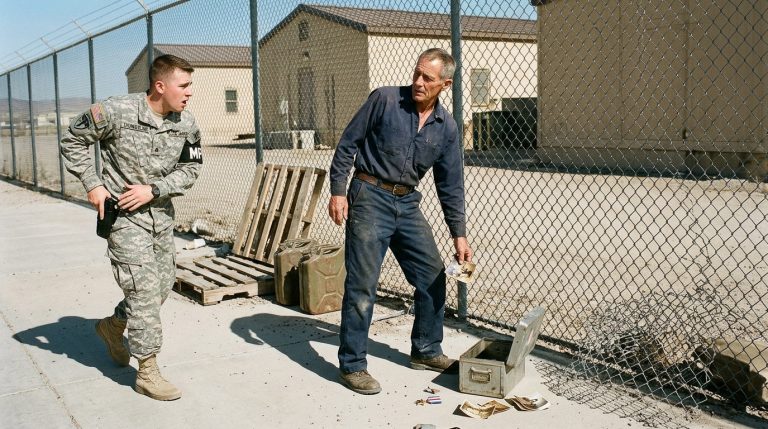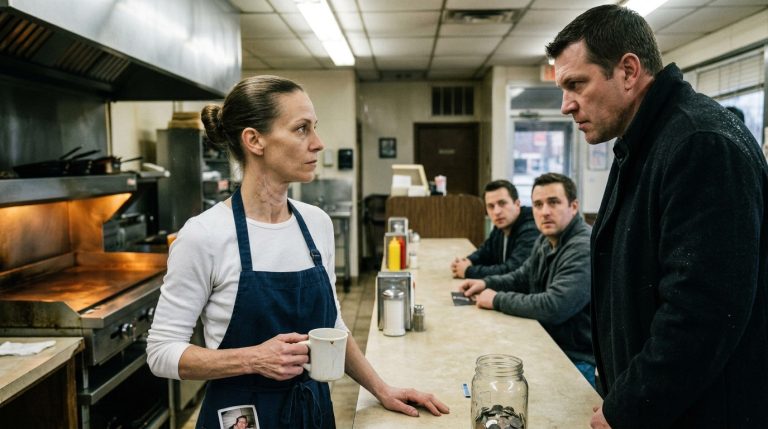
A Fractured Mirror: Finding the Quiet Strength in the Pieces of a Once-Perfect Life
CHAPTER 1: The Weight of Silence
The room smelled of lavender and expensive baby powder, a scent that had, until three minutes ago, felt like the definition of safety. Vivian sat in the high-backed rocker, the wood groaning softly under the shift of her weight. She didn’t move. She couldn’t. Across from her, Elliot stood in the doorway, his silhouette blocking the hallway light. He was perfectly still, his hands resting at his sides, his tie slightly undone—the only sign that the world had ended.
Alma, ten months old and heavy with sleep, pressed her cheek against Vivian’s collarbone. Her breath was steady, rhythmic, a sharp contrast to the erratic thumping of Vivian’s own heart.
Tell me about Danny, he had said. The voice wasn’t a roar. It was a scalpel, thin and precise, cutting through the layers of the life she had spent years carefully constructing.
Vivian looked down at Alma’s eyelashes, dark and feathery against her skin. She realized then that for ten months, she had been walking a tightrope in the dark, pretending the abyss beneath her was solid ground. She looked up, meeting Elliot’s gaze. His eyes were not filled with the fire of anger; they were vacant, like a room stripped of its furniture.
I never meant for this, Vivian whispered, her voice barely audible above the hum of the air purifier.
It doesn’t matter what you meant, Elliot replied, his voice devoid of texture. It only matters what is.
A sudden, jarring thought fractured her focus: on the changing table behind her, she noticed a small, silver item—a cufflinks box—that shouldn’t have been in the nursery. It was an anomaly, a tiny physical discrepancy that felt like a bell ringing in a tomb. He had been here before she arrived. He had been watching.
She shifted Alma slightly, feeling the weight of her daughter, a physical tether to the reality she had just shattered. The silence in the room stretched, heavy and suffocating. Outside, the city lights of Manhattan blurred into a smear of cold, distant gold, uncaring of the life being hollowed out inside the penthouse.
You should pack, Elliot said, turning away without waiting for a reply.
He didn’t stomp. He didn’t slam the door. He simply walked away, leaving the scent of his cologne hanging in the stagnant air, a ghost of the man she had thought she knew. Vivian stood up, her legs feeling like glass, and for the first time in years, she didn’t know which direction was forward. She looked back at the changing table, the silver box glinting in the low nursery light. The mystery of why it was there nagged at her, but the immediate, crushing cold of the empty room was all she could feel. She had no time for puzzles. She had a bag to pack, and a city to leave, and the terrifying, impossible task of starting over with the only thing that was truly hers.
CHAPTER 2: The Geometry of Departure
The nursery door clicked shut—a sound so final it felt like a hammer striking an anvil. Vivian didn’t scream. She didn’t fall to her knees. The survival instinct she had honed in the hallways of Cleveland schools and the boardrooms of Manhattan flared to life, cold and sharp. She stood, her knees locking to keep her upright, and scooped Alma into her arms. The baby shifted, a small, trusting weight against her chest, her soft hair brushing Vivian’s chin.
She turned back to the changing table. The silver cufflinks box sat there, a polished, taunting square of light. She didn’t open it. She knew what it contained: the evidence of a surveillance she had been too blind to notice. Elliot hadn’t been waiting for a keepsake. He had been waiting for a reason.
Vivian moved to the closet. She didn’t reach for the designer luggage—the structured, hard-shelled suitcases that marked her as a resident of this penthouse. She reached for a duffel bag, a worn canvas piece from her years as an intern, shoved into the back corner. She began to pack with a terrifying, mechanical efficiency. Diapers, formula, the onesie Alma favored, a handful of clothes for herself. She didn’t think about the lifestyle she was shedding; she thought only about the physics of the immediate moment: how to get from this room to the garage, how to exit the city before the security staff realized the internal dynamic had shifted.
She pulled the duffel over her shoulder and moved into the hall. The penthouse, usually a sanctuary of soft lighting and hushed luxury, now felt like a gallery of glass—brittle and ready to shatter. She bypassed the master suite where Elliot had gone. Every step toward the back service elevator was a calculation.
When she reached the lobby of the building, the doorman, a man named Arthur who usually offered a warm nod, looked up from his desk. His eyes flickered to the battered duffel, then to the baby in her arms. For a heartbeat, the air in the lobby curdled.
Leaving for a visit, Mrs. Ashford? he asked, his voice hesitant.
Vivian didn’t break stride. She offered the smile she had practiced since childhood, the one that made people forget their own questions. My sister needs me. A medical emergency. We’ll be back by morning.
She didn’t wait for his response. She pushed through the heavy revolving doors and into the biting night air of Manhattan. The cold was a relief. It was honest.
Her car—a sedan she had chosen for its lack of prominence—was in the underground garage. But as she reached the bottom of the ramp, the vehicle wasn’t where she had left it. A maintenance crew was huddled around a service van, the hood of her sedan wide open, a thick, oily smoke curling into the fluorescent lighting.
Ma’am, you can’t take this, one of the men said, wiping his hands on a rag. The transmission’s blown. We’re deep in it.
Vivian froze. This wasn’t an inconvenience; it was a wall. She looked at the car, then at the elevator banks she had just descended. If she went back up, if she was seen in the lobby again, the control she was exerting would evaporate. She needed mobility. She looked at the exit, then at the small, narrow alleyway that led toward the subway station two blocks away.
She looked down at Alma, who was starting to stir, her small hand clutching the collar of Vivian’s coat. The soft, faded texture of the wool felt like a promise of something smaller, something that didn’t require an assistant to manage. She couldn’t take the car. She couldn’t call a driver. She was a woman with a bag and a baby, standing in a basement, suddenly stripped of the logistical armor she had used to navigate the world.
She turned toward the alleyway. The rain had started, a fine, grey mist that turned the pavement into a mirror for the city’s neon signs. She began to walk, the weight of the duffel bag digging into her shoulder, a painful, grounding pressure. With every step away from the building, the luxury of her life in the penthouse felt more like a fever dream she was finally waking up from. She wasn’t just leaving a man; she was leaving the person she had allowed herself to become to stay there.
She reached the street, the noise of the city washing over her—honking taxis, the low hum of distant subways, the damp, metallic scent of the urban night. She ducked into a bus shelter, pulling her coat tighter around Alma. The bus schedule was smeared by the rain, but she didn’t care. She watched the headlights of passing cars, each one a potential threat, each one a chance to vanish. She realized then that she was no longer three moves ahead. She was in the present, for the first time in years, and the present was cold, wet, and utterly, terrifyingly real.
CHAPTER 3: The Threshold
The bus shelter offered little protection. The wind whipped the rain into a fine, needle-like spray that stung Vivian’s exposed skin, but she didn’t retreat further into the shadows. She stood, anchored by the weight of the duffel bag, watching the street. Her coat, a high-end wool piece she had purchased in a different life, was quickly becoming saturated, the fabric losing its structure and drooping against her frame. It felt fitting. She was losing the structure of her life, layer by layer, in the middle of a New York night.
Alma shifted in her arms, letting out a small, sleepy protest against the damp chill. Vivian shifted her grip, shielding the baby’s face with the collar of her coat. She needed to get to Queens, but the subway entrance three blocks away was an unknown variable. In her old life, she moved through the city in climate-controlled cars, the city a series of dioramas viewed through tinted glass. To walk into the subway now, to descend into the subterranean veins of the city with a child and a single bag, was to step into a world where her influence—and the protection it provided—held no currency.
She began to walk. The sidewalks were slick, reflecting the yellow glow of distant streetlamps. Every puddle she stepped over, every gust of wind that threatened to knock her off balance, reminded her of the fragility of her current state. She wasn’t just a woman in transit; she was a woman in a state of divestment.
As she reached the subway entrance, the stairs looked like a throat, dark and cavernous. The smell hit her first: ozone, stale paper, and the sharp, metallic tang of rusted tracks. She took the first step down, and the sound of the city above—the sirens, the tires on wet asphalt—muffled, replaced by the low, subterranean rumble of a train somewhere in the distance.
She paid her fare with a crumpled bill she found in her pocket, the transaction feeling absurdly tactile. The turnstile groaned as she pushed through, the cold metal biting into her hip. There were few people on the platform. A man in a grease-stained jacket sat on a bench, staring at his boots; a woman with a mountain of grocery bags stood by the yellow line, looking at the dark tunnel as if she could summon the train with her gaze.
Vivian found a spot near a structural pillar and leaned against it. The cold from the concrete seeped through her thin coat, but she didn’t mind. It was a sharp, biting cold that cleared her head. She opened the duffel bag just a crack to check on Alma. The baby was deeply asleep, her breathing so light it was almost imperceptible. Vivian’s hands, usually so steady, trembled as she adjusted the blanket. She had spent months lying to herself about the solidity of her ground, but here, in the damp, subterranean silence, the lies felt thin and transparent.
She found herself thinking of Danny. Not the man in the garage with the grease-stained hands, but the space he occupied—the quiet, the lack of performance, the way he lived his life as if it were a simple, sturdy wooden table, built to hold weight without collapsing. She had spent ten months trying to build a castle on that table, and now, the castle was gone. The only thing left was the wood.
A whistle pierced the air, and a rush of wind preceded the train. The lights of the cars flickered against the tiled walls, a frantic, rhythmic strobe that illuminated the grime of the station. The train slowed, the screech of steel on steel agonizingly loud. As the doors slid open, Vivian hesitated. This was the threshold. Once she boarded, she was moving from the world of the penthouse into the world of the garage. It was a choice that wasn’t really a choice, but it felt like a transformation.
She stepped inside. The air in the car was warm, smelling of damp wool and dry, overheated dust. She found an empty seat and sat down, the plastic bench hard against her back. The doors closed, sealing her in. The train began to lurch forward, gathering speed as it plunged deeper into the dark tunnel. She looked at her reflection in the dark window, a ghost of the woman she had been twelve hours ago. The woman in the window looked tired, frayed, and uncertain, but for the first time in years, the eyes looking back at her were her own. She was no longer performing for a camera or a spouse; she was simply existing in the velocity of her own truth. The journey to Queens was long, but as the tunnel lights blurred into a continuous streak of white, Vivian felt the first tentative stirrings of a reality that didn’t require an anchor. She was moving toward the only life she had left, and she would have to learn how to exist within it, one stop at a time.
CHAPTER 4: The Silence Between
The walk from the station to the garage was a descent through the layers of her own history. Queens didn’t look like Manhattan; it looked like effort. Frayed awnings, brickwork marked by decades of exhaust, and the persistent, low-frequency hum of a city that never finished its work. Vivian moved with her head down, the weight of Alma and the duffel bag forming a singular, aching burden on her right side.
She turned the corner onto Danny’s block. The shop was dark, a hollowed-out shell against the night sky, but the apartment window above it glowed with a faint, amber light. It was the same light she had watched from her sedan during the months of her double life—a beacon that had once promised an escape, and now stood as the only reality she had left.
As she neared the entrance, she froze. A nondescript dark sedan was idling two houses down, its headlights off, the silhouette of a driver just a smudge against the windshield. It wasn’t the kind of car that belonged on this street; it had the clean, matte finish of an asset managed by someone who dealt in logistics. Her heart gave a singular, painful thud against her ribs. Was it Elliot? Had he already begun to map her movements? Or was she simply suffering from the phantom paranoia of a woman who had lived behind a screen for too long?
She didn’t linger to find out. She slipped into the narrow alleyway alongside the garage, the bricks damp against her shoulder, and used the key she still carried—a jagged, cold piece of brass that felt heavy in her palm. The door opened with a familiar, high-pitched protest of rusted hinges.
Inside, the smell was a sensory time machine: ozone, oil, and the lingering, faint scent of toasted bread. She climbed the stairs to the apartment, each step creaking beneath her feet like a confession. When she reached the landing, she stopped, her breath catching.
Danny was sitting at the small, laminate-topped kitchen table, a blueprint spread out before him, his fingers tracing a line of ink. He didn’t look up immediately, but the tension in his shoulders shifted the moment the floorboards sighed under her weight. He turned, the overhead bulb casting long, sharp shadows across his face.
He didn’t ask why she was there. He didn’t ask where her bags were or why she was holding their daughter in the middle of the night. He simply looked at her—his gaze moving from her disheveled hair to the duffel bag, then resting on Alma. His expression was a raw, unvarnished mirror of his heart. There was no judgment in the silence, only a weary, profound acceptance.
I saw the car, she whispered, her voice cracking.
Danny stood up, his movements slow and deliberate. He walked to the window, peering through the slats of the blinds. He stood there for a long time, the only sound the steady, rhythmic ticking of a clock on the wall. Finally, he turned back to her, his face composed, the grease-stained lines around his eyes deepening.
It doesn’t matter who is in the car, he said, his voice as steady as the foundation of the shop below. What matters is that you’re here.
He moved toward her then, gently taking the duffel bag from her shoulder and placing it on the floor. His hands brushed against her arm—a touch that was rough, warm, and terrifyingly real. Vivian felt the last of her structural defenses liquefy. She had spent months constructing a facade, polishing it until it shone, only to find that it offered no shelter from the storm.
He took Alma from her arms, handling the baby with a practiced, gentle grace that made Vivian’s chest ache. He laid her down in the makeshift crib in the corner, a place he had kept ready, the sheets clean and smelling of detergent. Vivian watched him, a man who possessed nothing of the world’s gold, and yet in this moment, held everything she needed.
She sat at the table where he had been working, the paper blueprints under her elbows. They were maps of things that could be fixed, parts that could be replaced, systems that followed predictable laws. She looked at her hands, the skin pale and manicured, so out of place in this room of hard edges and honest labor. The silence between them wasn’t empty; it was a pressurized space, filled with the weight of everything they hadn’t said, and everything that was now unavoidable.
She realized then that she hadn’t just arrived at a destination; she had arrived at a reckoning. She couldn’t hide in Queens. She couldn’t play the role of the visitor anymore. Every shadow outside, every car that idled in the dark, was a consequence of the life she had tried to bifurcate. Danny pulled a chair out and sat opposite her, his hands clasped on the table. He didn’t push. He didn’t demand. He simply waited for her to begin, his presence a tethering force in a world that had suddenly become untethered.
CHAPTER 5: The Reach
The envelope was thick, expensive, and carried the unmistakable weight of high-end stationery—the kind that felt like a death warrant in the grease-stained atmosphere of the garage apartment. Vivian stared at it. It lay on the threshold, a stark, pristine white against the dark, worn wood of the floor. Danny moved before she could, his boots heavy as he crossed the room. He didn’t pick it up immediately; he looked at the return address, his jaw tightening into a hard, unforgiving line.
Elliot didn’t waste time, he said, his voice stripped of its earlier softness.
Vivian knelt, her fingers trembling as she reached for the paper. Inside was a legal summons, a formal notification of a motion for emergency custody, accompanied by a letter. She didn’t need to read the legalese to understand the intent. Elliot wasn’t just asking for time with Alma; he was building a narrative of “unfit environment,” using the very life she had sought as proof of her negligence.
As she scanned the text, a sudden, blinding memory surged: the penthouse library, a week before she left. She remembered Elliot showing her a new security system, his hand hovering over the monitor as he explained, with chilling precision, how it could track movement throughout the entire residence, even in the nursery. At the time, she had thought it was about safety—about protecting their daughter from the world. Now, she realized it was about data. He hadn’t been protecting Alma; he had been logging her every deviation from his prescribed routine, building a file that had likely started the day she first brought the baby home.
The paper felt like ice in her hands. She stood up, the room spinning slightly. Danny was watching her, his eyes searching her face, but she couldn’t meet his gaze. She felt exposed, not just by the legal threat, but by the realization of how thoroughly she had been curated.
They’re going to use the DNA test, she said, the words spilling out before she could check them. The one he asked for as a keepsake. It wasn’t a keepsake. It was a lock.
The realization hit her with the force of a physical blow. The “keepsake” he had requested was the leverage he was now preparing to wield. If he could prove she had lied about the timeline—which he could, with the data he had been quietly harvesting for months—he wouldn’t just take custody. He would destroy the validity of her entire history with Alma.
Danny moved to her side, his hand settling on her shoulder. His grip was firm, a stark contrast to the ethereal, shifting terror she felt. We fight back, he said. Not with their rules. With the truth.
Vivian looked around the small apartment. The walls seemed to be closing in, the items she had clung to for comfort—the drawing Lily had given her, the simple kitchen table—now appearing fragile, almost ornamental. She was playing a game of chess against a grandmaster who had been setting the board for a year, and she had just realized she was the pawn.
She walked to the window and pulled the blind back just an inch. The dark sedan was still there, a silent sentinel in the night. It wasn’t just watching; it was waiting for her to break. She looked at Danny, who was already gathering his tools, not for a car, but for the work ahead. He wasn’t a lawyer, and he wasn’t a billionaire, but he was a man who understood the mechanics of things—how to dismantle a complex system by finding the single, faulty bolt that held it all together.
I have to call someone, she said. Not a lawyer. Someone who knows how he thinks.
She thought of the PR firm. She thought of the contacts she had spent years cultivating, people who knew the sheen of the Ashford brand but had never seen the rot beneath the surface. If she was going to survive this, she couldn’t just run. She had to dismantle the narrative Elliot had constructed, and she had to do it using the very tools of perception he had trained her to wield.
The air in the garage grew thick with the scent of coffee and the rising tension of the night. She sat back down, the legal documents spread out before her, and began to read them again, not with the panic of a victim, but with the cold, calculated focus of a strategist. Every paragraph was a move. Every clause was a trap. She felt the ghost of her old self—the woman who navigated boardrooms with effortless precision—reasserting itself, but tempered now by the raw, unrefined urgency of a mother fighting for the only thing that mattered. The fight had moved from the shadows into the light, and for the first time, she knew exactly what she had to sacrifice to win.
CHAPTER 6: The Negotiation
The neutral ground Elliot had chosen was a private dining room in a hotel that smelled of mahogany and old money—a place where the ambient sound was dampened by heavy curtains and the polite, hollow clinking of silverware. It was a space designed for transactions, not for the messy, visceral reality of families coming apart. Vivian sat across from him, the table a wide, polished expanse that felt like a canyon.
Elliot looked impeccable. His suit was tailored to a degree that made Vivian feel almost apologetic for her own choice of a simple, charcoal-grey sweater. He didn’t look like a man launching a legal offensive; he looked like a CEO reviewing an underperforming asset.
You look tired, Vivian, he said, his voice smooth, professional, and entirely devoid of heat. It’s a shame. You were always so much better at maintaining your composure.
Vivian kept her hands beneath the table, gripping her knees to keep them from shaking. She wouldn’t give him the satisfaction of a visible tremor. I’m tired because I’m being hunted, Elliot. And I’m tired of playing the part you wrote for me.
Elliot signaled the waiter to leave the room before answering. When the door clicked shut, he leaned forward, his posture shifting from the boardroom to the interrogation. Let’s be clear about what’s happening here. This isn’t a hunt. It’s a reconciliation of facts. You deceived me. You constructed an entire narrative around a pregnancy that was, by all accounts, a tactical move to stabilize your position.
The cold precision of his words landed with the weight of stones. He wasn’t just attacking her; he was rewriting the history of their marriage to ensure that if she lost Alma, the world would see it as a natural, almost moral outcome.
I loved you, Elliot, she said, and even to her own ears, the word sounded thin, stretched to the point of breaking.
His smile was quick and dismissive. You loved the stability I offered. You loved the version of yourself you could see in the reflections I provided. But now, that version is gone. The DNA test was just the first step in uncovering the reality of who you really are.
Vivian watched him closely. She noticed the way he checked his watch—a fleeting, almost imperceptible flick of the wrist. He wasn’t here to negotiate; he was here to confirm her breakdown. He wanted a scene. He wanted her to cry, to plead, to lash out in the kind of emotional outburst that would make for a perfect exhibit in a custody hearing.
She realized then that the sedan outside the garage, the legal summons, the cold hotel room—it was all designed to produce a predictable response. She reached for her water glass, her movements slow and deliberate, and took a long, steadying sip. She thought of Danny’s workbench, the way he would spend hours meticulously cleaning a fuel pump, his patience a testament to the belief that even the most complex, broken thing could be made to function if you were willing to put in the time.
I’m not the woman you’re trying to build a case against, Elliot, she said, her voice finding a calm she hadn’t known she possessed. You can audit my life. You can look through every security log you’ve harvested. But you won’t find what you’re looking for, because you’re looking for a performance.
Elliot’s eyes narrowed. He looked genuinely surprised, the first genuine emotion she had seen from him all morning.
You think you have the upper hand because you have the logistics, she continued, leaning into the space between them. But you don’t have the truth. And the truth is, I’m the only one who actually knows who our daughter is. Not as an asset. Not as a legacy. As a person.
She stood up, her legs steady. The room felt smaller now, the heavy curtains no longer muffling the sound of her resolve. She hadn’t resolved the custody battle, and she hadn’t dismantled his trap, but she had refused to provide the performance he required. As she walked toward the door, she could feel his gaze on her back—a sharp, cold pressure. He was already planning his next move, but for the first time, she wasn’t waiting to see what he would do. She was already out the door, moving back toward the grit and the reality of the garage, where the only things that mattered were the ones she could hold in her own two hands.
CHAPTER 7: The Integration
The subway ride back to Queens was a blur of fluorescent lights and the rhythmic, clattering heartbeat of the tracks. Vivian leaned against the door, the vibration travelling up her spine, but her mind was elsewhere, dissecting the meeting with Elliot. He hadn’t won. He had expected a shattered woman, but she had delivered clarity. Yet, as she stepped onto the platform and ascended to the street level, the reality of the situation began to settle in: clarity was not the same thing as victory.
She turned the corner, her pace quickened by a gnawing sense of unease. As she approached the garage, she saw it: the dark sedan from the night before was back, parked directly in front of the shop. A man in a suit, not Elliot, but someone who looked like he had been cut from the same cloth of cold, precise logistics, was standing by the entrance, talking to Danny.
Vivian didn’t stop. She pushed past the man, her presence a sudden, sharp intrusion.
What is this? she demanded, her voice cutting through the humid night.
The man didn’t flinch. He looked at her with an impersonal, professional detachment. Mrs. Ashford. Mr. Ashford requested that I deliver the final documents regarding the upcoming hearing. It’s a formality, really. To ensure you’re prepared for what’s to come.
He handed a heavy, leather-bound folder to Danny, who took it without a word, his expression unreadable. Vivian stepped between them, her gaze locking onto the man’s eyes. You’re not a courier, she said, her voice dropping to a low, dangerous register. You’re the one who’s been monitoring the house.
The man offered a thin, practiced smile. I’m just a logistics manager, ma’am. I suggest you read those documents very carefully. The custody motion has been updated. It now includes evidence of… let’s call it significant behavioral instability.
He turned and walked toward the sedan, his movements rhythmic and efficient. As he pulled away, leaving behind a faint scent of exhaust and the heavy, oppressive silence of the street, Vivian felt the ground beneath her shake. Behavioral instability. It was a classic move: paint her as the frantic, erratic mother to justify the state taking the child into a “stable” environment.
Danny opened the folder. He looked through the pages, his face darkening with every passing second. These aren’t just papers, Viv, he said, his voice tight. These are logs. Calls you made, times you left the apartment, even the duration of the conversations you had with your mother. He’s not just watching you. He’s building an ecosystem of surveillance to prove you were never present.
Vivian took the folder, the weight of it pulling at her hands. The pages were filled with timestamps, logs of digital activity, and even grainy, high-resolution photos of her walking to the subway. It was a comprehensive, horrifying map of her life over the last year. He had been playing the long game, waiting for the moment he could present her existence as a series of calculated risks rather than the lived reality of a woman, a mother.
She looked at the shop, the dark interior, the tools Danny had spent his life mastering. If she stayed on the defensive, if she continued to play by the rules of the court and the logic of his law, she would lose. The evidence was manufactured, yes, but it was presented with the flawless, polished veneer of absolute truth.
She turned to Danny, her eyes reflecting the amber glow of the garage light. We can’t fight this in the courtroom, she said, her voice clear. If we try to argue against these logs, we’re just validating his narrative. We have to change the frame.
She saw the question in Danny’s eyes. How?
We show him the truth of what he missed, she said, not as a defense, but as a contradiction. We don’t argue about the time I spent; we argue about the quality of the life that was actually lived. We stop defending ourselves against his records and start building a record of our own.
She looked back at the apartment, at the quiet, sturdy space she had created. The panic had vanished, replaced by a cold, sharp resolve. She had one move left, a move that would require her to strip away the last of the safety she had tried to maintain. She was going to document the reality of her life—not the curated, polished version Elliot wanted, but the messy, real, imperfect love she shared with Danny and Alma. She was going to fight him with the only thing he didn’t understand: the texture of a life lived for something other than control.
CHAPTER 8: The Mosaic
The morning air in Queens smelled of damp pavement and the slow, inevitable start of a city morning. Inside the garage apartment, the tension that had defined the last several weeks had finally evaporated, replaced by a strange, hollow quiet. Elliot hadn’t arrived to collect the child, nor had the authorities come knocking with the manufactured evidence of her instability. Instead, there was a silence—a massive, absolute silence—that followed the realization that he had retracted the motion.
Vivian stood by the window, watching the street. The dark sedan was gone. It had left sometime in the small hours of the morning, vanishing as quietly as it had appeared. She turned away from the glass, her eyes landing on the kitchen table. The folder, once a weapon of immense psychological weight, now looked like nothing more than a stack of expensive, wasted paper. She realized then that Elliot hadn’t retracted because he had lost the power to destroy her; he had retracted because, for the first time, he recognized that the woman he was trying to “manage” no longer existed to be managed. He had built his ecosystem of surveillance on the assumption that she was still the woman who craved the penthouse, but he had finally looked at the “evidence” he collected and seen not a failure, but a life.
Danny was working below, the rhythmic sound of a wrench against metal rising through the floorboards. It was a grounding, steady sound. Vivian walked to the corner of the room where Alma’s crib sat. Her daughter was awake, propped up on her elbows, watching the sunlight play across the ceiling. Vivian picked her up, the weight of the child familiar and warm. She felt no lingering terror, no phantom fear of the next legal maneuver. The confrontation had been less about the documents and more about the final, brutal shedding of the skin she had worn for Elliot.
She walked to the workbench that sat in the corner of the living area, the one Danny had built for her during their first, frantic weeks of “safety.” It was cluttered with the small, essential fragments of their life: a box of crayons, a stack of unpaid bills, a collection of smooth stones Alma had gathered from the sidewalk. Vivian picked up the worn, silver keychain from her old, broken-wheeled suitcase—the silent motif of her transition. She hadn’t looked at it since the move, but now, she found a small hook on the side of the workbench and hung it there. It didn’t represent the past anymore; it was a testament to the fact that she had arrived.
The door creaked, and Danny climbed the stairs, his face tired but his eyes clear. He didn’t say anything, but the way he looked at her—the way he looked at the space they had built together—was enough. He had stood as the bedrock while she weathered the storm, never asking her to be anything other than the woman she was becoming.
He’s not coming back, Danny said, his voice low.
I know, Vivian replied, looking out the window at the familiar, gritty skyline of Queens. He doesn’t know how to exist in a world he can’t curate. And I don’t know how to exist in one that requires a script. We’ve finally found a point of mutual agreement.
She moved to the kitchen and began to prepare breakfast, the rhythm of the tasks—chopping, stirring, cleaning—feeling like a form of meditation. The denouement of her life with Elliot hadn’t been a dramatic explosion in a courtroom; it had been a slow, quiet realization that her value was not something he could grant or revoke. She had spent her youth learning to be charming because it was free, but she had spent the last two years learning that authenticity was the only thing that had a cost, and it was the only thing that lasted.
As they sat together at the table, the morning light filling the room with a soft, amber glow, Vivian felt a sense of peace that wasn’t brittle or performative. It was a quiet, sturdy thing, built out of the broken pieces of the life she had once thought was perfect. She reached out, her hand finding Danny’s across the worn surface of the table. They didn’t speak. There was no need for grand declarations or explanations. They were simply there, inhabiting the space they had fought for, a mosaic of a life made beautiful by the cracks that had once threatened to tear it apart.
Outside, the city began to roar to life, the sirens and the grinding gears a distant, muffled backdrop to the sanctuary they had built. Vivian looked at Alma, then back at Danny, the quiet, persistent pulse of their world beating in time with the morning. She was no longer a woman managing a double life. She was simply a woman, in a home that wasn’t a gallery, and for the first time in her life, the future didn’t look like a chessboard to be navigated. It looked like a day, then another, then another, lived with the terrifying, beautiful simplicity of a truth that belonged only to them.